

Explore the very best temples, tombs and timeless landscapes of Egypt with our epic, self-guided 2 week Egypt itinerary for independent travellers, overlanding from Cairo to Aswan and Luxor.
~~~
Short of travelling through time, to journey through Egypt is about as close as you can physically get to the ancient past of one of our oldest and earliest civilisations.
This extraordinary country is home to some of the greatest and best preserved ancient temples and tombs in the world, along with spectacular landscapes, and a people whose cultures and traditions have developed alongside the mighty River Nile over thousands of years.
Egypt is a country that keeps calling us back. Between the two of us, we’ve been lucky enough to visit Egypt multiple times now and we’ve travelled through the country both independently and on tour. There’s always more to see and more we want to do. There’s always a plan to return.
While we prefer slow travel and absolutely recommend giving as much time as you can to a visit, if you have just 2 weeks to explore, our self-guided Egypt itinerary will help you plan an unforgettable independent travel experience that introduces you to the best of the best – the greatest hits – of this ancient place.
You’ll get to see Egypt’s most famous and enduring sites, from the Great Pyramid of Giza and the even more ancient step pyramid of Djoser in the country’s north, to the incredible temples of Karnak and Abu Simbel in the south.
You’ll also experience vivid tombs in the Valley of Kings in Luxor, sail the Nile at sunset aboard a felucca in Aswan, and immerse in the dramatic and timeless landscapes of Egypt with a quintessential Nile River cruise.
Rest assured, after this trip, Egypt will be calling you back too.
2 Week Egypt Itinerary Snapshot
Start: Cairo, Egypt
Finish: Luxor, Egypt
Length: This self-guided itinerary requires a full two weeks. If you have less time or more time, we’ve made some suggestions for how to plan your itinerary further on.
Overnight stops: 4 nights in Cairo, 1 night sleeper train, 2 nights in Aswan, 3 nights on a Nile Cruise, 3 nights in Luxor.
Transport: This journey involves cars, a sleeper train, planes and boats.
Self-guided: This itinerary is based on our own travels through Egypt and aims to help independent travellers plan their own self-guided itinerary. We’ve also provided suggestions for guided experiences at destinations along the way.
What’s in this post?
What’s the Route?
– 2 week Egypt itinerary
– Shorter and longer Egypt itineraries
Planning a Trip to Egypt
– Getting to Cairo
– Best time to visit Egypt
Our Self-Guided 2 Week Egypt Itinerary
– Day 1: Arrive in Cairo
– Day 2: Pyramids of Giza & Grand Egyptian Museum
– Day 3: Cairo sightseeing
– Day 4: Alexandria day trip
– Alternative Days 3-4: Explore the Western Desert
– Day 5: Memphis, Saqqara & Dahshur day trip (+ overnight train)
– Day 6: Aswan sightseeing
– Day 7: Abu Simbel day trip
– Overview Days 8-11: Nile cruise from Aswan to Luxor
– Day 8: Nile Cruise – Aswan highlights
– Day 9: Nile Cruise – Temple of Kom Ombo
– Day 10: Nile Cruise – Temples of Edfu, Karnak & Luxor
– Day 11: Nile Cruise – Valley of the Kings & Luxor
– Days 12 & 13: Luxor sightseeing
– Day 14: Depart Luxor
Useful Travel Resources
This post contains affiliate links. If you choose to buy through these links we may earn a small commission at no extra cost to you, which helps us to keep Two For The World running. Many thanks for your support!
What’s the Route?
If you follow this self-guided Egypt itinerary, you’ll need a full two weeks.
- You’ll start with a couple of days in Cairo, visiting the Pyramids of Giza and the city’s historic sites and museums.
- You’ll day trip south from Cairo to the vast Necropolis of Saqqara, and north to the ancient city of Alexandria.
- Then you’ll take the overnight train south to Aswan, visiting the epic attractions there before day tripping to the extraordinary temple complex of Abu Simbel.
- From Aswan, you can opt to spend the next couple of days aboard a Nile cruise heading back north, taking in the timeless landscapes and temples along the Nile between Aswan and Luxor (or, you can overland between Aswan and Luxor instead).
- In Luxor, you’ll explore the highlight sites of Karnak Temple, Luxor Temple and the Valley of the Kings.
- Your last couple of days will be spent exploring more of the wonders in and around Luxor before winding up your itinerary in this Nile-side city.

Shorter and longer Egypt itineraries
With less time: If you have 1 week in Egypt
If you have just one week in Egypt to play with, we would suggest visiting Cairo for a couple of days and Luxor for a couple of days, flying between the two cities, and possibly doing a day trip to Abu Simbel.
With more time: If you have more than 2 weeks in Egypt
With more than 2 weeks in Egypt, we would recommend a longer, more in-depth Nile Cruise such as this 6 day dahabiya cruise that we did on one of our trips.
Dahabiyas can dock in places the bigger cruise boats can’t, and we visited a whole range of smaller, off-the-beaten-path ancient sites and villages along the Nile. This will always be one of our favourite Egypt experiences.
If you wanted to incorporate a longer Nile Cruise into this two week itinerary in Egypt, you could do so by shortening your stay in Cairo and skipping Alexandria.
Alternatively, you might consider adding a 2-day overnight trip to the Bahariya Oasis and White Desert out of Cairo, and/or flying out of Luxor for a couple of days in one of Egypt’s Red Sea resort areas, like Hurghada, Sharm el-Sheik or – our personal favourite – the low-key village and scuba diving hub of Dahab on the Sinai Peninsula.
Planning a Trip to Egypt
Getting to Cairo
Our self-guided itinerary starts in Cairo, Egypt’s capital city. Most international travellers will fly into Cairo International Airport.
This is the busiest airport in Africa and a major hub for the region so give yourself plenty of time navigating your way in, around and out of here. The airport is around 20 kilometres (12.5 miles) north-east of downtown Cairo, though traffic can make it feel a lot further away. We outline the options for getting from the airport to the city in Day 1 below.
There are a number of other airports in Egypt servicing popular tourist areas with both domestic and international flights, including airports at Luxor, Hurghada and Sharm el-Sheik.
As this itinerary finishes in Luxor, you might consider flying from Luxor back to Cairo for your connecting flight home, or seeing whether there are flights from Luxor to an airport near you. You could also extend your trip and fly out of Luxor to somewhere else in Egypt.
Best time to visit Egypt
If you’re planning a trip to Egypt, the best time to visit is between October and March, when the generally hot and dry climate is a bit kinder.
Peak travel time is December and January and the prices of accommodation and travel will reflect this, plus places book up quickly. Plan well ahead if you’re intending to visit over this period.
The shoulder periods of March, April and September are also good times to travel as it will be less crowded at the major sites, but the temps aren’t quite as oppressive as they are over the summer period between May and August.
Those summer months are still fine for travel if you don’t mind intense heat, just be prepared and avoid being outdoors during the hottest hours of the day.
We’ve visited Egypt in January, October and November and found the temps to be pleasant, though it was still pretty hot out on the Giza plateau and on Luxor’s West Bank during the day. Nights can get cool during the winter months in Cairo and Alexandria, and very cold in the desert.
Is it safe to visit Egypt?
Safety always comes up when people ask us for advice on visiting Egypt. Tourism is vital to the country’s economy and the government takes the safety of visitors very seriously. You may notice a military and police presence in many places you go, particularly at the main tourist sites.
We’ve never felt unsafe on our travels there, and we’ve visited during some pretty turbulent periods.
As with any trips though, it’s important to keep tabs on the travel advice for Egypt provided by your home country. Also, stay abreast of what’s happening in the lead up to your visit and while you’re in the country.
Our Self-Guided 2 Week Egypt Itinerary
Day 1: Arrive in Cairo
Highlights: Cairo | Giza Pyramids Sound & Light Show
Overnight: Cairo
Cairo is Egypt’s vast, frenetic capital city and it’s the launchpad for our self-guided itinerary for 2 weeks in Egypt. The city’s densely populated urban sprawl is home to more than 22 million people, and from the moment you arrive, you can’t help but be swept up in the all-senses chaos and pace. Welcome to the beating heart of Egypt!
If you’re flying into Cairo International Airport, you have a couple of options for making the 25 kilometre (15.5 mile) journey from the north-east to your hotel: public bus, taxi, Uber or private transfer.
The easiest (albeit usually the most expensive) option, and generally our option of choice when arriving in a new and unfamiliar country, is to arrange a private transfer. Taxi drivers will bombard you when you exit the arrivals hall at the airport. It’s much less hassle to have someone waiting for you when you arrive. You can usually arrange a transfer through your hotel in advance, or check prices for transfers from Cairo Airport here.
Travel Tip: Cairo is a huge, bustling maze of a city and it’s helpful to have access to online or offline maps while you’re out and about.
With roaming costs being what they are, we always travel with an eSIM these days and our go-to is Airalo. However, if you plan to rely on wifi during your Egypt trip (or even if you do have internet access), we recommend downloading offline maps for Cairo, Luxor and Aswan before you arrive.
The first time we visited Cairo together, we managed to get lost in the Downtown area while exploring. Thankfully some lovely locals helped us find our accommodation again, but having access to a map on our phones would have made a big difference.
There’s a good chance your flight won’t arrive until this afternoon, and with Cairo’s intense traffic and congestion, it’s likely to take an hour or so to reach your hotel. So if you arrive late afternoon, rest up and be ready for your Cairo itinerary to start in earnest tomorrow.
If you do arrive in the morning and you’re keen to get out and explore some Cairo highlights, check out Day 3 for some ideas.
If you have the evening free, you might consider the Pyramids Sound and Light Show. We haven’t personally done this and, to be honest, sound and light shows aren’t usually our thing, but these are the pyramids after all! If you do go, drop us a comment, we’d love to know what you think. The nights and times of the light show can change, so head to the official website for more information.
Where to stay in Cairo
Cairo offers a wide range of accommodation, from budget hostels and family-run inns to high-end luxury hotels. You’ll get more value for your money here compared to many other major cities around the world, however quality and service can be a mixed bag. We’ve researched a range of places to help get you started, but we recommend reading recent reviews on any place before booking.
Depending on your priorities and budget, the key areas to stay in Cairo are Downtown, Garden City, Giza and Zemalek.
Downtown
On the east-side of the Nile, this is the most convenient area for access to the (original) Egyptian Museum and Tahrir Square. It’s also a short drive to other attractions like Coptic Cairo, the Citadel and Khan el-Khalili bazaar. You’ll find more budget stays in this area.
This is where we’ve stayed on our visits to Cairo and we’ve found it to be a good base. Our accommodation choices have been pretty basic though and we’ll look to cast the net wider next time. A couple of options here with excellent reviews include:
- Good value: Tahrir Plaza Suites – top location opposite the Egyptian Museum | clean, spacious rooms, some with balconies | above-and-beyond staff | excellent value for money
- Mid-range: Champollion Palace – short walk to Tahrir Square | friendly and attentive staff | tasteful, clean rooms | homely communal areas
- Spend a bit more: Steigenberger Hotel El Tahrir Cairo – modern and stylish hotel | very close to Tahrir Square and Nile | exceptional staff and service | safe and secure.
Garden City
Just south of Downtown, this is a more leafy, upmarket area with grand, early 20th-century architecture and some lovely Nile-side hotels. Some highly-rated options in this area include:
- Good value: Triple Garden View Hotel – calm, peaceful and secure location around 1km from Tahrir Square | spotless, modern rooms | reliable, high-speed wifi | friendly, helpful staff
- Mid-range: Villa Layla – beautifully designed, adults-only stay with high-end boutique feel | close to highlights yet tucked away in a calm alley | impeccably clean | outdoor pool, shared kitchen and workstations
- Spend a bit more: Kempinski Nile Hotel – top, Nile-side location | spotless, comfortable rooms, many with balconies overlooking Nile | attentive staff and butler service | choice of restaurants on-site | rooftop pool, spa and fitness centre.
Giza
If you want to wake up to the pyramids, then look to Giza on the west bank of the Nile. It’s worth noting that while the pyramids are the accommodation drawcard here, and it’s also convenient for trips to Memphis and Saqqara, this area is further from Cairo’s other attractions, which means more time in taxis and traffic. That said, with the new Great Egyptian Museum nearby, there’s now even more reason to stay on this side of the river. The following options are all highly rated:
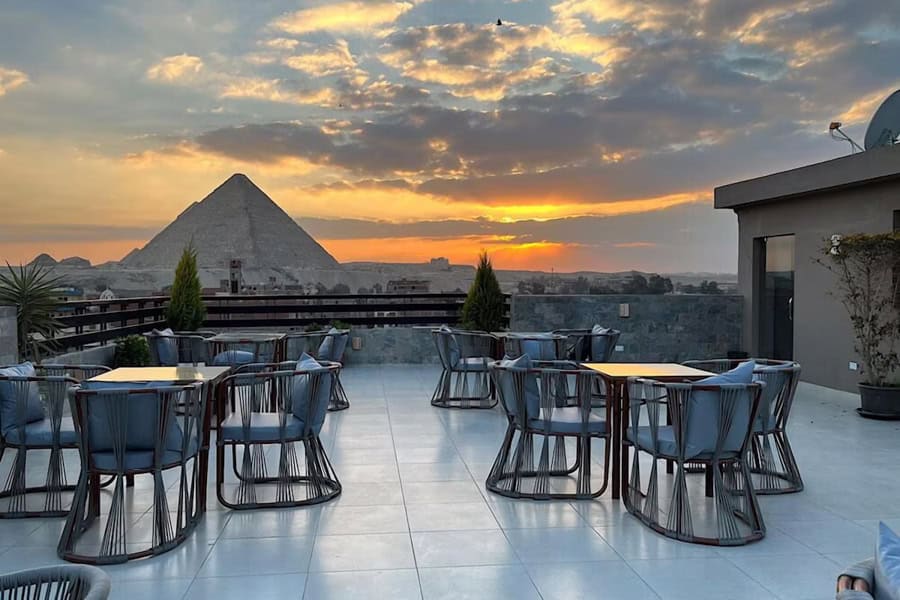
- Good value: Imperial Pyramids View Inn – family-run stay just 10-minutes’ walk from Pyramids entrance | clean, cozy, well-quipped rooms | warm and attentive hospitality | rooftop terrace overlooking Pyramids and Sphinx
- Mid-range: Kemet Boutique Hotel – top marks for Pyramid views and diverse breakfast on the rooftop terrace | large, comfortable, spotless rooms | very friendly and helpful staff |
- Mid-range: Sequoia Pyramids View Al-Haram – clean, modern rooms, some with balconies | 5-minute walk from entrance to Pyramids | rooftop terrace with Pyramid views
- Spend a bit more: Marriott Mena House – a former royal hunting lodge, now a grand luxury stay overlooking the Pyramids | well-appointed rooms with luxurious bathrooms | expansive gardens with ambient terrace | professional and attentive staff.
Zamalek
Sitting between them all, in an affluent area on Gezira Island in the middle of the Nile, is Zamalek. This is where a number of embassies are located, along with lots of expats and dining options. You’ll find more apartments here in a generally higher price bracket (for Cairo).
Day 2: Pyramids of Giza & Grand Egyptian Museum
Highlights: Pyramids of Giza | Great Sphinx | Grand Egyptian Museum
Overnight: Cairo
Morning – Visit the Pyramids & Great Sphinx
Plan to get started early today. The Pyramids of Giza site opens at 8am from October to March and 7am from April to September. We recommend being there for opening to get ahead of the crowds and the heat, both of which build as the day progresses.
You can arrange a guided tour of the Pyramids. Or you can taxi or Uber to the site on the Giza plateau and explore independently, which is what we did.
There are two entrances, on the north side near the Great Pyramid and on the east side in front of the Sphinx. For that classic Sphinx-in-front-of-Pyramid pic, we suggest entering via this gate. It’s also less busy but it does involve a 3km (1.9 mile) uphill walk to the Great Pyramid.
There’s a lot more to the Giza Necropolis than the pyramids, so aim to spend at least 3 to 4 hours here. With that amount of time, you’ll be able to visit the three pyramids of Khufu, Khafre and Menkaure (and head inside one of them if you don’t mind queuing and small spaces; there’s an extra cost for this), as well as the Queens Pyramids, the Worker’s Village, some of the smaller temples and, of course, the Great Sphinx.
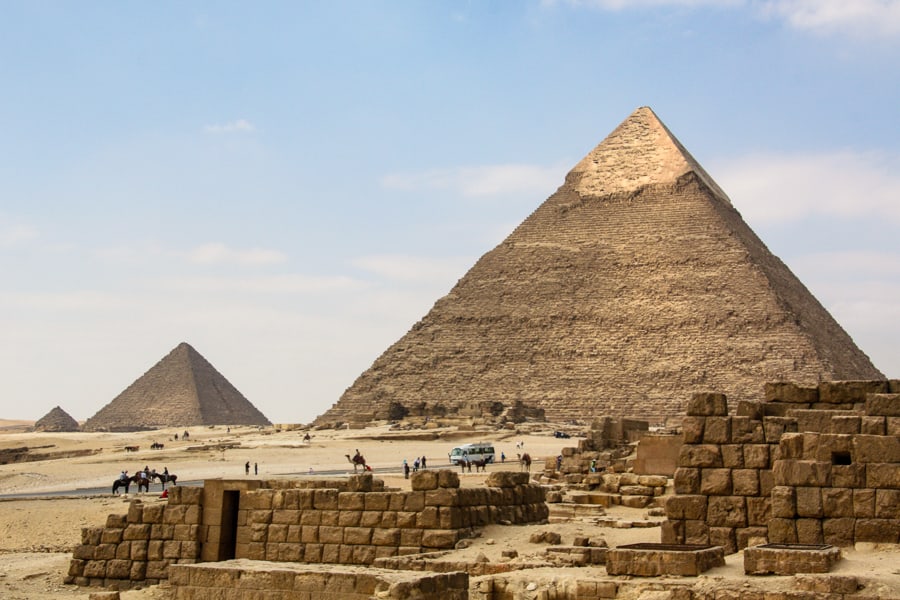
Travel Tip: Be prepared for some serious hassle at the Pyramids of Giza, especially if you’re visiting independently. The pressure from touts can be intense, whether it’s to buy a souvenir, have your photo taken with a camel or ride a horse or camel into the desert.
Plan ahead of time what you want to do at the site and be polite but firm when responding. If you don’t intend to buy or ride, say ‘no’ from the outset rather than ‘maybe later’ or, as we experienced, you’ll end up with a persistent entourage for most of your visit. Remember, nothing is really ‘free’.
Afternoon – Explore the Grand Egyptian Museum, Giza Plateau
It’s been years in the making, but the Grand Egyptian Museum (GEM), said to be the largest archaeological museum in the world, is finally fully open on the Giza Plateau. Yet another reason for us to return!
All of the GEM’s galleries and exhibition halls can now be visited. You’ll find thousands (and thousands!) of artefacts here spanning Ancient Egypt’s long story, in an architecturally striking building with views to the pyramids.
The showstoppers of this extraordinary space, for which the GEM has been purpose-built, are the Tutankhamun Galleries. For the first time since Tut’s tomb was discovered, virtually everything found with the boy king is on display together, including his golden mask and chariots.
Another highlight of the GEM is Khufu’s Boats Museum, which houses the remarkable, 42-metre-long Solar Boat of Khufu. This impressive boat awed us when we first saw it in a musty hangar near the Great Pyramid. Now it has a beautiful new dedicated space, along with a second boat found at the same site, which is being conserved and reconstructed in real time as part of the exhibition.
The GEM is open every day. For more info about times, tickets and guided tours, visit the GEM website.
Day 3: Cairo sightseeing
Highlights: Royal Mummies at NMEC | Coptic Cairo | Cairo Citadel | Khan el-Khalili Bazaar | (Old) Egyptian Museum
Overnight: Cairo
For many visitors, Cairo is just a transit point to Egypt’s ancient sites. But this historic city offers much, much more. Day 3 of our Egypt itinerary is dedicated to exploring some key Cairo highlights plus…Royal mummies!
There are five experiences you might opt to choose from today. You can visit each of these locations independently, spending a couple of hours at each. Or visit most of them on this highly-rated full-day guided tour. If doing it yourself, opt for two or three rather than attempting all of them as getting between them independently will take time.
Itinerary Tip: If you’re keen to see and do everything below, another option is to spend Day 4 in Cairo as well and leave Alexandria for a future visit.
National Museum of Egyptian Civilisation (NMEC)
Having spent the afternoon of Day 2 at the Grand Egyptian Museum (GEM), we’d understand if you aren’t in a rush to visit another big museum quite so soon.
But the NMEC is on our Cairo itinerary not just because it offers an engaging journey through Egyptian history from prehistory to present, but because this is the final, purpose-built resting place for the Royal Mummies of Ancient Egypt. All the big names, like Ramses II, Queen Hatshepsut and King Seti I are here.
These mummies were previously displayed at the Egyptian Museum and were moved to the NMEC with great fanfare during the globally screened Pharoah’s Golden Parade in 2021.
These are the kings and queens whose temples and tombs you’ll be seeing as our Egypt itinerary takes you south to Aswan and Luxor. For us, the NMEC is a must-do. It’s open daily from 9am to 5pm and also in the evenings on Fridays from 6 to 9pm.
Coptic Cairo
This peaceful neighbourhood in Old Cairo is one of the oldest in the city; it’s been home to Egypt’s Christian community since the 4th-century.
There’s plenty to explore here, including the 7th-century World Heritage Hanging Church; as well as the Church of Saints Sergius and Bacchus, and the Ancient Roman Babylon Fortress, both of which date to the 4th-century.
There’s also the 10th-century Greek Orthodox Church of St George (said to be built on the site where the Holy Family rested when they arrived in Egypt), the 7th-century Mosque of Amr ibn al-As (Egypt’s first and oldest mosque), the 9th-century Ben Ezra Synagogue, the 1st-century BC Babylon Fortress.
For some context and a foray into the history of Coptic Christianity, check out the Coptic Museum as well.
Cairo Citadel
As you travel into downtown Cairo, you may glimpse this imposing fortress hulking above the city in the Mokattam Hills. Saladin built a fort here in the early 12th-century as a defence against crusaders, and the bastion went on to be expanded and upgraded as the home of the country’s rulers for hundreds of years after.
Today, the must-see sites here include the walls and gates of the fortress itself, the dominating Ottoman-style Mosque of Mohammed Ali, the Mamluk-era Mosque of Al-Nasir Mohammed, and several terraces with panoramic views over Cairo.
If you’re coming by Uber or taxi, you’ll likely be dropped off at the base of the hill and will need to walk up to the citadel. It’s open daily from 8am to 5pm.
If you’re after a guided tour focusing on the highlights of Old Cairo, including the Hanging Church and the Citadel, this Full Day Islamic and Coptic Cairo tour gets excellent reviews.
Khan el-Khalili Bazaar
This vast and famous souq is worth at least an hour of your time, if not for the opportunity to haggle for souvenirs, spices or just about anything else you can imagine, then for the vivid sensory experience of wandering the narrow, bustling alleyways of a market where traders have been hawking their wares for more than 600 years.
I bought some cheap and cheerful souvenirs here, but also spent a good hour taking tea with a local shopkeeper who was a teacher by day and a stall holder by night. It’s a connection I’ll always remember.
You can wander independently or go with a guide. Khan el-Khalili is open daily from 9.30am until late, though hours will vary during public holidays, Eid and Ramadan.
Egyptian Museum Cairo
It’s yet another museum, yes, but we’ve also included the Egyptian Museum Cairo in Tahrir Square, Downtown, as this is the original great house of Egyptian archaeological treasures.
Even though the GEM is now open, the old Egyptian Museum still houses a vast collection of priceless Ancient Egyptian artworks and artefacts, just as it has for over 120 years.
If you’re keen to see some of the tens of thousands of ancient masterpieces to be found here, aim to set aside at least a couple of hours today for a visit.
There are usually guides milling about at the museum and you can arrange one on the spot. If you do this, seek out a certified guide. Find out more about visiting at the Egyptian Museum website.
Day 4: Alexandria day trip
Highlights: Catacombs of Kom ash-Shuqqafa | Kom el-Dikka | Pompey’s Pillar & Serapeum | Bibliotheca Alexandrina | Fort Quaitby | Alexandria Corniche
Overnight: Cairo (or Alexandria)
Today, leave Cairo for the day and make for the Mediterranean coast and one of the most famous cities of antiquity: Alexandria.
Founded by Alexander the Great in 331BC, Alexandria was the capital of Hellenistic, Roman and Byzantine Egypt for a thousand years.
It was also once home to the legendary Pharos Lighthouse – one of the Seven Wonders of the Ancient World – as well as the great Library of Alexandria. They might not exist today, but Alexandria’s ancient story is still very much in evidence.
DIY or join a tour?
It’s possible to do a full day trip to Alexandria taking in the city’s highlights and returning to Cairo in the evening. Just beware it will be a long day!
With hindsight, we would probably look to do a tour from Cairo. A guided tour like this well-rated full-day trip from Cairo to Alexandria visits all the key sites and will take the hassle out of doing it yourself. But it can certainly be done independently.
We went the self-guided route and took the train from Ramses Train Station in Cairo to Alexandria (check ahead that the train still departs from this station rather than the new Upper Egypt Bashtil station in Cairo). The train journey takes 3-4 hours, so try and get an early train there and expect to arrive back in Cairo in the late evening (or stay overnight in Alexandria).
Once there, we hailed taxis to get us around town and between sites. If you’re doing it yourself, have a solid plan of attack before you go to maximise your time.
There are also guided tours of the ancient city that you can join once you’re in Alexandria, like this top-rated 6-hour Highlights of Alexandria tour, which takes in all of the sites below and more. It starts at 9am, so you’d need to be heading to Alexandria very early or go the night before, but you can arrange a pick-up and drop-off at the train station.
Highlights of Alexandria
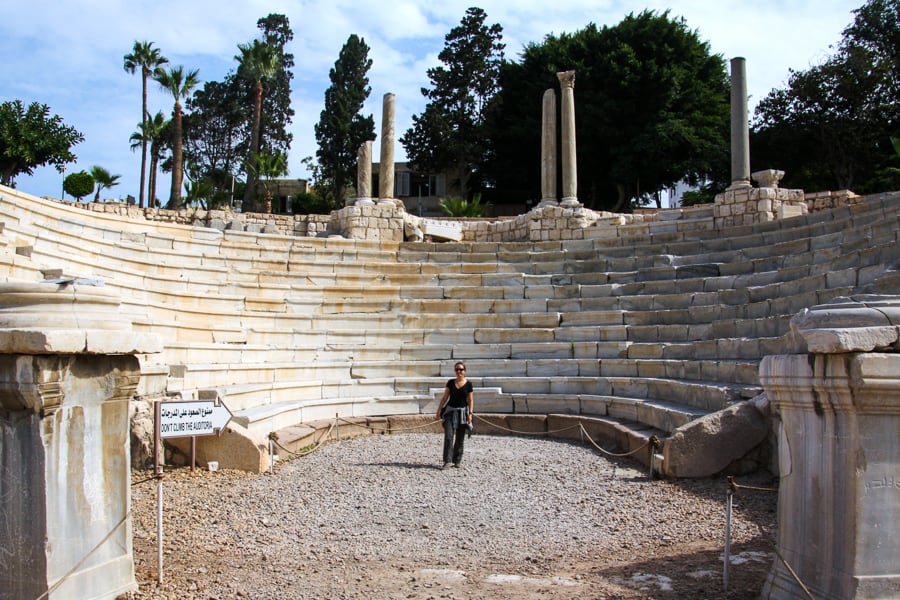
The main things to see in Alexandria include the Catacombs of Kom ash-Shuqqafa, a labyrinth of crypts some 20-metres below street level; the open air museum of Kom el-Dikka, with its well-preserved Roman amphitheatre, villas and mosaics; Pompey’s Pillar and the Serapeum, an ancient Greek temple.
The Bibliotheca Alexandrina, a beautifully-designed modern tribute to the legendary ancient library, is also worth a stop. As is Fort Quaitby, a medieval seaside bastion built with some of the stones from – and sitting atop the platform that once supported – the ancient Pharos lighthouse.
Finish up your visit to Alexandria with a wander along the seaside Corniche before heading back to Cairo. If you choose to stay overnight in Alexandria, aim to get back to Cairo as early as possible tomorrow.
Alternative Days 3-4: Explore the Western Desert
For something completely different to Cairo and Alexandria sightseeing, an alternative option for Days 3 and 4 of this itinerary is this highly-rated, 2-Day Bahariya Oasis Camp and Desert Tour into the Egyptian Sahara.
You’ll visit the Bahariya Oasis, see the extraordinary landscapes of the Black Desert and White Desert National Park, and camp out under the stars.
Epic dunes, amazing formations, sunset and sunrise in the desert – this trip is high on our bucket list of things to do next time we visit Egypt.
If you only have a day to spare, this full-day Tour To El Fayoum will take you into the Western Desert to visit the Fayoum Oasis, local villages, wadis, waterfalls and ancient whale haunts (you read that right!). It also gets great reviews. Another tour we’re very keen to do!
Day 5: Memphis, Saqqara & Dahshur day trip
Highlights: Memphis & Colossal Statue of Ramses II | Red & Bent Pyramids of Dahshur | Necropolis of Saqqara & Step Pyramid of Djoser
Overnight: Sleeper train to Aswan
Morning & Afternoon
Journey south of Cairo today to see the evolution of Egypt’s early pyramids and temples on a day trip to Memphis, Dahshur and Saqqara (you’ll also sometimes see it spelled Sakkara).
We negotiated with a cab driver that we met on one of our trips around the city to ferry us about for half-a-day to these sites. But it’s also very easy to organise half or full-day guided tours from Cairo, like this well-rated guided tour that visits all three sites, which can be shared or private, and customised with other stops.
The Giza pyramids may be Egypt’s most famous, but there are actually dozens of pyramids scattering the desert south towards – and beyond – the ancient city of Memphis, Egypt’s thriving capital for much of the Pharaonic age.
Little remains of ancient Memphis today apart from a small, dusty open-air museum centred around a covered, colossal statue of Ramses II. The sheer scale and stonemasonry skill of this fallen giant make Memphis worth the visit, if not much else.
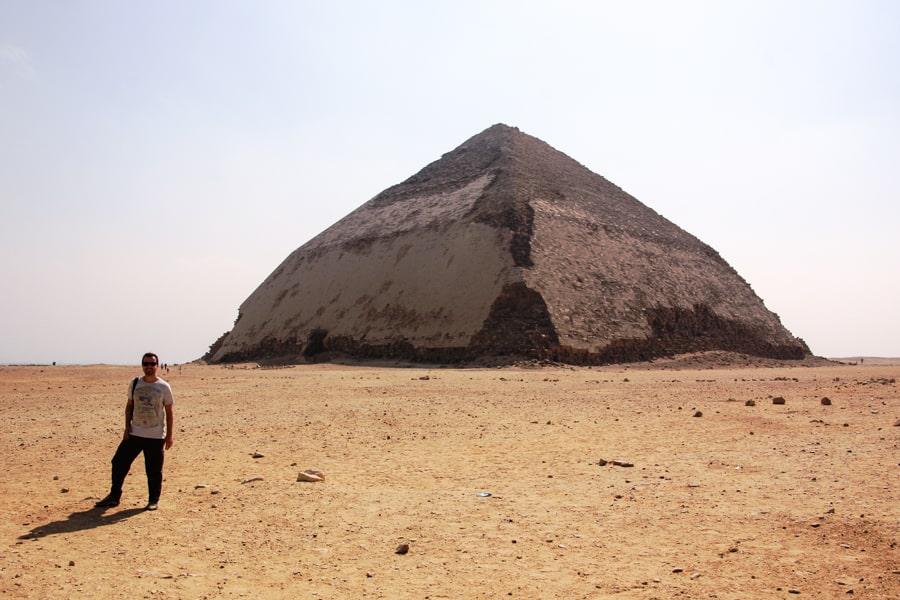
Ten kilometres (6 miles) further south of Memphis are the Red and Bent Pyramids of Dahshur – the oldest ‘true’ pyramid and its practice-run contemporary.
The focus of today’s trip, however, is the extraordinary Necropolis of Saqqara to the west of Memphis. Saqqara was in use as a cemetery for more than three thousand years, and it is vast. You could easily spend the entire day here so either come armed with a guidebook or arrange a guide.
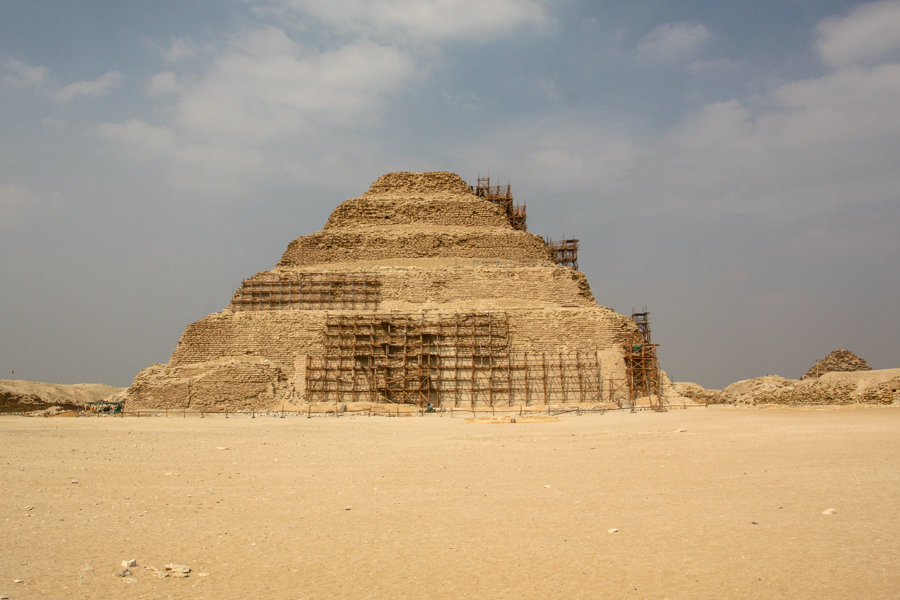
The most obvious highlight of Saqqara is the funerary complex and step pyramid of Djoser. This is Egypt’s very first pyramid and the world’s oldest.
Other must-sees include the excellent Imhotep Museum and, if they’re open, the Pyramids of Unas and Teti, with their pyramid text-inscribed walls; the Serapeum, burial place for the sacred bulls of the Apis cult; and the mastaba tombs of Kagemni and Ti.
Evening
Tonight, farewell Cairo and head south on the overnight train to Aswan.
You could fly this leg but having taken the overnight train twice, we can tell you that it really adds another dimension to your Egypt travel itinerary. Plus you’ll be covering ground while you sleep.
Sleeper trains used to leave Cairo from Ramses Train Station, but now depart from a grand new station in Cairo calledTrains Egypt (Bashtil) Station.
These overnighter trains are run by a private company called Abela Trains. Tickets can be booked online or ahead of time at their ticket offices.
There are a number of evening services that depart between 7pm and 10.30pm. The journey to Aswan takes around 12 to 14 hours, depending on the service.
As this is a very popular method of travel between Cairo and the south, seats and beds can and do fill up quickly. So once you have your Egypt itinerary locked in, book your Cairo to Luxor train tickets in advance.
Itinerary Tip: Sleeper trains do stop in Luxor en route to Aswan, so if you’re wanting to swap the next part of our itinerary around and travel from Luxor south to Aswan, rather than Aswan back up to Luxor, you could get off there instead.
Day 6: Aswan sightseeing
Highlights: Nubian Museum | Elephantine Island & Ruins of Yebu | Sunset Felucca Sail on Nile
Overnight: Aswan
Aswan is Egypt’s most southern city, a frontier town infused with thousands of years of lived history. For much of its past, Aswan was a key trading stop on the African caravan route and, for the ancient rulers of Egypt, a vital military outpost. Aswan also stretches along a lovely sweep of the Nile, making it a great place to relax by – and on – the river.
Assuming there have been no delays, your overnight train will pull into Aswan between 8am and 9am. Head straight to your accommodation, drop off your bags, freshen up and then head out exploring – there are lots of things to see in Aswan.
If you’re planning to do a Nile cruise, work your itinerary so you join your river boat tomorrow. Many cruise itineraries include a guided tour to Aswan’s major sites on the first afternoon. They usually visit the Aswan High Dam, the Temple of Philae and the Unfinished Obelisk.
Therefore, depending on the itinerary of your chosen Nile cruise, we recommend using today to visit some of Aswan’s other important sites. We made our way around Aswan on foot and by taxi.
Itinerary Tip: If your own final itinerary doesn’t include a Nile cruise with visits to the sites above, look to work them into today’s agenda or give an extra day to Aswan so that you can visit them.
There are tours that you can organise with pick-up and drop-off in Aswan if you want to go guided. This well-rated, half-day Aswan highlights tour visits the High Dam, Unfinished Obelisk and Philae, plus the Aswan Nubian Village, in the company of an Egyptologist guide.
Morning – Nubian Museum
We highly recommend a couple of hours at the excellent Nubian Museum. This was a surprise highlight for us. The museum offers a fascinating journey through 6,500 years of history and culture in Nubia, the land that stretches away from Aswan south to Khartoum in Sudan. Nubia gave rise to one of the world’s oldest civilisations and has a major role in Egypt’s ancient story.
The museum also highlights the extraordinary works in the 1960s to save Nubia’s history and monuments ahead of the building of the High Dam and the flooding of the vast area now beneath Lake Nasser – useful insights ahead of your visits to the relocated temples at Philae and Abu Simbel. It’s open 9am to 5pm daily.
Afternoon – Elephantine Island
A cheap and easy public ferry ride from Aswan will take you to Elephantine Island in the middle of the Nile. At the southern end of this large island, you’ll find the Ruins of Yebu, part of the ‘Nubian Monuments’ World Heritage area.
There’s a museum where you can pick up a brochure guide to the ruins. Highlights include the Temples of Khnum and Satet and there’s a viewpoint overlooking the vast area.
Our favourite spot in Yebu is the Nilometre, down by the water near the museum. This was an ancient means of measuring the height of the Nile waters and predicting the annual Nile flood, which in turn helped to set taxes.
Sunset – Felucca on the Nile
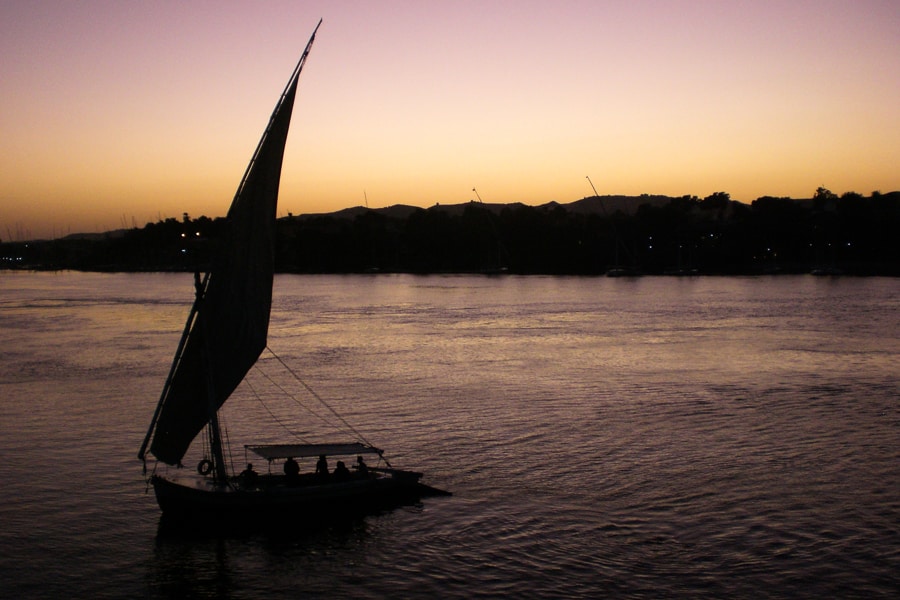
In our opinion, Aswan is the best place in Egypt for a sunset felucca sail on the Nile. There are opportunities to sail on a felucca in Cairo and Luxor as well, but if you do it just once on this 2 week Egypt itinerary, then do it here.
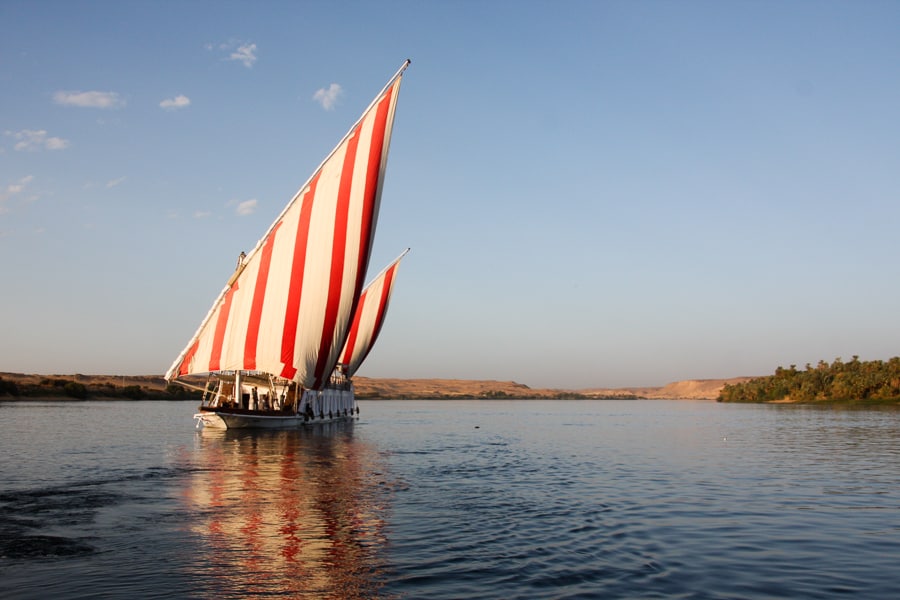
Feluccas are small, traditional boats with canvas sails. You can do multi-day Nile cruises on them but they’re pretty basic – you sleep on deck and they don’t have facilities. In our opinion, far better to enjoy them for a gentle hour or so of sailing.
Having said that, choosing and negotiating a felucca ride on your own can be an experience in itself and you may not end up with quite what you imagined; something we discovered the hard way. Our takeout: avoid the hassle, and arrange a sunset felucca trip through your hotel.
Where to stay in Aswan
In Aswan, you’ll find most accommodation along the Nile Corniche on the east bank of the river, and on Elephantine Island in the middle of the river.
The Nile Corniche is the more convenient of the two for getting out and about and visiting attractions such as the Nubian Museum and the Unfinished Obelisk.
However, Elephantine Island has a more peaceful, low-key vibe, plus you’ll find the World Heritage Ruins of Yebu here. There are also lots of budget accommodation options. There’s a public ferry to and from the island (it’s very cheap and you’ll pay one way only), but you can also arrange a felucca to the island pretty much anywhere along the Corniche.
Wherever you choose, go for something with either a rooftop or riverside area where you can enjoy the breeze and the Nile views Aswan is renowned for.
We stayed at the Obelisk Nile Hotel Aswan, a nice mid-range hotel on the Nile Corniche. We particularly liked the terrace overlooking the Nile, the perfect spot to wind up the day with a drink at sunset. Some other options with great reviews in Aswan include:
- Good value: Airkela Nuba Dool2 – tranquil Nile-side location on Elephantine Island | colourful, comfy rooms, some with balconies | warm and welcoming hospitality | charming, low-key experience
- Spend a bit more: Sofitel Legend Old Cataract – historic character and elegance in a spectacular Nile-side location | spacious rooms and high-end comfort | impeccable service | onsite pools, spa and hammam.
Day 7: Abu Simbel day trip
Highlights: Great Temple of Ramses II & Temple of Hathor at Abu Simbel
Overnight: Aswan
It takes a bit of effort to get there, and you’ll need a whole day, but World Heritage Abu Simbel is right up there with the Pyramids of Giza and Karnak Temple as one of the country’s most monumental sites.
The story of its modern incarnation is equally epic. In our opinion, Abu Simbel is an absolute must for an Egypt 2 week itinerary.
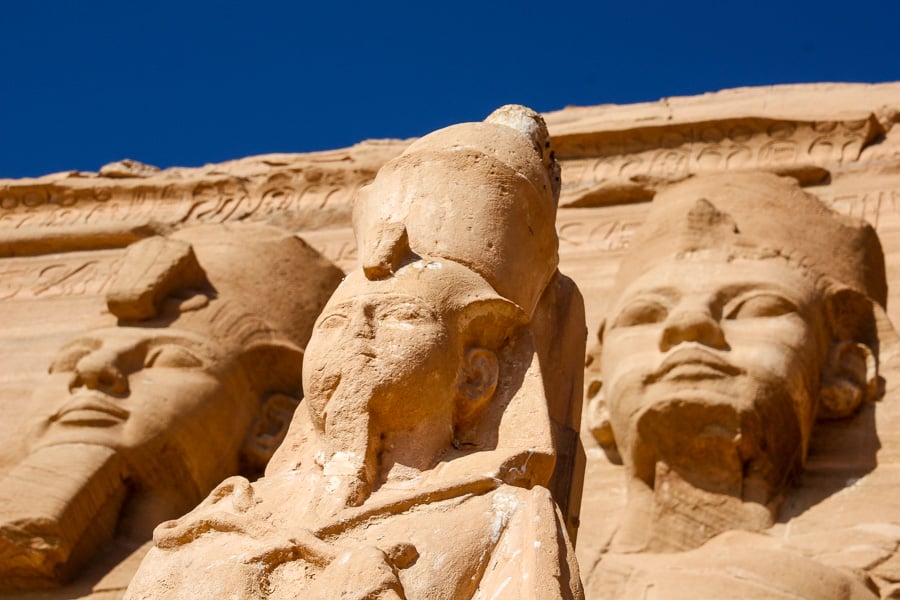
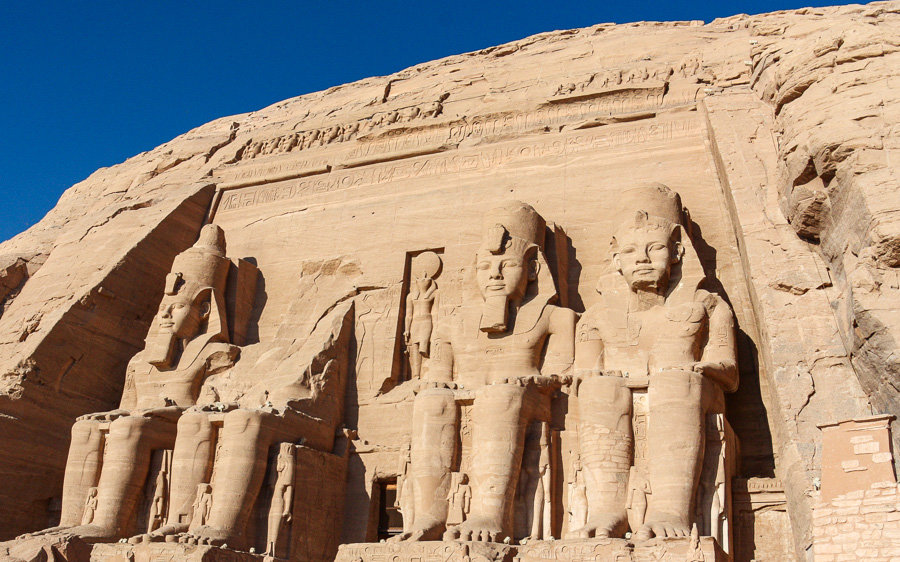
There are two rock-cut temples at Abu Simbel. The largest and most famous is the Great Temple of Ramses II, with its four colossal seated statues of the king keeping eternal watch over the ancient southern borders of his kingdom.
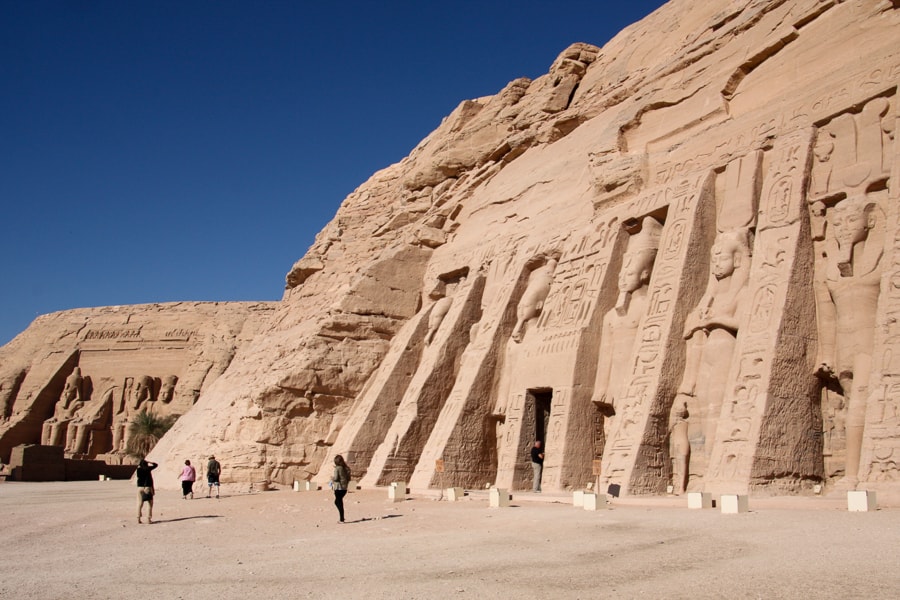
Nearby is the smaller, but no less impressive rock-cut Temple of Hathor, with four huge standing statues of Ramses II and two of his favourite wife, Queen Nefertari.
These 13th-century BC temples are extraordinary in and of themselves. What makes them even more exceptional is the fact that they were moved here, stone by stone, from somewhere else.
Unbelievable as it may seem, under threat of being lost forever with the building of the High Dam and the creation of Lake Nasser in the 1960s, both temples were completely dismantled, relocated and meticulously reassembled on the high ground where they are today. Mind blowing.
You have two options for getting to and from Abu Simbel out of Aswan – by road or by plane.
We travelled to Abu Simbel by road, a journey of close to 300km (186 miles) and up to 3 hours each way. We organised our trip to Abu Simbel through our hotel in Aswan, joining a van with a group of others and travelling as part of a convoy, which is no longer required.
You can also book ahead on a guided tour, like this Abu Simbel Temple Day Trip, which gets solid reviews for its guides and communication, and includes hotel pick-up and drop-off from Aswan.
On arrival, we had about two hours to explore the temple complex before heading back. If travelling by road, you can expect the day to last between 8 and 10 hours.
The alternative is a return flight from Aswan to Abu Simbel. This is a more expensive option but the flight is around 45 minutes each way. Make sure you book a return flight that gives you a couple of hours at the temples. With travel to and from the airport, waiting for flights and time at the temples, this option will take around 7 to 8 hours.
Overview Days 8 to 11: Nile cruise from Aswan to Luxor
Just about everyone planning a trip to Egypt will consider a Nile cruise. You’ll see boats of all sizes voyaging in both directions between Luxor and Aswan, from feluccas and traditional dahabiya boats to large river cruise ships.
Nile cruises generally last from 3 to 7 nights. Boats also travel in both directions, so while this itinerary suggests an Aswan to Luxor route (south to north), you can easily opt for a Luxor to Aswan (north to south) cruise instead and wind up your travels in Aswan.
The type of boat you choose, the length of your trip and the itinerary for that cruise will determine which sites you visit along this stretch of the Nile.
It’s important to note that while the larger cruises will generally always stop en route at the Temples of Kom Ombo and Edfu, they usually spend their first and last nights docked near Luxor and Aswan with other tourist boats.
For this 2 week Egypt itinerary, we’ve included a typical 4 Day/3 Night Nile cruise so that you can experience the magic of travelling on the Nile, while also having enough time to see all the main sites of Cairo, Alexandria and Luxor.
If you’d prefer not to do a Nile cruise, you can substitute the following river cruise leg with overland travel, going by car or train between Aswan and Luxor. Instead of 3 nights on a boat, look to spend an extra night in Aswan and 2 extra nights in Luxor. If you arrange a car and driver for Day 9, you’ll be able to visit the Temples of Kom Ombo and Edfu on the way to Luxor.
Cruising the Nile
I’ve cruised the Nile aboard a large, 100-passenger riverboat over 4 days as part of a longer Egypt tour, and John and I have also travelled together on a small and beautiful, 16-passenger dahabiya boat over 6 days when we travelled the country independently.
Both experiences were memorable, but the dahabiya cruise remains one of our all-time favourite Egypt experiences.
We stopped at places along the Nile where the larger cruise boats could not dock, meaning we saw more off-the-beaten-track ancient sites and much more of the local way of life along the river. We’ve written about this experience in our Sailing the Nile Aboard a Dahabiya post.
Days 8 to 11 of this itinerary are based on a typical 4 Day/3 Night Nile Cruise. What you will see on these days may vary from this, depending on the itinerary of the cruise you choose.
Day 8: Nile cruise – Aswan highlights
Highlights: Aswan High Dam | Unfinished Obelisk | Temple of Philae
Overnight: On board Nile Cruise (or Aswan if you’re overlanding this leg)
If you’re opting for a Nile Cruise, aim to line that up to start today. The typical 4 Day/3 Night itinerary will include guided tours of several ancient sites in and around Aswan, usually the High Dam, Temple of Philae, and the Unfinished Obelisk.
If your Nile cruise doesn’t include a tour of the following sites in Aswan, we would rework Day 6 of this Egypt 2 week itinerary to take in the Temple of Philae and the Unfinished Obelisk as well as the Nubia Museum.
If you’re overlanding this leg rather than joining a Nile cruise, plan to spend an extra night tonight in Aswan and visit the sites below today. You can do this independently or on a guided tour like this well-rated, 6-hour High Dam, Unfinished Obelisk, Philae & Nubian Village tour, which includes hotel pick-up and drop-off in Aswan.
Unfinished Obelisk
Much of the granite used in the temples and statuary of Pharaonic Egypt came from around Aswan, and you’ll see the Unfinished Obelisk in one of these ancient stone quarries.
Work started some 3,500 years ago on this massive pink granite obelisk for the prolific builder and pharoah Queen Hatshepsut. Had it been finished, it would have been the largest obelisk ever created. Alas, a flaw turned up in the stone and it was abandoned.
Temple of Philae
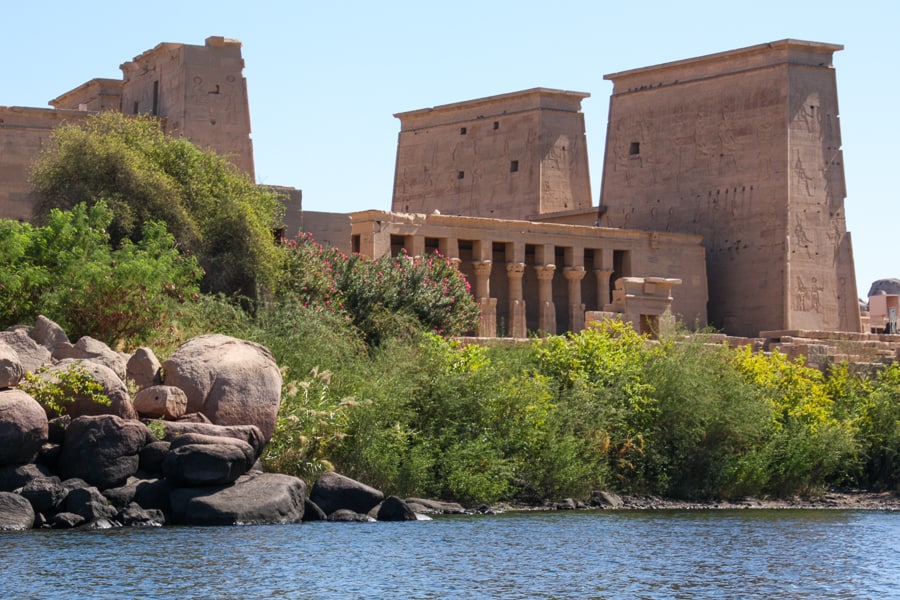
The elegant Temple of Isis at Philae, also part of the Nubian Monuments World Heritage area, originally graced a site near the First Cataract of the Nile.
Like the temples at Abu Simbel, it was completely dismantled and moved 500 metres away to higher ground on Agilkia Island in the 1960s, to protect it from flooding when the Aswan High Dam was built. Approaching the site by boat is a wonderful part of the experience of visiting this picturesque sanctuary.
Day 9: Nile cruise – Temple of Kom Ombo
Highlights: Nile Cruising | Temple of Kom Ombo | Crocodile Museum
Overnight: Onboard Nile cruise (or Luxor if you’re overlanding this leg)
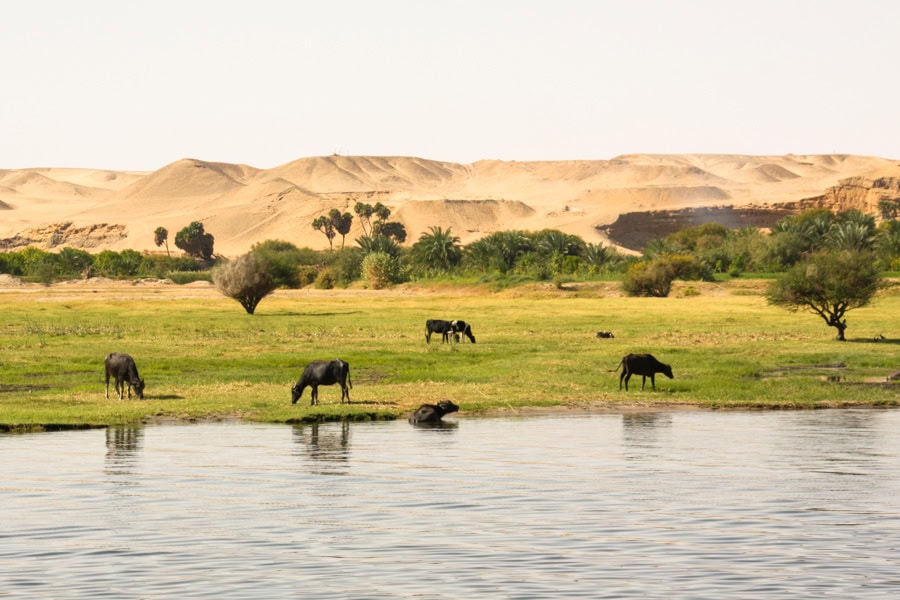
Today, enjoy the timeless greenery-meets-desert scenery edging the Nile as you cruise north towards the temples of Kom Ombo and Edfu, typical stops on most Nile Cruises.
If you’re overlanding instead of cruising this leg, we would recommend arranging a car and driver today and travelling from Aswan to Luxor via the temples at Kom Ombo and Edfu, as well as the Temple of Khnum at Esna.
Temple of Kom Ombo
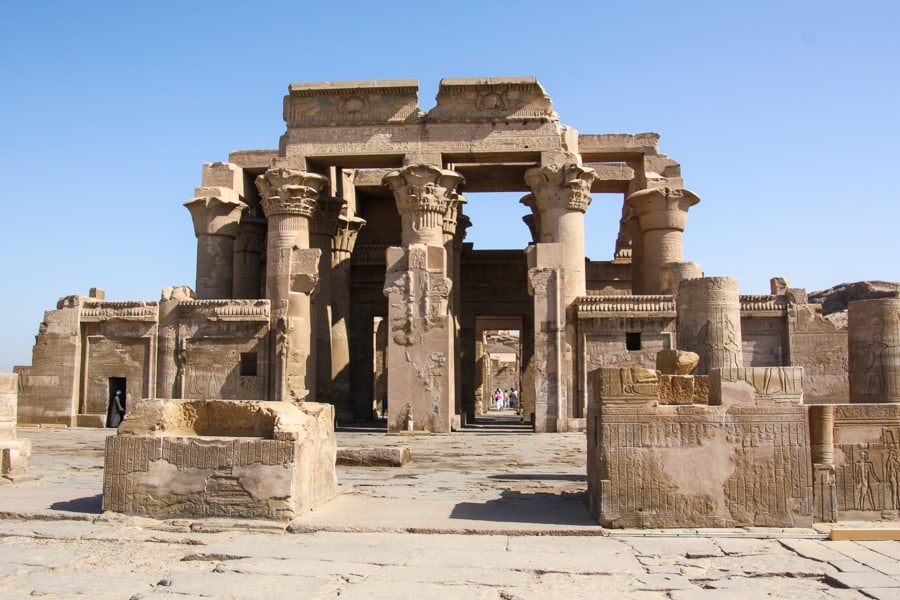
The beautiful Nile-side Kom Ombo is a dual temple dedicated to two gods, with symmetrical twinned sides. The left side is dedicated to the falcon-headed god, Haroeris (Horus the Elder) while the right side is dedicated to the crocodile-headed god, Sobek.
Crocodiles were sacred to Sobek and nearby the temple you’ll find the Crocodile Museum, which has a fascinating collection of mummified reptiles found at the temple.
Day 10: Nile cruise – Temples of Edfu, Karnak & Luxor
Highlights: Nile Cruising | Temple of Edfu | Temples of Karnak | Luxor Temple by Night
Overnight: On Board Nile Cruise (or Luxor if you’re overlanding this leg)
Edfu is another major temple typically included in a Nile Cruise itinerary. Many cruises will sail on to Edfu after Kom Ombo, docking in Edfu overnight so that you can opt to visit this temple early in the morning of your third day cruising.
The Nile cruise then continues on to Luxor, where you’ll spend the afternoon visiting the epic Temples of Karnak and the Temple of Luxor on a guided tour.
If you’ve overlanded instead of Nile cruising, you may have visited Edfu yesterday and will wake up today in Luxor, giving you the whole day to explore the temples of Karnak and Luxor.
Temple of Edfu
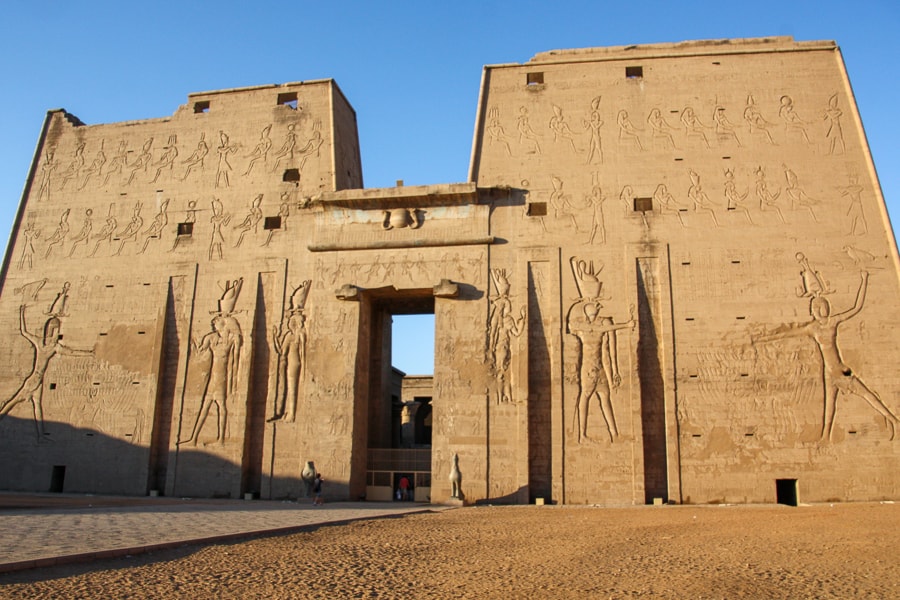
The striking Temple of Horus at Edfu is one of the best preserved temples in Egypt. It was built by the Ptolemaic pharaohs over a 200 year period and completed in 57 BC. Giant reliefs of Pharoah Ptolemy XII smiting his enemies ornament the 36-metre-high entrance pylon.
Temples of Karnak
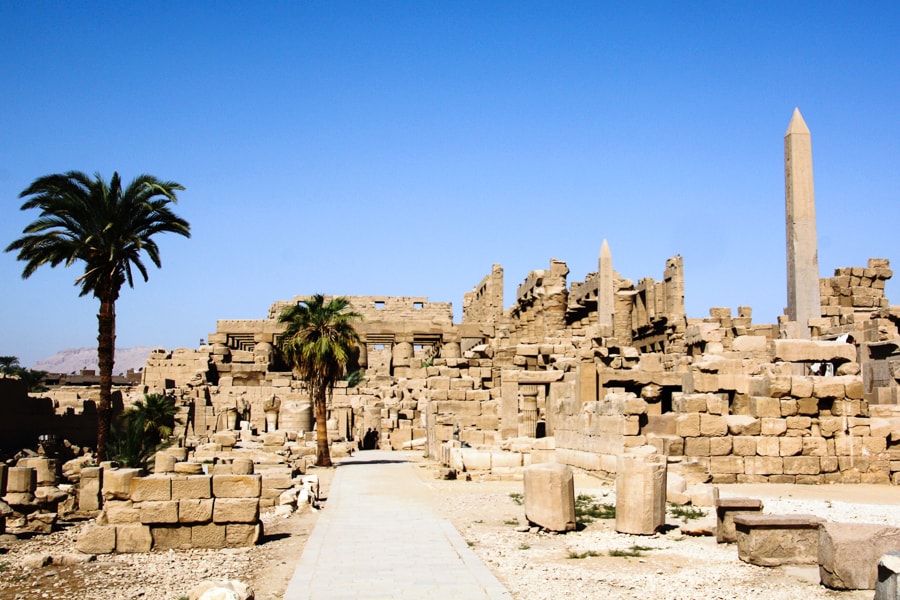
The World Heritage site of Karnak is one of our own top five Egypt highlights. Built and expanded on over a thousand years, and centred around the biggest religious structure ever built – the Temple of Amun-Ra – Karnak was once Egypt’s most important place of worship.
Today, it’s a vast historical treasure trove of temples, courts, halls, pylons, decorated columns, statues, obelisks, and an epic avenue of sphinxes.
You could spend days wandering here. We had a good half-day and we barely scratched the surface. We considered exploring ourselves, but believe us when we say a guided tour makes all the difference in giving you a meaningful introduction to this enormous time capsule. Our guide, who we engaged at the site, also pointed out myriad hidden gems we’d have never spotted on our own.
A guided visit to Karnak is usually included in typical 4-day Nile Cruise tours. If you want more time here, consider coming back on one of the extra days we’ve given over to Luxor in our 2 week Egypt itinerary. Tickets for Karnak can be bought at the site.
Luxor Temple
Also located on Luxor’s East Bank is the elegant Luxor Temple, a New Kingdom sanctuary built around 3,400 years ago. Some of the big hitters of ancient Egypt left their stamp here, like Amenhotep III and Ramses II.
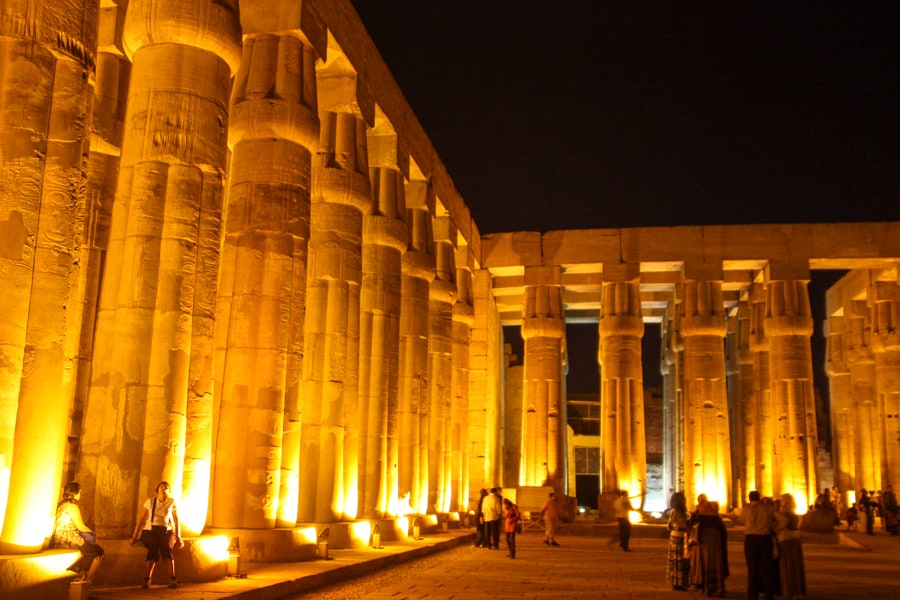
The young Tutankhamun also had a significant role in the decoration of the striking Great Colonnade Hall, with its 28 beautiful lotus-shaped columns.
The temple is particularly ambient at night, when the site is all lit up (there’s a sound and light show here too). You can buy tickets for Luxor Temple at the site.
Day 11: Nile cruise – Valley of the Kings & Luxor
Highlights: Valley of the Kings | Temple of Hatshepsut
Overnight: Luxor
A typical 4-day Nile cruise will finish today after breakfast, but will often include a guided day trip to Luxor’s West Bank, taking in the following sites.
If you haven’t done a Nile cruise, this will be your second full day in Luxor and we recommend you also visit the sites below.
Valley of the Kings
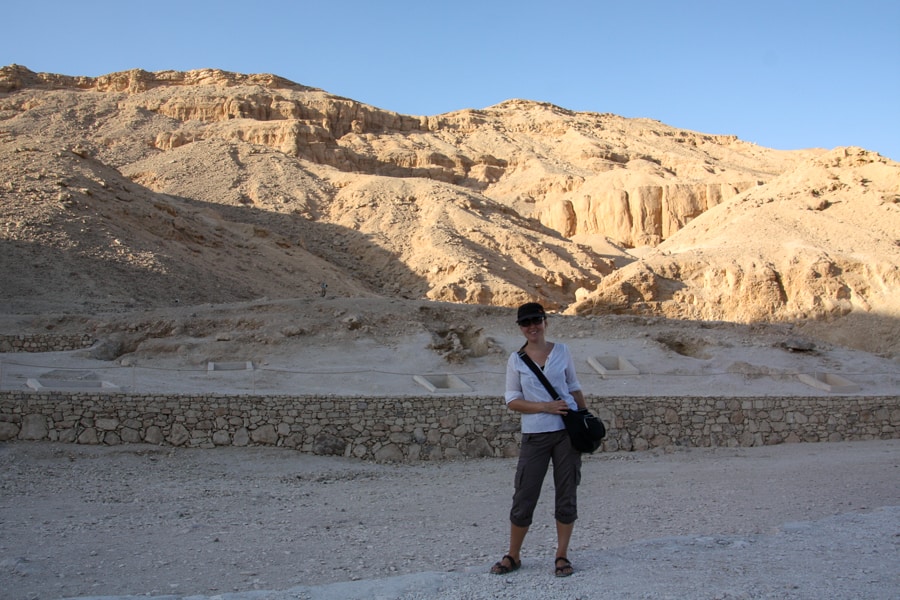
Barren, dusty and hot on the surface, it’s hard to imagine the extraordinary wealth of ancient art (and on rare occasions treasure) that still lies beneath the ground in the labyrinthine tombs of the Valley of the Kings.
This is where the pharaohs of Egypt’s New Kingdom built their lavish portals to the afterlife. More than 65 tombs have been uncovered. While most were plundered of their rich grave goods in antiquity, those that can be visited today are beautifully decorated and still vivid with colour.
Tickets for the Valley of the Kings include entry to three tombs from a list of those open at the time you visit.
There are a couple of other tombs that can also be visited with an extra ticket and fee for each. These include the tombs of Tutankhamen (KV62), Seti I (KV17) and Ramesses V and VI (KV9). We highly recommend spending the extra money to visit KV17 and/or KV9; these were our favourite tombs in the valley.
Mortuary Temple of Queen Hatshepsut
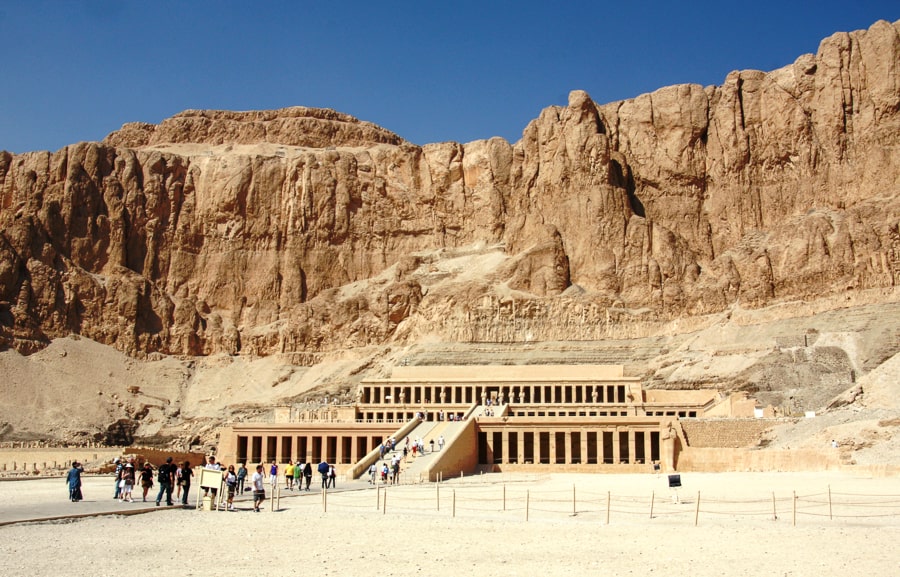
Tucked into the base of the soaring cliffs at Deir el-Bahri, the huge three-tiered Mortuary Temple of Hatshepsut looks almost like it was built recently.
At 3,500 years old, it definitely wasn’t, but Egypt’s longest reigning female pharoah did make sure her shrine took an entirely new direction in temple building. It’s a fascinating site, but can be very, very hot. If visiting independently, you can buy your entry ticket at the site.
Where to stay in Luxor
Most visitors to Luxor will stay in the town on the East Bank of the Nile. There’s a broader range of accommodation options, the Temples of Karnak and Luxor are on this side, it’s the transport hub, and it’s where you’ll find the majority of services and amenities.
There are also plenty of places to stay on the quieter, greener, more atmospheric West Bank, which is where you’ll find the Valley of the Kings, Valley of the Queens, the Temple of Hatshepsut and much more. This is the side we’ve stayed on and we loved the feeling of being in the midst of a place so ancient.
You’ll find accommodation at various price points in Luxor; just bear in mind that this is a major destination for tourists so it pays to book ahead, particularly if you plan to visit in peak season. Some options for Luxor with excellent reviews include:
- Budget (West Bank): Villa Kaslan Apartments – spacious, spotless apartments | outstanding hospitality from the hosts and team | tranquil garden setting with a pool | convenient onsite restaurant
- Mid-range (West Bank): New Memnon Hotel – excellent location just steps from the Colossi of Memnon | comfy, clean rooms | warm and helpful staff | rooftop terrace, quiet garden and pool | also has an onsite restaurant
- Indulge (East Bank): Pavillon Winter Luxor – ideally located near the Luxor Temple | spacious, comfortable rooms, some with balconies | warm, efficient service | lovely gardens and pool on same grounds as Sofitel Winter Palace.
Days 12 & 13: Luxor sightseeing
Highlights: Colossi of Memnon | Valley of the Queens | Workmen’s Village at Deir el-Medina | Tombs of the Nobles | Ramesseum | Temple of Medinet Habu
Overnight (both nights): Luxor
In our view, just 2 days in Luxor is not enough. This is ancient Thebes, the thriving heartland of the New Kingdom for many hundreds of years. Kings and queens left their enduring legacy in what is today one of the most extraordinary epicentres of ancient temples and tombs in the world.
In fact, there’s so much to see in Luxor that we recommend devoting an extra couple of days – the final days of your 2 weeks in Egypt – to this extraordinary place.
You could use these two days to head back to Karnak for a morning or spend another couple of hours marvelling at more tombs in the Valley of the Kings. On the East Bank, you’ll also find the small Mummification Museum along the Luxor Corniche.
There are also plenty of other sites on Luxor’s West Bank that you might consider visiting over the next two days. We recommend the sites below.
Itinerary Tip: Tickets are required for most sites on the West Bank. You can buy tickets for the Valley of the Kings, Valley of the Queens and the Temple of Hatshepsut at each of those sites.
For all other ticketed sites, you’ll need to buy your tickets in advance from the West Bank Ticket Office (also called the Antiquities Inspectorate Ticket Office), which is just down the road beyond the Colossi of Memnon.
Colossi of Memnon
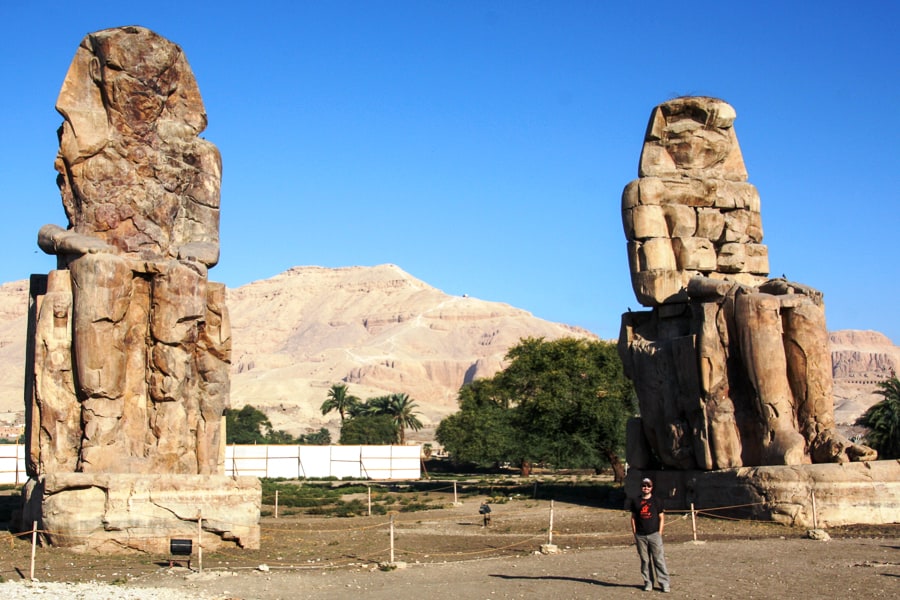
It’s possible you’ll stop by these two forlorn-looking colossal statues during your Nile Cruise guided tour to Luxor’s West Bank. If not, they’re worth a quick hello.
Once adorning a temple complex thought to be even larger than Karnak, the eroded twin giants – which depict the 14th-century BC pharaoh Amenhotep III – are all that remains of his mortuary temple today. Entry is free.
Valley of the Queens
While most visitors to Luxor make a beeline for the Valley of the Kings, in the nearby Valley of the Queens there are more than 90 other tombs that once served as the final resting place for the queens, princesses and high-ranking officials of the New Kingdom.
Tickets are bought at the Valley of the Queens ticket office and three tombs are included in the general entry ticket.
The star of the show, however, is the Tomb of Nefertari (QV66), which isn’t included in the general ticket and costs quite a bit extra. For good reason too. This is considered one of the most beautiful tombs in the country, if not the most beautiful.
Nefertari (you’ll recognise her from Abu Simbel) was Ramses II’s most beloved wife and her tomb is an exquisite and vividly-decorated love letter to her. It looks like it was painted yesterday and is absolutely worth paying extra to see.
There’s a daily limit on numbers for Nefertari’s tomb so if you’re visiting independently, head there first thing in the morning to up your chances of getting a ticket for this tomb.
Travel Tip: Like the Pyramids of Giza, Luxor and its sites are notorious for the level of hassle tourists can experience from touts, drivers, vendors, site ‘guardians’ and others.
As with the pyramids, the best thing you can do is be ready for it and be polite but firm in your position. Don’t be pressured and avoid making loose commitments like ‘maybe later’ or ‘I’ll think about it’ unless that’s actually the case.
We also found it useful to carry small denomination notes and loose change as baksheesh for those who do provide a good or helpful service.
Workmen’s Village at Deir el-Medina
If you’re visiting the Valley of the Queens, we also suggest you swing by the Workmen’s Village at Deir el-Medina. This is where the labourers and artisans who worked in the valleys lived.
There are four tombs you can visit, though not all are open at the same time. They are the tombs of Sennedjem, Irynefer, Inherka and Peshedu (the last costs extra). While these tombs are small, they more than make up for their size with their decoration and the glimpse they give into the lives of ordinary ancient Egyptians.
Tickets can be bought at the West Bank Ticket Office. Of the three tombs we visited, the Tomb of Sennedjem was our favourite. The exceptional artwork here convinced us this master artist left some of his best work for his own final resting place.
Tombs of the Nobles
Between Deir el-Medina and the Temple of Hatshepsut, you’ll find the Tombs of the Nobles. Clustered into groups in the rocky hillside, these are the tombs of governors, administrators and other high-ranking officials of ancient Thebes. It’s less straightforward to visit these tombs without a guide, though if you do, you’re likely to have the (insistent) assistance of a site guardian in return for a bit of baksheesh.
You’ll need to choose which tomb clusters you want to see in advance when you purchase your tickets at the West Bank Ticket Office.
We chose the tombs of Sennofer and Rekhmire, both beautifully adorned with vivid scenes from their daily lives (we felt a particular connection with Sennofer who covered the ceiling of his tomb in grapevines). We’ve also heard the tomb of Ramose is outstanding.
Ramesseum
Near the Tombs of the Nobles lies the hulking ruin of the Ramesseum, a great mortuary temple built by Ramses II to ensure his everlasting veneration.
Despite suffering the ravages of time, it’s still an impressive monument, especially when you come face to face with the colossal head and shoulder of the self-appointed god-king lying in the sand. Entry for this temple is purchased at the West Bank Ticket Office.
Medinet Habu
We could see the towering entrance pylon of this less-visited temple complex from the roof terrace of our accommodation on Luxor’s West Bank. It turned out to be another of our top Egypt highlights.
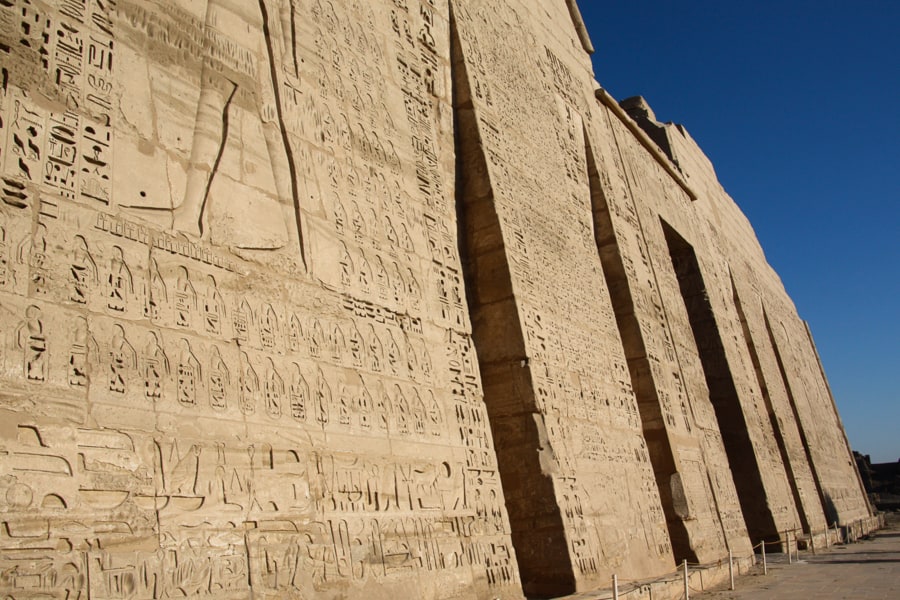
Huge mudbrick walls surround a complex of courtyards and halls, but the centrepiece of Medinet Habu is the great Temple of Amun.
The walls and columns here are absolutely covered in beautiful, well-preserved reliefs and hieroglyphs, showing scenes and telling stories of military exploits, religious ceremonies, and rituals that took place under the rule of Ramses III. Entry tickets can be purchased from the West Bank Ticket Office.
Visit the epic temples of Dendera & Abydos
If you’re looking for something else to do, or you have an extra day in Luxor and the stamina for one last big day trip, consider visiting the superb temples of Dendera and Abydos, to the north.
These are two of the most important temples in the country. Dendera’s Temple of Hathor is also considered one of Egypt’s most beautiful temples.
While you can visit independently by train or taxi, trying to do both temples in a day would be time-consuming and a bit of a hassle. The most straightforward means of visiting both is to organise a day tour from Luxor.
This highly-rated Private Dendera & Abydos Temple Tour is an all-day affair, with around two hours of driving each way and two hours at each site, and it isn’t budget, but by all accounts it’s definitely worth it.
These temples are definitely on our bucket list for a future visit!
Day 14: Depart Luxor
Our self-guided 2 week Egypt itinerary ends today in Luxor.
If you have time in the morning, you could wind up this epic itinerary for Egypt with a sunrise hot air balloon ride. While we haven’t done this in Luxor, we have ballooned over ancient sites and we reckon this would be beautiful, serene way to get a feel for the ancient capital of Thebes from on high.
This is a pre-dawn start so you could be up and back before check-out time, but do confirm how long the whole experience will take when you book.
From Luxor, you can take a day train or a bus back to Cairo (a journey of around 10 hours). Or you can fly out of Luxor to Cairo and onwards home. Luxor Airport also connects with various other Egyptian, Middle Eastern and European destinations.
Time to start planning your return!
Useful Travel Resources
Stays: We use Booking.com for wide choice of accommodation + Genius perks.
Airport Transfer: Welcome Pickups takes the hassle out of arriving in a new city and getting to your stay.
eSIMs: Airalo for on-the-go access to data in Egypt.
Tours: GetYourGuide to find top local tours, activities and experiences around Egypt.
We hope you’ve found our self-guided Egypt itinerary helpful! If you have any questions about Egypt trip planning, drop us a message below!
For more awesome itineraries and experiences around the region, head to our Middle East page.
Hi, could you give an idea on the cost of the trip?
Thank you looks wonderfull!
Hi Elina, many thanks for your message. Trip costs for Egypt will really come down to personal travel preferences and budget. Our blog post outlines a suggested itinerary to help people plan and arrange their own independent, self-guided trip through the country. So daily costs would ultimately vary according to personal interests, accommodation and eating choices, whether you join local tours or arrange local guides, how you get around, which sites and museums you opt to visit, what kind of Nile cruise you wanted to do, etc.
We personally tend to travel budget/lower mid-range and for our travels through Egypt, we allocated around US$200 per day as a couple, covering accommodation, food, getting around, and some entry fees. That didn’t include experiences like the trip to Abu Simbel or the Nile cruise – we always have a separate budget for experiences, which we work out in advance after researching everything we want to do.
As an indication of costs in 2025, entry to the Pyramids of Giza is around US$15 for foreigners (it’s extra to go into a pyramid), while the newly opened Great Egyptian Museum is around US$30pp. A half-day trip might cost anywhere from US$50-100 depending on what’s involved/included. A first class train ticket from Cairo to Alexandria is around US$8-12, while the overnight train from Cairo to Aswan is around US$100pp in a double cabin. Getting around in a taxi will usually cost just a couple of dollars, depending on distance and traffic. Nile cruises vary hugely in price, ranging from a couple hundred dollars for a basic cruise over a couple of days to many thousands of dollars for a luxury dahabiya cruise.
I have also travelled through Egypt on a guided tour, with basic accommodation, most meals, transport and a number of activities/entry fees included (and many more optional add-ons). That was a while ago but the same trip today works out at around US$200 per day per person. Of course, tour costs can also vary significantly depending on the kind of trip and what’s included.
Egypt is really an extraordinary destination – we hope you get to travel there.
All the best!