

Planning a Komodo diving trip? Discover what it’s really like to dive with mantas in Komodo National Park. From the best dive sites to practical insights, underwater conditions and planning tips – our guide to diving Komodo will help you decide if this is the right diving adventure for you.
Before we arrived, we’d heard plenty of stories about diving Komodo. Ripping currents, unpredictable conditions, and manta encounters that bordered on spiritual experiences. But nothing really prepared us for the reality of diving in this incredible corner of Indonesia.
Located just west of the island of Flores, 26 islands and their surrounding waters make up Komodo National Park. Covering around 1,700 kilometres of protected land and sea, this incredibly diverse park plays host to more than a thousand species of fish, 260 species of coral and around 70 species of sponge.
And while the gentle reef mantas rightly top the ‘must see’ list for many divers, the chance to encounter dugongs, dolphins, turtles and a variety of sharks, including the elusive whale shark, make this one of the best diving destinations on the planet.
While it wasn’t our turn for whale sharks (despite one being spotted just days earlier), and the resident dugongs had other places to be during our visit, our 5 day cruise and 15 dives around the pristine reefs of Komodo’s central and northern stretches left us with no shortage of highlights.
So, if you’re wondering whether diving Komodo is for you, read on – as we provide an overview of what to expect, and how to best plan a trip to this incredible national park.
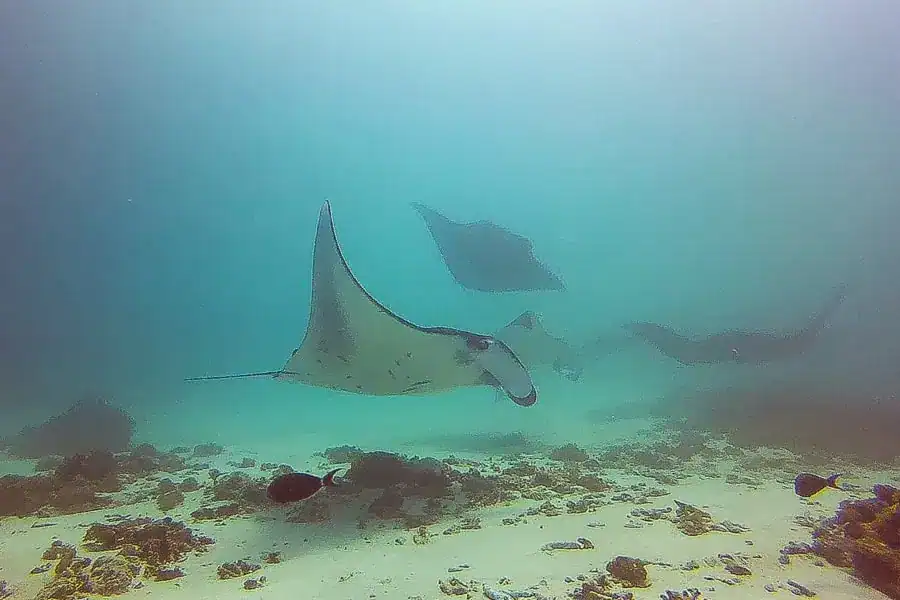
What’s in this post?
What to Expect from Diving Komodo
– Our Komodo diving experience
– Our favourite Komodo diving sites
– Things to consider when diving Komodo
– Reality check – is diving Komodo right for you?
– Who we dived Komodo with and why
Planning a Komodo Scuba Diving Trip
– Best time to dive Komodo
– Getting to Komodo National Park
– Where to stay in Labuan Bajo
– Final thoughts on diving Komodo
Useful Travel Resources
This post contains affiliate links. If you choose to buy through these links we may earn a small commission at no extra cost to you, which helps us to keep Two For The World running. Many thanks for your support!
Komodo Diving – Snapshot
Where: Komodo National Park, Indonesia (gateway town: Labuan Bajo, Flores).
Underwater experience: Current-driven reefs, drifts, pinnacles, channels, manta sites, macro pockets.
What surprised us: Conditions can change fast between sites; surface warmth doesn’t always match what you feel at depth.
Trip styles: Multi-day Komodo liveaboards or day trips from Labuan Bajo.
Komodo diving log: Sebayur Kecil, Mawan (2 dives), Siaba Besa (2 dives), Batu Bolong, Manta Point, The Passage, Gili Lawa Darat Bay, The Cauldron, Castle Rock, Crystal Rock, Tatawa Besar, Pengah Kecil and Wainilu.
What to Expect from Diving Komodo
For us, diving Komodo National Park was one of the most challenging and diverse dive trips we’ve ever been on. Conditions can change noticeably between sites, with currents, temperatures, marine life and the underwater landscape creating the kind of variety most divers dream of.
On our Komodo tour, dives ranged from relaxed, easy-going, shallow macro dives to highly challenging, deeper dives in current, where preparation was more intense, and awareness of our positioning and buoyancy control were critical.
That variability is part of what defines Komodo. The same environmental factors that make diving here so exhilarating and challenging, are critical to supporting the wonderful marine ecosystems that makes this a top diving destination.
Ultimately, it’s the kind of place that provides the full mix of experiences but – like many dive destinations – needs to be approached flexibly.
Try to avoid the pitfall of planning your trip (and expectations) around a manta moment, and instead go with the flow, expect the unexpected, and be prepared for the reality that nature doesn’t run to a tour schedule.
Our Komodo diving experience
Over the course of our 5 day Komodo scuba diving trip with Wunderpus, we dived 15 times across a diverse range of sites, from shallow macro dives to intense drifts, sloping reefs, stunning coral walls, manta processions, and submerged pinnacles raging with currents and underwater life.
Our first exploration of the relatively protected bay at Sebayur Kecil was the perfect introduction to diving Komodo. Healthy coral and abundant fish life was enough to distract us while our guide gave our dive skills the once over. It also allowed us to adjust our weights and iron out a few issues with a dive computer before we got into more serious waters.
After that, our itinerary included dives at Mawan, Siaba Besar, Batu Bolong, Manta Point, The Passage, Gili Lawa Darat Bay, The Cauldron, Castle Rock, Crystal Rock, Tatawa Besar, Pengah Kecil and Wainilu.
Every dive was different, and every single one left us with huge smiles as our heads popped back above the surface. Except maybe Castle Rock, where I forgot to close our underwater iPhone case and killed Dan’s mobile!
Even with that rather expensive mistake, it turned out to be the trip of a lifetime.
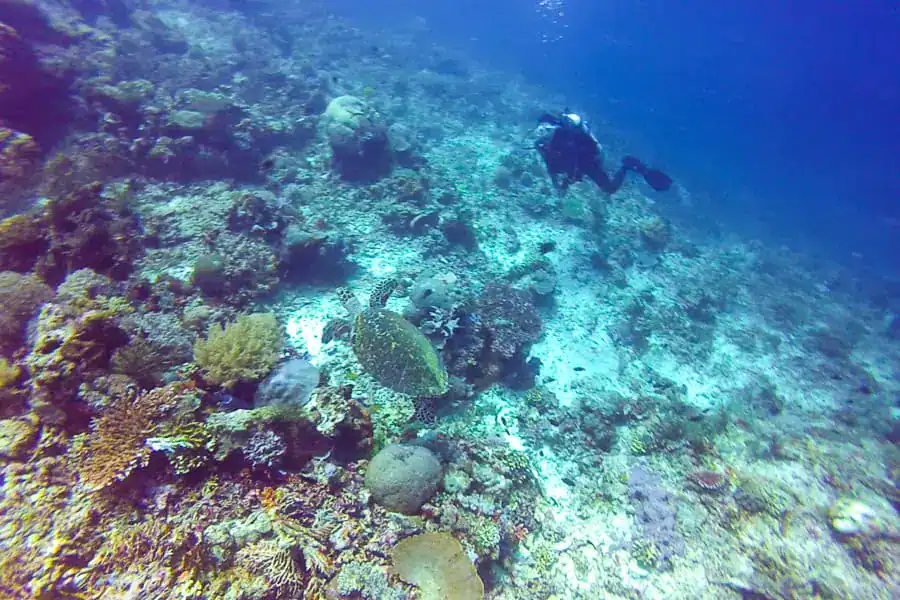
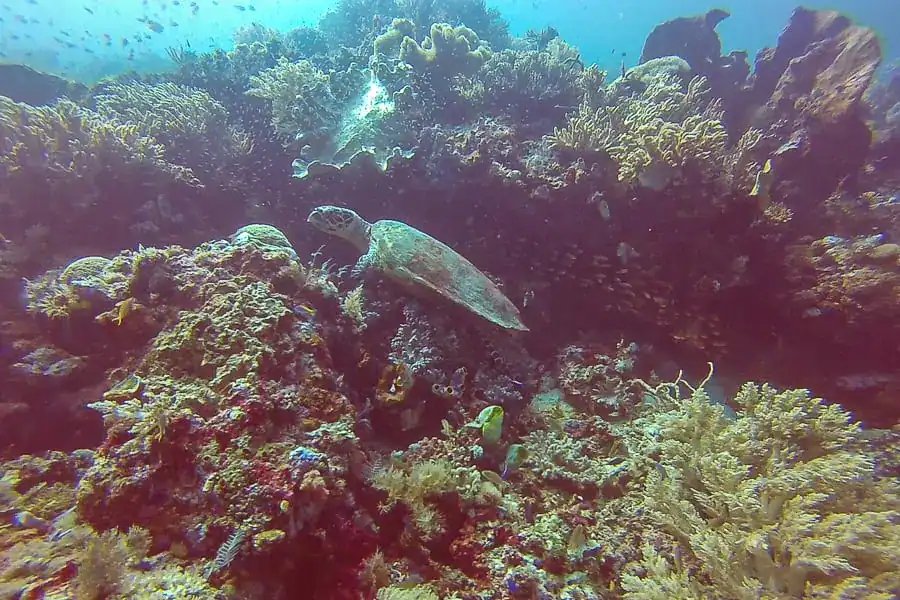
Favourite moments for me include searching for nocturnal critters by torchlight in the company of a couple of hungry lionfish at Siaba Besar, encounters with white-tipped reef sharks and a resting hawksbill turtle at The Passage, and going with the flow, quite literally, during a lovely drift dive along a gently sloping spectacular reef at Tatawa Besar.
But the dives that really took our breath away are outlined in a little more detail below.
Our favourite Komodo diving sites
Mawan
Our first dive at Mawan came with the anticipation of potential manta encounters, and a quick reminder that nature does what nature wants, especially when there are a bunch of day boats on site.
Even without mantas turning up, this dive was anything but disappointing, with excellent visibility, stacks of reef fish, beautiful coral, and encounters with an eagle ray and mantis shrimp.
Fortunately, we had a second opportunity to dive here a few days later, and on that occasion, we were lucky enough to get the dream Komodo diving experience.
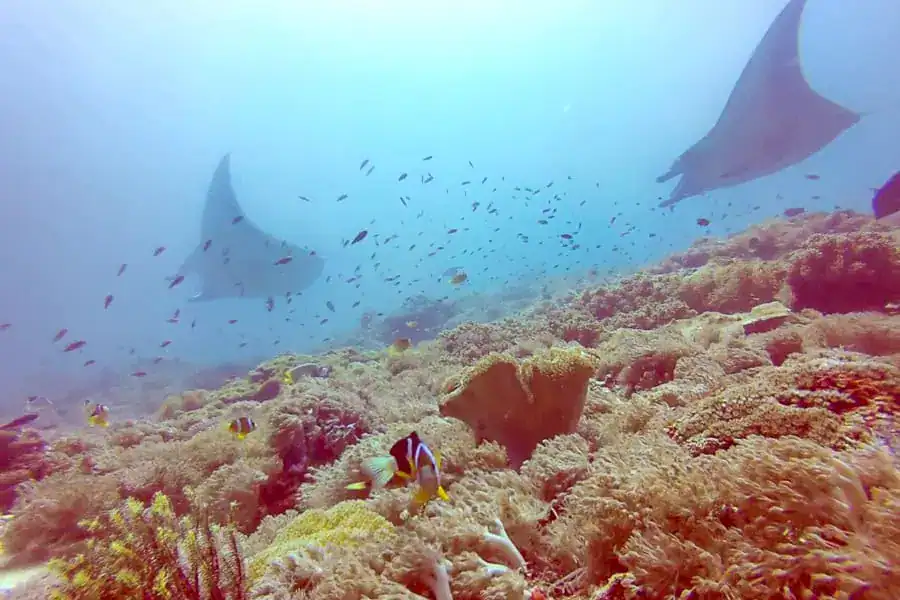
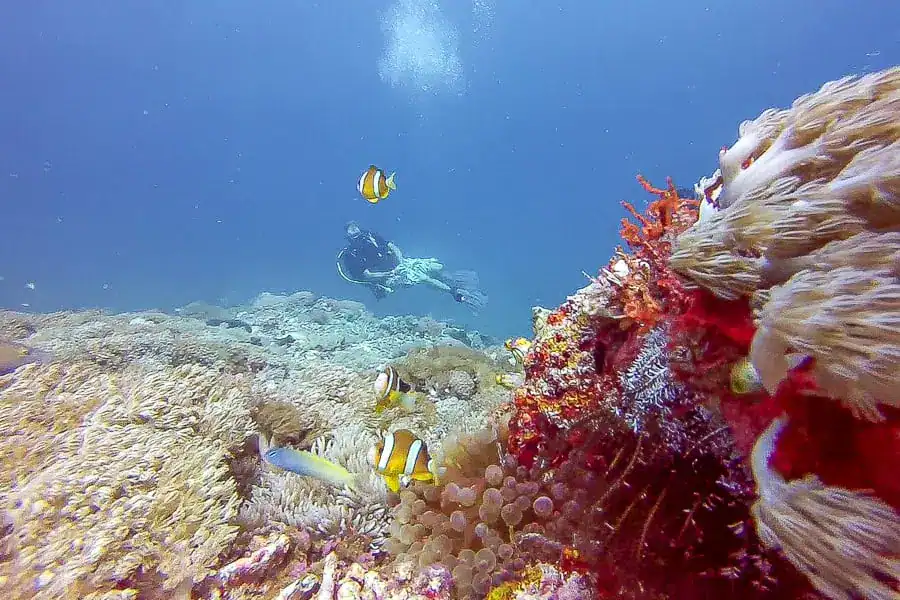
We didn’t think it could get much better than coming across a manta cleaning station with several large mantas swooping around us, but we ended up having mantas for company for most of the dive, culminating in a ‘manta love train’ where an in-demand female led a convoy of several males in a dance just a few yards from our group.
There are hardly words to describe the experience, just magic!
Batu Bolong
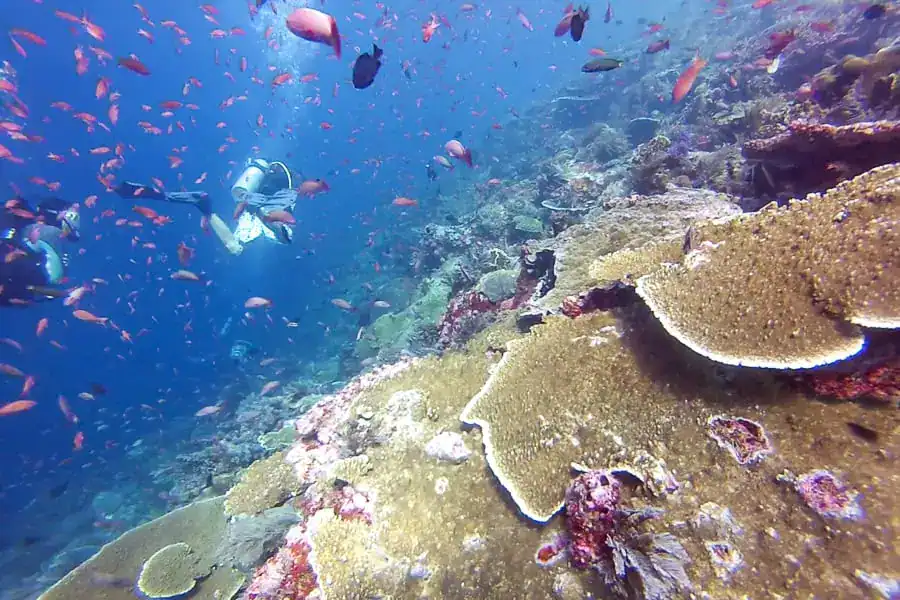
Widely considered to be one of Komodo’s best dive sites, Batu Bolong’s submerged reef rises steeply from the deep, climbing up the slopes of a submerged pinnacle swirling with marine life.
Descending here felt like entering “fish soup” with dense schools of reef fish moving constantly over colourful, healthy coral while large napoleon wrasse cruised past.
This was also where we had our first shark encounter of the trip, reminding us that it’s always worth keeping an eye on the big blue on these deeper dives. We finished the dive surrounded by swirling bait balls and exhilarated by Komodo at its vivid best.
Manta Point
When most people think of Komodo diving, they’re likely thinking about Manta Point, perhaps the most anticipated dive site on any Komodo trip.
It’s not the most beautiful dive, with a broad, unremarkable sandy seabed strewn with low patches of rocky reef, and a current that sweeps you through at quite a clip. But spotting manta early in the dive briefly raised our expectations, before it slipped away, leaving us wondering whether that fleeting moment would be our only sighting.
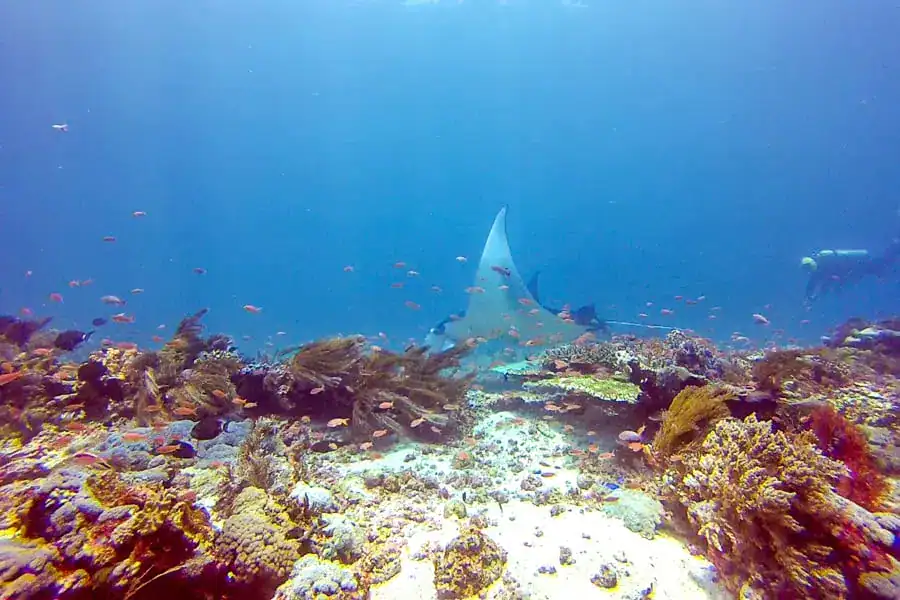
Luckily, just when it was looking like that may well be the case, we drifted into our second manta nirvana. Several mantas had gathered at a cleaning station near the sea floor. Our group kicked into gear, hooking onto rocks and taking hold of buddys’ fins in the current as we settled in to watch.
Despite the intense current, it was one of the best dive experiences we’ve ever had, and we’ll long remember that group of huge mantas just feet away, gracefully circling, oblivious to the torrent – a truly iconic Komodo diving moment.
The Cauldron
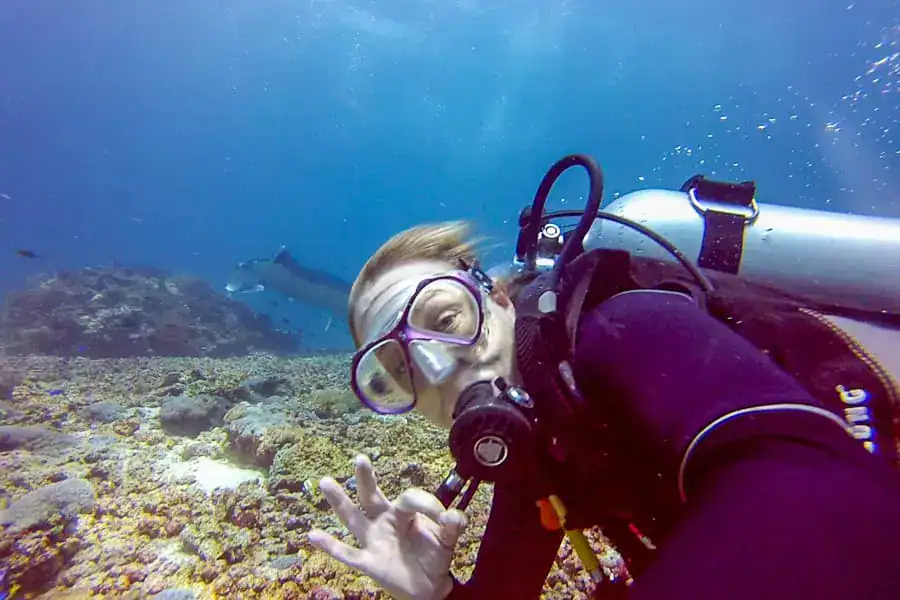
Even before we got into the water, we were a little intimidated by The Cauldron. Especially when our guide told us the currents we’d seen up to that point were pretty mild in comparison to what we were about to experience.
This thrilling Komodo dive explores a natural channel between islands shaped by the tides. We dropped down to a sandy bottom dotted with stingrays before spending some time exploring the large, bowl-like basin of The Cauldron, scattered with coral bommies.
After this, the adrenaline ramped up a few notches as we followed our guide through a narrow gap known as the Shotgun. Here, the current literally volleyed us through a gap in the Cauldron before the current slowed a touch, allowing us to ease into a fast-paced drift over a rubbly landscape interspersed with patches of decent coral.
Eventually we found ourselves in calmer waters, exploring a lovely sloping reef as the adrenaline wore off and we got to enjoy the final minutes of the dive at a relaxed pace before surfacing.
Castle Rock and Crystal Rock
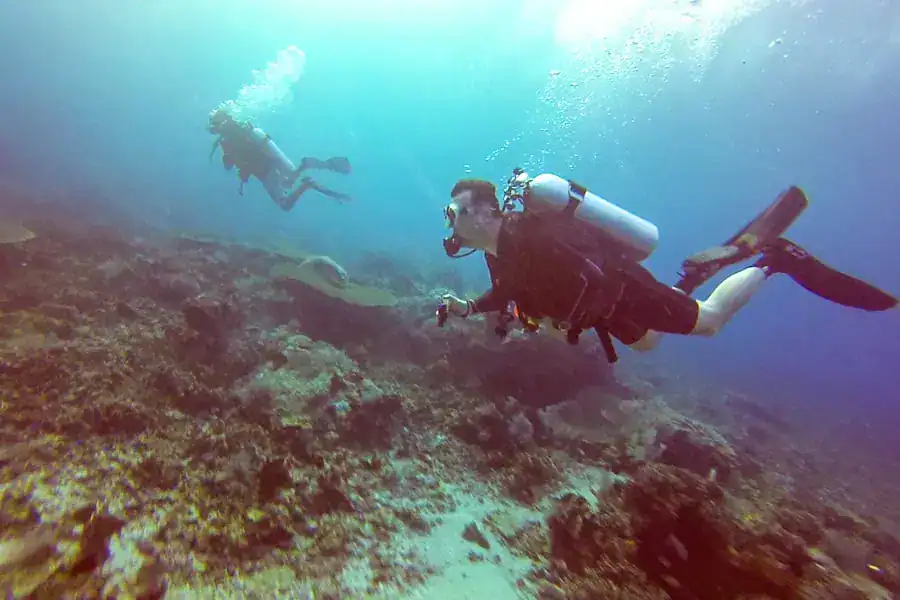
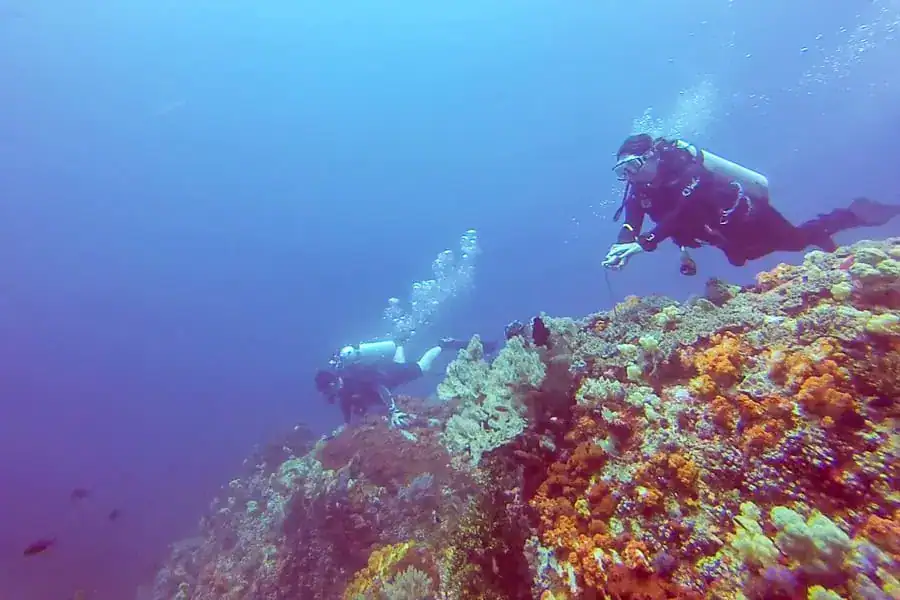
Among the best of Komodo’s submerged pinnacle dives, both Castle Rock, and nearby Crystal Rock are well known for strong currents and abundant marine life. Our dives here began with negative entries before descending quickly on the protected side of the rocks.
Deceptively calm at this point, we were able to enjoy the pristine, colourful reefs that adorn the pinnacle slopes surrounded by huge schools of fish.
But the biggest thrill on both sites comes when you leave the sheltered slopes to find a stable vantage point on the edge of the blue abyss.
Here, closer to the relentless current, you hook in and enjoy the show: admiring schooling snapper and fusiliers, giant trevally, napoleon wrasse, big eyed trevally, and the occasional white tipped reef shark cruising around the rock.
Wainilu
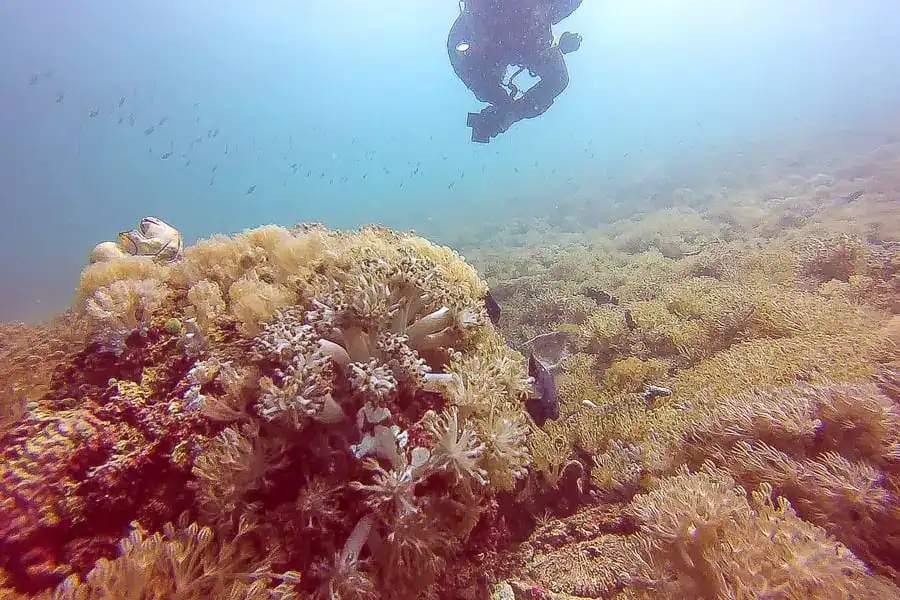
As macro lovers, Wainilu was one of our favourite Komodo dives, allowing us to focus on the small things rather than scanning the deep. It’s a relatively shallow, slow-paced dive exploring the sandy seabed, scattered rubble patches and coral bommies looking for small critters.
Among the highlights for us: mantis shrimp, a baby cuttlefish, puffer fish, spiny devilfish, frogfish, ribbon eel, anemone shrimp, and a pikachu nudibranch.
After the intensity of the more current-driven dive sites, Wainilu felt like a welcome change of pace, and a nice reminder of the diversity the region’s diving has to offer.
Things to consider when diving Komodo
Diving in Komodo National Park is undeniably world-class, but the conditions that make it exceptional also require a slightly different mindset compared to many places we’ve dived.
Having an appreciation of how the environment shapes the experience, and preparing accordingly will increase the chance of this being an incredible experience instead of an overwhelming one.
Currents are a defining feature
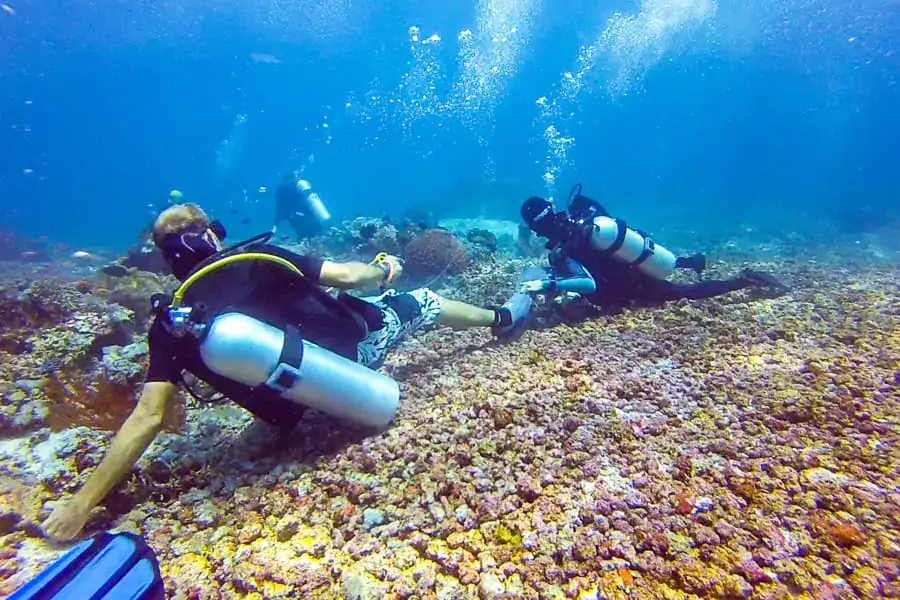
Whenever we talk to people about diving Komodo, the subject of currents inevitably comes up. The islands sit between major ocean basins, and tidal exchanges create strong, fast-moving water that defines many dives here.
It’s these currents though, that are the reason Komodo’s reefs are so alive, with nutrient-rich water attracting marine life large and small. However, it does mean dives often involve drift techniques, careful positioning, and occasionally negative entries or quick descents to sheltered areas.
We found currents ranged from fun drifts to heart-pumping surges that could rip off a poorly fitted mask. Even on dives that weren’t intense, we could certainly feel the water moving more than we were used to.
The key takeaway for us though isn’t that Komodo is dangerous, rather it’s the kind of place where you need to let the water do the work instead of fighting it.
Experience level matters – but beginners aren’t excluded
You’ll find plenty of online discussions debating whether Komodo is only for advanced divers, but the reality is more nuanced. While some sites are highly exposed and suited to advanced divers, others are calm enough for less experienced divers, when conditions are right.
That said, this certainly isn’t the place to overstate your experience, or level of comfort in strong currents.
It’s best to choose an operator with a track record of matching sites to visitor ability and comfort level and then have an honest conversation with them about your experience level.
We are advance certified and had around 100 logged dives when we dived Komodo. We also had some drift diving experience under our belts. But even then, our first dive was used as an opportunity for our guide to assess our ability to ensure we weren’t put into any diving situations beyond our experience or comfort level.
Expect variation between dives
One of the most thrilling aspects of Komodo diving is the huge variation between dives, and the changing conditions – day to day and dive to dive.
Conditions change with the tide, moon phase and location, and we often experienced significant shifts in visibility, current and even water temperature.
It’s therefore best to approach diving Komodo without fixed expectations and instead embrace the variability and keep a flexible mindset.
Listen carefully to dive briefings
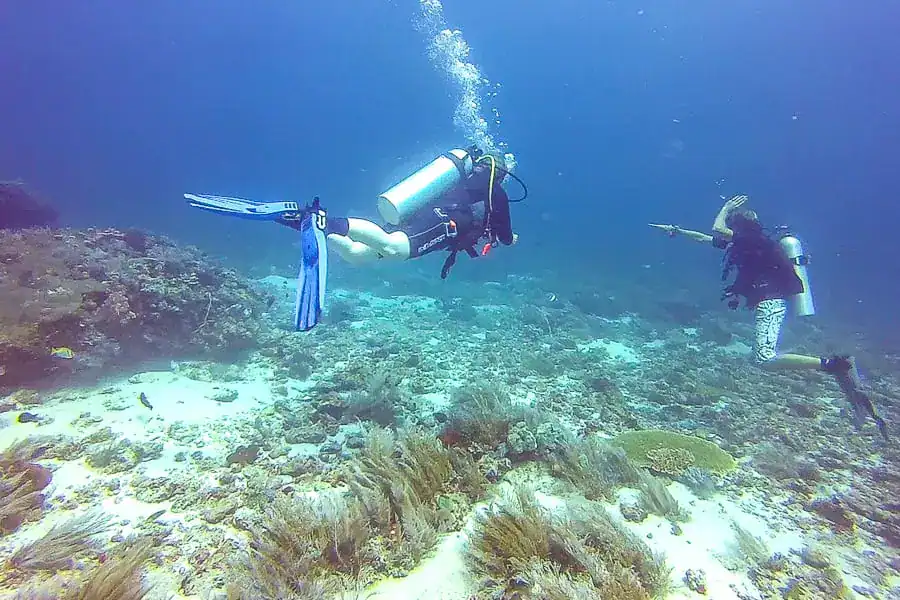
I remember my mind briefly wandering during a dive briefing until I heard our guide mention the need to be careful of the current at a certain spot to avoid being swept away into the ‘doom’.
While it was delivered light heartedly, there’s a very important reality at play here, and it’s vital to be present and attentive at the pre-dive briefings.
They typically cover entry techniques, shelter points, current direction, topography, exit strategy, and any essential dive techniques you may need to focus on during the dive – all critical for safe diving.
In Komodo, site-specific topography and tidal timing can dramatically change how a dive unfolds.
Positioning matters more than swimming
Watching our guides glide effortlessly along coral walls and through canyons often left us in awe, and brought home to us the importance of our body positioning and buoyancy during dives.
Diving Komodo is a great way to learn from the experts and improve your skill at using reef contours to reduce current exposure, allowing you to move from shelter to shelter, rather than swimming against the flowing current.
It was also a great reminder for us that good buoyancy and awareness often matter more than fin power – and while our own positioning and buoyancy definitely improved during our trip, we’ve still got a long way to go to match our guides.
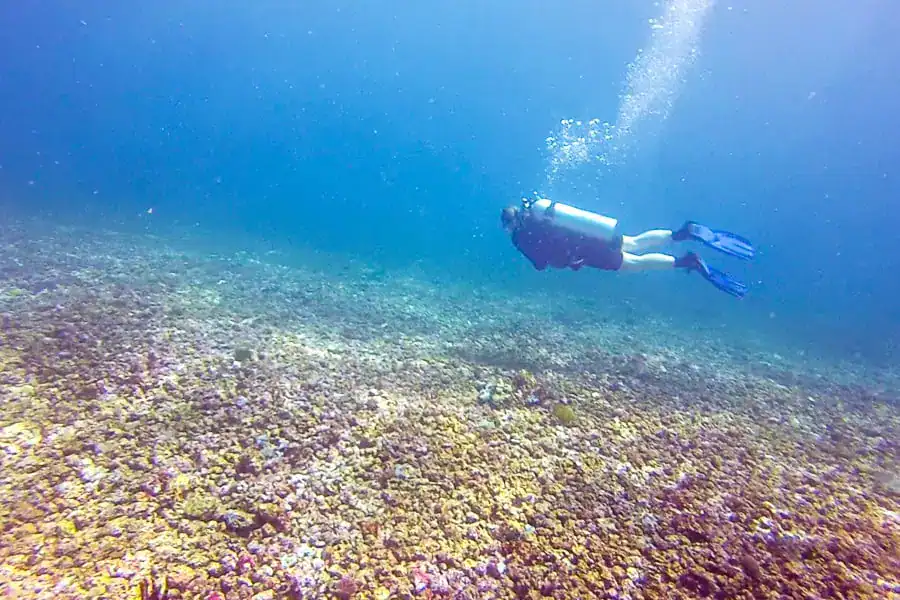
Gear considerations
It’s worth preparing for a wider range of conditions than might be expected in other tropical locations when diving Komodo.
If you know how to deploy an SMB for surface signalling, it’s worth carrying one – in fact some operators may consider it essential for current-driven environments like this.
We did also notice significant water temperature variations on some dives, especially where cooler upwellings occur in parts of the park. While we generally dived in 3mm shorties, bringing some extra thermal protection and discussing water temp on a dive-by-dive basis is a good idea.
You might also think about taking a reef hook and using it where permitted, especially on sites with strong currents. We can’t emphasise enough these always need to be used responsibly and under guide direction. If you haven’t used one before, Komodo is a great place to learn.
Reality check – is diving Komodo right for you?
Komodo is often described as one of the world’s best dive destinations, and that can be true without it being right for everyone.
While we had a reasonable level of experience, it still felt like we eased our way into diving Komodo, becoming more comfortable with diving in currents as the trip progressed.
If you feel confident with buoyancy, enjoy drift diving and want dives that feel adventurous rather than predictable, you’ll most likely enjoy Komodo diving.
If you’re newly certified and still building foundational confidence, or currents make you anxious rather than energised, it’s important to speak to local dive operators about your experience levels and what would be best for you.
One thing’s for certain, Komodo isn’t a place to ‘fake it.’
Good operators will help you have a great trip safely if you’re transparent and honest about your experience and ability. They’ll match sites to your ability and keep safety front and centre throughout the trip.
A good operator will also tell you if they think diving in Komodo isn’t right for you (you can still join day trips and liveaboards for swimming and snorkelling if you aren’t diving).
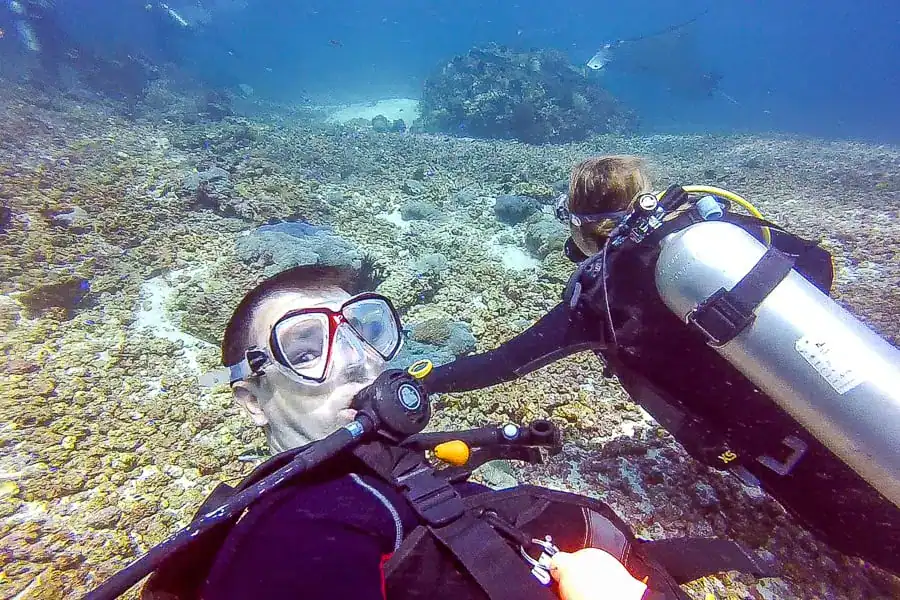
Who we dived Komodo with and why
Choosing the right dive operator in Komodo National Park is arguably just as important as choosing when to visit.
While Labuan Bajo has no shortage of companies offering day trips, Komodo liveaboards and snorkelling excursions, the rapid growth of tourism in the region means operator standards – particularly around safety, group size and environmental practices – can vary significantly.
For us, diving in Komodo was always going to be about more than simply ticking off famous sites. The National Park is both extraordinary and fragile, so we wanted to find an operator that prioritised conservation alongside guest experience.
During our research, we also looked for operators that are actively engaged in sustainable tourism initiatives, such as participation in local conservation networks like the Dive Operators Collaboration of Komodo (DOCK).
After comparing multiple options, we chose Wunderpus, a small-group operator with a strong reputation for experienced guiding, attentive service and environmentally conscious operations.
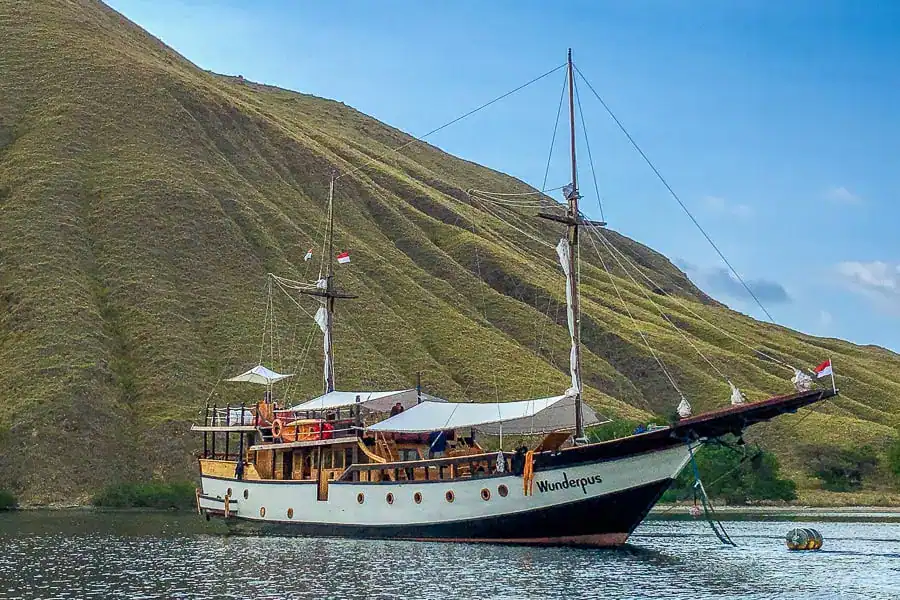
They operate two vessels — the traditional wooden phinisi Wunderpus, and the more budget-focused Mimic.
We opted for the main Wunderpus boat for its air-conditioned ensuite cabins and spacious layout, which was our preference for a multi-day trip.
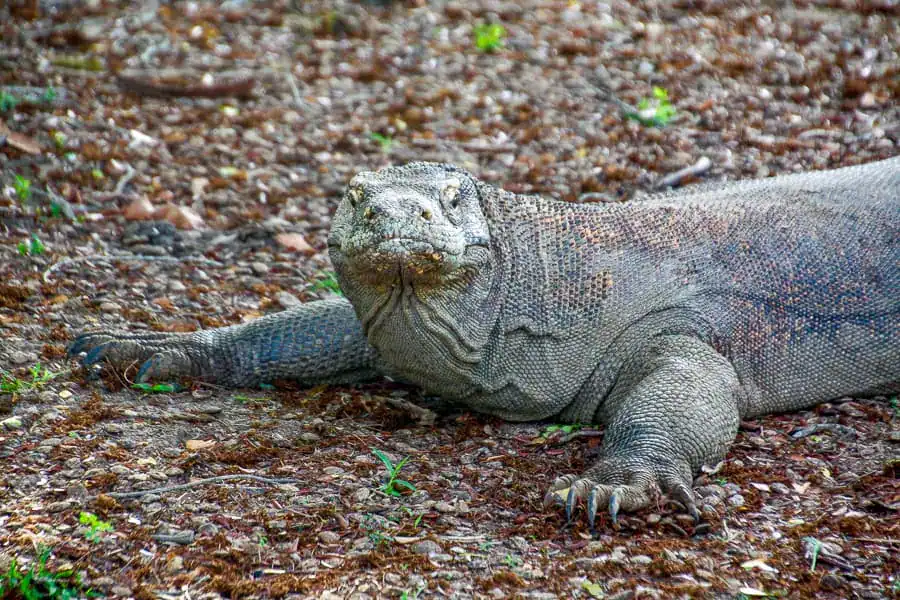
Wunderpus and Mimic itineraries also include a visit to see Komodo dragons on either Rinca or Komodo Island. We visited Rinca as part of our trip and seeing the dragons up close is something we’ll never forget.
Itineraries also include visits to remote, unspoilt beaches and island treks for sunrise or sunset. We particularly enjoyed these as it let us stretch our legs on dry land and have a break from diving occasionally.
More than anything, what really stood out was how much we enjoyed the daily rhythm of Komodo liveaboard diving itself.
Waking each morning in quiet anchorages, preparing for the day’s dives while the boat gently rocked at sunrise, and travelling deeper into the park between dives, created a sense of immersion that day trips simply can’t replicate.
Combining that with experienced guides, small groups, superb service, amazing food, well designed, comfortable boats, and a focus on sustainable tourism and care for this pristine environment make Wunderpus an easy choice.
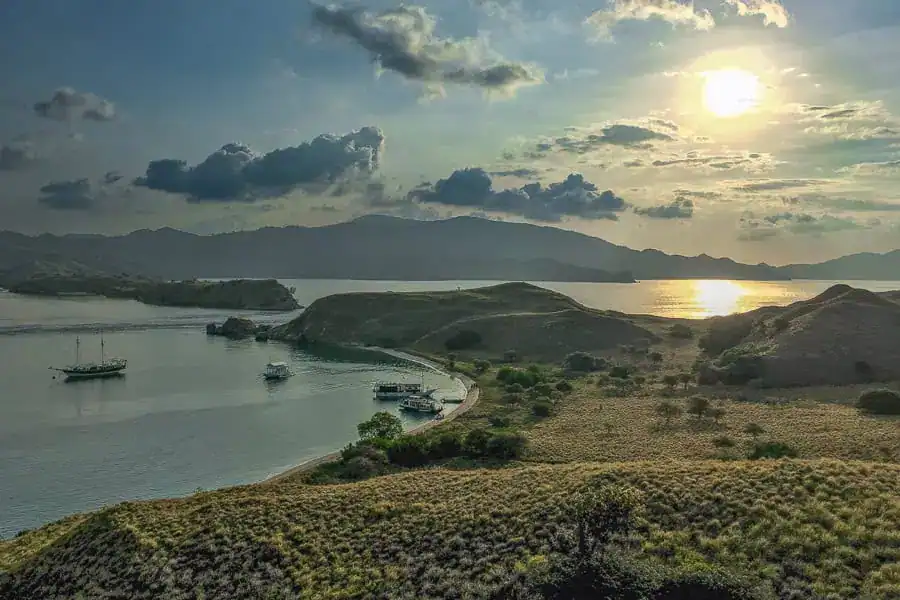
Wunderpus operates a variety of dive and snorkel trips ranging between 2 and 5 nights, with longer trips and charters operating based on demand.
They have two boats: the Wunderpus, offering air-conditioned ensuite cabins, and the Mimic, a budget option where you’ll get to sleep on deck with your group.
Whatever you choose, you’re guaranteed top-notch service, tasty food, and incredible snorkelling or diving in small groups with vastly experienced guides.
You can check schedules, pricing and book your Komodo diving trip with Wunderpus here.
Planning a Komodo Scuba Diving Trip
Best time to dive Komodo
Komodo is widely described as a year-round diving destination, but conditions shift noticeably across seasons – and they also vary by region within the park, tidal cycles and day-to-day weather patterns.
Broadly speaking, November to March tends to be quieter in terms of tourism, with fewer boats and a stronger focus on southern dive sites, where manta encounters are often reported.
This period coincides with the wet season, so weather can be less predictable, and visibility may be lower in some central areas, while sea conditions occasionally limit access to more exposed northern sites.
The shoulder months between April and May, and also September to October, are often described as the perfect time to visit Komodo. Most regions of the park are accessible and there are good prospects for both encounters with mantas and larger pelagic species.
June through August is typically considered high season, with more stable sea conditions ensuring most dive sites are accessible. Visibility is often excellent during this period, although dive sites can get busier, meaning manta sightings may be less likely.
We chose October and enjoyed excellent dive conditions throughout the trip, with decent visibility, pleasant water temperatures, and for the most part, lovely weather. We were also fortunate enough to enjoy multiple manta encounters.
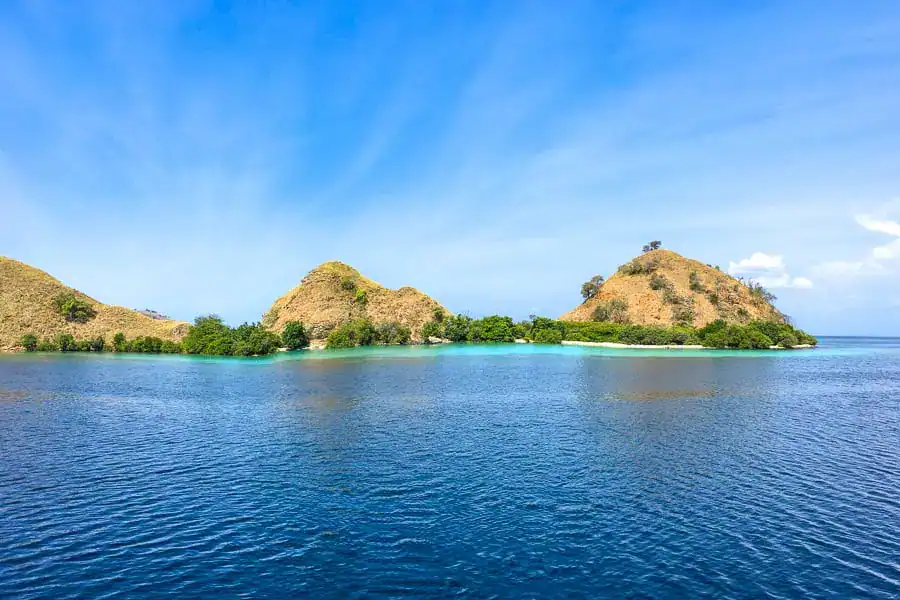
Getting to Komodo National Park
Most visitors to Komodo National Park travel there on day boats or multi-day liveaboard boats out of Flores, an island in the east Indonesian archipelago.
The main gateway is Labuan Bajo on the western tip of Flores, particularly for those planning to dive or visit Komodo National Park. Ende in central Flores and Maumere further east can also be useful entry or exit points if you’re travelling across the island rather than returning the same way.
Regular flights connect Flores with major Indonesian hubs, with Bali–Labuan Bajo being the most popular route, while there are also connections from Jakarta, Lombok and Kupang depending on schedules.
During peak travel periods, particularly July and August, it’s worth booking flights ahead as availability can tighten.
For our own Flores itinerary, we flew into Labuan Bajo from Bali with Wings Air and departed from Ende with Garuda Indonesia, which allowed us to explore Flores without backtracking, something we’d recommend if you’re combining diving with overland travel.
Travelling to Flores by sea is also possible, with public ferries and passenger ships operated by companies such as ASDP and PELNI connecting various Indonesian islands, though journey times and conditions can vary.
Multi-day tourist boats between Bali, Lombok and Komodo are another option, but standards seem to vary widely, so we’d recommend carefully researching safety practices and operator reputation before booking.
Where to stay in Labuan Bajo
Labuan Bajo is the main launchpad for Komodo National Park and, for most travellers, the start and end point for diving or island trips.
While the town remains relatively compact, accommodation options have expanded quickly in recent years, ranging from simple, centrally located hotels near the harbour, to hillside retreats and resort-style properties overlooking the sea.
Deciding where to stay really depends on your priorities. Central locations can be handy prior to your dive trip as they’re convenient for organising logistics, meeting your dive team, and stocking up on any last-minute supplies.
Properties outside town tend to offer more space, quieter surroundings and a more relaxing environment once you’re back on land, so they can be a great option if you want to reward yourself with a few days of post-trip relaxation.
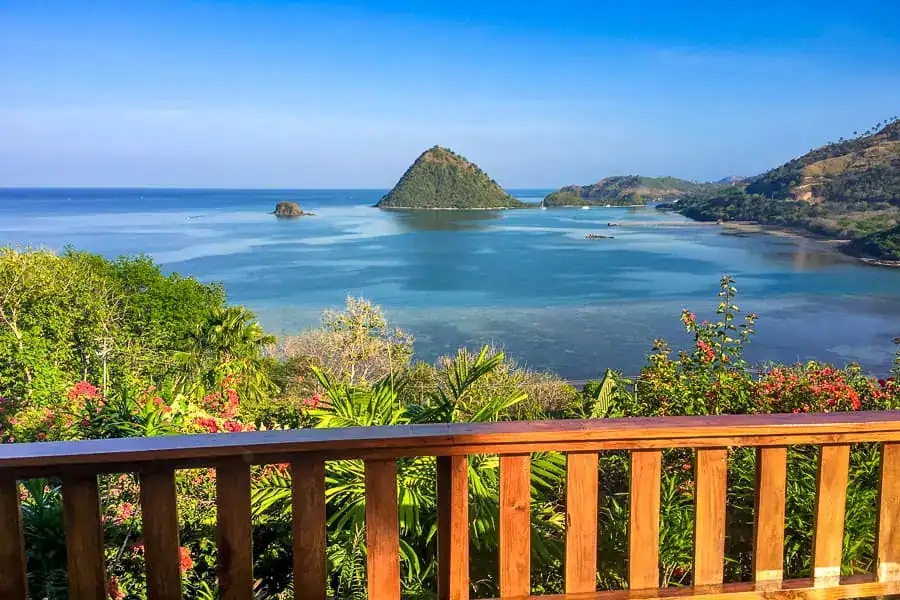
We split our own stay between both styles and found the combination worked well – so here are a few highly rated options that are worth considering:
- Good value: Puu Pau Hotel & Coffee Shop – Consistently well-reviewed hotel known for its clean, modern rooms and friendly service. Its central location makes it a reliable choice for short stays or early dive departures.
- Good value: Golo Hilltop Hotel – Set above Labuan Bajo with wide ocean views, this hotel feels more removed from the bustle of town. We had a simple but comfortable room here for a couple of days and particularly liked the peace and quiet, friendly atmosphere, and expansive views from the small pool terrace.
- Mid-range: Luwansa Beach Resort – Located around 4km south of town, this resort-style property offers large, modern rooms in a quieter beachfront setting. Friendly staff, a pool overlooking the beach, and an on-site restaurant make this a popular option for many travellers.
- Mid-range: Seaesta Komodo Hostel & Hotel – A lively, stylishly designed property with both private and dorm rooms and a social atmosphere. The hotel has a rooftop pool, bar and restaurant, along with nightly DJs – it’s a place that definitely caters to a younger crowd looking for something comfortable but fun.
- Spend a bit more: Elang Hillside Bamboo Villas – These peaceful bamboo villas enjoy breathtaking ocean views in a peaceful setting. The elevated position offers privacy and relaxation, and there’s a small pool, terrace and bar to help you unwind after all that diving.
- Spend a bit more: Sudamala Resort Komodo – For those looking for a slightly more polished resort experience, this popular beachfront property a few kilometres from town may hit the mark. Here you’ll find spacious modern rooms set within a tropical garden with resort facilities like pool, spa, fitness centre, restaurant and a bar.
We’ve also stayed in town at Green Hill Boutique Hotel which is conveniently located close to restaurants and dive operators. They offer a range of room types, but we opted for a standard double, which was clean and comfortable enough for our needs. Being centrally located though means you may experience more noise, so light sleepers might benefit from earplugs.
Final thoughts on diving Komodo
My enduring memory of diving Komodo is hanging on by a finger to our divemaster’s fin in the kind of current I’d been warned about, trying my best to avoid the stinging fire coral just inches away.
Just over my shoulder was one of the most enthralling sites the underwater world has to offer: a huge reef manta ray, almost within touching distance, majestic in the current as a host of cleaner fish gave it a body polish.
It was thrilling and awe inspiring in equal measure. And it’s a memory that never fails to put a smile on my face and makes me want to go back to these distant islands.
If you’re looking for diversity, are happy to take a flexible approach to your diving, love adventure, and don’t mind being challenged, we highly commend Komodo to you.
We came for manta rays – and yes, they’re part of the story – but what made Komodo stick with us was bigger than that.
It was the wonderful diversity of sites, the variety of underwater conditions, the pristine reefs, the sheer density of underwater life, and the satisfaction of diving somewhere truly remote and pristine.
We hope you enjoy it as much as we did.
Useful Travel Resources
Stays: We use Booking.com for our stays while travelling as there’s a huge choice of accommodation on offer through the platform. Search and book your Flores stays here.
Flores Driver: We used Sipri Muda to get around Flores and loved every second of the Flores itinerary he helped us design.
eSIMs: To stay connected when travelling we use Airalo eSIMs.
Tours: Check out GetYourGuide to find a great range of tours and local experiences around Flores.
Diving Komodo: We dived Komodo with Wunderpus and highly recommend them. You can find out about their boats and tour offerings here.
Have you been on a Komodo diving tour? What did you think? Let us know in the comments below!
If you’re spending more time in Flores, you might find our 2 week Flores itinerary useful, and for travel ideas in the region, check out our Asia page.
Good morning/afternoon/evening, Mr./Mrs./Ms.
My name is Gabriela, from Petra Christian University Surabaya, Indonesia.
Right now, I am currently working on my final project/thesis of: Travel Motivation in Visiting Komodo National Park (Padar island, Komodo island, or Rinca island).
If you don’t mind, would you please fill in this questionnaire?
(Here’s the link to it: https://goo.gl/forms/bq3Zlv65YjhWaZjE3)
Thank you very, very much, and God bless you. ??
Regards,
Gabriela A
Hi Gabriela, thanks for getting in touch, we’ll take a look at your questionnaire as soon as we can. All the best with your thesis!