

For thousands of years, people have been visiting Turkey’s public bathhouses to have their weary limbs steamed, splashed, scrubbed and kneaded to a state of serene cleanliness.
But what’s the deal for the modern-day tourist unfamiliar with the hammam experience? Is there an etiquette? Are guys and girls mixed or separated? And do you have to get naked? We decided to find out during a visit to one of our favourite cities in the world, Istanbul.
Our Istanbul hammam visit wasn’t actually our first time undergoing the soapy scrub-down. Both John and I had tried the hammam ritual before, once in Morocco and another time in Jordan.
Each time we were scoured and polished to a stinging gleam, but both times we underwent the treatment in the privacy of individual hammam rooms at the hotels where we were staying. This time we were going ‘public’.
We still cheated a little. There are dozens of upmarket, expensive hammams in Istanbul, largely geared towards the tourist market, and while the bathhouse we chose might have been more low-key and budget-friendly, it was still styled as a tourist-friendly establishment.
We weren’t entirely sure what that meant in practice, but we figured with other non-locals for company, we’d at least have a better chance of hiding our own cluelessness.
Who were we kidding?
What’s in this post?
Our Istanbul Hammam Experience
Our Hammam Experience Takeouts
Booking a Hammam Experience in Istanbul
Planning a Trip to Istanbul
– Getting to Istanbul
– Best time to visit Istanbul
– Where to stay in Istanbul
– Getting around Istanbul
Useful Travel Resources
This post contains affiliate links. If you choose to buy through these links we may earn a small commission at no extra cost to you, which helps us to keep Two For The World running. Many thanks for your support!
Our Istanbul Hammam Experience
On arrival at our traditional hammam, a 570-year-old establishment originally built as a private bathhouse in a hunting lodge for Mehmet the Conqueror, we were greeted by a smiling young Istanbullu, who handed us a menu of services to choose from in English.
The principle of the hammam is simple: you wash down and sweat in a steam room before being scrubbed free of at least five layers of skin and bathed again. On our services list, you could also opt to follow up the steam and scour with a soothing foam wash, a relaxing oil massage, and a pore-cleansing face mask. We decided to go the lot.
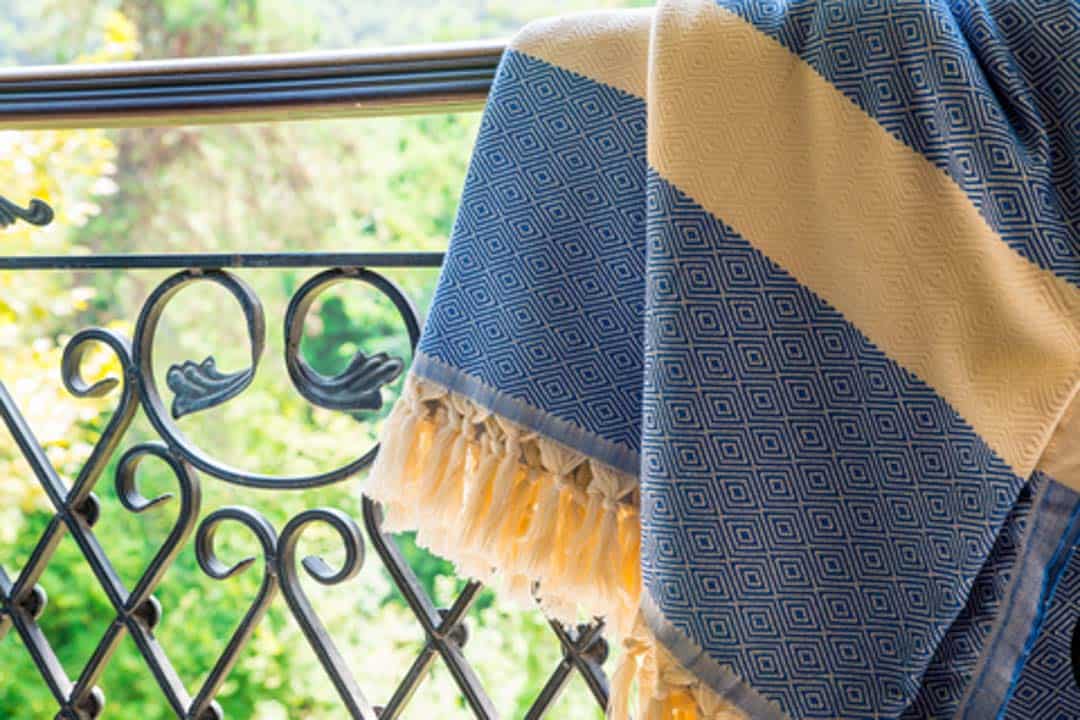
Handing us each an exfoliating mit called a kese, and a Turkish towel called a pestemal, our beaming attendant told us to go upstairs and strip down in the private change rooms, wrap ourselves in the pestemals, pop the sandals provided on our feet, then come back down and go to the main hammam room.
At this point, most people might have asked the obvious question: Do I take everything off? John and I though, feigning familiarity and too shy to ask obvious questions, mumbled our thanks and made our way up the stairs whispering at each other about whether or not we should leave our underwear on.
Not that I really had an option. Our decision to visit the Turkish bath had been lastminute and I wasn’t wearing a bikini. With a day of sightseeing ahead of us, I wasn’t going to chance wet underwear, so I took everything off and carefully wrapped myself in the pestemal. Take-out: plan ahead and wear a bathing suit.
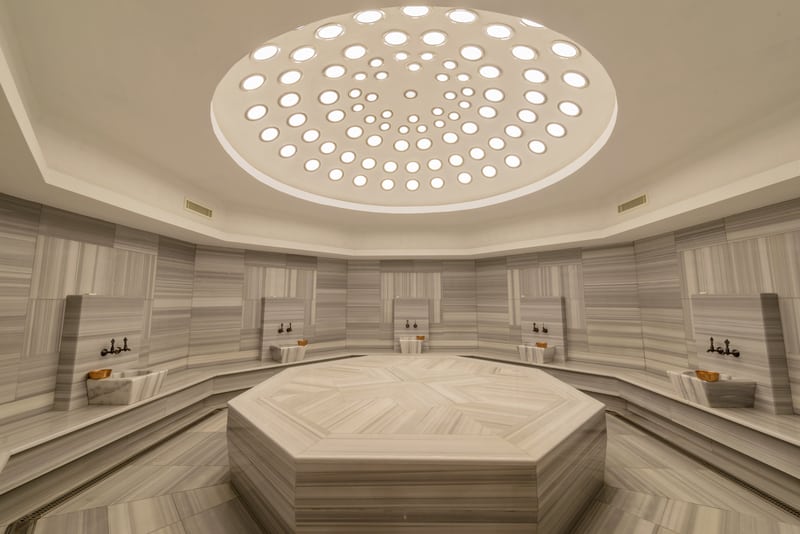
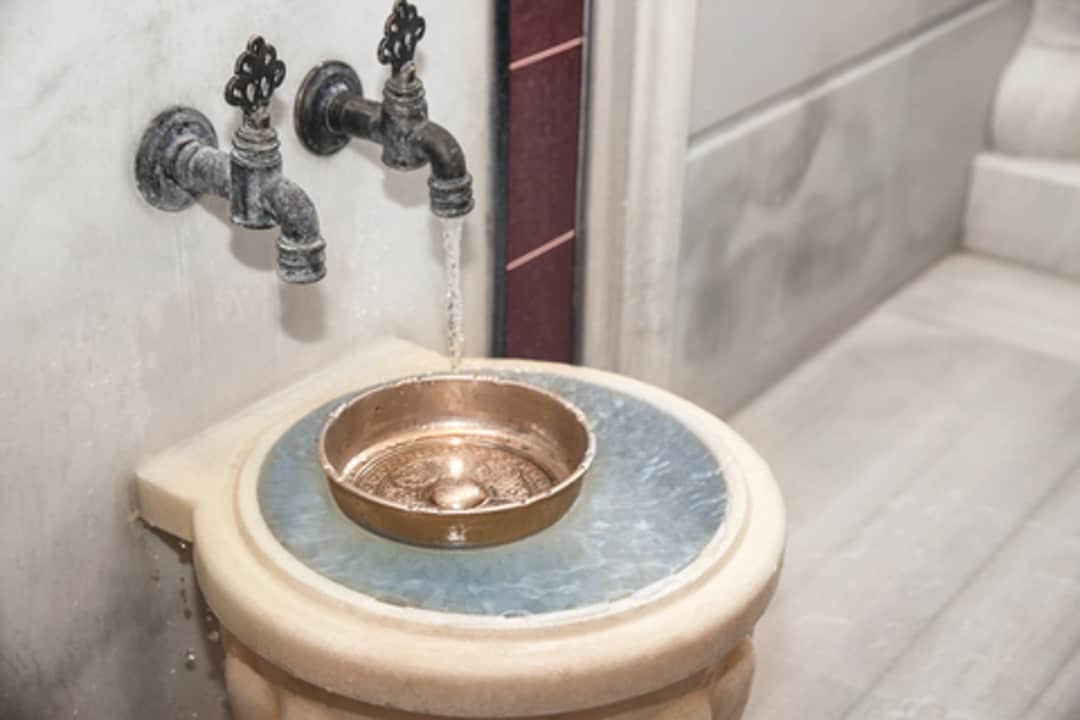
In the hammam room, a large square space tiled in white marble and capped with a small dome that channelled light through ageing painted glass, John and I gathered by one of the marble basins to wash and rinse ourselves.
While many public baths are segregated by gender for the entire experience, this Istanbul hammam – geared as it is towards western tourists – starts with a mixed gender steaming session. We were alone but given there was a chance others would walk in, I washed discreetly with my towel on. Before long, two young women, both tourists, came through the door and promptly took their bikini tops off. Semi-nude must be ok then, I thought, wrapping my pestemal a little tighter.
After washing, we lay down on the marble platform in the centre of the room to steam for a bit. There was a light mist and the temperature was pleasantly warm. Suddenly, our host popped his head into the room and summonsed me to a much smaller steam room where four other girls sat dripping, their damp hair plastered to their foreheads. The tiny space was dense with mist and pressure-cooker hot.
For the next half-hour I baked, while John continued his sweaty vigil in the main hammam.
Finally, just as my backside was starting to burn on the marble step, I was called into another small room with two marble benches and a basin, for my scrub and foam wash.
Any concerns I might have had at that stage about having nothing on under my pestemal were whipped away with the towel by a small, stern-faced woman wearing a black swimsuit.
She didn’t bat an eyelid at my nakedness but proceeded to point me on and off the bench over the next fifteen minutes as she scrubbed, sudsed and doused me in warm water until my entire body was stinging and as bright red as my face.
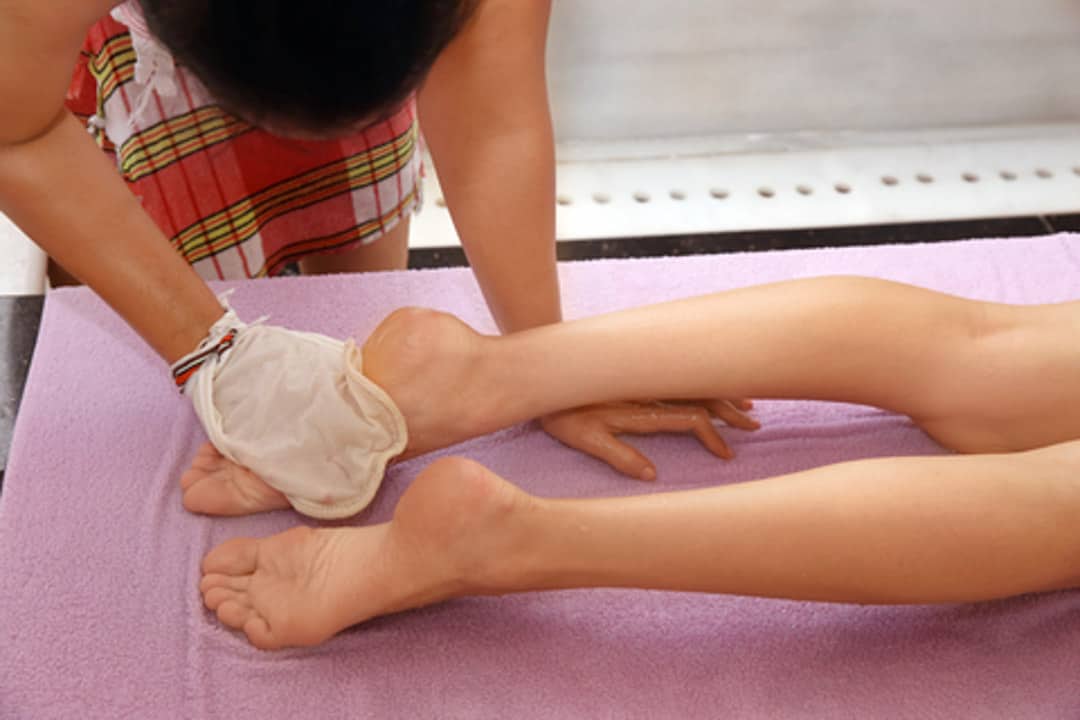
The finale was the foam ‘bath’, a surreal-feeling blanket of pillowy suds released over my entire body with a flick of a towel before a final rinse off. Then she gestured me off the bench, gently wrapped the pestemal back around me and sent me out into the foyer, where an attendant wrapped my hair in a towel and brought steaming apple tea.
While I sipped my drink under the fading grandeur of the foyer’s high domed ceiling, John was experiencing his own version of the scrub and sluice, atop the large marble platform back in the main hammam.
When he emerged from the steamy room, looking slightly stunned and ten years younger, he explained how he too was scoured, sudsed and doused by a friendly attendant, but with a guy doing the man-handling, he had the added experience of being dragged around the marble slab by the feet. At least he got to keep his pestemal on!
I’d survived the naked scrub and wash by this stage, but I wasn’t quite ready to embrace naturism and I still had an oil massage ahead of me. So while John sat down to his apple tea, I slipped off to my change room to put my underwear back on.
Ten minutes later, I walked into the massage room, where a lady masseuse smiled warmly at me and promptly announced, ‘Everything off!
At this point, most people might have asked the question, ‘Everything?’. Me though, feigning cool and too shy to say anything, promptly took everything off. Again.
I climbed up on the table and lay face down, relaxing surprisingly quickly under her practised hands, once I’d reminded myself that there was nothing here this lady hadn’t seen before. I was so chilled by the time I rolled over that I didn’t even flinch when she moved from my stomach and began massaging my chest.
In truth, I was ready for it. Despite it being a no-go zone at home, the top massage is something I’ve encountered in just about every single massage I’ve had in Asia and the Middle East. Be prepared or be clear up front it’s not for you.
At the end of the massage, kneaded, relaxed, and feeling strangely empowered, I wrapped the pestemal back around me and made my way back down to the foyer wearing a green mineral face mask, to sip some more tasty apple tea.
John also returned green-faced and serene. His massage, again with a guy, had been firm and relaxing. And again, he’d kept his pestemal on.
Our Hammam Experience Takeouts
Back on the street, looking cleaner than we had in two years on the road, neither of us were feeling much wiser about the ‘norms’ of the hammam, though we had our own take on the ‘tourist-friendly’ version now.
There’s a basic unspoken etiquette, of course: respect personal space and don’t stare at others. Cameras are a no-no away from the main lobby area (hence none of our own hammam photos here).
In the mixed gender steam room, it’s polite to keep towels on or wear a swimsuit, though it really depends on your own comfort level. For guys, it seems the loincloth stays on throughout the hammam experience and a man does the scrubbing and massaging.
For women, going au natural in the private scrub and massage sessions also seems fine, though next time I’ll be wearing bikini bottoms and keeping them on. You’ll have ladies looking after you in both. I’m sure if I’d actually asked to keep my underwear on at any point, it wouldn’t have been a problem. At the end of the day, it’s what you’re comfortable with.
Perhaps what you wear – or don’t wear – is different in the local, gender-segregated public hammams? We’re curious, but while the hammam is an ancient tradition that should absolutely be tried at least once when you’re in Turkey, we might wait a little while before we find out.
Booking a Hammam Experience in Istanbul
Booking a Turkish bath in Istanbul couldn’t be easier. Many hotels have their own hammams, and those that don’t will be more than happy to give you their view on the best Turkish bath in town.
If a scrub down is high on your bucket list though, and you want to avoid any potential disappointment by booking in advance you can always lock in a booking on sites like GetYourGuide and Viator.
We recommend both of these sites as they provide a convenient platform to search and book a wide selection of experiences in the places we travel to. All the experiences and tours have been reviewed by other travellers, while the secure payment facility and flexible cancellation policies provide peace of mind when visiting unfamiliar places.
We’ve outlined some of the best reviewed Turkish baths in Istanbul from both sites below.
Aga Hamami
Our Istanbul hammam experience took place at Aga Hamami in the trendy Beyoglu district. Dating back to 1454, the hammam was once the private bathhouse of Mehmed the Conqueror so it’s steeped in local history.
We can’t recommend the place highly enough and really enjoyed the authentic hammam experience on offer here.
It’s described as a mixed hammam, meaning the the main marble steam room can have both men and women present, while the serious business of scrubbing, foam bath and massage are all separated by gender.
Beethoven Senfoni Spa & Wellness
You can expect a warm welcome when you visit the Beethoven Senfoni Hotel’s authentic hammam located in Istanbul’s atmospheric Old Town.
Your visit will include a private half-hour Turkish bath, around 40 minutes in the sauna and steam room, followed by a massage.
The Spa & Wellness centre here also offers a variety of other treatments, including Asian, European, and Ayurvedic massage, skin treatments, pilates and zumba, as well as offering a well-equipped fitness centre.
Tulipa Spa Health Club Sirkeci
Another well regarded Turkish bath located in the comfortable surroundings of the DoubleTree by Hilton Sirkeci, not far from the Topkapi Palace.
The Tulipa Spa Health Club Sirkeci pitches itself as offering a fusion of the traditional hammam with contemporary luxury, and judging by the reviews, they hit the mark.
Expect a Turkish bath, sauna and foam massage, with optional longer massages and facial treatments available.
Acemoglu Hammam
One of the oldest Turkish baths in Istanbul, Acemoglu Hammam was originally commissioned by Fatih Sultan Mehmet in the 15th-century as part of a military training outpost.
Today you’ll find a mixed gender hammam offering public, semi-private, and private bathing options located in the Old City of Istanbul.
As part of the experience you can expect a mixed gender bath, clay mask, traditional kese body scrub, and a soothing foam wash, with optional massage therapies to further enhance your experience.
Gedikpaşa Hamamı
Dating back to the 15th century, Gedikpaşa Hamamı is another of Istanbul’s oldest and most atmospheric Turkish baths. Located close to the Grand Bazaar, and an easy walk from Sultanahmet, this historic hammam combines centuries of tradition with modern comfort.
You can choose from a range of options, including fully private, and can expect the full ritual – time on the heated marble platform, a traditional kese scrub, and a rich foam massage – all carried out by experienced attendants.
Many packages also include refreshments like tea and Turkish delight afterwards, making this a complete and indulgent hammam experience.
Planning a Trip to Istanbul
Getting to Istanbul
Straddling the Bosphorus Strait, with one foot in Europe and another on the Asian continent, Istanbul is well-connected by air, land and sea.
Most travellers who visit Istanbul will arrive by plane at Istanbul Airport (IST), one of Europe’s busiest airports. It’s located on the European side of the city and serves as a major international hub. Istanbul’s second airport, Sabiha Gökçen Airport (SAW) is located on the Asian side, handling budget, regional and some international flights.
If you’re coming from Europe, long-distance buses offer an affordable alternative, with routes from neighbouring Greece, Bulgaria and beyond – you can check prices and route options on Busbud. Train lovers might consider taking the Istanbul-Sofia Express, but international rail options remain limited.
For those arriving from within Turkey, domestic flights, intercity buses and even ferries provide excellent connections, while the high-speed train network links Istanbul to cities like Ankara and Konya.
Best time to visit Istanbul
You can enjoy a Turkish bath in Istanbul all year-round, but we think the best time to visit Istanbul is during Spring (April to June) and Autumn (September to November). This is when the weather is at its most pleasant and the city is slightly less crowded, providing the best balance of temps, crowds and cost.
The summer months between July and August often bring sweltering heat (above 30°C) and large tourist crowds, especially in hotspots like Sultanahmet and the Grand Bazaar. However, it’s a great time for seaside escapes if you’re planning some time on Turkey’s beaches or islands.
You’ll need to bring warm weather gear if you plan to visit Istanbul between December and February. On the plus side, it’s the quietest season for tourists and hotel prices drop significantly. If you’re lucky, you may even see the occasional dusting of snow over Istanbul’s minarets.
Where to stay in Istanbul
Turkey’s largest city has, as you’d expect, a wide variety of accommodation to suit almost every budget and style of travel.
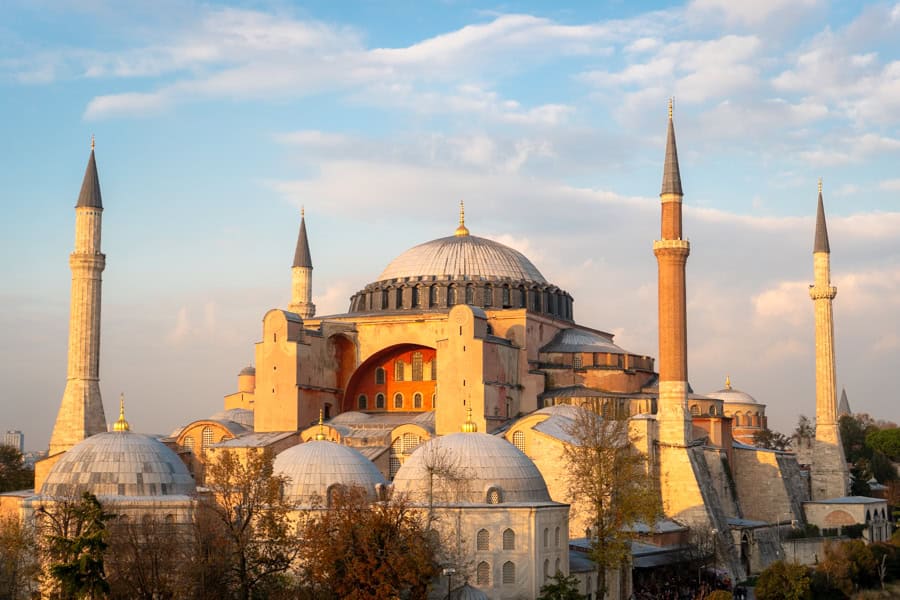
Our go-to neighbourhood is Sultanahmet in the Fatih district.This historic locale on the Bosporus is home to Istanbul’s most famous landmarks, including the Hagia Sophia, Blue Mosque and Topkapı Palace. We often stay here when we visit Istanbul as we find it’s well-geared for tourism and a perfect base for sightseeing.
But there are a variety of other areas in addition to the historic peninsula where Fatih sits that are worth considering. Sitting across the Golden Horn Beyoğlu has a lively, modern feel, while Beşiktaş and Şişli feel more residential, and Kadıköy, on the Asian side, has a distinctly local feel, with vibrant markets and plenty of nightlife.
To be honest, we’ve always found the hardest part of visiting Istanbul is narrowing down the choice of places to stay.
With that in mind, you might want to check out our more detailed guide on where to stay in Istanbul. It outlines the key districts and neighbourhoods where most people tend to stay, including providing a handy map, and our top recommendations, by price point, in each area.
We’ve stayed at the Katelya Hotel and Sadaret Hotel (formerly Q Hotel) in Sultanahmet and would happily stay at either on a future visit. Rooms at both are comfortable and clean, and staff were really friendly and helpful. But what makes both properties perfect for us is their location, in our favourite part of Istanbul just a short stroll from the Blue Mosque and other attractions.
Some other popular, well-reviewed mid-range stays in Sultanahmet and Karaköy on the European side, and Kadiköy on the Asian side include:
- Sultanahmet: World Heritage Center Hotel – Centrally located stay offering comfortable, well-maintained rooms and a rooftop terrace with stunning views toward Hagia Sophia and the Blue Mosque.
- Karaköy: Union Hotel Karaköy – Centrally located hotel near the waterfront and Galata Bridge with comfortable, modern rooms and excellent access to transport links. Spectacular views from some rooms across the Golden Horn to the historic peninsula.
- Kadiköy: Dekalb Hotel – Well-located stay near the markets offering bright, modern rooms, friendly service and excellent access to ferry, metro and bus connections for exploring both the Asian and European sides of Istanbul.
Getting around Istanbul
Getting to and from Istanbul’s airports
Istanbul can feel like an incredibly vast city and while it’s easy to feel overwhelmed when you first arrive, getting around the city is pretty straightforward once you get the hang of things.
Istanbul Airport is around 40km northwest of the city, while Sabiha Gökçen Airport lies around 45km in the opposite direction, southeast of the centre.
There are the usual array of bus, taxi, shuttle, and metro connections between both airports and key locations around the city, although not always with a direct connection. Be sure to check in advance which mode of transport works best for your specific destination.
We tend to book an airport transfer in advance when we arrive in a new city laden with bags, laptops and camera gear, so if you’re like us, check out the prices on Welcome Pickups, or ask your hotel to organise a transfer for you.
Moving about Istanbul
Despite its size, the central areas of Istanbul are very walkable, and we always clock up thousands of steps happily pounding the pavements of the Old Town, Taksim and Karaköy.
Istanbul’s public transport network is also a great way to explore the city and perhaps save some of the tread on your shoes. The tram is perfect for visiting tourist hotspots like Sultanahmet and Eminönü, while the metro connects districts like Taksim, Levent, and the Asian side of the city.
We also love getting around Istanbul on the ferries as, for us, they offer the most scenic way to criss-cross the Bosphorus and enjoy the neighbourhoods of Karaköy, Beşiktaş and Kadıköy.
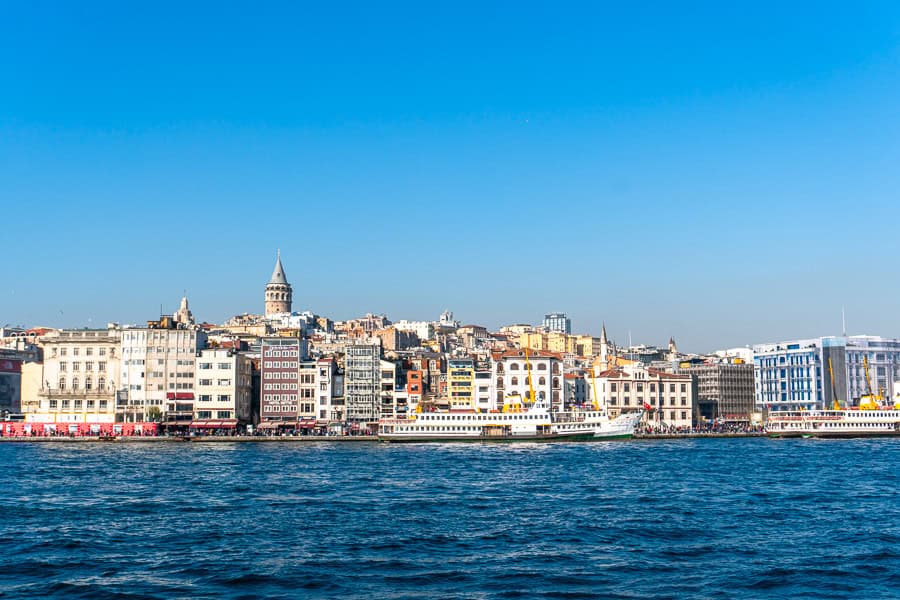
If you think you’ll be making the most of Istanbul’s public transport system, you might consider getting an Istanbulkart. These rechargeable transport cards are valid across buses, metro, trams, and ferries. Cards can be purchased at both airports, or from vending machines and kiosks at metro and tram stops around the city.
Useful Travel Resources
Stays: We use Booking.com for its wide choice of stays and Genius perks.
Airport Transfer: Take the hassle out of arriving laden with luggage by booking a private transfer or a Welcome Pickups transfer from the airport to your Istanbul stay.
Car Rentals: While we don’t think a rental car is needed for this Istanbul itinerary, if you plan to road trip more broadly in Turkey, our travel go-to is DiscoverCars for their wide choice, great rates and free cancellation.
eSIMs: To stay connected while travelling in Istanbul, check out the Airalo eSIM.
Tours: GetYourGuide offers a huge range of tours, experiences and services for Istanbul.
City Sightseeing Pass: If you want to save time and money exploring Istanbul, take a look at the Istanbul Tourist Pass.
Have you experienced a Turkish bath in Istanbul? What did you think? Let us know in the comments below!
If you’re after more info on visiting Istanbul, check out our 4 Day Istanbul Itinerary post, and our guide on where to stay in Istanbul. Happy travels!
How do I get from my cruise ship to the Aga Hamami?
Hi D, thanks for your message. This will really depend on where your cruise ship docks in Istanbul. If you’re time constrained, a taxi is probably the easiest way to get around, however we would suggest contacting your cruise company for advice on shore trips. Have a great time!
Are you allowed to lounge as long as you want in the hammam after your service? We’re in Istanbul and finding the prices kind of egregious for how long the treatments are. Would do it if I know that I can enjoy the facilities for as long as I want.
Hi there Ana, thanks for your comment.
Facilities will no doubt vary from place to place.
When we visited Aga Hamami we were welcome to enjoy tea in their comfortable lounge area after our scrubdown. There was certainly no pressure to head off afterwards, so I guess we could have stayed longer if we wanted to.
As with most things it’s always worth checking in advance with the provider if there’s anything you’d like to clarify before your visit.