

Our comprehensive, self-guided 4 day Istanbul itinerary brings together the very best of the city’s history, food and culture. It can also be easily adapted for a shorter or longer stay in this unforgettable city.
It’s a city that has answered to many names – Lygos, Byzantium, Constantinople, Istanbul. Each name marks a chapter in a story that stretches back more than two millennia.
Few cities have shaped – and been shaped by – history quite like Istanbul. Straddling Europe and Asia and commanding the Bosphorus, one of the world’s great waterways, it has long stood at the crossroads of trade, faith and empire.
Today, that legacy lives on in a city of more than 15 million people. Ancient minarets and domes rise alongside glass and steel buildings. Even older mosaics and vaulted, column-forested water reservoirs lie hidden beneath modern roads and tramlines. Tea houses and markets trade in the shadow of imperial walls, just as they have for hundreds of years.
We’ve visited Istanbul a number of times now, and it keeps calling us back. For us, it’s familiar yet never fully knowable. It’s packed with World Heritage, literally layered with history, and fuelled by a food scene as diverse as the people and cultures that have forged it.
The challenge isn’t how to fill your days in Istanbul – it’s where to even begin.
In this post, we’ve distilled the take-outs from our multiple visits into a practical 4 day Istanbul itinerary. It takes in all the icons: Hagia Sophia, the Blue Mosque, Topkapı Palace, Basilica Cistern, the Grand Bazaar, Galata Tower…as well as exploring atmospheric neighbourhoods and some less-visited sites. It also includes a food tour, a Turkish hammam experience, and a sunset Bosphorus cruise.
This is an on-the-go introduction to the highlights of Istanbul and you’ll cover plenty of ground. But in this city, there’s always a tea house to pause in, or a rooftop bar to relax on when you need a break.
And if you don’t get to do it all, don’t worry. If you’re anything like us, this definitely won’t be your last visit.
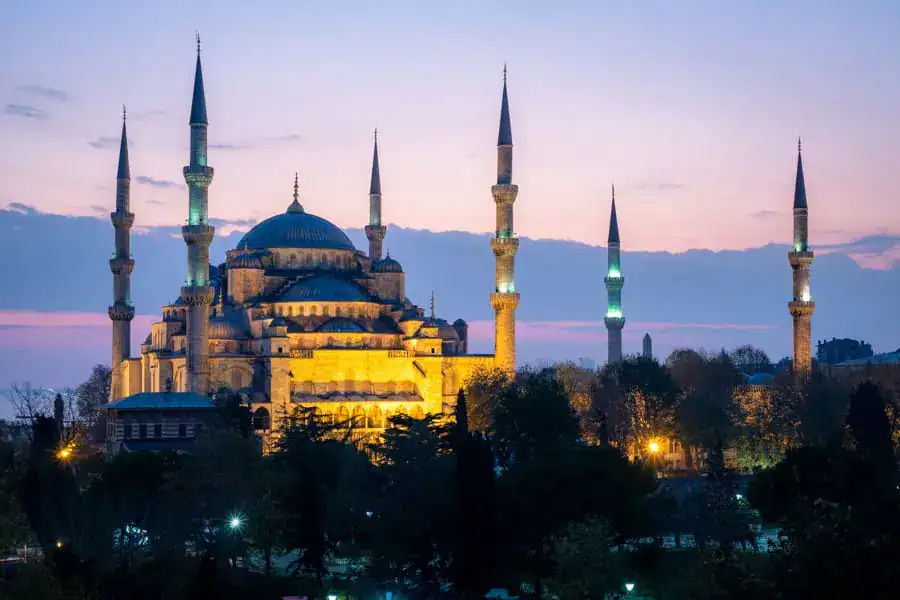
Istanbul Itinerary Snapshot
Duration: 4 full days (easily adaptable to shorter or longer stays)
Base: Old City or Karaköy/Galata
Highlights: Hagia Sophia, Topkapı Palace, Blue Mosque, Grand Bazaar, Galata Tower, Chora Mosque, Bosphorus cruise, Istanbul food tour, Turkish hammam and more
Getting around: Walking, trams and ferries (no hire car needed)
Best time to visit: April–May & September–October
Best for: First-time visitors, history and culture connoisseurs, food oriented travellers.
What’s in this post?
The Ultimate Istanbul Itinerary for Exploring History, Food & Culture
– Day 1: Highlights of the Old City
– Day 2: Historic Sultanahmet and Grand Bazaar
– Day 3: Vibrant Beyoğlu
– Day 4: Imperial Istanbul
– Final Thoughts on visiting Istanbul
Planning an Istanbul Itinerary
– How long do you need?
– Best time to visit Istanbul
– Getting to Istanbul
– Getting around Istanbul
– Where to stay in Istanbul
– Visiting Istanbul’s mosques and orthodox churches
– Guided tours of Istanbul
Useful Travel Resources
This post contains affiliate links. If you choose to buy through these links we may earn a small commission at no extra cost to you, which helps us to keep Two for the World running. Many thanks for your support!
The Ultimate Istanbul Itinerary for Exploring History, Food & Culture
Our Istanbul itinerary is 4 full days of epic sightseeing through the city’s historic peninsula and the vibrant neighbourhoods of Galata and Karaköy in Beyoğlu.
Each day is structured around one or two areas of the city, so you can focus your energies, immerse a bit more, and get out and about on foot as much as possible. The itinerary assumes that you’ve arrived in Istanbul the night before Day 1.
We’ve also deliberately designed this Istanbul itinerary around mosque prayer times and peak visitation periods at the major sites, so you can max your time exploring.
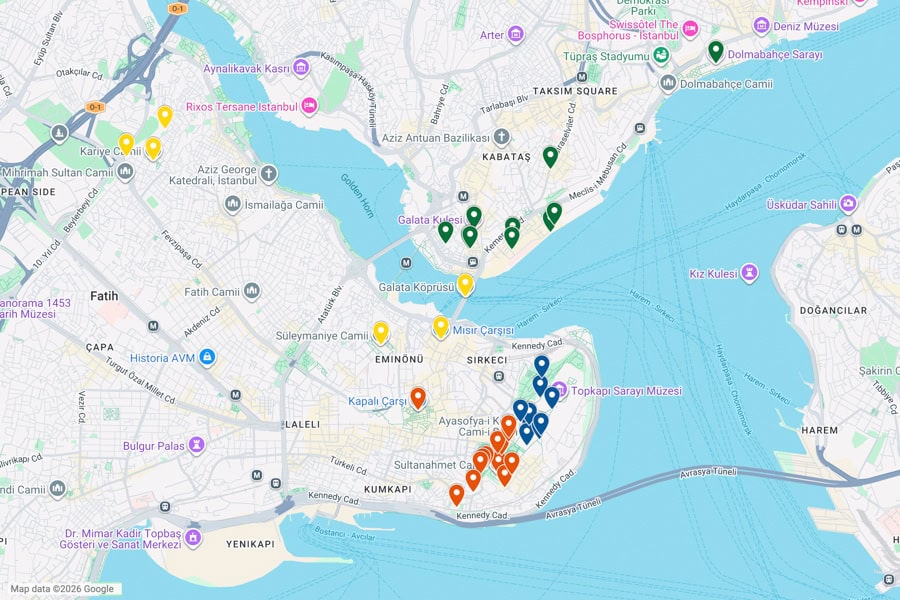
Itinerary tip: Check out the Istanbul Tourist Pass
We’re sometimes a bit wary about the value of tourist passes but with an Istanbul itinerary as busy as this one, the Istanbul Tourist Pass is worth taking a look at.
The digital sightseeing card bundles skip-the-line admission, guided tours, audio guides, boat cruises, shows and services for over 100 Istanbul attractions and experiences, including iconic sites like Hagia Sophia, Topkapı Palace, Galata Tower, Chora Mosque, Dolmabahçe Palace and Basilica Cistern. It also includes airport bus transfers and discounts on other activities and products.
Passes are available from 1 to 5 days. At first glance, it might seem expensive…until you start totting up all the entry fees and add-ons for booking all the sites and activities in this itinerary individually. It’s an upfront investment but if you do everything in our itinerary, the pass will save you time and money.
If you do buy the pass, you’ll get the most out of it by being strategic with your planning, pre-booking where you need to, and taking advantage of add-ons like audio guides, real guides, ferry trips and services wherever they’re available.
Day 1: Highlights of the Old City
Itinerary: Hagia Sophia Grand Mosque & Tombs > Istanbul Archaeology Museums > Topkapı Palace > Gülhane Park > Rooftop views
Good morning Istanbul! Chances are your wake-up call will have been the adhan – the dawn call to prayer, which rings out across the city from its mosques five times a day.
For us, hearing the adhan is always the moment that we feel like we’ve truly arrived in Istanbul.
Today’s itinerary is built around an early start at Hagia Sophia before the masses begin to build. We suggest leaving Topkapı Palace until later in the day when the crowds there are starting to thin out.
Marvel at Hagia Sophia Grand Mosque
Time: Around 60–90 minutes.
Best time to visit: Arrive for opening to avoid the crowds. Later in the day is also a good time to go.
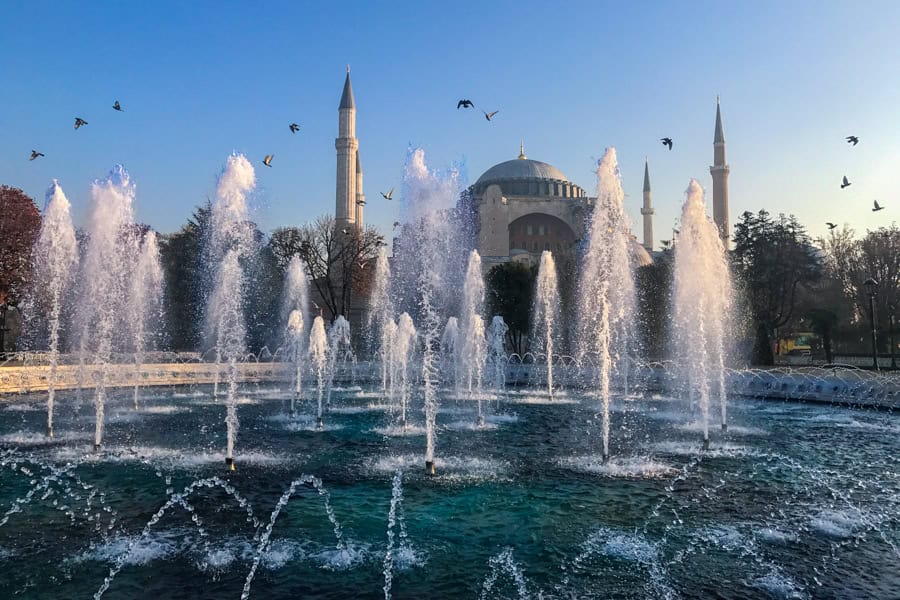
Where better to start than at one of the most iconic of Istanbul’s highlights: the monumental Hagia Sophia Grand Mosque (Ayasofya-I Kebir Camii Şerifi).
Built in 6th century for the Emperor Justinian, this architectural masterpiece has borne witness to virtually every page of Istanbul’s story since the early days of Constantinople.
Hagia Sophia was consecrated and functioned as a church for around 900 years before the Ottoman conquest saw it transformed into an imperial mosque. It was turned into a museum in 1935 before converting back to an active mosque in 2020.
These days, visitors can only explore the upper galleries, but even there the scale is breathtaking. Look up to the floating dome – no building works matched it for a thousand years. Light pours in through arched windows, and Byzantine mosaics glint golden above marble columns and huge medallions with Islamic calligraphy.
There’s lots to take in, but see if you can find one of our favourite relics in Hagia Sophia: a small graffito scratched into a marble balustrade by one of the emperor’s Varangian Guard around the 10th century. It reads ‘Halfdan was here’ in runes; a poignant human touch.
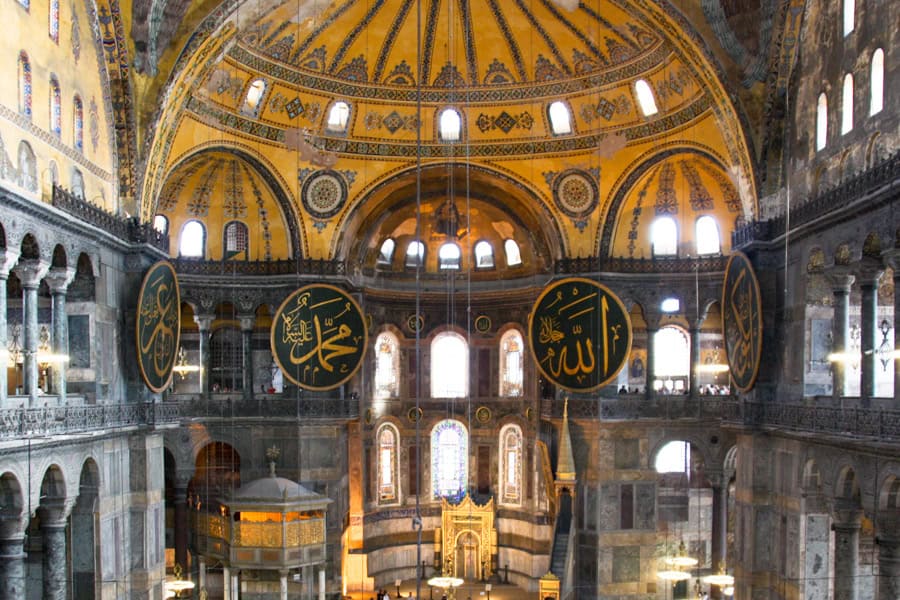
Hagia Sophia Grand Mosque is open daily between 9am and 7.30pm. Entry is around €25 and it’s possible to get tickets there, but we recommend you buy your Hagia Sophia Entry Ticket online in advance so you can get into and through the security check quicker. The ticket option above includes an audio guide, or a live guide if you choose.
As an active mosque, Hagia Sophia closes five times each day for prayer, and between 12.30pm and 2.30pm on Fridays. Shoulders and knees must be covered and women must also cover their hair (you can rent or buy scarves there if you need to).
Step inside the Hagia Sophia Tombs
Time: Around 20–30 minutes.
Head out of Hagia Sophia and around to Kabasakal Caddesi, where there’s a separate entrance off the street to the Hagia Sophia Tombs.
This is a much quieter corner of the complex: a series of domed mausoleums set around a small courtyard. Here you’ll find the final resting places for five Ottoman sultans of the 16th and 17th centuries, entombed alongside their families.
The many angular sarchophagi make for a moving sight, especially the smaller ones. The sometimes brutal, sometimes tragic stories of these families is even more poignant.
But it’s the exquisite Ottoman funerary decoration inside the mausoleums that is the drawcard here: beautiful İznik tilework, stained glass windows, delicate woodwork, elegant calligraphy and fine paintwork adorn every surface.
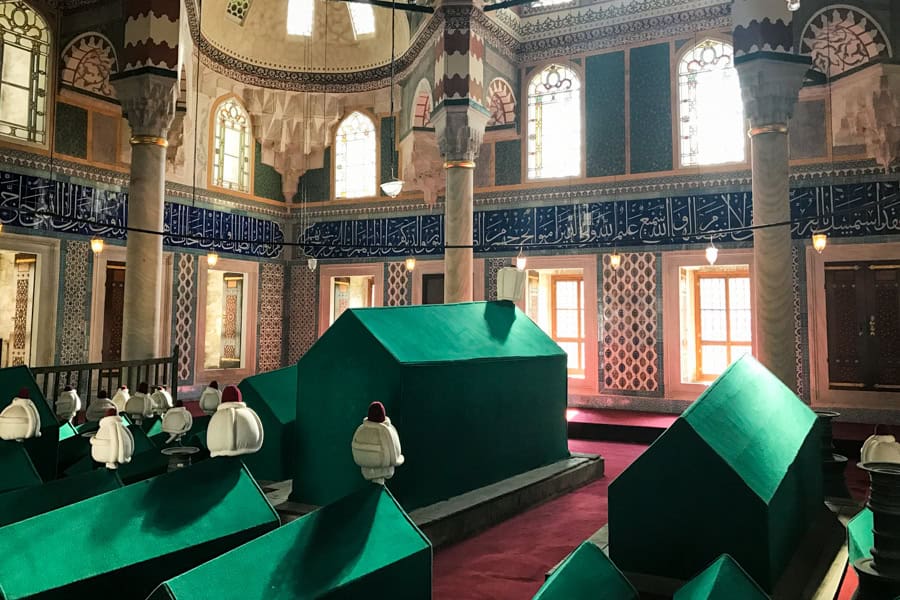
The Hagia Sophia Tombs are free to visit, and open Monday to Saturday from 9am to 5pm. There may be a brief security check and you’ll need to remove your shoes before entering each mausoleum.
Sip tea in a 16th-century madrassa
Time: Around 30–45 minutes.
From the tombs, make your way northeast along Kabasakal Caddesi until you reach the impressive Fountain of Sultan Ahmed III, built in the 1700s in Turkish Rococo style.
Opposite is Bâb-i Hümâyûn, the Imperial Gate of Topkapı Palace. You’ll return here later today to visit the palace.
For now, turn left and walk down the pedestrianised Soğuk Çeşme Sokak. This atmospheric, cobbled laneway runs along the rear wall of Hagia Sophia and is lined with restored Ottoman-era wooden houses.
Continue on until you see signs for Caferağa Medresesi. This charming little hideaway is housed in a 16th-century former religious school and serves çay (Turkish tea) and coffee, sweets and home-style meals in an umbrella-shaded courtyard surrounded by Turkish handicrafts.
Discover the treasures of the Istanbul Archaeology Museums
Time: Around 1.5–2 hours.
Head back to Soğuk Çeşme Sokak and continue down the hill until you reach the archways for Gülhane Park and the signs for the Istanbul Archaeology Museums.
In a land with a history as rich and ancient as Turkey, we reckon a visit to this national institution is a must, even if it’s just to see the highlights.
The museums are set across three 19th-century buildings in a peaceful, leafy courtyard facing Gülhane Park. They include the Archaeological Museum, which showcases Ottoman treasures; the Museum of the Ancient Orient, which houses Mesopotamian art and artefacts, and the Tiled Kiosk Museum, a beautifully restored pleasure palace built by Mehmet the Conqueror in 1472.
For us, the absolute stand-out here is the Hall of Sarcophagi in the main building – seek out the Alexander Sarcophagus and the Sidamara Sarcophagus: they are epic.
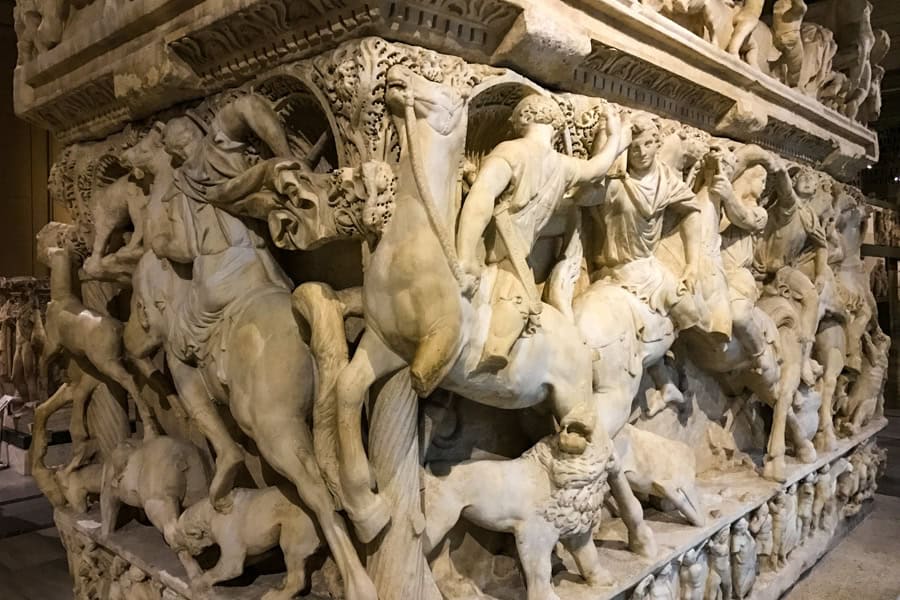
The Istanbul Archaeology Museums are open daily from 9am to 6.30pm. Restoration is an ongoing activity here so there’s a good chance one or more of the galleries will be closed – to be honest, this isn’t a bad thing as there’s simply too much to see in one visit.
Entry is €15 and you can buy skip-the-line Entry Tickets with Audio Guide online in advance here.
Find lunch in the Old City backstreets
The aim today is to arrive at Topkapı Palace after 2pm, once the crowds are starting to ease, so now is the perfect time to find somewhere for lunch.
If you head back up Soğuk Çeşme Sokak or onto nearby Alemdar Caddesi and the surrounding streets, you’ll find various options ranging from simple kebab shops and cheerful hole-in–the-wall cafés like Gülhane Sur Café, to swish tasting menus in a beautiful ancient cistern at Sarnıç Istanbul.
Explore the splendour of Topkapı Palace
Time: Around 3–4 hours.
Best time to visit: First thing or after 2pm (it’s at its busiest between 10am and 2pm).
Spend the rest of the afternoon exploring Topkapı Palace (Topkapı Sarayı). You can enter through either the Imperial Gate, Bâb-i Hümâyûn, or via the side entrance in Gülhane Park.
This enormous palace complex of pavilions, courtyards, private quarters, chambers and service areas was the seat of the Ottoman Empire for nearly 400 years – home to sultans, their wives, concubines, children and other members of the imperial household, as well as courtiers, officials and thousands of servants.
The key to enjoying a visit here is not trying to see it all. If you’re exploring independently, head straight to the Harem (off the Second Courtyard). Then make your way through the Imperial administrative centre and council hall of the Second Courtyard, the treasury, sacred relics, and private quarters of the Third Courtyard, and into the gardens, pavilions and water views of the Fourth Courtyard.
Topkapı is one of the most popular things to do in Istanbul, so it’s highly recommended that you buy your Topkapı Palace and Harem Ticket with Audio Guide online before you go. The Harem has a separate access ticket, usually included in a combo ticket when you buy online, but do check.
We’ve wandered the palace on our own, and it’s easy to feel a bit adrift if you have no context for what you’re seeing. The audio guide is fine but basic. We really feel this is the kind of place where you’ll get more out of having a real guide, at least on your first visit.
This highly-rated, small group Topkapı Palace and Harem Museum Tour showcases the best of the palace and its history over 3 hours with an expert guide. It includes entry to the palace and the harem, and gets great reviews (it starts at 1.30pm, so you’d need to adjust today’s itinerary slightly).
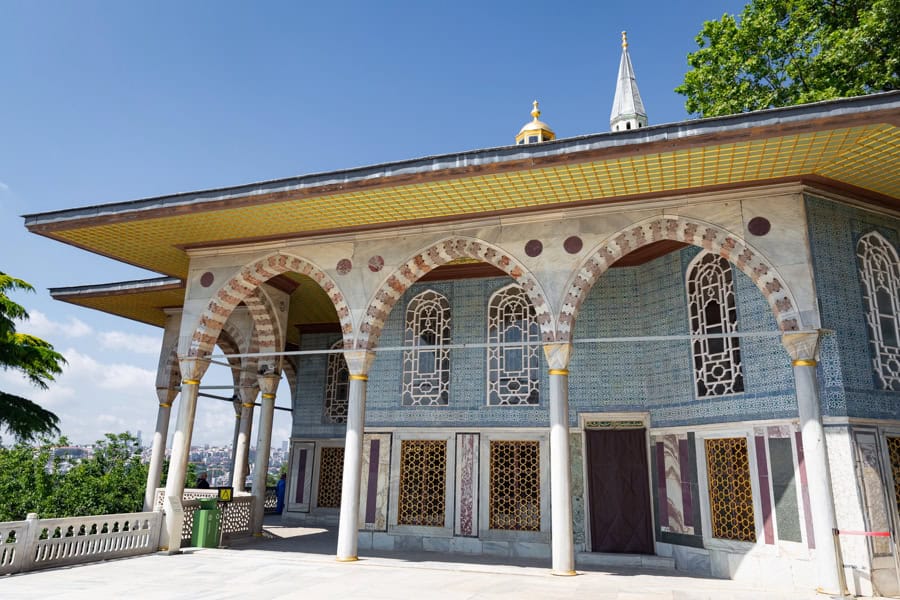
Topkapı Palace is open every day, except Tuesday, from 9am to 6pm. Ticket booths close at 5.30pm (5pm between October and April).
While booking online means you can skip the box office queue, you’ll still need to line up for a security check. If you really want to take your time exploring the palace, consider flipping today’s itinerary and starting the day here.
Stroll through peaceful Gülhane Park
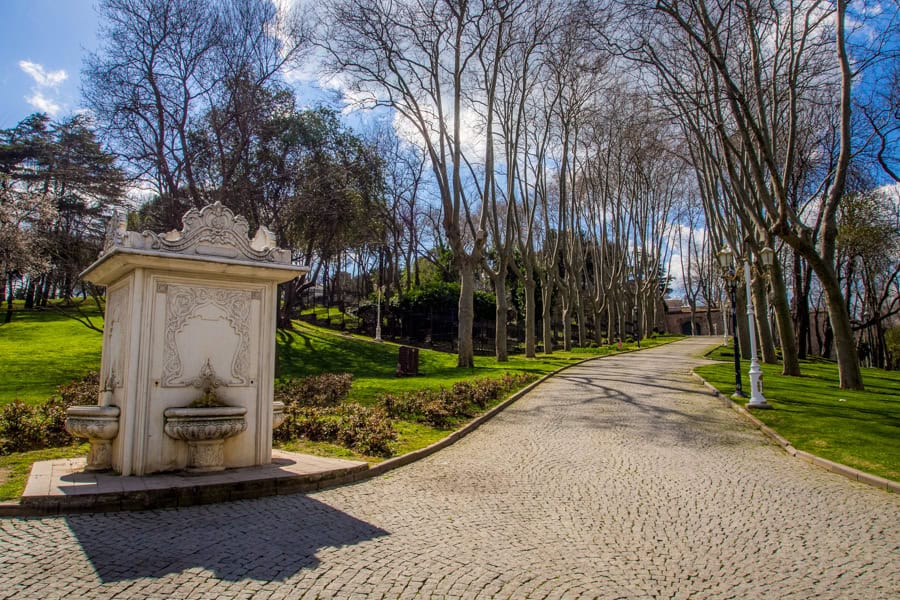
Edging the palace grounds is Gülhane Park (Gülhane Parkı), formerly a private garden for the Ottoman court, these days a public green space.
It’s a really lovely spot to wind up an intense couple of hours at the palace, especially in the late afternoon/early evening. If you’re visiting Istanbul in April, Gülhane blooms with tulips for the Istanbul Tulip Festival.
As you wander through the park, look out for the Atatürk monument, the 14th-century Tarihi Çeşme fountain and ancient cistern; the remnants of the Hagios Paulos orphanage built under Emperor Justinian in the 6th century; and the ancient Column of the Goths, believed to be the oldest Roman monument in the city. There are also viewpoints overlooking the Bosphorus and the Sea of Marmara.
Linger over dinner in the Old City
Eating in Istanbul is one of the city’s defining experiences.
You’ll find casual spots for a quick bite all over, so it’s easy to fuel up between sightseeing stops during the day. At night though, we recommend a slower-paced meze or grilled platter at one of the city’s neighbourhood restaurants or rooftop dining spots.
Our favourite restaurant near Gülhane Park is Gülhane Şark Sofrası: it has a wonderful local vibe, welcoming staff, and absolutely delicious Turkish food and wine.
Itinerary tip: Take in Old Istanbul from the rooftops
In our opinion, a drink or dinner on a rooftop terrace is an absolute must while visiting Istanbul.
There are plenty of spots in Sultanahmet and over in Galata and Karaköy. Rooftop joints tend to lean towards the more expensive side, but we reckon it’s worth it at least once for sunset and evening views across the city.
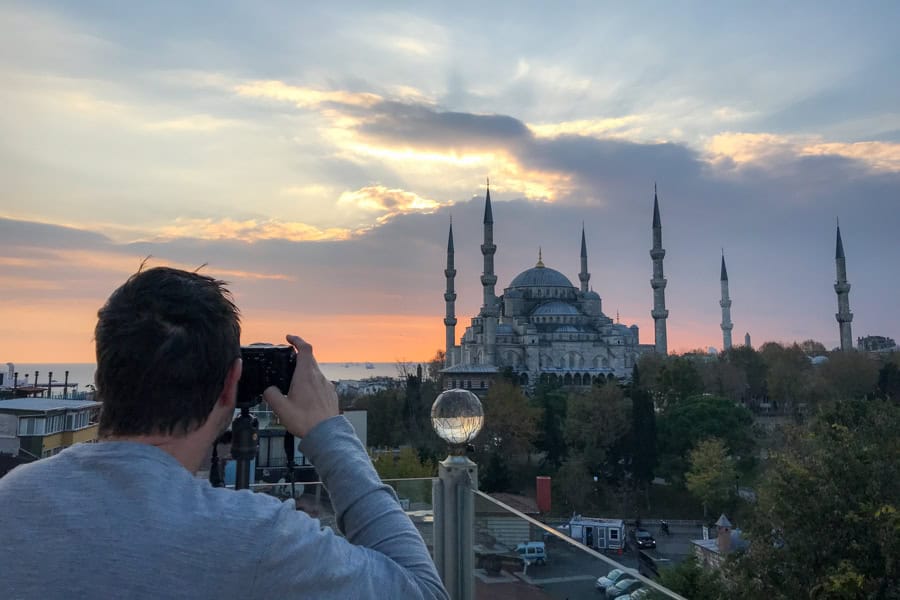
One of our favourite rooftop views in the Old City is from the bar at Seven Hills Restaurant in Sultanahmet. It’s totally touristy, the drinks are pricey, and you’ll find better food elsewhere, but for us, sitting with an Efes and watching twilight fall over both the Blue Mosque and the Hagia Sophia is a memory worth every penny.
Day 2: Historic Sultanahmet and Grand Bazaar
Itinerary: Blue Mosque > Grand Bazaar > Hippodrome of Constantinople > Little Hagia Sophia Mosque > Great Palace Mosaics Museum (currently closed) > Arasta Bazaar > Basilica Cistern > Evening Food Tour
Day 2 of our itinerary for Istanbul takes in more of the highlights of the Old City and the buzzing arcades of the Grand Bazaar, before wrapping up with an evening foodie immersion.
Experience the majesty of the Blue Mosque
Time: Around 45–60 minutes.
Best time to visit: Go for opening before the crowds gather or late afternoon – check prayer time closures.
The Blue Mosque, officially known as Sultan Ahmet Camii, is one of Istanbul’s most iconic sights. Its cascading domes and six minarets are a dominating feature of the Istanbul skyline. The muezzin’s call to prayer here is next level and, in our experience, stays with you long after you leave.
Built in the early 17th century for Sultan Ahmet I, the Blue Mosque was an Ottoman power statement designed to outdo the grandeur and beauty of the much older, Byzantine-era Hagia Sophia opposite.
The majesty of these two extraordinary structures facing each other is something to behold, and it’s the first scene we seek out whenever we’re in the city.
The Blue Mosque gets its nickname from its exquisite interior: more than 20,000 hand-painted İznik ceramic tiles, many of them blue-toned, cover every inch of the walls and domed ceilings. While craning your neck at the tilework, also take in the huge elephant foot pillars, the hundreds of stained glass windows, the marble mihrab (prayer niche indicating the direction of Mecca) and the marble minbar (pulpit).
If you’d like someone to show you around the Blue Mosque, check out this well-rated, 1 hour Blue Mosque Guided Tour. Your guide will take you around and inside the mosque, sharing insights about the architecture and history of the building, Islam and the surrounding area.
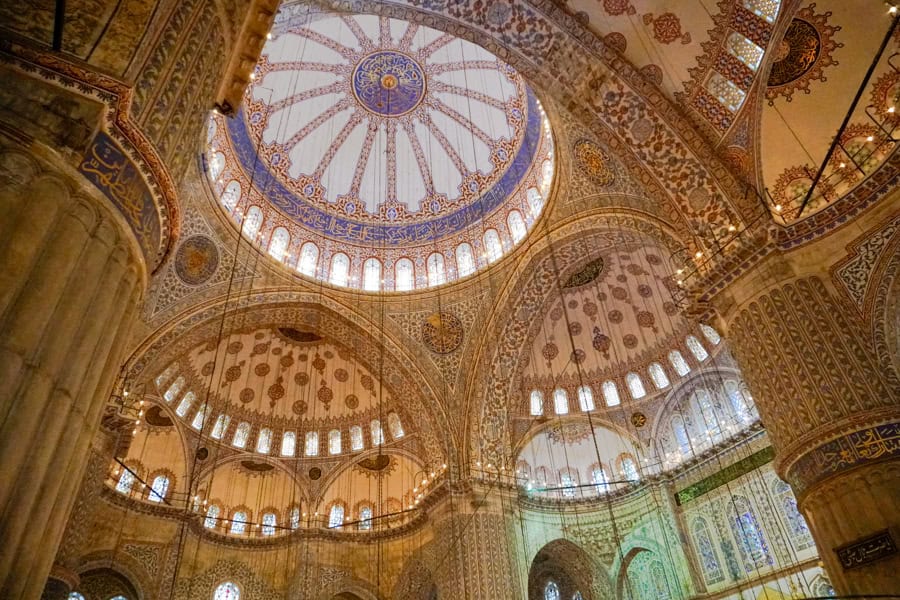
The Blue Mosque is open daily from 8.30am until an hour before dusk, and closes several times throughout the day for prayer. On Friday the mosque is closed until the afternoon. The main visitor entrance is on the side facing Hagia Sophia (the entrance on the Hippodrome side is for worshippers).
Entry is free (donations are welcome). There’s a security check which can lead to queues. Shoulders and knees must be covered and women must cover their hair. I always carry a scarf when I’m in Istanbul but there are scarves and wraps available to borrow at the entrance.
Pause in the Tomb of Sultan Ahmet I
Time: Around 15 minutes.
As you leave the Blue Mosque, you’ll see the Tomb of Sultan Ahmet I (Sultanahmet Türbesi).
Pop in here for a brief but atmospheric stop in the elegant final resting place of the young sultan who commissioned the Blue Mosque in the early 1600s.
The mausoleum is free to enter and it’s generally open from morning until late afternoon (it may also close during prayer times). As with the mosque, dress modestly.
Immerse in the Grand Bazaar
Time: Around 2–2.5 hours.
Best time to visit: Go early while crowds are still relatively light. It’s at its busiest in the early afternoon.
If you don’t mind a stroll, you can walk from the Blue Mosque to the Grand Bazaar (Kapalı Çarşı) in around 15 minutes.
Or make your way to Sultanahmet tram stop, hop on the T1 Bağcılar–Kabataş tram heading towards Bağcılar, and get off at Beyazıt–Kapalıçarşı tram stop, which puts you right by one of the main entrances.
The Grand Bazaar has been Istanbul’s trading nerve centre for more than 560 years. Once just a warehouse, over the centuries the shops multiplied, alleys and courtyards were absorbed, and the market expanded into the vast labyrinth you see today.
A visit here is all about the atmosphere – it’s a sensory supercharge and it gets more chaotic, noisy and congested as the day wears on. If you’re keen to buy stuff, have a plan and be ready to haggle. Otherwise, just go with the frenetic flow: wander the arcades, pop into the courtyards, take in the painted vaulted ceilings, and watch artisans at their crafts.
While it’s fun to just wander and get lost in the bazaar, a guide can take you to the corners and corridors most tourists never find. This popular 2–2.5 hour guided group tour, Grand Bazaar: From Rooftops to the Secret Passages, will give you a local’s perspective and birds eye views as you hear the stories of the historic market.
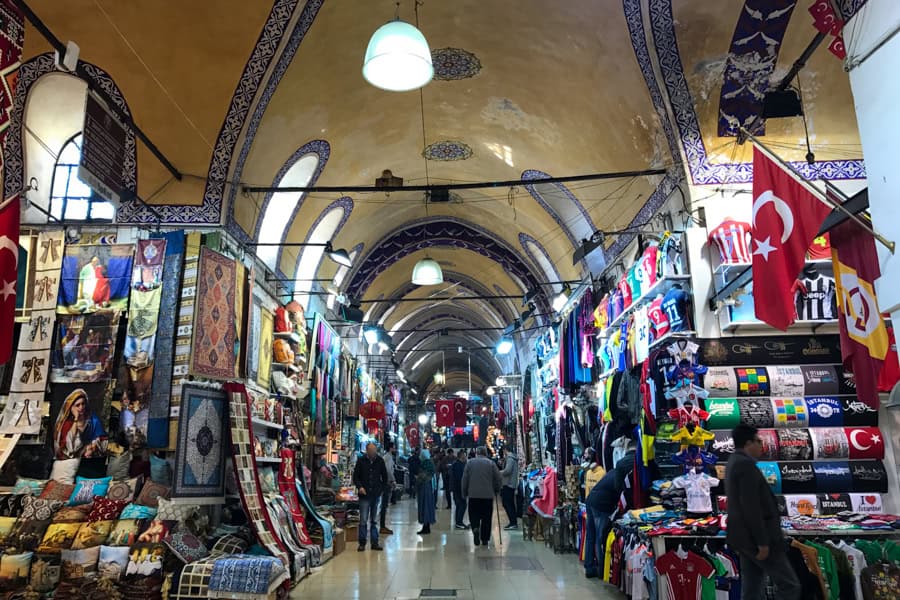
The Grand Bazaar is open everyday, except Sunday, and entry is free. Shops start to open around 9am and close by 7pm, though some shutters start coming down from around 4.30pm. Some places take credit card but cash is better here.
Grab a bite to eat in the bazaar quarter
Once you’ve had your fill of the market’s rabbit warrens, search out some lunch in the streets surrounding the bazaar.
For a quick bite, one option is Sultan Döner Kebab. Or walk a couple of minutes for a sit-down lunch of local and regional classics in the caravanserai-style space at Dehliz.
Trace the Hippodrome of Constantinople
Time: Around 15–20 minutes.
Make your way back from the Grand Bazaar towards the Blue Mosque on foot or by tram and head to the German Fountain (Alman Çeşmesi) at the head of Sultanahmet Square. This elegant, domed water fountain was a gift from the German Kaiser Wilhelm II at the turn of the 1900s.
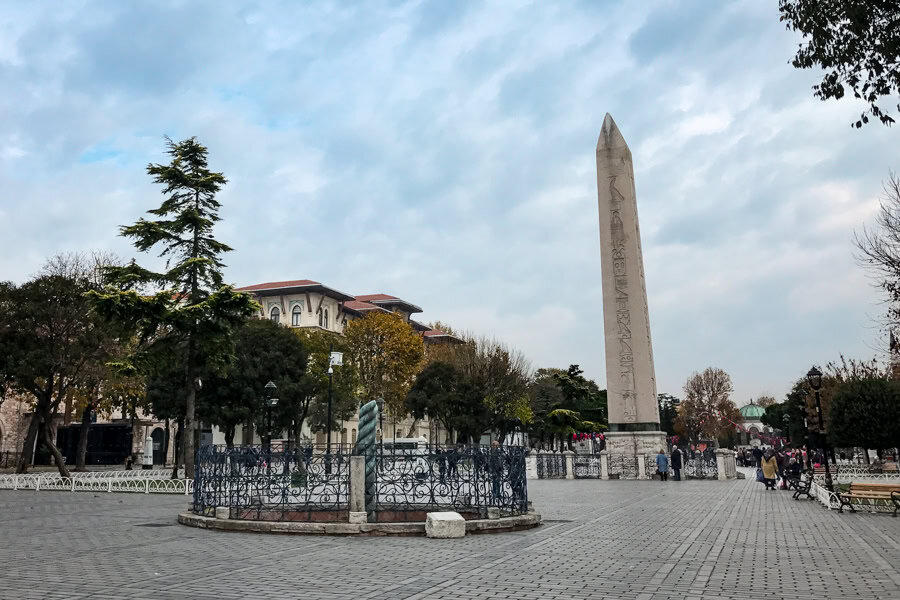
Sultanahmet Square is also known as the Hippodrome and it was the focal point of Byzantine Constantinople for a thousand years: a great rectangular arena that hosted imperial ceremonies, chariot races and public gatherings.
While only a remnant of the stadium survives, this long stretch of paved, tree-lined space invokes a real sense of Istanbul’s story; where its Roman, Byzantine, Ottoman and modern timelines converge.
Wander down the Hippodrome to the far end. En route, you’ll pass a series of ancient monuments: the Obelisk of Theodosius, a beautifully preserved column shipped to Constantinople from Egypt in the 4th century; the twisting Serpent Column from ancient Delphi, once crowned with three bronze snake heads (one head can still be seen in the Istanbul Archaeology Museum); and the Walled Obelisk, a 32-metre-high rough-cut stone column once covered in gilded bronze plates.
Search out the Sphendone
At the southern end of the Hippodrome, off to the left down Nakilbent Street, is a stretch of ancient brick-and-stonework called the Sphendone.
This is all that remains of the actual Hippodrome and – apart from the length of the promenade you’ve just walked – it offers perhaps the best sense of just how monumental the arena once was.
The curved structure supported the Hippodrome’s marble-clad viewing galleries, which were destroyed during the Fourth Crusade. Many columns and marble remnants were reused in the construction of Süleymaniye Mosque (see Day 4).
Itinerary tip: Discover Turkish rugs and a hidden cistern
En route to the Sphendone, you’ll pass a popular carpet house called Nakkaș Rug. Here you can browse high-quality rugs and learn about traditional Turkish weaving.
Given we’re on the road much of the time, we’re yet to be in the market for a rug, as beautiful as the creations here are. It’s what lies beneath the store that first drew us in.
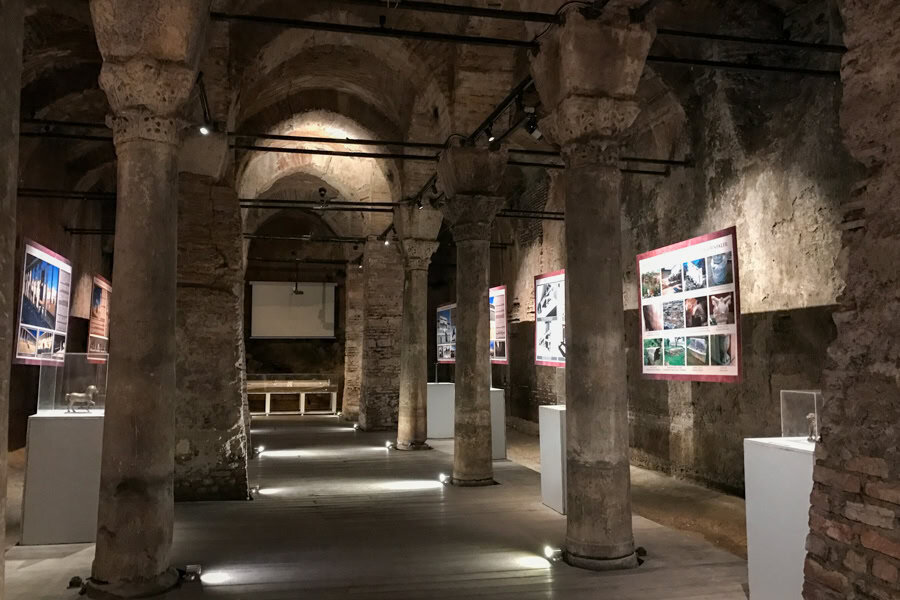
The atmospheric Nakilbent Cistern is a beautifully preserved 6th-century Byzantine water reservoir supported by 18 marble columns with art and other exhibits tucked between. Unlike the Basilica Cistern, this spot was crowd-free and very peaceful when we visited.
It’s free but these days you need to make an appointment the day before. If you’re keen to visit, drop Nakkaş Rug a message or pop into the store and ask. If you do go, set aside around 20 to 30 minutes; more if you plan to peruse the wares upstairs.
Step inside the Little Hagia Sophia
Time: Around 30–45 minutes, more if you stop for tea.
Just 5 minutes’ walk from the Sphendone on Küçük Ayasofya Caddesi is the Little Hagia Sophia Mosque (Küçük Ayasofya Camii).
This early Byzantine house of worship opened its doors in the 6th century as the Church of Saints Sergius and Bacchus. It’s considered the architectural forerunner to the Hagia Sophia Grand Mosque: its 17m-diameter dome was a prototype.
Compared to Hagia Sophia and the Blue Mosque, the building and interior here are much more restrained and on a much smaller scale, but the symmetry is just as sublime, as are the detailed capitals and lintels.
This is one of the less-visited highlights of Istanbul, making it a peaceful detour off the main tourist trail. There’s also a café on site and an arts and cultural centre with artisan workshops.
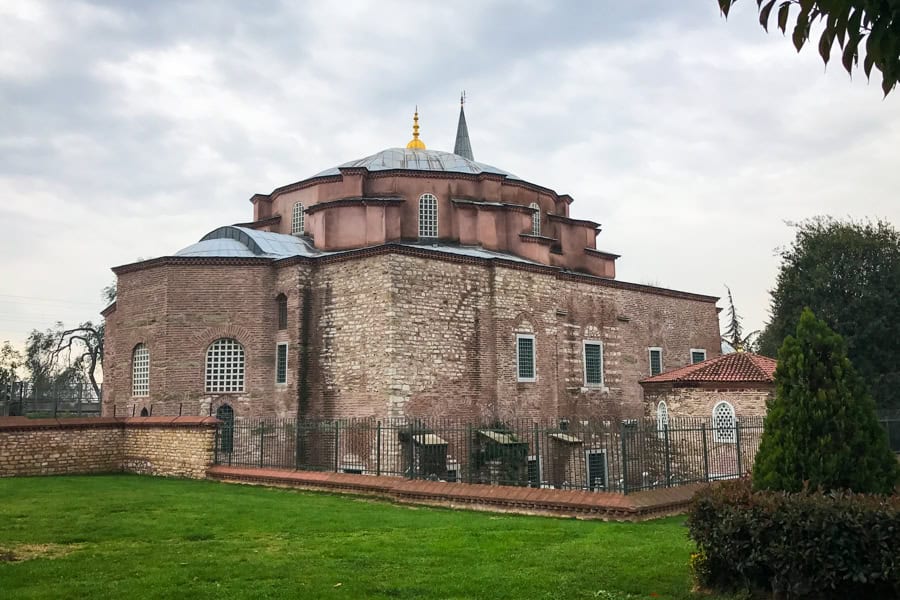
Little Hagia Sophia is open from around 9am to 6pm daily and it’s free to visit. It’s an active mosque so it closes during prayer times and the same rules of dress and etiquette apply.
Marvel at the Great Palace mosaics
From Little Hagia, make your way east along Küçük Ayasofya Caddesi for around 5 to 10 minutes until the road curves into Torun Sokak. On the left you’ll find the Great Palace Mosaics Museum (Büyük Saray Mozaikleri Müzesi).
This hidden gallery protects one of the most remarkable surviving remnants of early Byzantine Constantinople – patches of a mosaic floor in the once-vast Great Palace of Byzantium.
Around 250 square metres of 6th-century mosaics have been uncovered and meticulously restored here. They show wildlife, animal hunts, rural life, mythological scenes and more. The intricate tesserae work is delicate and beautiful, and teases a sense of what must have been a truly staggering imperial palace in its day, when the mosaic floor is thought to have covered up to 4,000 square metres!
We’re total nerds for ancient ruins so we’ll always search out sites like this. But presentation can make a massive difference and given the treasures here and their importance, we’ve always felt the museum could be a little better – so it’s good to see that it’s being renovated.
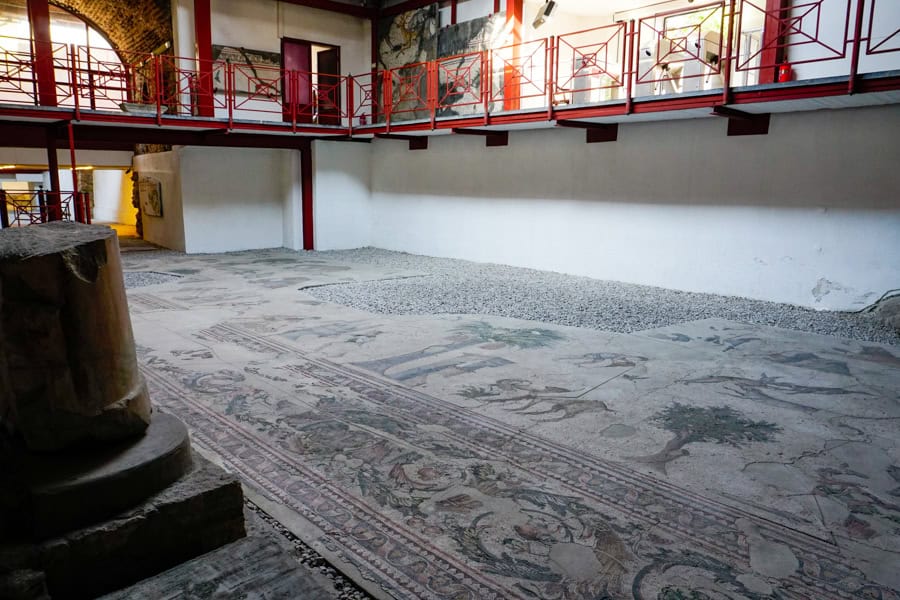
The Great Palace Mosaics Museum is currently closed for restoration. We feel it’s a must for our Istanbul itinerary so we’ll provide an update when it reopens.
Browse Arasta Bazaar
Time: Around 20–30 minutes; extra if you want to haggle or break for tea.
Where Küçük Ayasofya Caddesi bends intoTorun Sokak, you’ll find the archway entrance to Arasta Bazaar (Arasta Carşışı).
Tucked in behind the Blue Mosque, this charming arcade of boutique shops once formed part of the mosque’s külliye – the complex that supported the surrounding community with services such as schools, kitchens and hospitals.
Arasta’s offering is more upmarket than the Grand Bazaar, but it’s a fraction of the size. It has a mix of clothing, leatherware, textiles, jewellery, souvenirs and galleries.
It’s also a good place to pause for a tea or coffee, with a couple of cafés and restaurants in the area. Our go-to is Meşale Restaurant & Cafe at the top end of the arcade; it’s usually buzzing with a mix of locals and visitors and is a reliable spot for a bite to eat or Turkish çay and baklava.
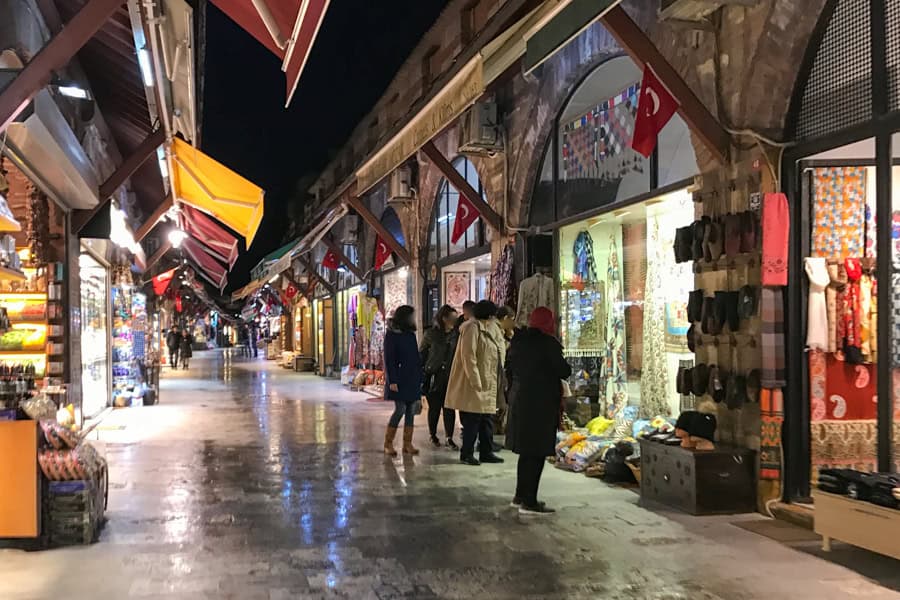
Arasta Bazaar is generally open from 9am to 7pm daily, though some shops may have differing hours. Meşale is open till late.
Find the Milion Stone
From Arasta Bazaar, head up the stairs and make your way across Sultanahmet Park to the far corner near Hagia Sophia.
Cross the street to the remains of a tall stone tower that looks a bit like a ruined chimney; it was once part of a Byzantine wall. In front of this is a stumpy white marble post.
It doesn’t look much but this is the Milion Stone, once a four-sided, domed structure at the very heart of Constantinople – ground zero for the measurement of distances to and from cities across the realm.
Descend into Basilica Cistern
Time: Around 45 minutes to an hour.
Best time to visit: Go first thing or later in the afternoon, once the daytime crowds have started to taper off (steer clear from late morning to mid-afternoon when queues are long).
To the right and just around the corner is an unassuming little brick building, the entrance to one of our favourite places to visit in Istanbul: the Basilica Cistern (Yerebatan Sarnıcı).
A vast underground reservoir commissioned by Emperor Justinian and completed in 532AD, the cistern once stored and supplied water to the Great Palace and surrounding districts.
There’s nothing quite like descending into this striking underworld for the first time. A ghostly amber glow reveals brick vaulted ceilings soaring above 336 marble columns reflected in still, dark water. The scale and symmetry are sublime and the whole experience is very atmospheric.
Wander the raised walkways, looking out for breaks in the regularity, like the ever-damp, tear-engraved Weeping Column, the two Medusa Head column bases, and the diverse column styles – many pillars were salvaged from earlier temples and buildings.
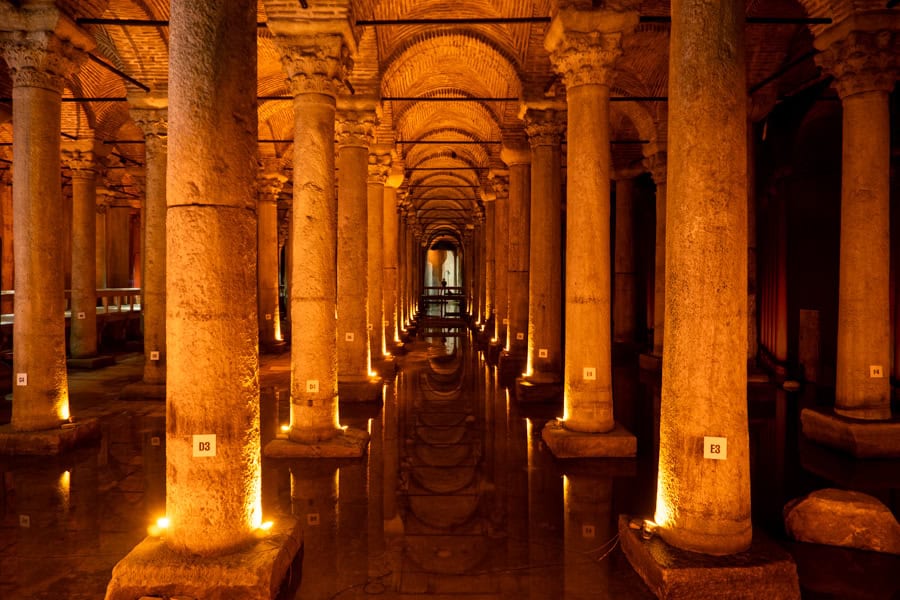
Basilica Cistern is open daily between 9am and 10pm, with tickets sold for a daytime or nighttime visit. Daytime entry is between 9am and 6.30pm – you can buy daytime Basilica Cistern Skip-the-Line Entry Tickets online in advance (tickets with audio guides are also available).
Night Shift entry is between 7.30pm and 10pm – buy Night Shift Entry and Audio Guide Tickets here. Evening tickets are twice the price but some say it’s even more magical, with far fewer people and beautiful, soft lighting.
Itinerary tip: Alternatives to Basilica Cistern
If Basilica Cistern is closed, the queues are ridiculous, or you’re put off by the cost, there are a couple of quieter, smaller, less-expensive cisterns nearby.
- Binbirdirek Cistern, the ‘Cistern of Philoxenos‘, is the second largest in the city, and one of its oldest. Its name means ‘1001 columns’ which is a bit of an embellishment, but the 232 warmly-lit marble pillars still make for an impressive sight, even if they don’t sit in water. It’s around €10 and it’s open daily from 10am to 5pm, except Sunday.
If you happen to be in the area at the right time, there’s a Whirling Dervish ceremony that takes place at 3pm daily among the columns. Find out more here.- Şerefiye Cistern, the ‘Cistern of Theodosius‘, dates to the early 5th century. It’s much smaller than the others, but it’s been carefully restored, with raised walkways over water, and lighting that highlights its 32 marble columns and vaulted brick ceilings.
It’s open every day, except Monday, from 10am to 6pm. You can buy skip-the-line tickets online and explore at your own pace with an audio guide.
Join an evening Istanbul food tour
An Istanbul itinerary isn’t a done deal unless you include a food tour of some kind. Seriously, eating here is a joy and a food tour is one of the best ways to experience the city beyond the sights.
Istanbul’s cuisine is diverse, delicious and highly social. A guided food walk will introduce you to flavours, stories and neighbourhoods you might not otherwise find on your own.
Tonight, we recommend joining an evening food tour and discovering the delights of Turkish cuisine with other like-minded travellers. The following Istanbul food tours both get excellent reviews:
- Turkish Food Night and Rooftop Experience – This 3 hour tour starts in the historic Sirkeci neighbourhood of Eminönü and showcases local street eats, pauses for a rooftop tea and coffee, then dishes up a range of Turkish dishes at a 130-year-old restaurant in Sulemaniye. Book tickets here.
- Local Hotspots & Gourmet Street Foods – On this 3.5 hour tour, you’ll sample of smorgasbord of traditional street foods, from stuffed flatbreads and dumplings to meats, mussels and sweets, as you explore Istiklal Street in Beyoğlu, from Galata to Taksim Square. Book your place on the tour here.
Itinerary tip: Dive deeper into Istanbul’s food scene
If you’re keen for a longer Istanbul food tour, there are plenty of half-day experiences available. These tours tend to depart between 9 and 11am and explore markets, meze bars, bakeries and local eateries, often on both the European side of the city and in Kadiköy on the Asian side.
We did an evening version of this top-rated European and Asian Side Guided Foodie Walking Tour and it was an absolute highlight.
We started with a tour and tastings in the Spice Bazaar on the European side of the city, then took the ferry over to Kadiköy on the Asian side, where we explored the markets and eateries, sampling everything from kebab and pide to kokoreç, baklava and local ice cream. Highly recommend!
Day 3: Vibrant Beyoğlu
Itinerary: Serpme Kahvalti Breakfast > Galata Tower > Arab Mosque > Banks Street > SALT Galata > Kamondo Stairs > Istanbul Modern & Galataport Promenade OR Dolmabahçe Palace > Bosphorus Sunset Cruise
On Day 3 of our Istanbul itinerary, walk the highlights of bohemian Beyoğlu and its vibrant neighbourhoods of Galata and Karaköy.
If you’re staying on the historic peninsula, Beyoğlu is across the Golden Horn and can be reached on foot over the Galata Bridge, or by tram on the T1 line to Karaköy.
Start the day with a sultan’s feast
Time: Around an hour.
Best time to visit: First thing in the morning.
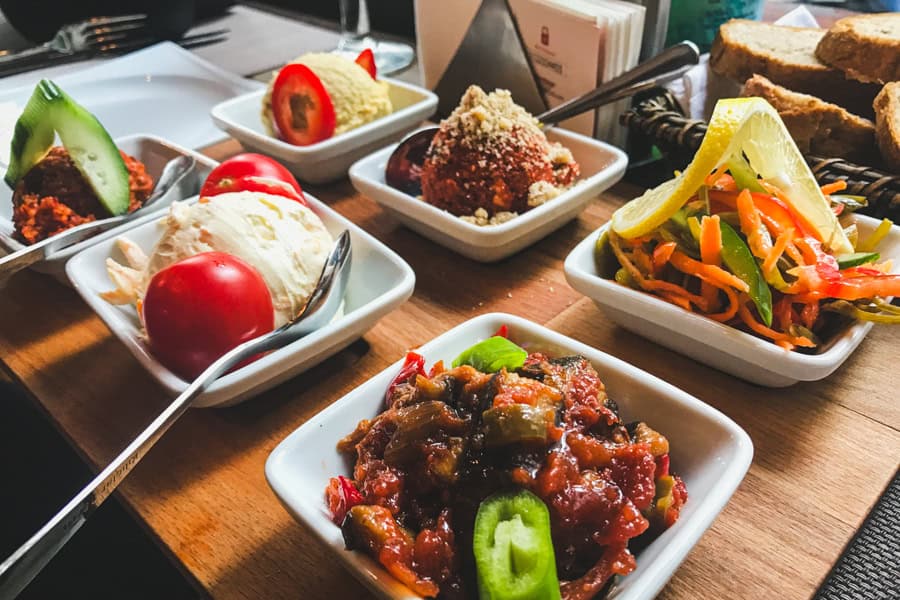
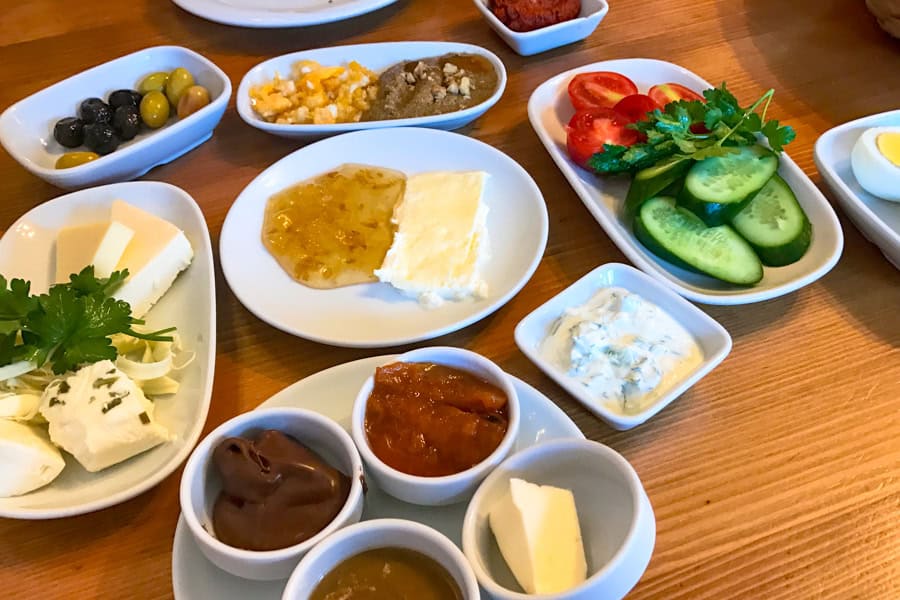
Many years ago, we were introduced to the supremo of Turkish breakfasts at a restaurant in our hometown of Sydney. It was the Turkish equivalent of a ‘Full English’ but even better: the serpme kahvaltı.
This feast of small sharing plates takes the typical Turkish breakfast spread to the next level. You’ll sample cheeses and olives, honey and clotted cream, spreads, dips and pastes, breads and pastries, eggs, sometimes spicy sucuk (a traditional sausage), menemen (Turkish scrambled eggs) and more. It is divine.
We highly recommend sitting down to a serpme kahvaltı at least once while visiting Istanbul, and Beyoğlu is one of the best areas to find it.
Our vote goes to Van Kahvaltı Evi (Google map link), which is a 10 minute walk from the Tophane tram stop. Get there for opening around 7.30am as it can get very busy, especially on weekends. Privato Café in Galata is another solid option.
Climb Galata Tower
Time: 45–60 minutes (depending on queues)
Best time to visit: As this is one of the more popular Istanbul attractions, arrive ahead of opening to beat the queues.
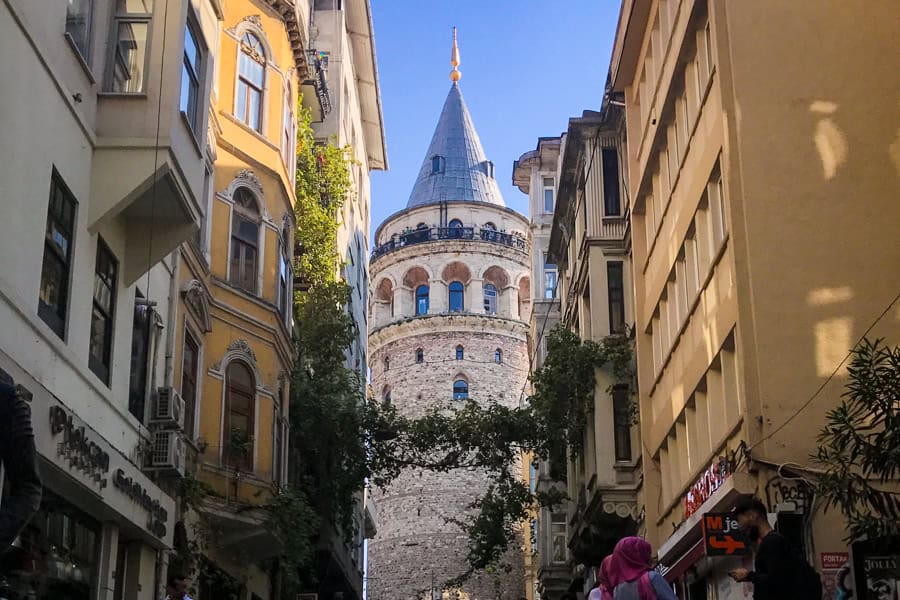
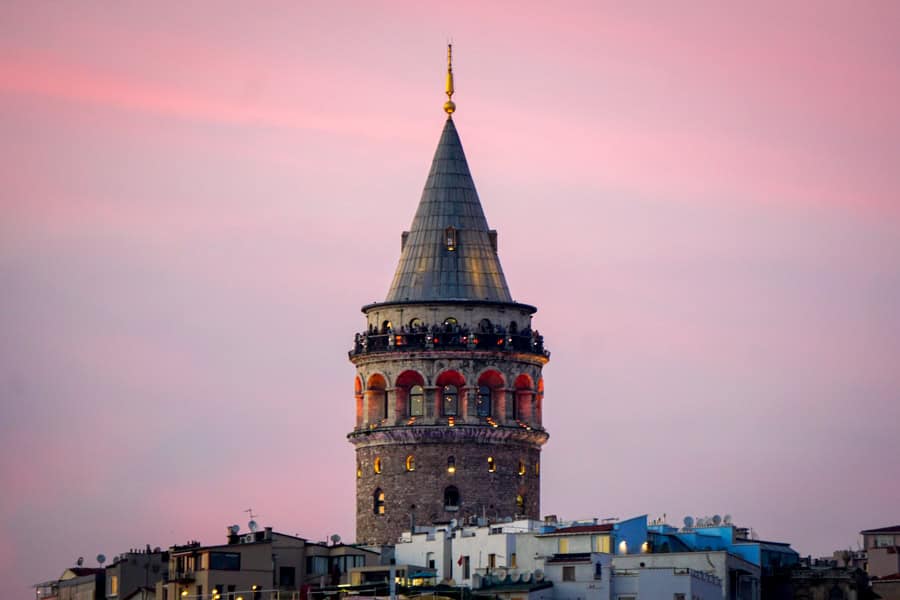
There’s a good chance you’ll have spotted the distinctive rise of Galata Tower over the past two days – it dominates the Beyoğlu skyline. The stone watchtower was built in the 14th century by the Genoese, who controlled this area at the time.
The panoramic views from its high circular viewing platform allow for a true appreciation of Istanbul’s unique setting on the doorstep of two continents. There are also museum displays, a café and a gift shop.
If you don’t feel like going up, do what we did and simply enjoy the atmospheric cobbled streets surrounding the tower.
Galata Tower is open daily from 8.30am to 10pm but closes briefly between 6.15pm and 7pm.
If you buy a Galata Tower All-Day Entry Ticket with Audio Guide online in advance, you won’t need to queue for tickets, just entry to the tower.
Discover the layers of Arab Mosque
Time: Around 30–45 minutes.
Head south of the tower along Galata Kuleski Sokak and Galata Mahkemesi Sokak for around 10 minutes to the Arab Mosque (Arap Camii), also known as the Genoese New Mosque.
Tucked well into the backstreets of Karaköy, this is one of the more off-the-beaten-track gems of our 4 days in Istanbul.
Built by the Genoese as a Roman Catholic church in 1325, it was later converted to a mosque by the conquering Ottomans. It still bears the hallmarks of an Italian Gothic-style church, with a basilica-style layout and a rectangular belltower-turned-minaret. Inside, you’ll find a beautifully serene space decked out in dark timber and red carpet.
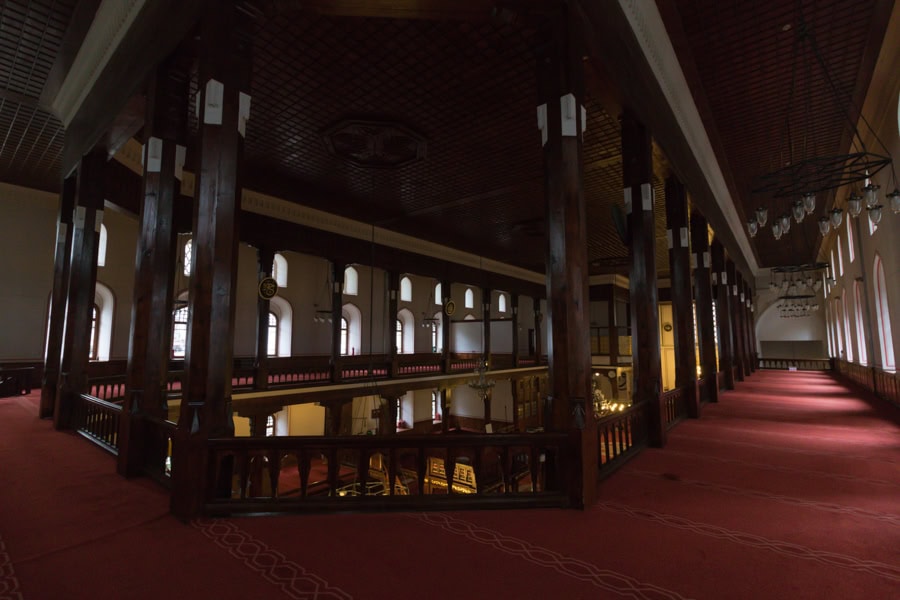
The Arab Mosque is open from around 9am to 6pm but closes for visits at prayer times. Entry is free (donations are welcome). Dress modestly and have a scarf handy for covering hair.
Stroll Bankalar Caddesi
Retrace your steps to Banks Street (Bankalar Caddesi) and head east. The grand old Neoclassical and Art Noveau buildings that line this street once housed the banks and financial institutions that powered the Ottoman Empire.
There are still a number of banks behind the arched and columned stone facades, but you’ll also find cafés, shops, galleries, and upmarket hotels like the aptly-named and highly-rated Bank Hotel Istanbul.
Step inside SALT Galata
Time: Around 15–20 minutes, longer if you stop in the café.
For a chance to see inside one of these stately buildings, pop into SALT Galata. It’s free to enter.
Once the Ottoman Bank headquarters, this is now a cultural centre with a research library, an art gallery with exhibition and event spaces, a museum, café and bookstore. There’s also a swish evening restaurant, Neolokal.
Head in to admire the atrium and marble floors, and pause for a mid-morning coffee or tea. Don’t miss the first-floor views across the Golden Horn to the Old City.
Pause at the Kamondo Stairs
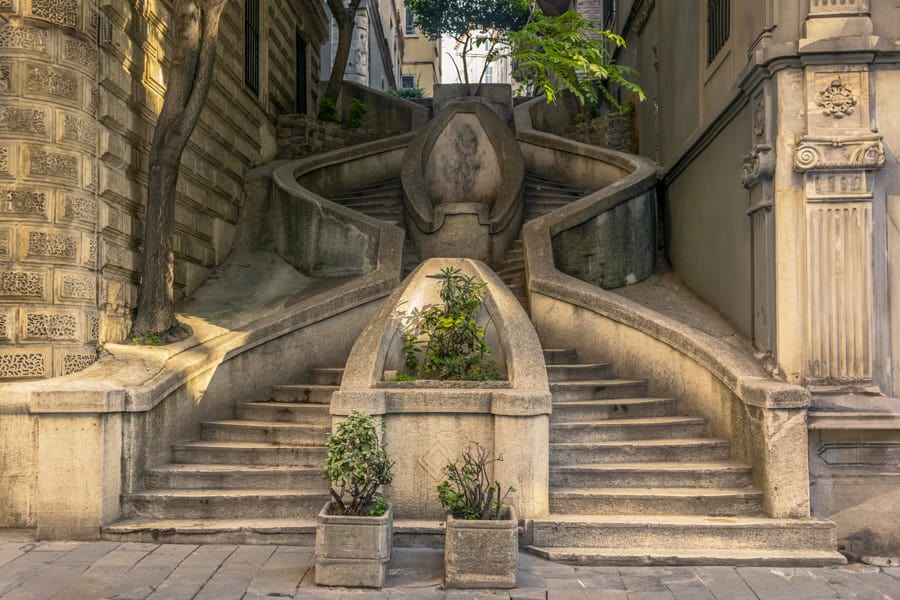
Across the street from SALT is one of the city’s more quirky photo stops: the unusual sweep of the Kamondo Stairs (Kamondo Merdilenveri). They were built in the 1870s by the prominent Kamondo banking family as a shortcut to their home.
There’s a touch of whimsy about this graceful stairway: it spills down from the street above, a wave of Neo-Baroque and early Art Noveau stonework between walls of straight, hard lines.
Try Istanbul’s famous Balık Ekmek
Time: Around 30–45 minutes.
Karaköy, particularly the streets around Galata Bridge and the waterfront, has a long fishing tradition that’s given rise to one of Istanbul’s great street foods: balık ekmek, the classic grilled fish sandwich.
You can get balik ekmek from hole-in-the-wall counters throughout the area so take your pick. Karaköy Fish Wrap is one great option – it’s around 10 minutes’ walk from the Kamondo Stairs. Take a seat at one of the streetside tables and people-watch as you enjoy this simple yet seriously tasty sandwich.
From there, head up through Gümüş Halka Sokak and along Hoca Tahsin Sokak until you reach another local Insta hotspot: Umbrella Street. This cute stretch of cafes, restaurants and shops (and a Russian church) is brightly decorated with street art and dozens of hanging umbrellas.
Visit Istanbul Modern or Dolmabahçe Palace
This afternoon’s itinerary depends on your interests and what you’re in the mood for: a contemporary counterpoint to all the grand history of the past couple of days? Or next level Ottoman opulence at Topkapı’s European-inspired successor?
Option 1: Istanbul Modern & Galataport Promenade
Time: Around 1.5–2.5 hours plus time on the promenade and a break for tea and baklava.
Just 10 minutes’ walk from Umbrella Street, on the waterfront, is Istanbul Modern. It makes sense that the city’s contemporary art museum has reopened in Karaköy’s creative neighbourhood. The gallery is a showcase of modern Turkish art, photography and multimedia. In addition to permanent and temporary exhibitions, the glass-and-aluminium building has a cinema, a café and library.
It fronts onto the Galataport Promenade, with awesome views across to both the Old City and the Asian side. Just nearby you’ll also find Karaköy Gülluoğlu – the home of baklava in Istanbul.
Istanbul Modern is open every day, except Monday, from 10am to 6pm (with extended hours on Fridays). Entry is around €20.
Option 2: Dolmabahçe Palace
Time: Around 3hours.
Best time to visit: From mid-afternoon or first thing; it’s busiest over the middle of the day and on weekends.
Dolmabahçe Palace, also sited on the waterfront to the north of Karaköy, marks the Ottoman’s 19th-century shift from the courtyard-based, ceremonial world of Topkapı Palace towards the grand European architectural style and centralised court life.
From the 1850s until the end of the Ottoman Empire in 1922, this was the sultans’ primary residence. Inside, you’ll find opulent ceremonial halls and reception rooms, as well as the private apartments of the Harem. You can buy Dolmabahce Palace and Harem Fast-Track & Audio tickets online in advance.
It takes around 30 to 40 minutes to walk from Karaköy to Dolmabahçe Palace. Or head to Tophane tram station and take the T1 tram to Kabataş, then walk from there.
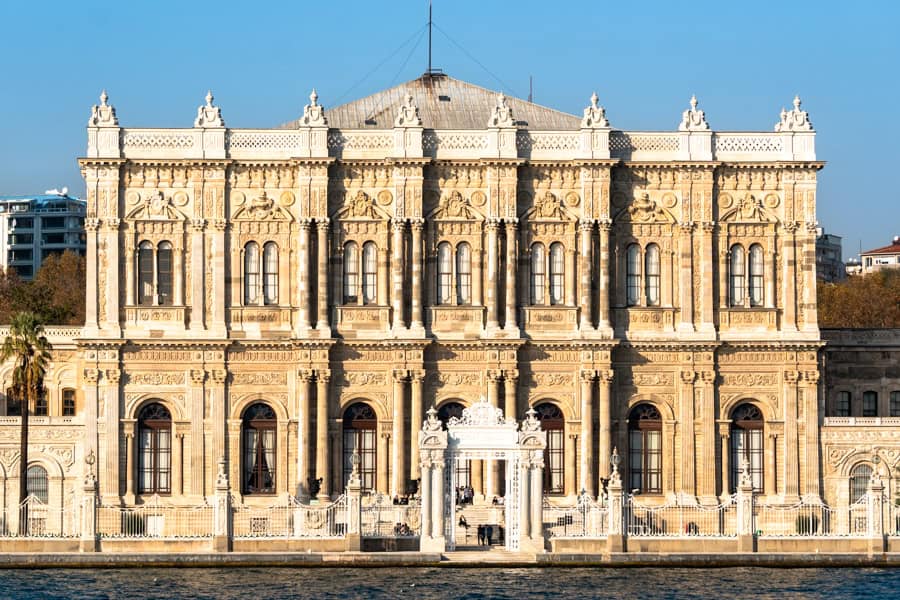
Dolmabahçe Palace is open every day, except Monday, from 9am to 5pm. This is another very popular Istanbul attraction so expect it to be busy.
As you need a good amount of time to explore here, aim to arrive by around 2pm but also check timings to ensure you leave enough time to get to your sunset cruise departure point.
Itinerary tip: Afternoon alternatives for Beyoğlu
If you aren’t fussed about modern art or another palace, other options this afternoon include:
- Exploring more of the Karaköy neighbourhood – see the beautifully lit arches of the Underground Mosque (Yeraltı Camii), the free Tophane-i Amire Culture and Art Centre (housed in an impressive Ottoman cannon and artillery factory), and the famous sweets shop, Karaköy Güllüoğlu; or
- Wandering up İstiklal Street, the city’s grand pedestrian boulevard of boutique shops, arcades, galleries, restaurants, and historic churches. Finish in Taksim Square, the heart of modern Istanbul, before taking the T2 red heritage tram back.
If you’d like a guided walk through the area, check out this top-rated 2 hour Galata Tower, Istiklal Street & Karaköy City Walk – it visits a number of the stops on today’s itinerary, as well as some of the historic sites and shops of Istiklal Street.
Cruise the Bosphorus at sunset
Time: Around 2–3 hours.
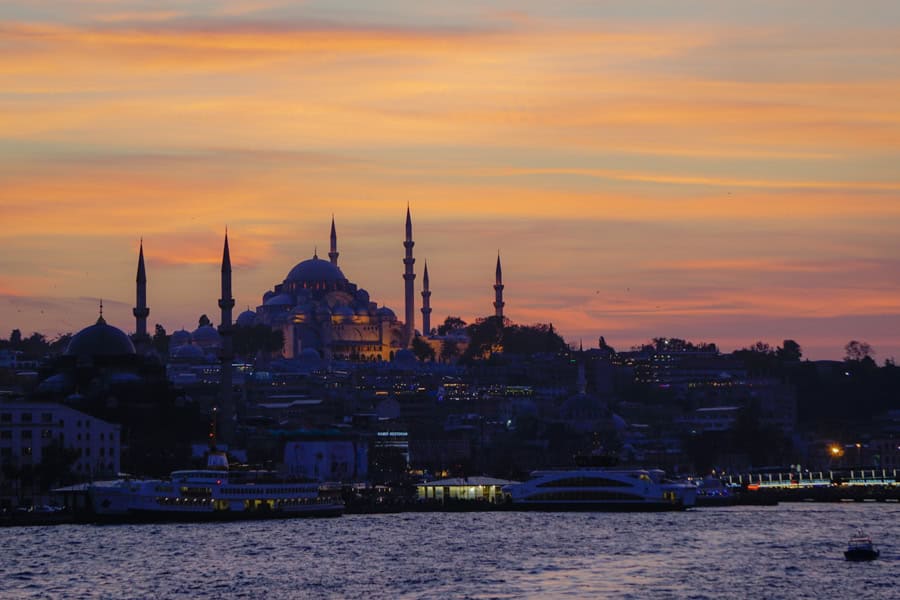
Istanbul sits at the confluence of the Bosphorus Strait, the Golden Horn and the Sea of Marmara, and these waters have shaped the city, bringing trade, cultural exchange, wealth and power. In our opinion, seeing the city from the water is a must.
One of the best ways to do this is on a Bosphorus cruise, and we reckon the best time of day to do it is sunset. This is when Istanbul’s distinctive skyline really comes into its own, with the city’s minarets and domes silhouetted against a golden backdrop.
There are loads of boat trips in Istanbul to choose from, whether you’re after:
- a simple sightseeing trip like this low-cost, 2 hour Bosphorus Sightseeing Cruise that we’ve done (there are daytime and sunset trips and an audio guide is included);
- a sit-down cruise with a 3-course meal and traditional Turkish folk dancing, like this hugely popular, 3-hour Bosphorus Dinner Cruise & Show; or
- something more relaxed and a smaller boat, like this highly-rated, very reasonably-priced 2 hour Bosphorus Yacht Cruise at Sunset – it includes light snacks, tea and coffee, but you can BYO drinks as well.
Boats depart from various points along the waterfront on both the Golden Horn and Bosphorus; check departure points and how to get there when booking.
Day 4: Imperial Istanbul
Itinerary: Chora Mosque > Walls of Theodosius > Süleymaniye Mosque > Spice Bazaar > Turkish Hammam
The final day of our 4 day Istanbul itinerary is a chance to explore more of the World Heritage highlights of the Old City and unwind in a traditional Turkish hammam.
Admire the Chora mosaics
Time: Around 60–90 minutes.
Best time to visit: Go for opening, between the dawn and midday prayers.
Start the day by making your way to Chora Mosque (Kariye Camii), in the neighbourhood of Edinerkapı.
Once a Byzantine church, then a museum, now a mosque, this peaceful, off-the-beaten-track gem is – in our opinion – one of the best places to visit in Istanbul. It’s also a World Heritage site.
While it’s on the outskirts of the historic peninsula and takes a bit more planning and effort to get to, we rate Chora a must-see for the stunning 14th and 15th-century mosaics and frescoes that decorate its interior: some of the finest in-situ Byzantine artwork still in existence.
To get to Chora, we took the T1 tram to Topkapı station then the T4 tram to Edirnekapı station. From there, we walked to Chora via remnant sections of the ancient Theodosian Walls.
If you’re interested in seeing more of the old walls in this area after Chora, make your way back up to Hoca Çakır Caddesi and follow the walls towards the water. They end at the Tekfur Sarayı Museum, where you’ll find the Byzantine Palace of the Porphyrogenitus. More about the walls and touring them further on.
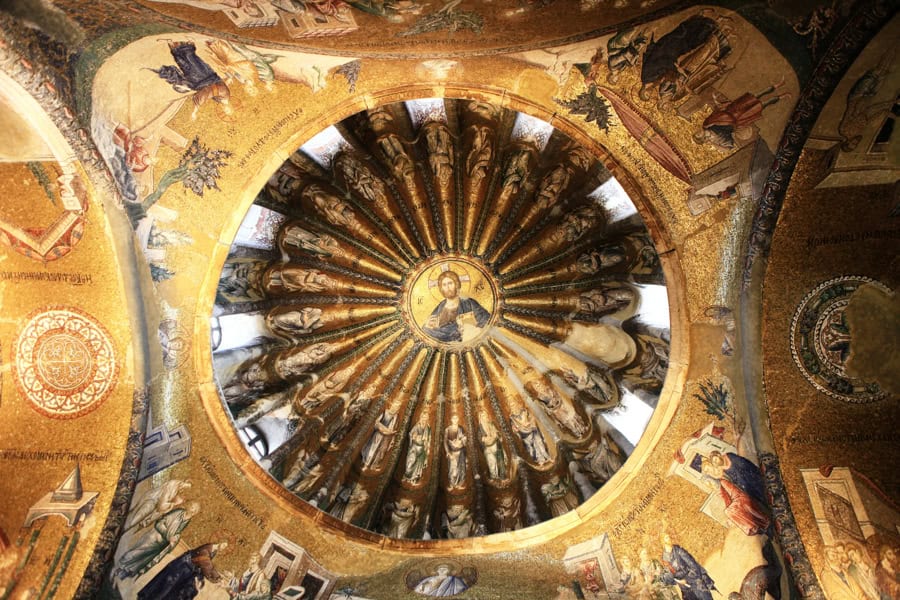
Chora Mosque is open to visitors from 9am to 6pm every day, except Friday.
You can buy Chora Mosque Entry Tickets online in advance, or at the site, and there’s a free audio guide.
As this is is an active mosque, prayer-time closures, and appropriate dress and head cover etiquette apply.
Itinerary tip: Walk the ancient Walls of Theodosius
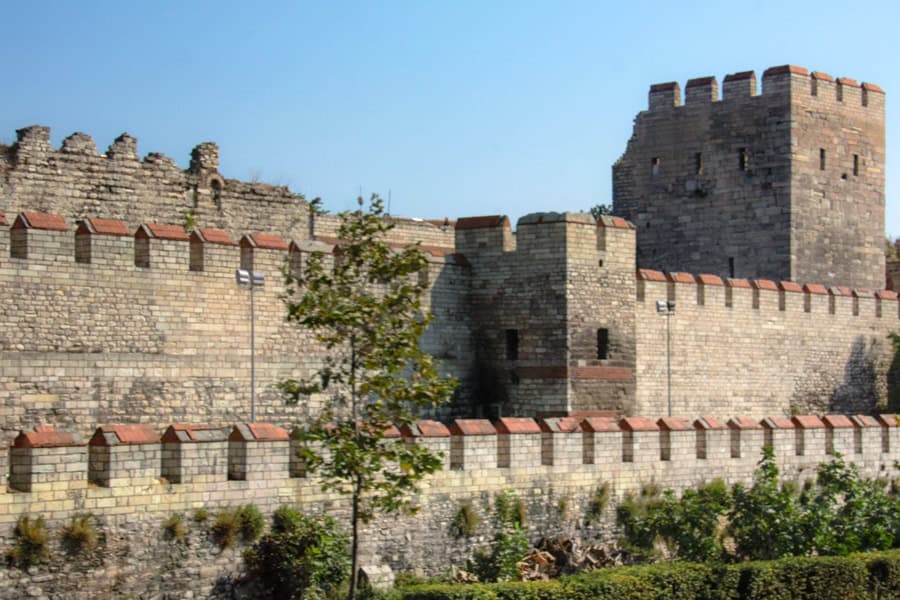
We love an old city wall and Istanbul has one of the best and most impressive ancient city fortification systems ever built.
The Theodosian Walls are named for the emperor who commissioned their construction in the 5th century.
While earthquakes, wars and time have led to much repair and rebuilding of the fortifications over the last 1600 years, the reason the Byzantine Empire survived as long as it did is because the walls were breached by land only twice in their long history.
It’s possible to walk along the walls for nearly 7km, from the Sea of Marmara almost to the Golden Horn. There are also places where you can climb up onto the fortifications, such as the Yedikule Fortress and Topkapı Gate.
If you’re following this itinerary for Istanbul and visiting Chora Mosque, you’ll pass the Edirnekapı sections of the walls en route and can explore them before or after your visit.
If you’re keen for a more immersive tour of the historic walls, this top-rated Walls of Constantinople and Byzantine Palace Tour gives you a guided 4 hour exploration from one end to the other. It includes hotel pick-up and drop-off, entry to Yedikule Fortress and a visit to the Palace of the Porphyrogenitus (going inside is optional and extra). A stop at Chora Mosque can also be added.
Experience the serenity of Süleymaniye Mosque
Time: Around 60 minutes.
Best time to visit: Work around prayer closures, and steer clear on busy Fridays.
From Chora Mosque or the walls, make your way to Süleymaniye Mosque, one of the highlights of Istanbul’s World Heritage showcase.
This grand complex was commissioned in the 16th century by Suleiman the Magnificent. So it comes as no surprise that it’s considered the most impressive of Istanbul’s Ottoman-era mosques.
Give yourself time to wander and absorb the architecture, decoration, open spaces and atmosphere. It’s formidable, yet elegant and graceful. There’s a serenity here that gets lost in the crowds at the Blue Mosque. Don’t miss Suleiman’s ornate mausoleum and the eye-catching Ottomon tombstones in the graveyard.
Perched as it is on one of Istanbul’s seven hills, the mosque’s outer courtyard also serves up one of our favourite views of the city: domes and towers give way to panos right across the Golden Horn and the Bosphorus.
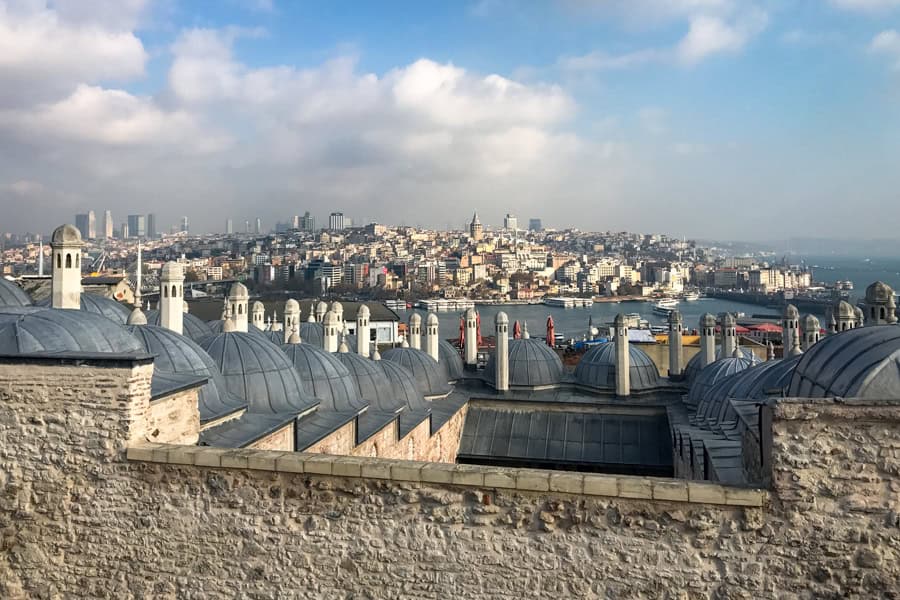
Süleymaniye Mosque is open from around 9am to 6.30pm daily. Entry is free and the usual modest dress code and head cover applies.
The least-fuss way to get here from Chora Mosque is by taxi or ride share. If you don’t mind walking though, take the colourful backstreets of Balat to Balat tram station (15 minutes), get the T5 tram to Eminönü station, then walk up to the mosque (another 15 minutes).
Sample the delights of the Spice Bazaar
Time: Around 60–90 minutes.
Best time to visit: Our itinerary has you exploring over the busy lunchtime period so you get a feel for the bazaar buzz – an exception to our general avoid-peak-periods rule. If you want to steer clear of crowds, go first thing or later in the day.
A 10 to 15 minute walk back down the hill via the Rainbow Stairs of Fetva Yokuş brings you to Istanbul’s other famous market, the Spice Bazaar. You might also hear it called the Egyptian Bazaar, as it was once Egyptian goods that fuelled the trade here.
Within the bustle of the 17th-century hall, you’ll find eye-catching piles of brightly coloured spices alongside mounds of dried fruits, sacks of tea, towers of nougat and baklava, and blocks of Turkish Delight (it’s called lokum here).
Enjoy a sensory stroll through the bustling bazaar, then head to one of the restaurants and cafés in the surrounding streets for a lunch stop (or vice versa). You’ll find lots of choice on the side closer to Gülhane Park.
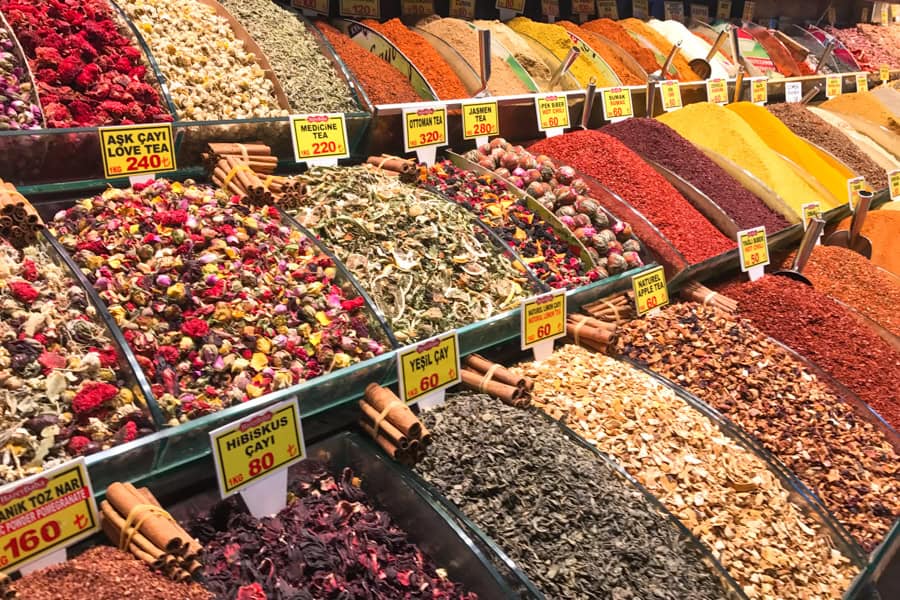
The Spice Market is open every day from 8am to 7.30pm. Entry is free but bring cash if you plan to buy (some places take card but cash is better).
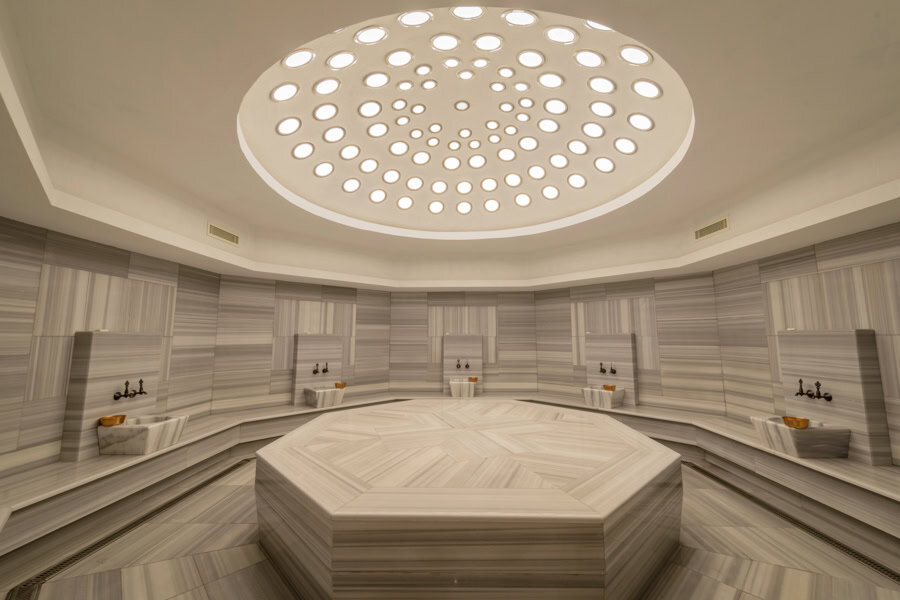
Relax in a traditional Turkish hammam
Time: Around 1–2 hours.
Istanbul’s hammam tradition runs as deep as its Byzantine roots and beyond: the bathing pastime was inherited from the Romans.
But the Turkish bathhouse really came into its own under the Imperial Ottomans, who made the baths an essential part of city life. They were often built into mosque complexes, serving as places for cleansing and socialising.
You’ll find a wide range of hammams throughout the city; some of the grandest date back to the 15th and 16th centuries.
We opted for a hammam in the beautiful surrounds of Mehmet the Conqueror’s 15th-century private bathhouse at Aga Hamami in Beyoğlu, but there are also some excellent options in the Old City if you want to stay in that area today.
We go into detail about our hammam visit, how it works, etiquette, what you can look forward to, as well as some top hammam options around Istanbul, in our post What to Expect from an Istanbul Hammam Experience. Be sure to book ahead.
End the day on Galata Bridge
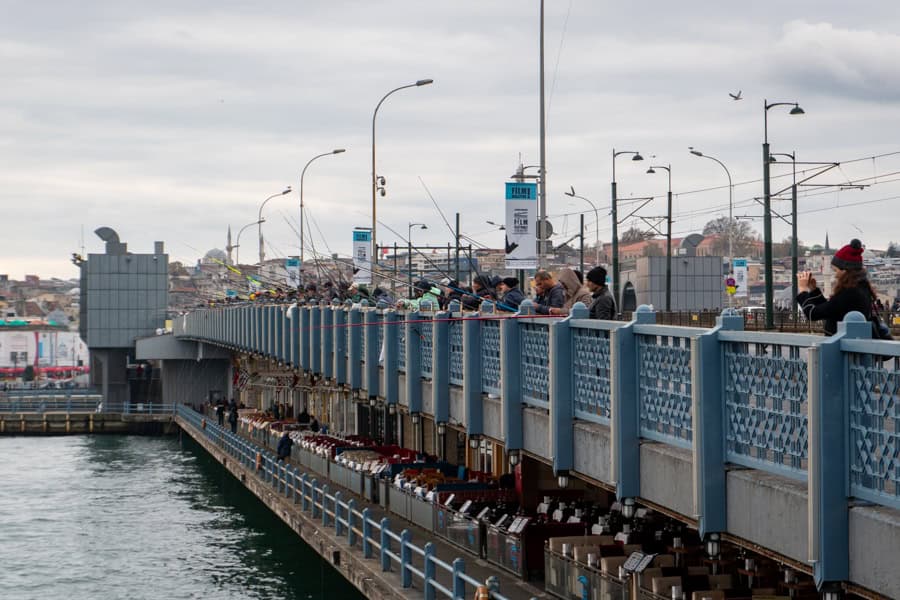
Before searching out dinner in the city tonight, make your way to Galata Bridge.
It’s absolutely bustling on the bridge at the end of the day, with locals and visitors strolling, and dozens of fishermen casting lines.
The lower span of Galata Bridge is home to a bunch of busy seafood restaurants. They’re largely geared towards the tourist market and while we haven’t personally eaten there yet, we’ve read some pretty mixed reviews.
If you’re after a quick grilled fish or meze plate with views and vibe, this might make for a fun stop. If you want quality fare without the tourist mark-up, you’ll find better options a few streets away on either side of the bridge.
Final thoughts on visiting Istanbul
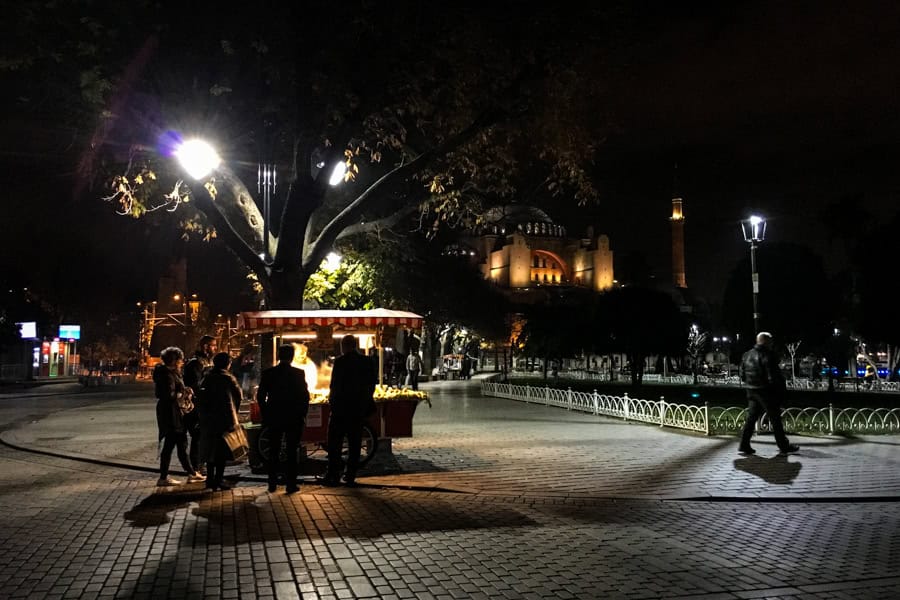
We have a bit of a tradition whenever we wrap up an Istanbul trip: after sharing a tasty Turkish meze, we wander through Sultanahmet Park under the lights and minarets of the Blue Mosque and Hagia Sophia, pause to pat the friendly street cats and dogs, then stop for a late evening çay and baklava at Meşale in Arasta Bazaar.
For us, it’s kind of like tossing a coin in the Trevi: as we clean up those last flakes of sticky baklava, take that last sip of sweet Turkish tea and reminisce on another epic stay, we’re pretty much guaranteeing our return to this extraordinary city.
There’s always more to see in Istanbul.
Planning an Istanbul Itinerary
How long do you need?
We never feel like our Istanbul trips are long enough. With this much history and culture at your feet though, you have to be pragmatic.
We believe the city deserves at least 3 full days. This gives you a chance to see the major Istanbul attractions around Sultanahmet and Galata. With 4 days in Istanbul, you can cast the net a little further, plan around peak periods, and spend a bit more time in the places you visit.
If you have 5 days or more, even better. Here are some of the things we would do with an extra day or few:
- Join a half-day food tour like this one and discover the epic eating to be had in the street stalls, markets and meze bars on both the European and Asian sides of the city;
- Spend a day and evening exploring the local markets, shops, cafes, bars and sea views of Kadıköy on the city’s Asian side;
- Ferry up the Golden Horn to visit the sacred Eyüp Sultan Mosque, and take the cable car up to Pierre Loti Café for views across the city;
- Join a guided walking tour of Fener and Balat in the Old City, once the residential epicentre for Istanbul’s Greek Orthodox and Jewish communities, and home to religious houses, heritage sites, and brightly coloured Ottoman-era wooden houses;
- Explore the 15th-century Rumeli Fortess, built by Mehmed the Conqueror to launch his conquest of Constantinople;
- Spend more time exploring Beyoğlu, including Istiklal Street to Taksim Square.
Best time to visit Istanbul
You can visit Istanbul any time of year; it really comes down to your tolerance for heat, cold, crowds and cost.
We tend to visit in Autumn (September and October) and it’s a great time of year: nice temps, lively without being overwhelming. It’s also perfect for long days exploring on foot, wandering neighbourhoods, and enjoying the Bosphorus without the intensity of peak-season heat.
The Spring months of March through May are also a lovely time for an Istanbul itinerary, with pleasant days, manageable crowds, and better value on accommodation. April is tulip season, with places like Gülhane Park in vibrant bloom and the annual tulip festival underway.
A peak Summer visit (July and August) will give you long days and sunshine; just be prepared for heat, humidity, crowds, and queues at the major sites. Plan for early starts and late finishes.
Winter (December to February) is much quieter, more atmospheric, and often more affordable. Shorter days and grey weather mean it’s better suited to indoor discovery – think museums, historic sites, cosy cafés and steamy hammams. Bring lots of layers for outdoor exploring.
Getting to Istanbul
Istanbul is very well connected, and easy to reach from almost anywhere by air, as well as overland and, in some cases, by sea.
Arriving by plane
Most international visitors arrive via iGA Istanbul Airport (IST) on the European side. This is one of the world’s largest airports, with global connections.
A second gateway, Sabiha Gökçen Airport (SAW), is on the Asian side of the city and handles mainly domestic and budget flights.
We’ve found that when arriving by plane, arranging a private transfer from the airport direct to our stay is the most straightforward and comfortable option.
Look for a top rated, highly reviewed option like this one, which transfers from Istanbul Airport (IST) to all parts of the city, and tracks your flight, ensuring drivers wait if your flight is delayed. Another solid option is a pickup arranged via global transfers company, Welcome Pickups.
There are airport shuttle bus services – Havaist from Istanbul Airport and Havabus from Sabiha Gökçen Airport. They’re low-cost and can get you to hubs within the city, but you’ll still need to walk, tram or taxi your way to your stay. You can pay by card or use the Istanbulkart (there are kiosks to buy cards at the airports). Havaist is also included in the Istanbul Tourist Pass.
Then there’s the metro but depending on where you’re staying, you’ll likely need to make several mode changes, which isn’t fun when you’re toting luggage.
Arriving overland by bus or train
Travelling overland from Europe to Istanbul is also possible, with long-distance buses linking the city to other cities within Turkey, and to neighbouring countries such as Greece and Bulgaria. Check out platforms like Busbud to compare routes and prices.
If train travel is your thing, there’s the Istanbul–Sofia Express, which starts and ends at Halkali on the outskirts of Istanbul (buy tickets at Halkali or Sofia station). Other international train options remain relatively limited.
Within Turkey, getting to Istanbul is straightforward thanks to frequent domestic flights, a strong intercity bus network, and high-speed rail services connecting major cities like Ankara and Konya.
Arriving by water
Istanbul is a major cruise port, with most cruise ships docking at Galataport in Karaköy.
If you arrive this way, you’re on the doorstep to the city: Galata Tower, Karaköy’s café and restaurant scene, ferry wharves, and the T1 tram direct to the Old City, are all within walking distance.
Apart from the many ferries running daily between the European and Asian sides of Istanbul, intercity ferries are largely limited to a couple of ports on the Sea of Marmara. International ferries from the Greek islands tend to sail to southern ports in Turkey, like Bodrum and Fethiye.
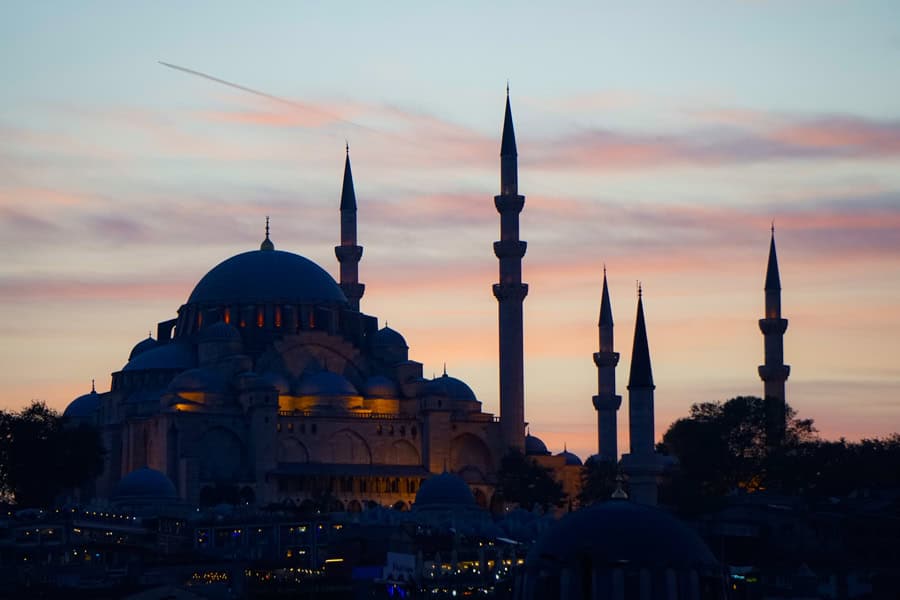
Getting around Istanbul
Istanbul is big, but it has a good public transport system. You won’t need a hire car (and with the traffic, you wouldn’t want one).
There’s plenty of on-foot exploration over the course of our 4 days in Istanbul itinerary, but between the tram, bus and ferry (there’s also a metro), getting around Istanbul is pretty easy.
You can access all of these modes, as well as the city’s cable cars and funiculars, with the rechargeable Istanbulkart. Cards are available at small, signposted kiosks near stops and stations. You buy the card, top it up with credit, tap on and off, and recharge as you go.
Most public transport services accept contactless card payment now, but it’s cheaper to go with the Istanbulkart. Same with limited use paper tickets; they’re available but more expensive per trip.
There are taxis and rideshare services, including Uber, and local companies BiTaksi and iTaksi. We’ve yet to use them and we’ve read mixed reports about reliability, overcharging and scams. If this is your preferred way of getting around, we recommend doing some research first so you know what to expect.
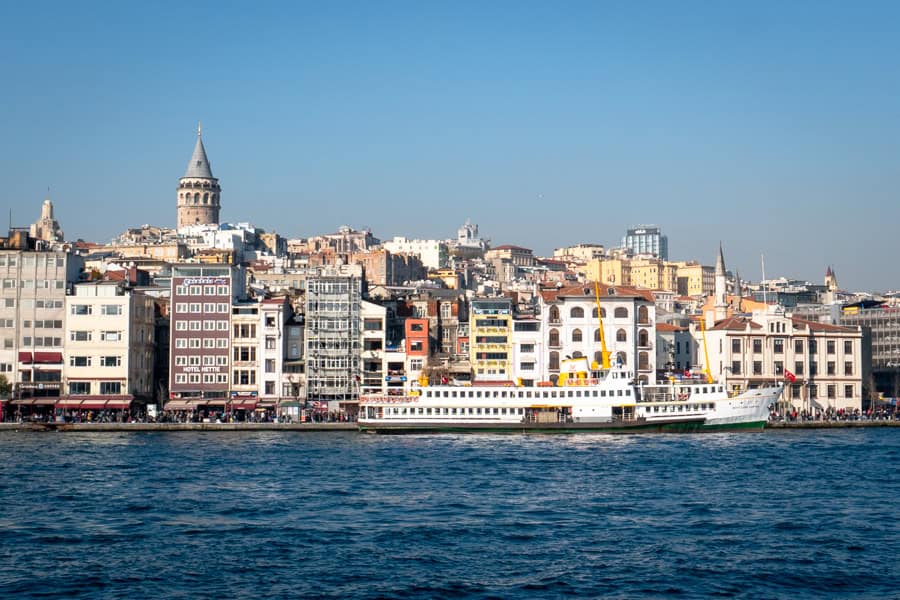
Where to stay in Istanbul
As you’d expect from one of the world’s largest cities, accommodation in Istanbul caters to every style of traveller and budget. Stays in the city are generally very good value for money compared with other major European cities.
You’ll find small family-run boutique hotels tucked into historic buildings, mid-range modern hotels with rooftop terraces, and high-end luxury stays in restored Ottoman palaces or along the waterfront. Apartments and serviced stays are also common, particularly in Karaköy, Beyoğlu, and Kadıköy.
Choosing the location of your accommodation in Istanbul comes down to how you want to experience the city, and for first-time visitors, location matters.
We’ve written about this in more detail, along with suggested good value, mid-range and upmarket stays in each area, in our dedicated post: Where to stay in Istanbul.
In the meantime, here are some suggested mid-range stays in Sultanahmet and Karaköy on the European side, and Kadiköy on the Asian side, to help you get started; they all have excellent reviews:
- Sultanahmet: World Heritage Center Hotel – Centrally located stay offering comfortable, well-maintained rooms and a rooftop terrace with stunning views toward Hagia Sophia and the Blue Mosque.
- Karaköy: Union Hotel Karaköy – Centrally located hotel near the waterfront and Galata Bridge with comfortable, modern rooms and excellent access to transport links. Spectacular views from some rooms across the Golden Horn to the historic peninsula.
- Kadiköy: Dekalb Hotel – Well-located stay near the markets offering bright, modern rooms, friendly service and excellent access to ferry, metro and bus connections for exploring both the Asian and European sides of Istanbul.
We stay in Sultanahmet as we love being in the heart of the Old City and waking to the Blue Mosque’s adhan. Two places we rate for their location, cosy rooms and excellent service are Katelya Hotel and Sadaret Hotel.
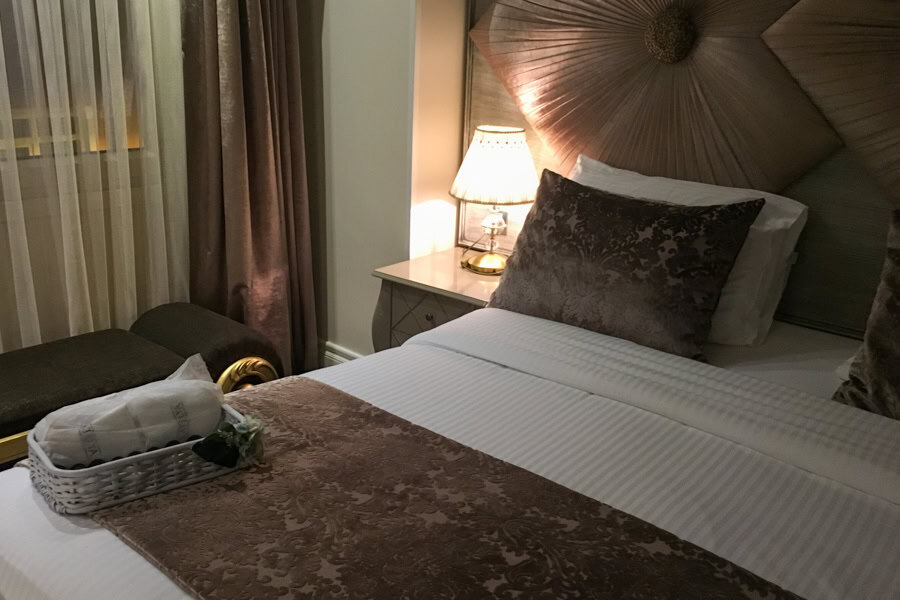
Visiting Istanbul’s mosques and orthodox churches
Istanbul’s houses of worship are some of the most sublime and serene places you can visit, but there are some important things to be aware of.
The city’s mosques close for visits five times each day for prayer, and prayer times change daily. You’ll know the mosques are closing when you hear the call to prayer. They reopen around 30 minutes to an hour later.
On Fridays, mosques are often closed for visits all morning or all day; this is a sacred day in Islam and the busiest day at the mosques. Ideally, go another day if you can.
Some of the city’s iconic sites, like the Hagia Sofia and Chora, are now active mosques as well and so also have prayer time closures.
Itinerary tip: Check current prayer times for Istanbul.
Whether you’re visiting a mosque or an orthodox church, it’s respectful (and required) to dress modestly. Shoulders and knees should be covered, and at mosques ladies need to cover their hair as well (I always carry a scarf with me in Istanbul, but scarves and wraps are often available to borrow or hire on site).
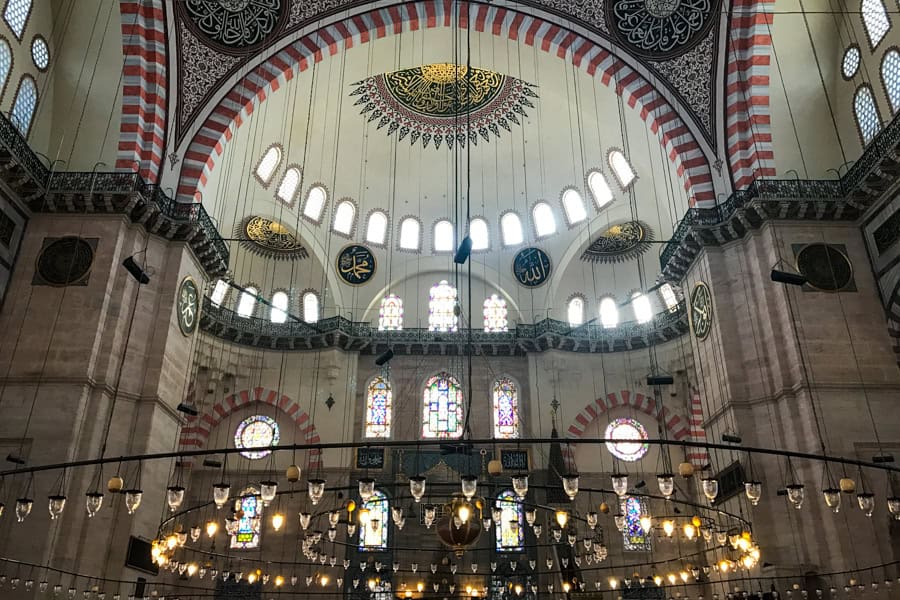
Guided Tours of Istanbul
We personally love to explore places independently: working to our own schedule, getting off the beaten track, and arranging guides for specific sites and places when we want to dig a little deeper.
Our Istanbul itinerary is designed in this spirit – it provides a self-guided structure for 4 days in Istanbul (or more) that also gives you the flexibility to ramp things up, slow things down, or move things around to suit your preferences.
However, if your time is limited or you’d prefer a guide for part or all of your visit, there are literally dozens of Istanbul tours that combine some or many of the sites we’ve included here into guided programs covering half-a-day to multiple days. Below, you’ll find a couple of top-rated examples with great reviews:
Useful Travel Resources
Stays: We use Booking.com for its wide choice of stays and Genius perks.
Airport Transfer: Take the hassle out of arriving laden with luggage by booking a private transfer or a Welcome Pickups transfer from the airport to your Istanbul stay.
Car Rentals: While we don’t think a rental car is needed for this Istanbul itinerary, if you plan to road trip more broadly in Turkey, our travel go-to is DiscoverCars for their wide choice, great rates and free cancellation.
eSIMs: To stay connected while travelling in Turkey, check out the Airalo eSIM.
Tours: GetYourGuide offers a huge range of tours, experiences and services for Istanbul.
City Sightseeing Pass: If you want to save time and money exploring Istanbul, take a look at the Istanbul Tourist Pass.
If you have any comments about our Istanbul itinerary, or thoughts on the best things to do in Istanbul, let us know below! To help with your Istanbul trip planning, we’ve also got guides on Where to Stay in Istanbul and What to Expect from an Istanbul Hammam.