

Plan the perfect North Coast 500 itinerary with our one-week travel guide, helping you discover the most scenic roads, incredible hikes, legendary castles and unspoilt beaches on this iconic road trip through the Scottish Highlands.
Scotland’s North Coast 500 route has a reputation as one of the best road trips in the world, and for good reason.
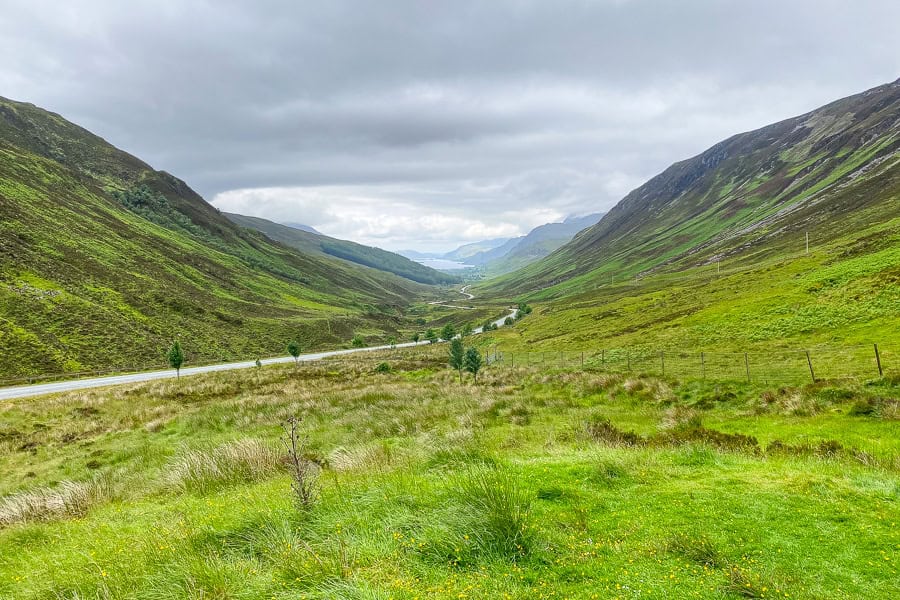
This incredible road trip of the far north of the country covers some of the Scottish Highlands’ most striking scenery – from craggy mountains and pristine beaches, to wave-thrashed sea cliffs and remote, windswept moorlands.
We’ve visited the Highlands many times over the years, and we’ve driven parts of this iconic circuit, but somehow we’d never managed to do the whole drive. Until now.
Our 7-day NC500 itinerary balances the must-see highlights of Scotland’s north coast, with quieter stops and side trips that allow you to explore stretches of coastline that feel barely touched by tourism, off-the-beaten-path historic castles, tiny harbour towns, and beaches reached by spectacular single-track roads.
Whether you’re keen on photography, short hikes, sampling local seafood or just soaking up big views with a wee dram at the end of the day, a North Coast 500 road trip really does deliver.
If you’re anything like us, by the time you’re looping back into Inverness, there’s a good chance you’ll already be thinking about your next visit.
What’s in this post?
Our 7 Day North Coast 500 Itinerary
– What’s the route?
– Our North Coast 500 road trip map
– Day 1: Inverness to Wick via the Black Isle
– Day 2: Wick to Tongue via Bettyhill
– Day 3: Tongue to Drumbeg – Caves, cliffs and remote coastline
– Day 4: Drumbeg to Ullapool – Sea stacks, beaches and ancient landscapes
– Day 5: Ullapool to Applecross via the Torridon Valley
– Day 6: Applecross to Inverness – Coastal villages, castles and lochs
– Day 7: Inverness and Culloden
Planning a North Coast 500 Road Trip
– How long does the NC500 take?
– Best time to visit the Scottish Highlands
– Getting to Inverness
– Driving in the Scottish Highlands
– Inverness car hire
– North Coast 500 accommodation
Useful Travel Resources
This post contains affiliate links. If you choose to buy through these links we may earn a small commission at no extra cost to you, which helps us to keep Two For The World running. Many thanks for your support!
North Coast 500 Road Trip – Quick Plan
Start & finish: Inverness
Distance: Around 1,150km (700 miles) with scenic detours | official route is 830km (516 miles)
Recommended duration: 7 days
Suggested direction: Go anti-clockwise – the scenery gets bigger as you go
Best time to visit: May to September
Trip highlights: Grey Cairns of Camster | Castle Sinclair Girnigoe | Duncansby Stacks | Smoo Cave | Allt Chranaidh Waterfall | Old Man of Stoer hike | Corrieshalloch Gorge | Beinn Eighe Mountain Trail | Bealach na Bà Pass | Eilean Donan Castle | Loch Ness | Culloden
Overnight stops: Wick | Tongue | Drumbeg | Ullapool | Applecross | Inverness
Our 7 Day North Coast 500 Itinerary
What’s the route?
Our North Coast 500 itinerary follows an anti-clockwise loop from Inverness, covering around 1,150 kilometres (700 miles) through some of Scotland’s most striking landscapes.
While anti-clockwise might not be the most common approach for this drive, we decided we wanted to let the drama of the Scottish landscape unfold the further into the journey we went, peaking in the big mountain vistas and epic scenery of the Western Highlands.
- From Inverness, you’ll head up the east coast to Wick, taking in sea cliffs, harbourside towns and castle ruins.
- The next leg runs through Caithness and up to John o’ Groats and Dunnet Head, before cutting west to Tongue across sweeping moorland dotted with lochs and past sweeping sandy bays.
- From Tongue, you’ll follow the north and west coasts down through Sutherland, past wild beaches, loch views and rugged hills, eventually bringing you to Ullapool.
- From there, the route winds through the jaw-dropping Torridon valley before heading south through Shieldaig and then over the dramatic Bealach na Bà pass into Applecross.
- From Applecross, instead of taking the traditional NC500 route directly back to Inverness, we suggest stopping by the picturesque coastal village of Plockton, before visiting the iconic Eilean Donan Castle and skirting the shores of Loch Ness en route to Inverness.
With this variation of the final leg plus our suggested detours along the way, our North Coast 500 road trip is a little longer than the classic 516 mile route, providing a truly epic driving experience through some of the most unforgettable landscapes on the planet.
Book your North Coast 500 road trip
Find a stay
Grab a hire car
Book a tour
Our North Coast 500 road trip map
To help you plan your North Coast 500 itinerary, we’ve mapped our full route from Inverness around the north coast and back again. While the map below mainly follows the official NC500 loop we’ve added a few detours to some of our favourite spots along the way.
We suggest using the map alongside the day-by-day itinerary to help get a clear sense of driving distances, overnight stops and how each stage of the route fits together. It’s particularly useful for understanding where you might want to slow down, add extra time, or make adjustments to suit your own pace.

Day 1: Inverness to Wick via the Black Isle
Highlights: Clootie Well | Dunrobin Castle | Grey Cairns of Camster | Whaligoe Steps | Noss Head | Castle Sinclair Girnigoe
Total driving distance: appx. 220km (135 miles)
Total driving time: appx. 3.5 hours
Overnight: Wick
Our North Coast 500 itinerary starts with a short drive from Inverness to the Black Isle. This peninsula sits across the Kessock Bridge from Inverness, and is known for its peaceful villages, forest tracks and beautiful coastal views.
Not far onto the peninsula you’ll come to Clootie Well near Munlochy. We parked in the small carpark here and enjoyed a lovely short walk to the ancient well through a forest bathed in early morning light.
The well is an ambient, colourful place where pilgrims have been tying scraps of cloth to the surrounding trees and bushes since pre-Christian times, in the hope their ailments will disappear as the cloth disintegrates over time.
If you have more time, or want to start earlier, you can explore further onto the Black Isle by driving the coast road via Fortrose and Rosemarkie all the way up to Cromarty on the northeastern tip, and then back down to the A9 near Culbokie – a loop of around 50 kilometres (30 miles) and perhaps 1 hour driving time from Clootie Well.
For a longer stay, the 100 steps loop walk near Cromarty is said to be a relatively easy but rewarding coastal loop of around 9km (almost 6 miles). You’ll also find dolphin watching in the area, and the award-winning Black Isle Brewery.
Back on the A9, the scenery opens up as you head north towards Cromarty Firth and beyond, You’ll have mountains, rolling hills, and distant wind farms for company on the road to Dornoch, a charming little town of sandstone buildings with a small cathedral (Scotland’s smallest), castle hotel, distillery, and some nice restaurants and cafes.
There’s also a pleasant sandy beach here overlooked by the Highland Larder food shack, which is worth stopping at for a coffee or snack.
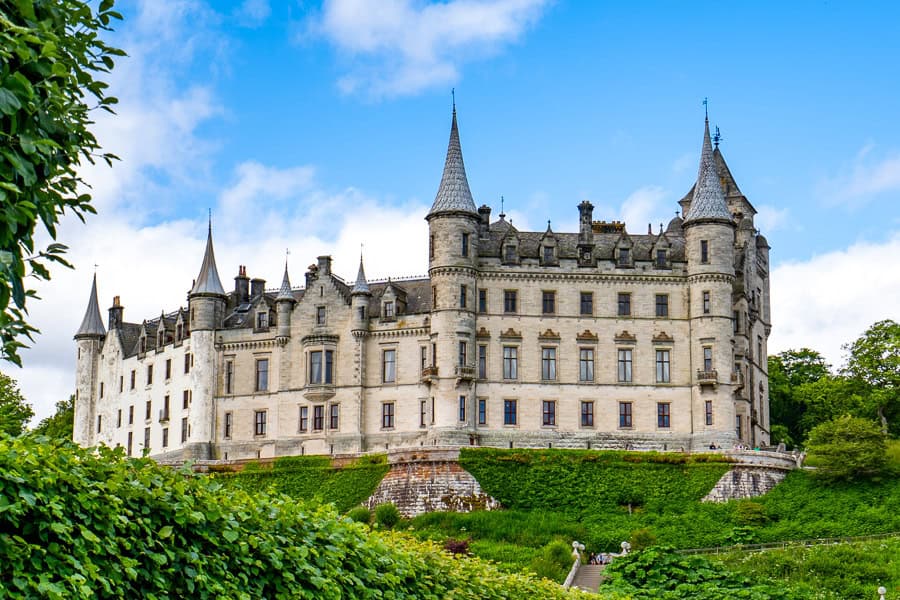
From Dornoch, it’s a short hop of less than half-an-hour past the cute town of Golspie to Dunrobin Castle, a stately, Disney-esque home overlooking the Moray Firth.
The castle is open between 10am and 5:30pm from April to September, and 10:30am to 5pm in October. Entry tickets get you access to some of the rooms, the museum and formal grounds. If you’re pushed for time, you can walk around the castle and down to the shore to appreciate a view of the castle in all its fairytale-spire glory.
Just a few kilometres up the road you’ll find Carn Liath overlooking the firth. It’s a nice example of an ancient broch (an Iron Age drystone building), and worth a quick stop to admire the views and read the info panels on display here. Just be wary crossing the busy road from the carpark.
From here, it’s a lovely hour-long drive north with a backdrop of rusty, heather-clad hills overlooking the coast road, past Berriedale Brays Viewpoint and the well-preserved Dunbeath Broch, to reach our late(ish) lunch stop at Lybster.
In its heyday, Lybster was Scotland’s third-busiest port but it’s enjoying something of a quiet retirement these days. Head down to the picturesque harbour surrounded by grassy cliffs and pop into Waterlines Lybster – in season they do a mean crab roll.
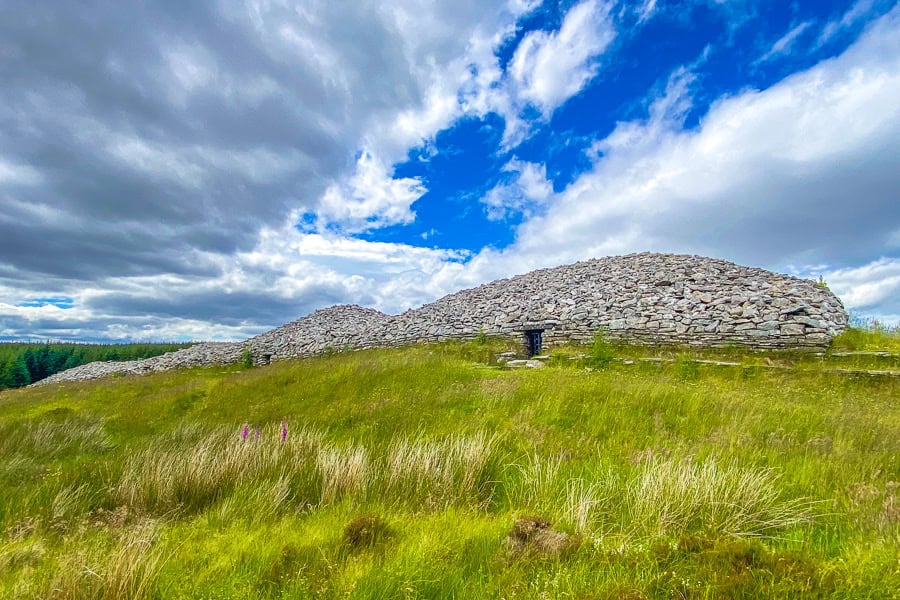
After lunch, take a quick 8km (5 mile) detour off the A99, down a lonely, one-lane side road (with semi-regular passing places) to the evocative, five-thousand-year-old Grey Cairns of Camster.
We absolutely loved wandering around this remote, windswept site, learning about its history and purpose from the interps panels, and even crawling into the cairns themselves. It’s well worth spending some time here.
Back on the A99, around 5km (3 miles) up the coast you’ll pass the Hill o’ Many Stanes, a mysterious Bronze Age collection of around 200 upright flagstone slabs of unclear origin. From here, continue on to Whaligoe Steps.
You need to be lucky at this stop, especially in summer, as the small carpark only has space for around ten cars. We missed out, but if you manage to snag a spot, you’ll find spectacular cliff and waterfall views – along with 330 stone-cut steps to get your heart pumping!
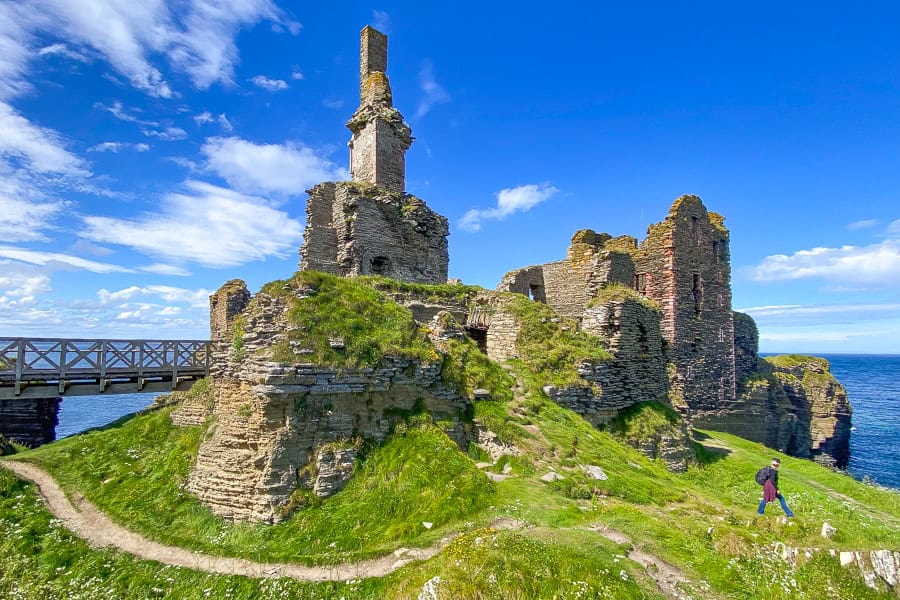
After the steps, bypass Wick for now, and head further up the coast to Noss Head. There’s a decent-sized paid carpark near the lighthouse from where you can take an easy, well-marked path along the coast to the ruin of 14th-century Castle Sinclair Girnigoe, perched precariously on a sandstone stack, surrounded by dramatic rock formations.
Where to stay around Wick
The Lonely Planet may have nailed it with its ‘more gritty than pretty’ assessment of Wick, but it’s still probably the most convenient overnight spot for this leg of our NC500 itinerary. With a decent choice of stays, as well as plenty of pubs, restaurants and cafes, it’s certainly worth considering.
If you want to look further afield, you could pretty much consider any stays that take your fancy in the whole northeast corner between Wick and Dunnet Head, and adjust your itinerary accordingly.
The following options get consistently good reviews:
- Good value: Wee Coastal Snug – modern, clean room | friendly host | close to coast path | 20-minute walk to town | free parking
- Mid-range: Mackays Hotel – centrally located historic Wick hotel | clean, comfortable rooms and apartments | popular bistro and whisky bar | friendly staff | free on-site parking
- Spend a bit more: Caithness View Luxury Farm Lodges – beautifully designed huts | quiet, rural location | well-appointed kitchenette | bbq, deck and outdoor dining area | 15km (9 miles) from Wick
Day 2: Wick to Tongue via Bettyhill
Highlights: Duncansby Stacks | John o’ Groats | Dunnet Head | Forsinard Flows | Farr Beach
Total driving distance: appx. 210km (130 miles)
Total driving time: appx. 4 hours
Overnight: Tongue
Day 2 of our NC500 road trip starts with a lovely drive up towards John o’ Groats. Keep an eye out for the Orkney Islands along the way, before taking the winding narrow road up to Duncansby Lighthouse carpark. This is a popular spot with parking for around 20 cars and 4 coaches, so getting here as early as possible is a good call.
From the carpark, take the well-trodden path south along the beautiful headland teeming with birds. This is proper twitcher territory, so we were in our element, enjoying all the fulmars, razorbills, gulls, skuas, and even a lonely puffin, as we walked.
Walking further south along the dramatic, 60-metre-high sea cliffs, you’ll find expansive views of the coastline, and the twin Duncansby Stacks rising in the distance. It’s worth taking the time to walk all the way to the stacks (around 1.5km each way) as the views get better the further you go, while the trail gets quieter and more peaceful.
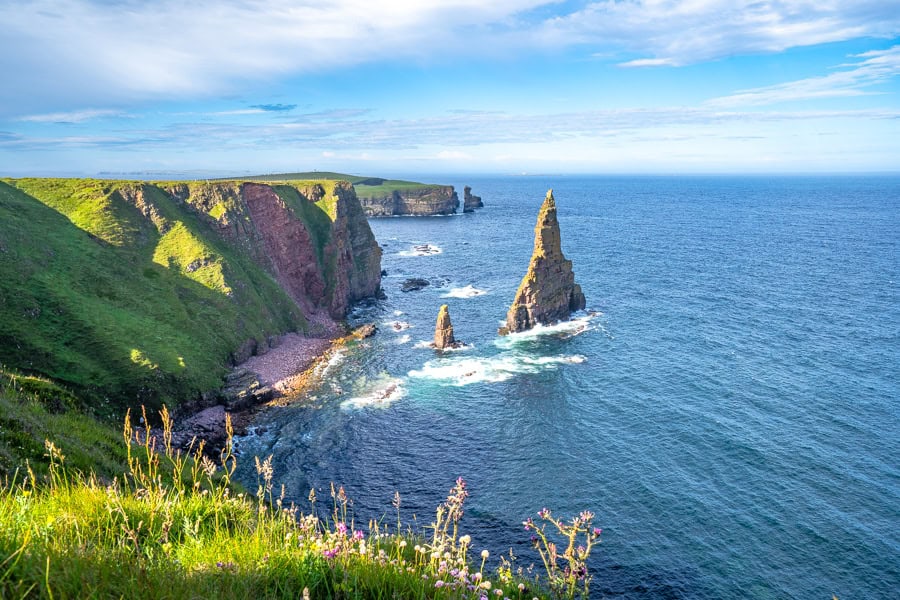
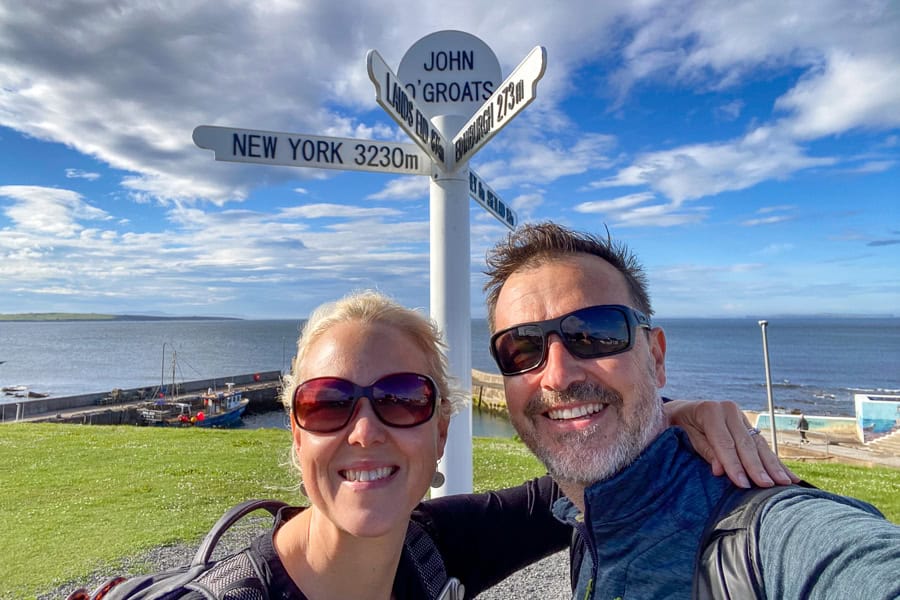
It’s less than 10 minutes’ drive to John o’ Groats. This is touted as the northernmost point of Britain (spoiler alert, it isn’t) and has developed into a bustling tourist site as a result. If you’re keen for the obligatory photo at the famous signpost, head there next for a coffee break and, hopefully, if the weather is on side, views to the Orkneys. There’s plenty of (paid) parking here.
From John o’ Groats, continue west along the coast to the Castle of Mey. Once the summer home of the Queen Mother, this modest but charming castle has beautifully maintained gardens and views over the Pentland Firth. It’s open from Wednesday to Sunday between May and September, and tickets can be purchased on the day from the visitor centre.
Further along the coast, Dunnet Head marks the true northernmost point of mainland Britain. The lighthouse here stands guard above steep cliffs with excellent coastal views. There’s a signpost here too, and far fewer people.
Just 15 minutes further along you’ll pass Dunnet Bay, a unique habitat and designated Site of Special Scientific Interest with sand dunes and grasslands that support a diverse range of flora, along with a thriving bird population.

Fifteen minutes up the road, you’ll arrive into Thurso, the northernmost town on mainland Britain and a good spot to grab some lunch and stretch your legs. There are decent services here, including food and supermarkets, as well as a long, sandy stretch of beach with views across to the Orkneys.
Continuing further west, the scenery turns moody as you pass through undulating bogland rolling down to the sea as the hills get higher. After around 30 minutes, you’ll pass Halladale Inn near Melvich, another decent option for lunch if you can hold out this long.
Head inland for around 25 km (15.5 miles) from here, through rugged moorland and peat bog to the remote Forsinard Flows Nature Reserve. Elevated walkways offer a rare opportunity to experience the wild, boggy beauty of the Flow Country – one of Europe’s most important peatlands and home to a diversity of wildlife, including hen harriers.
Check in advance with the visitor centre if there are any guided walks happening, but even if there aren’t, the 45-minute Dubh Lochains Trail can be enjoyed without a guide and is open year-round.
From here, you can either head back the way you came to the coast, or enjoy more of this dramatic landscape by continuing through the vast, open peatland that defines this remote part of the Highlands by taking the B871 at Kinbrace and continuing on to Syre and eventually Bettyhill.

Stretch your legs here with a quick walk down to Farr Beach, a beautiful sweep of sand backed by dunes where it was blowing a gale on the day we visited.
Next up is an absolutely stunning stretch of road between Bettyhill and Coldbackie.
This was one of our favourite stretches of the day, with the land opening up on both sides as the road winds between glittering lochans and a landscape palette of dark green pine, khaki green grass and purple heather.
The road then passes Coldbackie Beach with its beautiful sand-and-island views, before heading south along the Kyle of Tongue.
You’ll finish up the day in the quiet village of Tongue, which sits beneath the rocky peaks of Ben Loyal with the ruins of Castle Varrich in the distance.

Where to stay around Tongue
While Tongue is only a small village, it’s a handy overnight stop on the northernmost leg of our NC500 itinerary, with a modest spread of places to stay, from simple B&Bs to small hotels and cosy cottages.
If you’re planning to stay here during summer, it’s wise to book ahead or widen your search to incorporate the broader northwest region.
Wherever you stay in the region, you’re pretty much guaranteed stunning Highland scenery right on your doorstep. The following options in the area get consistently good reviews:
- Mid-range: Borgie Lodge Hotel – stylish country hotel | comfy, homely feel | spacious rooms with comfy bed | excellent breakfast and evening meals | free parking | 15 minutes from Tongue
- Mid-range: The Tongue Hotel – historic lodge | large, stylish rooms | delicious meals | friendly staff | panoramic Highland views | centre of Tongue
- Spend a bit more: Smithy House – renovated 3-bedroom holiday home | modern facilities | large well-stocked kitchen | beautiful views | on-site-parking | centre of Tongue
Planning your North Coast 500 itinerary last minute?
Victorian townhouse on the River Ness with beer and whisky on tap: Glen Mhor Hotel at Uile-bheist ‘Brewstillery’ Inverness
Very Good – 8.2 | More than 5,000 reviews
Cosy lochside bed and breakfast overlooking Loch Broom: Harbour House, Ullapool
Superb – 9.0 | More than 1,400 reviews
Boutique B&B with loch and mountain views: The Albannach, Lochinver
Exceptional – 9.8 | More than 150 reviews
Visit the Isle of Skye and Scotland’s most photogenic castle: Isle of Skye and Eilean Donan Castle Day Trip from Inverness
Top rated – 4.8 | More than 4,000 reviews
Search for Nessie and visit an ancient castle stronghold: Loch Ness Cruise and Urquhart Castle visit from Inverness
Top rated – 4.7 | More than 2,000 reviews
Day 3: Tongue to Drumbeg – Caves, cliffs and remote coastline
Highlights: Castle Varrich hike | Golden Eagle Zipline | Smoo Cave | Faraid Head | Allt Chranaidh Waterfall
Total driving distance: appx. 130km (80 miles)
Total driving time: appx. 3 hours
Overnight: Drumbeg
Get an early start today so you can enjoy an invigorating 1.5km (each way) hike from the village of Tongue up to Castle Varrich, perched above the Kyle of Tongue.
While there’s not much of the crumbling 14th-century stronghold left, it makes for an ambient destination on this popular hike, which enjoys expansive views over the surrounding hills and sea lochs.
There are plenty of jaw-droppingly beautiful landscapes to enjoy today as you road trip Scotland’s wild northwest. The ‘wow’ starts immediately on the drive west over Tongue Causeway – be sure to pause here to appreciate the views of distant mountains fringed by a lovely turquoise bay.

The drive up out of the kyle is no less spectacular. It was desolate, wet and windy on the day we were here, providing a hauntingly bleak but beautiful crossing of the mountain-fringed moors to the panoramic viewpoint overlooking Loch Eriboll and the small island of Eilean Choraidh.
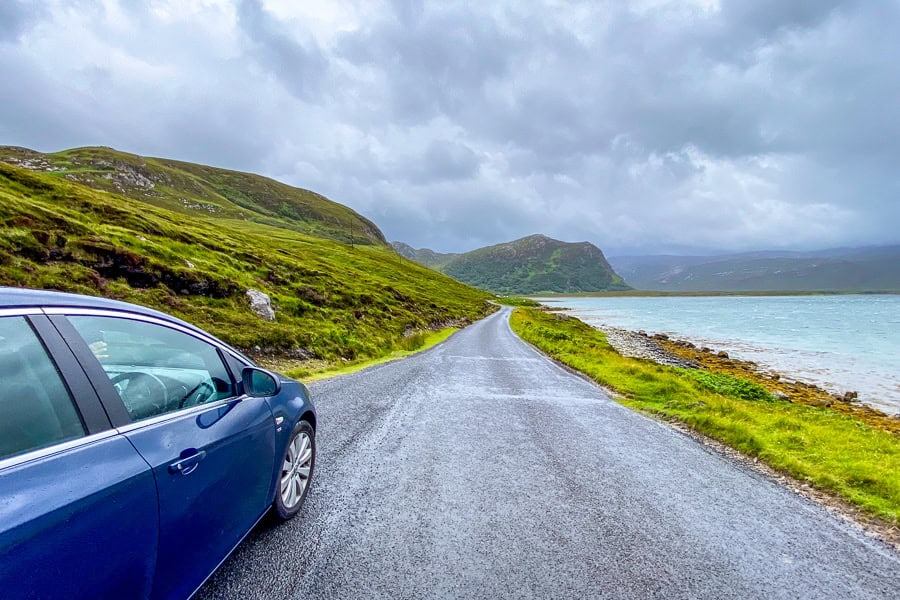
After the viewpoint, it’s a slightly bumpy 30-minute single lane drive on the A838 around Loch Eriboll to Rispond. It’s an absolutely stunning stretch of road, even in the poor weather we had, so we can only imagine how it would look in sunshine.
You’re now in the North West Highlands UNESCO Global Geopark, covering a striking, geologically significant area across Sutherland and Wester Ross. Keep your eyes peeled for the helpful Geopark info panels explaining the geological, cultural and natural heritage of the area.
If you’re up for a quick adrenaline rush, you’ll find the Golden Eagle Zipline just a few minutes past Rispond, serving up an exhilarating 45km/h ride over beautiful Ceannabeinne Beach.
The zipline is very much subject to weather conditions, but if you’re here between Easter and late August (and get lucky with conditions), you can just rock up for a ride between 10:15am and 4pm. Hours are slightly reduced in September and October, and outside those months you’ll need to email ahead for a booking.
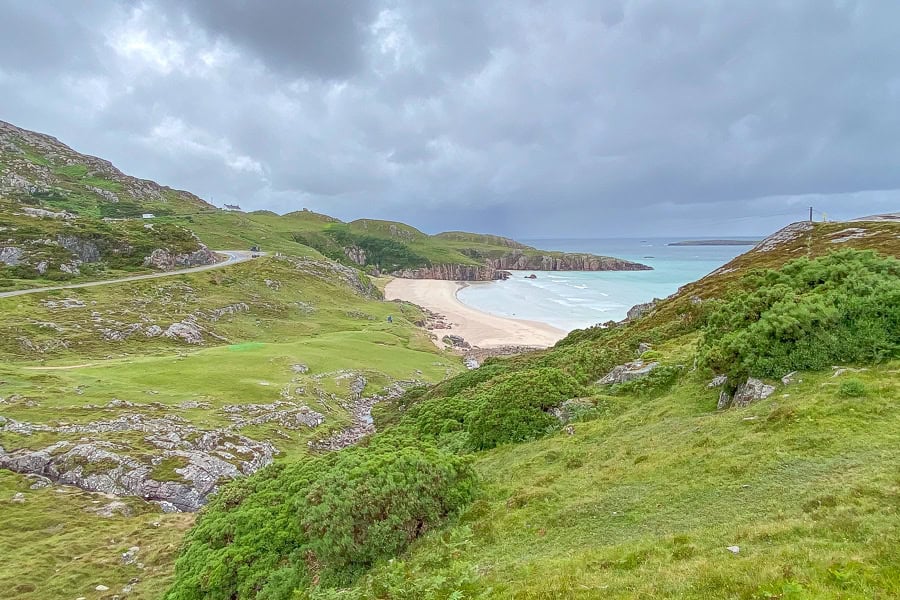
From the zipline, it’s only a few minutes’ drive to Smoo Cave, set into limestone cliffs just outside Durness. There’s a small, free carpark with toilet facilities at the top of the stairway down to the cave, and a larger, pay-and-display carpark 100 metres further up the road.
Take the steep stairway from the carpark until you find yourself in front of this huge sea cave with its high, arched entrance and small river. You can explore the beautiful main chamber before following a small tunnel to the pretty waterfall within.
Entry to the main chamber is free, and in good weather you can take a short (paid) guided boat / walking trip into the darker inner caves.
On your way out of the cave, it’s worth taking the stairs on the opposite side of the way you arrived for wonderful high views of the caves and surrounding landscape as you loop back around to the carpark.

You’ll probably be quite peckish by now, so continue a couple of minutes further up the road to Durness Beach. We spent a pleasant half-hour here devouring delicious toasties from the Cheese & Toasted Snack Kiosk while enjoying views of the high seas crashing into the windswept bay.
Once you’ve fuelled up, drive a few minutes up the road to the beautiful stretch of sand at Balnakeil Beach. There’s a scenic 8.4km (5 mile) loop trail here that heads up the beach to the dramatic cliffs of Faraid Head.
If the weather is behaving, set out to explore some or all of the trail, keeping an eye out for the many birds and seals that call this rugged corner of the Highlands home.
Cape Wrath and Sandwood Bay
With more time in this area, you could make a detour to Cape Wrath or Sandwood Bay. While both are significant detours from the NC500, they’re said to be worth it to experience the Highlands at their most isolated and raw.
Getting to Cape Wrath involves a short ferry across the Kyle of Durness and a bumpy minibus ride to the lighthouse, where you’ll find towering cliffs and sweeping Atlantic views.
The walk to Sandwood Bay is just under 7km (4 miles) each way, starting from the small carpark at Blairmore. There’s a clear path across open moorland to the long stretch of sand that’s backed by dunes and cliffs, with the sea stack – Am Buachaille – just offshore.
Back on the road, if you need to warm up from your hike to Faraid Head, we recommend a stop at Cocoa Mountain in Balnakeil for one of their decadent hot chocolates, before continuing south towards Scourie.
In our view, this drive along the A838 encapsulates the very best of the North Coast 500 route, so take your time, and enjoy the ride.
The road can be narrow and rough in places as it winds its way past rugged coastline, sea lochs and empty beaches, with views across desolate moorland dotted with countless mountain-backed lochans.

On the way south, it’s worth stopping to appreciate the lovely sweeping bay at Scourie Beach. If you’re hungry, the nearby Crofter’s Kitchen food shack is said to be excellent.
Continue on to picturesque Kylesku. As you cross the bridge here you’ll get a sense of the stunning landscape. There’s a carpark on the left just after the bridge where you can park up, or for slightly better views, head further down to the Kylesku Hotel where you’ll find uninterrupted views of the surrounding mountains across Loch Gleann Dubh.
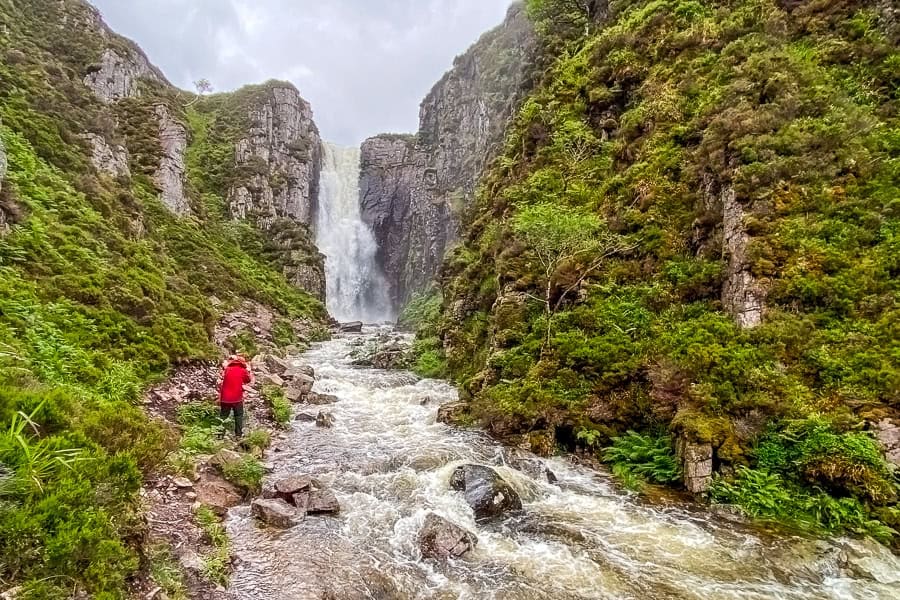
It’s been a huge day already, but if you can, there’s one more stop we suggest – one of our surprise favourites: the thundering Allt Chranaidh Waterfall.
To access the falls from the bottom, park in the small layby (there’s space for 3 or 4 cars here) and take the rough trail to the left. Take extra care here. The trail does require some sure-footedness as there are sections where you need to scramble along loose rubble and peaty mud while trying not to slip into the rushing river created by the falls.
On the day we visited there had been a fair bit of rain, which made the trail a little more challenging, but it meant we got to see the falls at their roaring best.
If you want to see Allt Chranaidh from above, and also check out Loch na Gainmhich, park up the hill and walk the 400 metre long trail to the falls. This is part of the longer, 10km (6 mile) hike to Eas a Chual Aluinn Waterfall, the tallest in the UK.
Finish the day with the final stretch through Assynt’s dramatic landscape to the Drumbeg Viewpoint, where you’ll be treated to lovely views over the nearby islands.
The winding B869 to get here is an adventure in itself, with beautiful views over Loch a Cairn Bhain to distract you from the narrow, bumpy road. Fortunately there are plenty of passing places.
Where to stay around Drumbeg
There’s a smattering of accommodation in this remote corner of the Highlands, so spreading your net widely between Scourie and Lochinver will give you the best range of options. You can expect to find small, independent places with lots of Highland character and a friendly welcome.
This part of Assynt feels remote, even by Highland standards, but it’s a great base for walking, coastal views, and exploring the northwest’s unique geology. Like most places along the NC500 route, it’s best to book ahead since there aren’t many rooms to be had and they fill up quickly, particularly in summer.
The following options get consistently good reviews:
- Mid-range: Tor Druim – peaceful B&B | clean, comfy room | lovely hosts | wonderful views | excellent breakfast | 2-night minimum stay | 3km from Drumbeg
- Mid-range: Scourie Lodge and Gardens – historic lodge in Scourie | comfortable ensuite rooms | on-site restaurant | close to beaches and coastal walks | free parking | breakfast included
- Spend a bit more: Kylesku Hotel – modern lochside hotel | comfortable rooms | award winning seafood restaurant and lively bar | friendly atmosphere | free parking
- Spend a bit more: The Albannach – boutique B&B near Lochinver | loch and mountain views | warm, personal service | outstanding breakfast | free parking.
Day 4: Drumbeg to Ullapool – Sea stacks, beaches and ancient landscapes
Highlights: Old Man of Stoer hike | Clachtoll Beach and Broch | Achmelvich Beach | Stac Pollaidh hike | Knockan
Total driving distance: appx. 120km (75 miles)
Total driving time: appx. 3 hours
Overnight: Ullapool
Today’s leg of our North Coast 500 itinerary packs a lot into a relatively short distance. There’s excellent walking, standout beaches, and classic northwest Highland scenery, so strap yourself in for another epic day of adventure.
Start the day by following the one-lane B869 around the coast, past windswept Clashnessie Beach, before taking the turning on your right where the brown sign points you towards Stoerhead Lighthouse.
The road to the lighthouse is even narrower than the B869, but as you bounce along the 7km (4 mile) potholed track it really does feel like you’re getting into the wilds of the northwest Highlands. There are plenty of passing places as you drive through this beautifully bleak wilderness of rolling grassy hills.
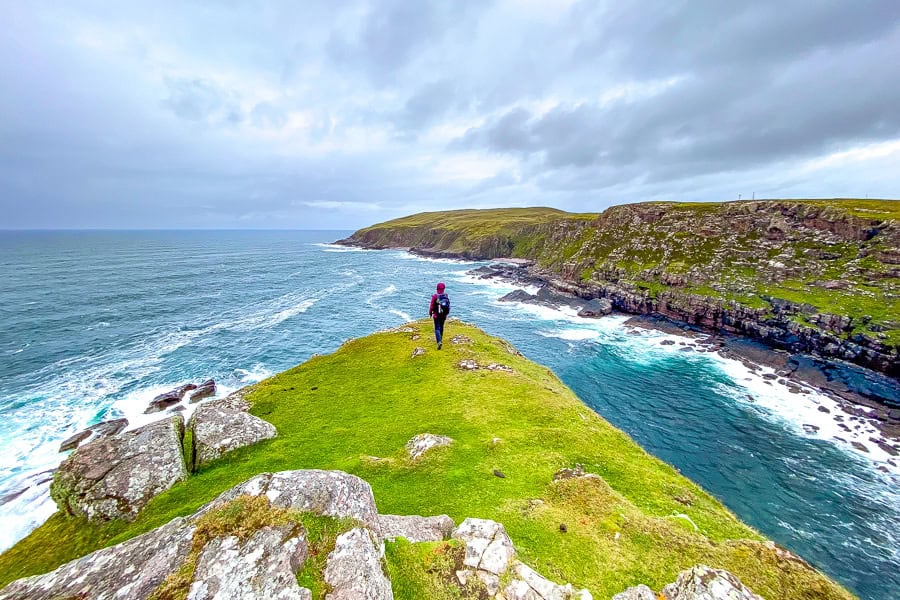
We got here nice and early to spend a couple of hours hiking along the headland to the Old Man of Stoer sea stack, but sadly the heavy overnight rain ruined our plans.
By all accounts, this is an epic 7km (4 mile) round-trip hike, but as we started sinking ankle deep into the boggy ground a few hundred metres into the initial climb, we decided to abandon our attempt. Definitely a hike that’s best done in dry conditions with waterproof hiking boots or shoes.
Even if you can’t do the hike, it’s well worth climbing up the path past grazing sheep to the small lighthouse to enjoy a taster of the epic views further along the coast.
Back on the road, the B869 continues winding its way south through the rocky landscape, punctuated by small lochs and coastal views until you get to Clachtoll Beach, a quiet sweep of white sand worth a quick stop.
The Iron Age ruin of Clachtoll Broch is a pleasant 20-minute walk north of the beach.
Continue south along the B869 for around 10 minutes towards Lochinver until you see a right turn towards Achmelvich Beach. Head down the single-track road for around 3km (almost 2 miles), passing gneiss-smattered hills aside Lochan Saile til you get to the stunning curve of white sand fringed by turquoise water at the end of the road.
After you’ve enjoyed some beach time here, retrace your route and continue south to the picturesque fishing village of Lochinver, the main settlement of the area and a good spot to take a break and grab some fuel.
If you’re here early in the day, this might be a good opportunity to buy supplies for a packed lunch for later. We were starving by the time we arrived, so we swung by Lochinver Larder – we can confirm their reputation for super tasty pies is very well deserved!
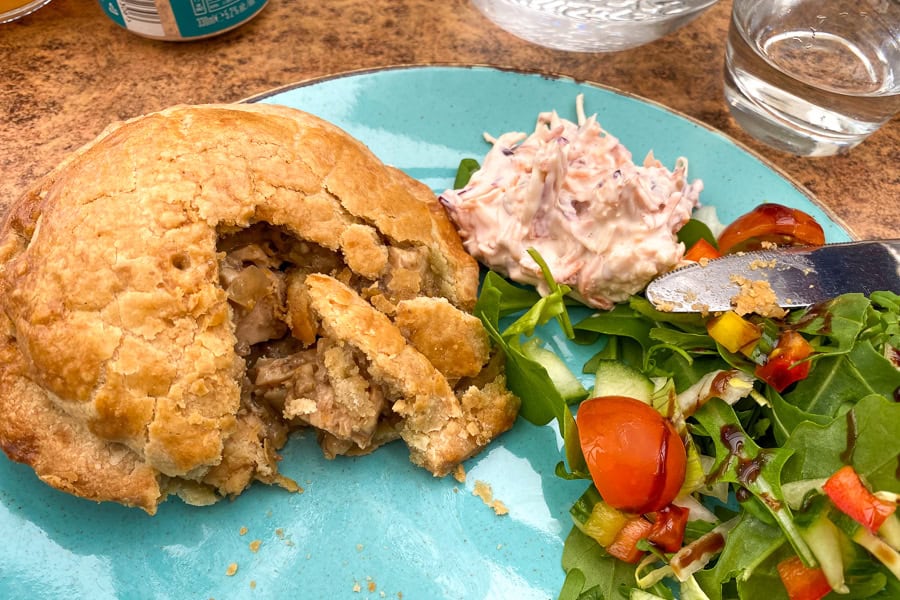
From Lochinver, our NC500 road trip continues south along a very narrow, winding route through shrubby hills of gneiss, interspersed by rocky coves, small lochs and sandy beaches, before swinging right towards the bleak moorland of the Coigach peninsula and our next destination, Achnahaird Beach.
Despite being only 30km (19 miles) from Lochinver, expect this dramatic drive to take around an hour, plus any time you want to allow for photo stops along the way.
The sweeping curve of Achnahaird Beach, with views to the mountains of Coigach and Assynt, is one of those wild spots that really encapsulates the raw beauty and remoteness of the North Coast 500 route.
If you’re going ok for time, and the weather is behaving, consider taking the fairly challenging 4km (2.5 mile) circular trail up Stac Pollaidh, a rocky summit with incredible views across Assynt and the Summer Isles, around 13km (8 miles) from Achnahaird Beach.
Sadly, the mountain was draped in cloud and heavy rain the day we were in the area, so it’s on our list for a future visit.
Instead, we continued further east, past the shores of Loch Lurgainn to Knockan Crag, where the rain eased off long enough for us to briefly enjoy the short circular trail with fantastic views across Lochan an Ais towards Cul Mor and Cul Beag.
It’s a great place to gain a deeper understanding of Scotland’s geological story and we found the interpretive panels explaining the complex geology of the area to be really informative.
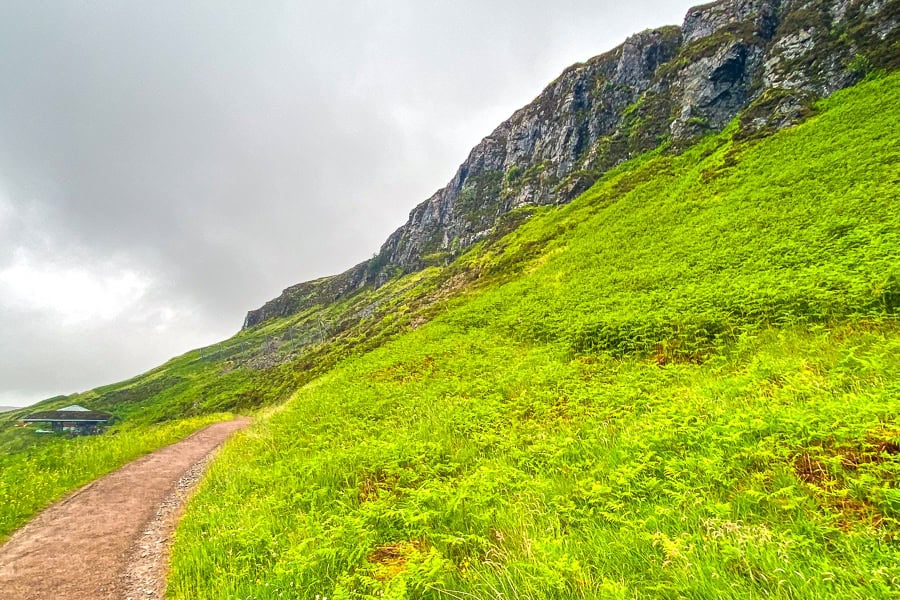
Finish the day with the final 20km (12 mile) drive along the A835 to the shores of Loch Broom and our destination for the night, Ullapool.
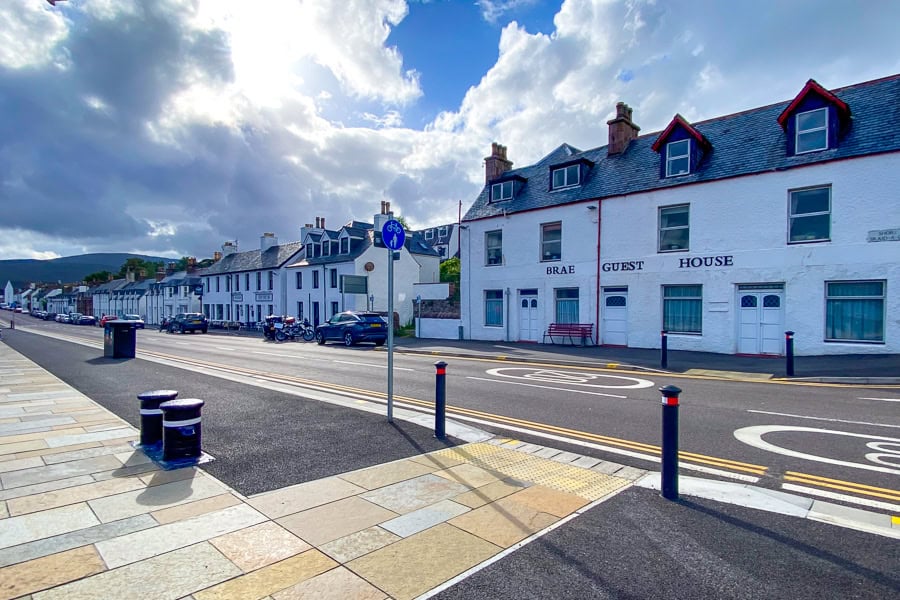
Surrounded by rugged hills with expansive views down the loch, Ullapool, with its whitewashed houses and working harbour (and its near-constant wreath of cloud and rain) has a distinctly Highland feel that we’ve both loved since we each first visited.
It’s a feeling enhanced by nights in cosy harbourside pubs, and some of the best seafood of the NC500 – don’t miss the Seafood Shack, just a street back from the ferry terminal.
Where to stay in Ullapool
With more dining, drinking and accommodation options than most of the stops on our NC500 itinerary, the picturesque town of Ullapool is a handy base for exploring the rugged landscapes of Coigach and Assynt.
You’ll find all kinds of stays here, ranging from small hotels, guesthouses and pub stays, to self-catering cottages and campsites. In town, you’ll find traditional inns and B&Bs lining the waterfront and side streets, many offering views over Loch Broom.
If you’d rather stay somewhere quieter, you could also look at options in nearby Ardmair or along the coast towards Achiltibuie, adjusting your route as needed.
The following options in Ullapool get consistently good reviews:
- Good value: Island View Guest House – comfortable, clean rooms | friendly host | short walk to harbour and restaurants | free parking on-site
- Good value: Caledonian Hotel – comfortable modern rooms, some with views | on-site restaurant and bar | close to ferry terminal | free private parking
- Mid-range: Harbour House – lochside bed and breakfast | nicely-appointed rooms, some with loch views | excellent breakfast | relaxed lounge overlooking Loch Broom | free parking on-site | short walk to town centre
- Spend a bit more: The Arch Inn – popular inn overlooking Ullapool harbour | small but comfortable rooms | bar with regular live music | popular restaurant | free parking on-site
Day 5: Ullapool to Applecross via the Torridon Valley
Highlights: Corrieshalloch Gorge | Beinn Eighe Mountain Trail | Torridon Valley | Bealach na Bà Pass
Total driving distance: appx. 230km (140 miles)
Total driving time: appx. 4 hours
Overnight: Applecross
We reckon today’s drive is one of the most rewarding of this North Coast 500 road trip, with dramatic scenery pretty much from start to finish.
From Ullapool, you’d be forgiven for thinking you’ve been transported to Norway as you head south on the A835 along the edge of fjord-like Loch Broom backed by misty mountains.
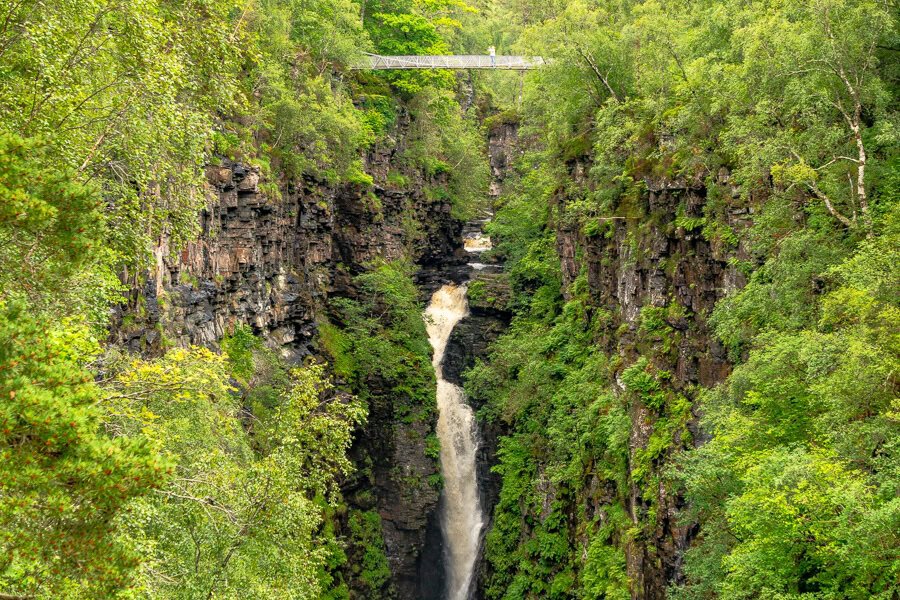
The first stop today is Corrieshalloch Gorge, a deep, narrow chasm carved by the River Droma. The friendly visitor centre and café opens at 9.30am (as does the carpark) so if you get here early, we’d highly recommend continuing a couple of minutes up the A832 to enjoy the panoramic views up the valley towards Loch Broom and Ullapool from the Braemore Viewpoint.
From the Visitor Centre (£5 parking, but free for National Trust members), there are a couple of short (1 and 1.4km) walking trails that amble through the peaceful forest until you arrive at the suspension bridge for views of the Falls of Measach plunging into the depths of the gorge.
For slightly more expansive views of the falls and suspension bridge, take the short pathway on the other side of the bridge to the viewing platform.
Back on the road, it’s around 40km (25 miles) along the A832 to Gruinard Beach via a lovely stretch of road that hugs Loch Broom.
You’ll find a few nice spots along the road where you can pull over and admire the mountain-and-loch scenery, particularly at the parking area opposite Dundonnell Hotel, and further on at the Little Loch Broom Viewpoint.
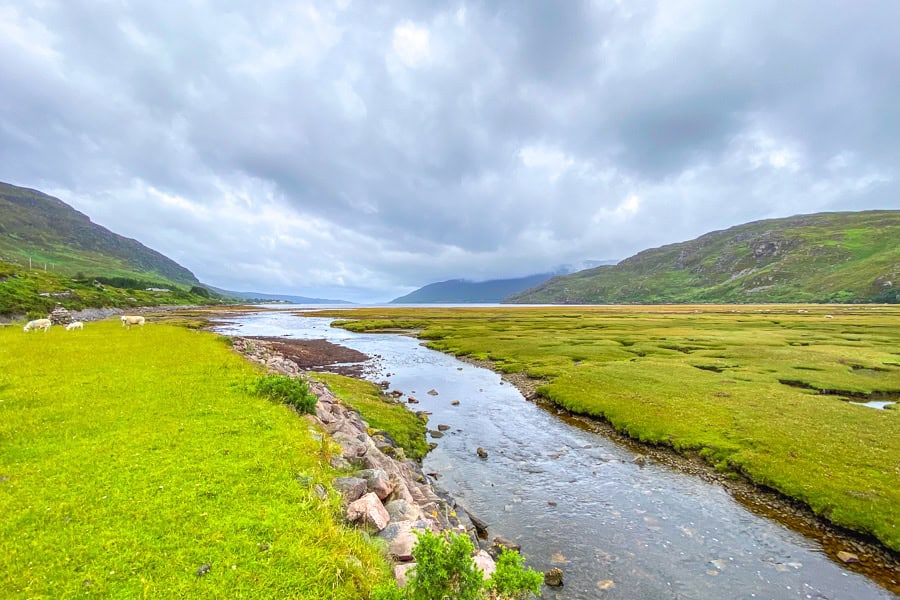
Head on past Gruinard Beach, a quiet arc of sand backed by heather-clad slopes, until you get to the small layover at the top of the next hill where you can appreciate elevated views of the beach and surrounds, including Gruinard Island, once the site of anthrax testing during WWII and only declared safe in 1990.
Further on, a slight detour will take you up to Mellon Udrigle Beach, another perfect stretch of white sand backed by a gentle creek lined with wildflowers. We enjoyed stretching our legs here while watching busy little plovers zipping along the sand. While there’s not much in the way of facilities, there’s room for a few cars in the small (free) carpark, and there’s a decent sized campground next door.
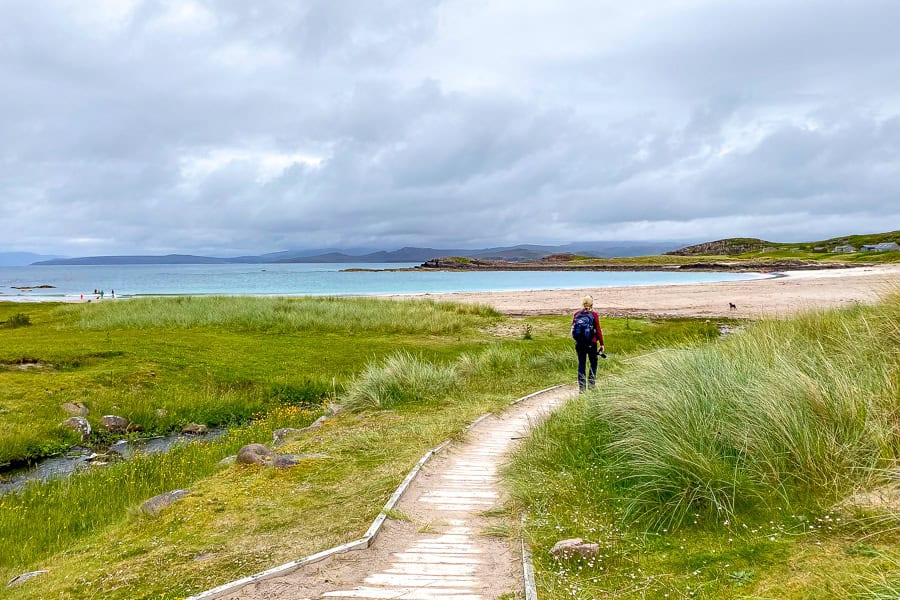
Press on towards Gairloch, another fantastic drive that’s all elevated views and coastal glimpses. The drive passes through pretty Poolewe before the A832 heads back into the rugged mountain landscape, through moorland and past Loch Tallaidh.
Gairloch itself is a lovely coastal village set amid a series of sandy bays with rugged hills rising just inland, and views across the water towards the Isle of Skye and the Outer Hebrides. You’ll find a range of services here including a small supermarket, pubs, cafes and petrol stations, making it a popular stop on the North Coast 500 route.
With more time in the area
If you have the luxury of more time in the area, there are a couple of things worth adding to your itinerary for this corner of the NC500 route.
Inverewe Garden: An unexpected splash of colour in the West Highlands, this historic garden is packed with exotic plants, towering rhododendrons and rare trees that thrive here despite the northern latitude. Paths wind through woodlands and along lochside viewpoints, with benches to stop and take it in. There’s also a café and visitor centre.
Gairloch Wildlife Cruises: Explore the waterways and islands of the West Highlands with local operators offering trips ranging from a couple of hours to half a day between around April and September. Highlights of these cruises include the chance to see seals, porpoises, dolphins or even minke whales, while birders should keep their eyes peeled for gannets, razorbills, guillemots, kittywakes, skuas, puffins, sea eagles and more.
Heading further south, take a detour to your right on the B8056 just after Kerrysdale in the direction of Red Point Beach. It’s a quiet, single-track road for much of the way, winding through small crofts with whitewashed houses, past tiny lochans and patches of heather.
The landscape feels more remote the closer you get to Red Point, where you’ll find a small parking area from where you can walk over dunes to the wide sandy beach. It’s a beautiful, secluded spot that you might just be lucky enough to get to yourself – enjoy!

Despite the need to backtrack, the spectacular drive from the beach back to the A832 feels quite different to the way in, probably due to the mountain views you get from this direction. If you didn’t grab a packed lunch at Gairloch, consider stopping by Badachro, a pretty hamlet by the water with a local distillery and cosy waterside inn.
Back on the A832, you’re treated to big, sweeping mountain scenery on the drive alongside Loch Maree which again, reminds us of Norway and New Zealand in terms of sheer scale and natural beauty.
If the weather is on side, we’d highly recommend breaking up the journey with a leg-stretcher at the Beinn Eighe Mountain Trail.
Depending on your energy and fitness levels, you have a couple of options here: a 1.5km trail into woodland that goes up high enough for decent views over Loch Maree and the surrounding peaks, or a longer, more challenging 6.5km (4 mile) hike up to the top of the mountain.
We took the easier option, and the views were still spectacular, despite the pretty ordinary weather.
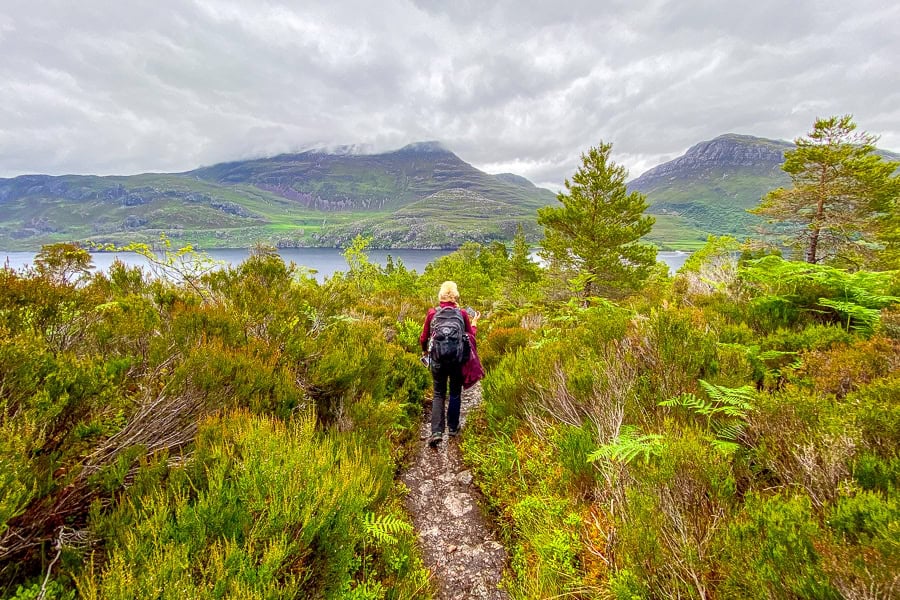
Even if you skip the walk, make sure you continue down the A832 for a further 5km (3 miles) to the Glen Docherty Viewpoint for sweeping views down the valley. We were lucky enough to come across a large stag grazing here on the hillside while we were taking in this classic West Highland panorama.
From the viewpoint, it’s a little over 60km (37 miles) to our overnight stop at Applecross and you’ll be finishing on a high, both literally and figuratively. The drive heads towards Loch Maree before turning left on the A896 to cross through the dramatic Torridon Valley. Flanked by towering sandstone peaks and views that go on forever, it’s a drive that was definitely one of our NC500 highlights.
From Shieldaig the road heads south along the coast before turning inland towards the Bealach na Bà pass. This single-track pass climbs 626 metres, making it the steepest road ascent in the UK, and it’s the kind of drive we absolutely love.
It’s a steep, twisting drive that’s ridiculously narrow in places, so you’ll need to be mindful of passing places and have your eyes peeled for sheep. But if you’re anything like us, your main challenge – if you’ve pulled the short straw as the driver – will be keeping your eyes on the road because the views are truly epic.
Fortunately, there are parking areas at the top where you can enjoy panoramic vistas over distant mountains and out towards Skye and the ocean beyond (weather permitting, of course). If you want to see what the drive is actually like check out our Bealach na Bà pass reel on Instagram.
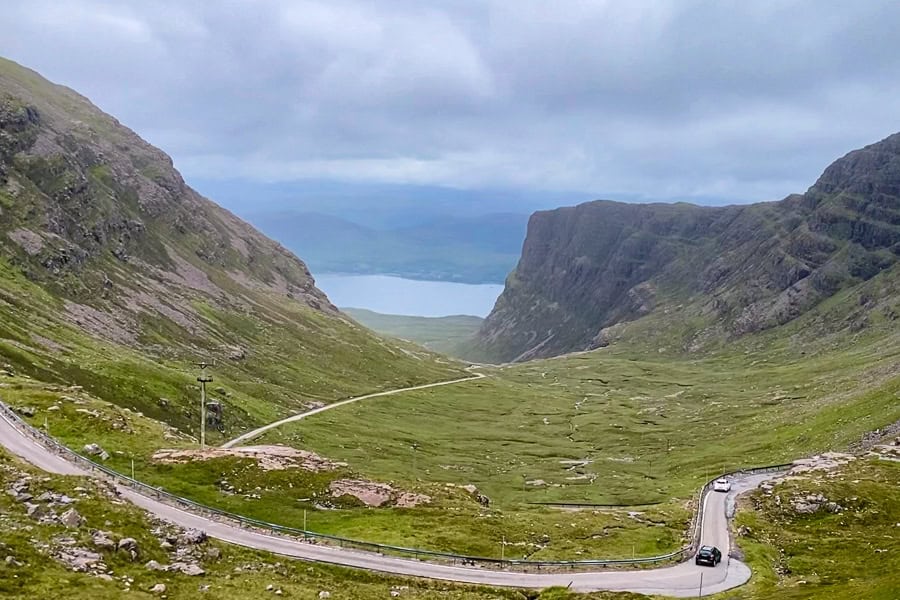
The descent to Applecross is just as memorable, with tight bends and more sweeping vistas. It’s a drive that needs time and care though – we almost didn’t make it over the pass due to the road being partially blocked by a car that had misjudged a corner, coming off the bitumen and damaging a wheel.
Alternative route to Applecross
As the UK’s steepest road ascent, and given the variable weather conditions at this elevation, the Bealach na Bá pass isn’t for everyone.
Warning signs at the base of the pass specifically state that this route is not advised for learner drivers and those who aren’t confident reversing on narrow mountain roads.
Likewise, drivers of large vehicles, including caravans and motorhomes are requested not to attempt the pass.
There’s an alternative route to Applecross from Shieldaig via Kenmore and around the Applecross peninsula’s northern coastline. It’s around 40km (25 miles) and takes around an hour or so.
Where to stay in Applecross
Applecross feels truly out on its own, tucked away on a remote, windswept peninsula. Set peacefully on the water’s edge, it has a quiet, relaxed feel that makes it a popular overnight stop on many a North Coast 500 itinerary.
There’s a handful of accommodation options in the area, however in summer you may need to widen your search to include the entire Applecross peninsula, and maybe as far as Shieldaig to give you the best chance of finding a stay in the area.
The following options get consistently good reviews:
- Good value: Hartfield House Hostel – simple private rooms and dorms | friendly, helpful staff | peaceful woodland location near Applecross | shared kitchen and lounge | free parking on-site
- Mid-range: Clachan Manse Bed & Breakfast – lovely B&B near Applecross | nicely decorated, cosy room | beautiful location with sea views | welcoming hosts | generous breakfasts with local produce | free parking on-site
- Spend a bit more: Tigh an Eilean Hotel – lochside hotel in Shieldaig | compact, comfy rooms | popular bar and restaurant | stunning views | free public parking
- Spend a bit more: Applecross B&B and Cabins – relaxed B&B and self-catering cabins | clean, comfortable rooms and well-equipped cabins | friendly hosts | hearty breakfasts | peaceful location | free parking on-site
We opted for Hartfield House Hostel, and while we don’t often stay in hostels these days, we had a pretty good stay at this one. Located in a beautiful old building surrounded by countryside, we had a simple private room that was comfy enough for us. Shared bathrooms were clean and well maintained, staff were really friendly and helpful, and we were able to buy frozen pizza from reception to cook in the communal kitchen.
Eating options in Applecross are very limited, so plan ahead and come prepared if staying here.
Day 6: Applecross to Inverness – Coastal villages, castles and lochs
Highlights: Bealach na Bà Pass | Plockton | Eilean Donan Castle | Loch Ness
Total driving distance: appx. 190km (120 miles)
Total driving time: appx. 3 hours
Overnight: Inverness
Today marks the final stretch of the NC500 route, and there are two ways to tackle it. If you have more days, you might also consider a side trip at this point in the route to the Isle of Skye – if so, check out our suggested 3-Day Isle of Skye itinerary.
Option 1: Classic route via Beauly
The classic route runs from Applecross to Inverness via Achnasheen and Beauly, a fairly direct drive of around 130km (80 miles) that takes between 2 and 3 hours. It’s a pleasant enough run, through quiet glens and farmland – handy if you’re short on time or ready to wind things up.
For us, the highlights of this route are the views, and mouthwatering cinnamon swirls at the Waterside Cafe in Lochcarron, along with a visit to 13th-century Beauly Priory, just under 30km (19 miles) from Inverness.
Option 2: Coast, castles and a famous loch
If you’ve a bit more energy left, we’d strongly recommend an alternative route back to Inverness for the penultimate day of our North Coast 500 itinerary. This option takes in coastal villages, one of Scotland’s most photographed castles, and its most famous stretch of water, all in a single day.
For us, this is a more fitting end to one of the world’s great driving routes.
Start by retracing your way over the Bealach na Bà pass, it’s just as striking in this direction with a fresh perspective of the rugged Applecross hills and views out across to Skye (or travel back to the A896 via the low-land route and head south).
Once you’re back on the A896 at Tornapress, it’s a beautiful, hour-long drive skirting the edge of Loch Carron to Plockton. This wee village is set in a picturesque, sheltered bay lined with neatly painted houses and fishing boats on the water.
It’s actually one of the first places I ever visited in the Highlands, and I still have fond memories of sitting in a pub on the bay on a summer’s evening, eating delicious local seafood and marvelling at the almost perpetual mid-year daylight this far north.
Unless you have more time up your sleeve today though, Plockton is very much an optional stop if you fancy a coffee break and wander along the waterfront.
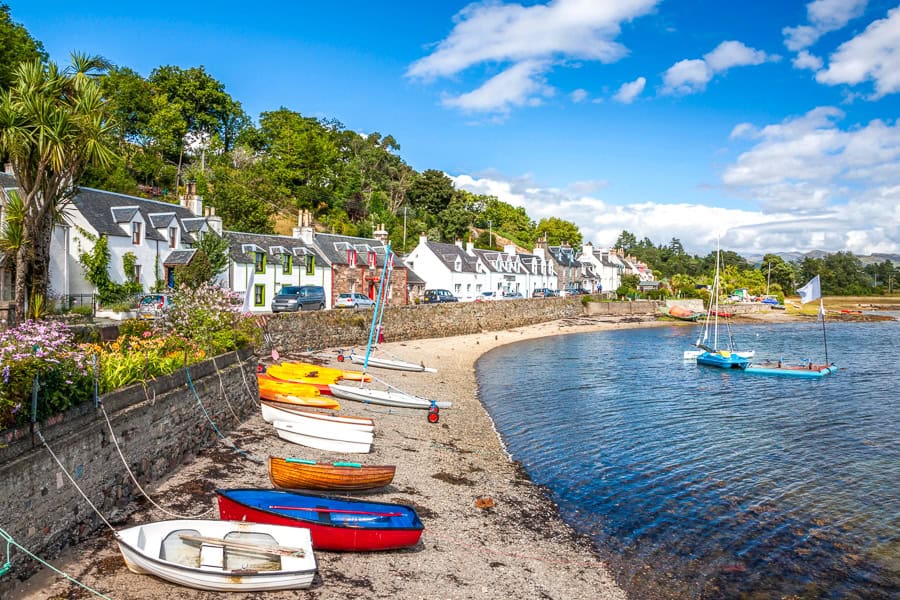
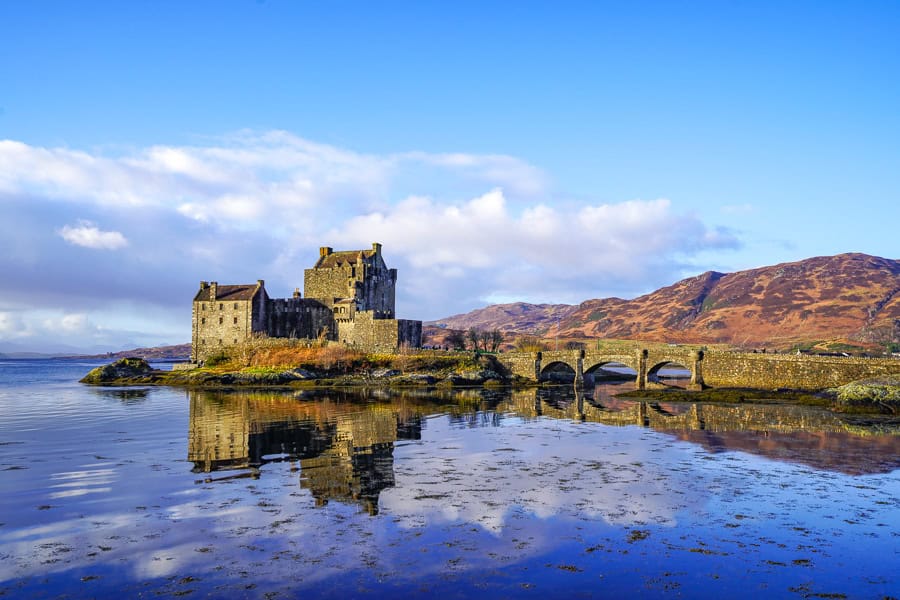
From Plockton, it’s only around 20km (12 miles) south, crossing over Loch Long to what is perhaps Scotland’s most photographed stronghold, Eilean Donan Castle.
Add the Isle of Skye to your NC500 itinerary
If you have more days to play with and the Isle of Skye is in your sights, this is the point in your itinerary where you would add it. As you travel south from Plockton to Eilean Donan Castle, turn right when you reach the A87, head west towards Kyle of Lochalsh and cross the Skye Bridge onto the island.
While you can see several of Skye’s highlights on a day trip, we honestly feel this spectacular island deserves at least a couple of days – see our 3-day Isle of Skye Itinerary and Where to Stay on the Isle of Skye posts for more.
Perched on a small, tidal island where three lochs meet, the 13th-century Clan Mackenzie bastion of Eilean Donan is an impressive sight. With its historic, high stone walls and picture-perfect setting, it’s no surprise the castle features on just about every Scotland road trip itinerary.
Pop inside for a look around, though just enjoying the views from the area around the castle make this one a worthwhile stop.
There’s also a visitor centre, café and toilets here. The castle has an entry fee and while opening times vary throughout the year, the whole site is normally closed from just before Christmas through January.
Take in sweeping loch views as the A87 hugs the shore of Loch Duich heading eastward. After about half-an-hour you’ll arrive at Loch Cluanie. If you want to break up the journey and have a bite to eat, both the Landour Bakehouse and Cluanie Bar & Kitchen get rave reviews.
Continue further east around Loch Cluanie and on to Invermoriston. Here, you’ll join the A82 to drive north along the western side of Loch Ness, Scotland’s most iconic and mysterious loch. Keep your eyes peeled for Nessie, of course!
A little over halfway up Loch Ness, near Drumnadrochit, you’ll come to 13th-century Urquhart Castle, perched above the water with vast views along the loch in both directions.
After exploring the more remote corners of the Highlands, Urquhart Castle can feel pretty touristy, with a slick visitor centre, small museum, and the obligatory café and gift shop. It’s still a fantastically ambient site though and we love it. Book online and ahead of time for a discount and to guarantee your entry, especially in peak season.
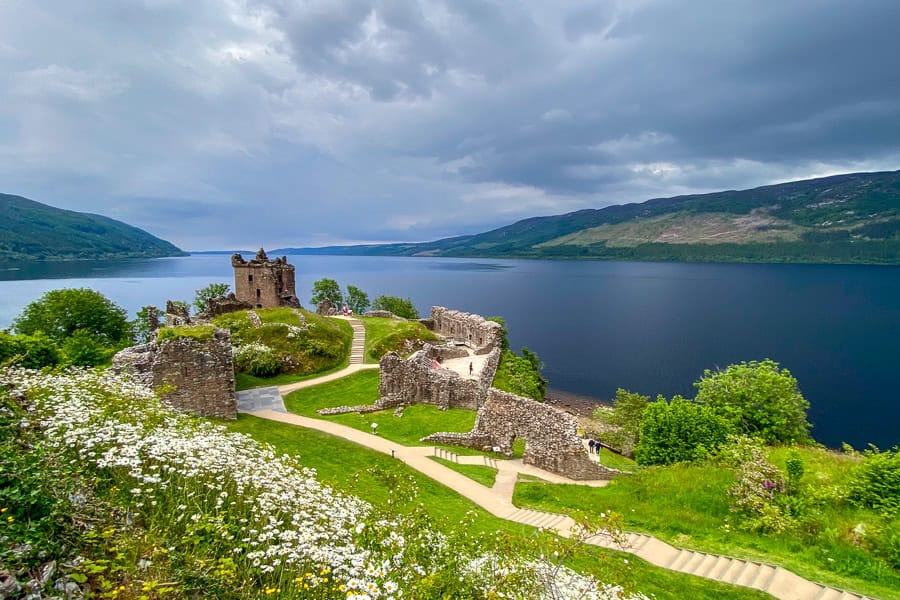
If you want to see the castle from the water and avoid the crowds, you can opt for a one hour Loch Ness cruise that takes in views of the castle from the water. Alternatively, you can combine a Loch Ness cruise with an Urquhart Castle visit – including castle entry and free time to explore the ruins. Both excursions operate from Inverness.
From the castle, it’s an easy final drive into Inverness, where the NC500 route officially ends. Don’t worry, we’ve still got one final day in our 7 day North Coast 500 itinerary to explore in and around this beautiful Highland city.
Where to stay in Inverness
Inverness is the biggest city on the NC500 and marks the official start and end of the route, making it a great place to spend a night or two, either before, or after your North Coast 500 road trip.
There’s a wide choice of hotels, guesthouses, B&Bs and apartments here, along with plenty of places to eat, drink, and keep you entertained.
If you’d rather stay somewhere quieter, you could also look at options along the Beauly Firth or even down towards Loch Ness, adjusting your route as needed.
The following options get consistently good reviews:
- Good value: Winmar House – clean, comfy room with fridge and private bathroom | well-equipped shared kitchen | free on‑site parking | close to river | 15-minute walk to Inverness castle
- Good value: Alban and Abbey House – modern, comfortable rooms | friendly staff | quiet location, close to town | free on-site parking
- Mid-range: Glen Mhor Hotel – stylish, comfortable rooms set in Victorian townhouses | on-site craft brewery and distillery | excellent food | great central location | on-site parking (paid)
- Mid-range: Redcliffe Hotel – comfortable, well-kept rooms | decent restaurant and bar with terrace | central location, close to everything | free parking on-site
- Spend a bit more: River Ness Hotel – modern, central hotel | stylish, nicely appointed rooms | bar and restaurant | fitness centre | fantastic service | short walk to river | paid parking nearby
- Spend a bit more: Ness Walk – Luxurious riverside hotel | elegant, spacious rooms with views | fine dining restaurant and bar | exceptional service | paid on-site parking
Wherever you decide to stay, Inverness is a handy base with all the amenities of a small city, while still feeling close to the Highlands. It’s a good spot to round off your NC500 road trip, unwind, and maybe raise a final glass to Scotland’s roads and scenery.
Day 7: Inverness and Culloden
Highlights: Culloden Battlefield | River Ness walk | Inverness Castle
Total driving distance: appx. 30km (20 miles)
Total driving time: appx. 45 minutes
Overnight: Inverness (or fly home)
The final day of our North Coast 500 itinerary covers a mix of history and relaxed city exploring. Start by driving the short distance from Inverness to Culloden Battlefield, around 8km (5 miles) east of the city centre. Aim to arrive by 9am, giving yourself time to wander through the excellent visitor centre before the first guided battlefield tour sets off at 10am.
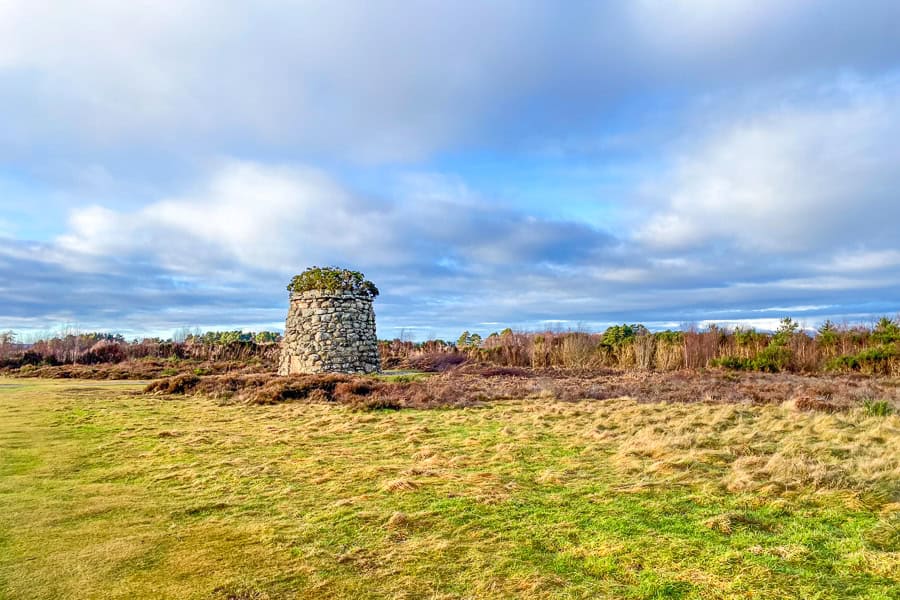
Culloden was the site of the last pitched battle on British soil, fought on 16 April 1746. It saw the Jacobite forces under Bonnie Prince Charlie crushed by government troops in less than an hour, bringing a brutal end to hopes of restoring the Stuarts to the throne, and to traditional Highland culture.
Without doubt this is one of the best visitor centres we’ve been to in the UK. It does a fantastic job of setting the scene, with displays of weapons, personal stories, maps, and an immersive film that vividly captures the chaos of battle.
The guided walk out on the moor though was the real highlight of the visit for us. Delivered with passion and enthusiasm, it gives you a tangible sense of what the battle must have been like on the very ground where so many lives were lost.
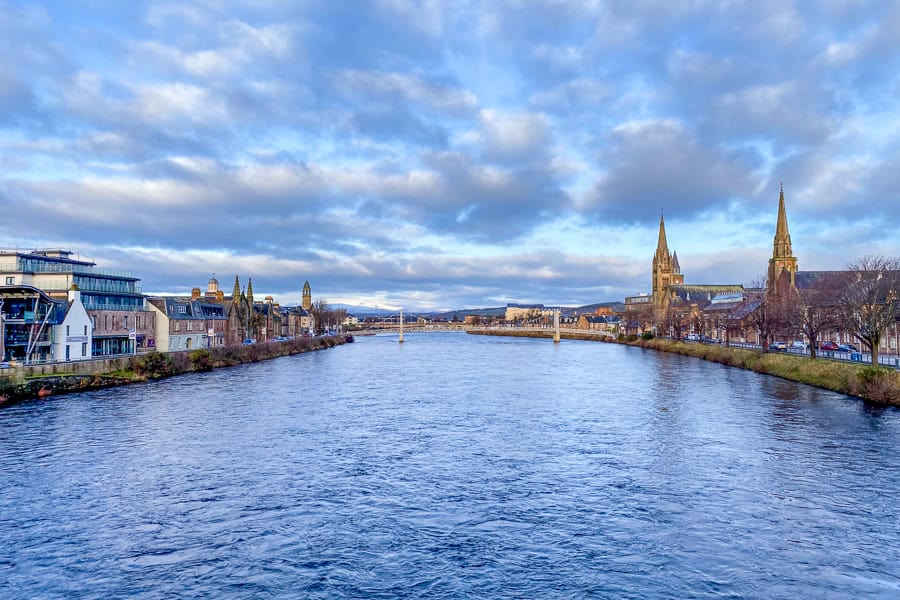
After Culloden, return to Inverness for a wander around this beautiful city on the banks of the River Ness. The heart of the city is compact and easy to explore on foot.
Start at Inverness Cathedral on the banks of the River Ness. Built in the mid-1800s, it’s a striking building with twin red sandstone towers and detailed stonework. Inside, you’ll find elegant arches, stained glass and a peaceful atmosphere. There’s a large pay-and-display carpark here with payment via coins at the machine, or via the RingGo app or website.
From here, follow the river south on Ness Walk, a lovely tree-lined path that takes you towards the Ness Islands, which sit mid-stream in the River Ness linked by Victorian suspension bridges. The path then meanders through the islands, past huge Scots pines and over rushing water, with ducks and occasional herons for company.

Once you leave the islands and arrive on the opposite bank, you can loop back towards the city along the east side of the river. It’s an easy hour or so walk all up, with benches dotted along the way if you want to pause and enjoy the peace and quiet.
Along the path to the city you’ll pass some fine stone buildings and hotels. Given we were here around lunch time, one in particular caught our eye: the Uil Bheist Distillery and Brewery. If you’re at the point in the day where you need recharge for a bit, we can highly recommend a paddle of beers and a bowl of traditional Scottish Cullen skink (a hearty fish soup) from this very cool brewery by the river.
There are also some very nice looking rooms at Glen Mhor Hotel attached to the brewery, if you’re after a comfortable, lochside stay in the heart of Inverness.

Back in the city, spend the remaining time you have exploring the main sights of Inverness.
The most obvious landmark is the castle crowning a small hill overlooking the river. It’s been closed for several years as it underwent extensive redevelopment, but you’ll be pleased to hear it reopened at the end of 2025 as the Inverness Castle Experience.
It was closed when we were here, but by all accounts it’s a far cry from a traditional Medieval castle visit, instead offering a modern, immersive experience that thoughtfully introduces visitors to Highland culture, landscapes and people through its exhibitions and instillations.
Allow yourself time to enjoy the elevated views over Inverness and the River Ness from the castle before making your way to the Victorian Market, a covered arcade of little shops and cafés under an ornate iron-and-glass roof – good for picking up last-minute gifts or a coffee. Not far away is the Inverness Museum and Art Gallery, a small but well laid out stop that takes you through everything from Pictish stones and Highland clan history to local wildlife and contemporary art.
There’s no rush today. The city centre is small enough to wander at an easy pace so enjoy the sights before you head to the airport or, if you’re staying another night, find a spot by the River Ness for one last Highland feast while reflecting on an iconic North Coast 500 road trip.
And that pretty much wraps up our North Coast 500 road trip.
From windswept beaches and mountain passes, to crumbling Highland castles, quiet lochs, and moody moorland, it’s a drive that certainly lives up to the billing.
I’m sure this won’t be our last visit to this wild, unspoilt corner of the world. We can’t wait to see what else there is to discover, next time on a longer visit to the Highlands.
Planning a North Coast 500 Road Trip
How long does the NC500 take?
We’d say the more time you can spare for this iconic Scotland road trip the better.
While it can certainly be done in 3-4 days (or even less), you’d need to accept that you’d be spending most of your time in the car just enjoying the scenery as you drive. While there’s nothing wrong with that approach, especially if you only have limited time, it does come with some obvious limitations.
If you really want to appreciate the scenery, stretch your legs on a few hikes, visit the historic sites, and check out some of the Highland’s most unspoilt beaches and coastline, we’d recommend allowing at least a week to drive the North Coast 500 route.
In reality, you could easily spend much longer up here. We’ll definitely be coming back for a longer trip.
Best time to visit the Scottish Highlands
There’s no bad time to explore the North Coast 500, but the experience changes a lot with the seasons.
For most people, the best time to visit the Scottish Highlands is between May and September, when you have a better chance of decent weather, longer daylight hours and easier driving conditions.
The summer months between June and August bring the warmest weather, making this peak season for visitors. You can expect to see plenty of tourists on the roads and around well-known stops, and accommodation can be scarce. This is also when midges are at their worst, so remember to pack repellent.
Despite its northern latitude, visiting in winter is certainly possible, with the prospect of the northern lights and spectacular winter scenery going some way to offset the cold. We’ve visited the Highlands in winter and had a blast, however it’s a time of year that requires a little more planning. While the main roads will be kept clear, some single-track roads can be icy or even closed at this time of year, daylight is limited, and some small businesses and attractions may shut for the season.
In our view, late spring (around May) and early autumn (around September) are the best times to drive the North Coast 500, giving you a good balance between weather, crowds and daylight hours.
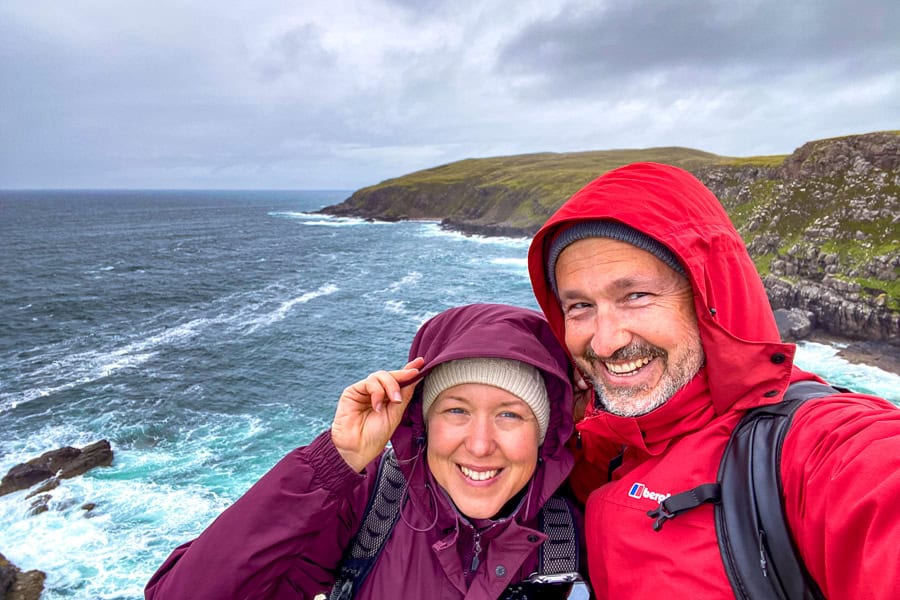
Whatever time of year you plan to visit, make sure you come prepared for changeable weather. We’ve been drenched, sunburnt, windblown and frozen, all on the same day in June, so it’s best to expect the unexpected.
Getting to Inverness
Regarded as the capital of the Highlands, Inverness is well connected to the rest of the United Kingdom by road, rail and air.
Inverness airport is just 14km (9 miles) northeast of the city centre in Dalcross, on the shores of Moray Firth. It’s well served by domestic flights from London, Manchester, Bristol and Belfast. If you’re coming from overseas, there are direct flights from Amsterdam, otherwise you’ll need to connect through places like London.
It’s a little over 8 hours by train from London to Inverness, and you’ll also find regular rail connections within Scotland from Edinburgh, Glasgow, Perth and Aberdeen. You can check timetables and book trains (and other transport modes) via the Omio website.
Budget-friendly long-distance coaches like Megabus and FlixBus also cover a variety of routes from as far afield as London, and on an intercity basis within Scotland. You can check schedules, prices and make bookings at Busbud.
By road, Inverness can be reached from the south along the A9 in around 3.5 hours from both Edinburgh and Glasgow. It’s a little over 900km (560 miles) from London, but the driving time can vary greatly depending on things like traffic, roadworks, and weather – you can safely assume a journey well in excess of ten hours.
Driving in the Scottish Highlands
Driving in the Scottish Highlands is an absolute blast, and even though we’ve been up to this part of the world many times, for us it never gets old. The remote, wild and beautiful landscapes here make it one of our favourite places to road trip, but it’s precisely that isolation that some might find challenging.
While the main NC500 route is pretty good, there are many narrow and winding sections, especially on the west coast. You’ll also come across plenty of single-track sections, some of which are quite rough, and it’s not uncommon for livestock to wander across your path.
On these roads it’s important to take your time, keep left, watch out for the passing places and, if you can, allow faster moving vehicles to safely overtake you.
Take the opportunity to fill up with petrol and use bathrooms when you can as both can be in short supply in some of the more remote areas of the Highlands. Also, consider downloading offline maps to cover those periods when the mobile signal gets patchy.
Finally, parking at popular viewpoints or trailheads can be very tight in peak season. Try to arrive early or later in the day, and make sure you park legally, without blocking passing places or gateways.
Having driven in plenty of different countries (on both sides of the road), we appreciate the apprehension that comes with driving somewhere new and getting to grips with unfamiliar road rules.
If you want to get a handle on what to expect before you travel, you might like to check out Tripiamo’s Driving in the UK Made Easy guide for international travellers.
This is a comprehensive, certified online driving kit that pulls together everything you need to know about driving in the UK. It includes 360 degree drive tours and expert instructional videos covering local road rules, customs and practical driving tips, plus PDF info you can take with you. It’s stuff we usually spend an age trawling the internet for, all in one place.
Inverness car hire
Other than a tour, the only way to really see the North Coast 500 is by hiring a car or bringing your own.
We had a small hatchback for our North Coast 500 road trip and would highly recommend hiring a car that’s on the smaller side to lessen any nerves you may have about navigating those very narrow Highland tracks.
While manual cars are pretty much the norm in the UK, you can still get an auto if you book in advance and don’t mind paying a little bit more. The same goes for four-wheel-drives, although we certainly don’t think the NC500 route warrants one.
We’ve always found the best deals at DiscoverCars and they’re our go-to car hire provider, with great rates and free cancellation should your plans need to change.
Booking your Inverness car hire in advance will get you the best rates and widest choice of vehicle, especially if you want to lock in an automatic vehicle. You can find and book your car rental for Scotland here (or use the search box below).
North Coast 500 accommodation
There’s a reasonable range of places to stay along the North Coast 500 route, from campgrounds, B&Bs and small hotels to self-catering cottages, traditional inns, apartments, and a scattering of hostels.
Where we can, we’ve based the overnight stops of this road trip around decent-sized towns and villages – places like Wick, Ullapool and Inverness – so you’ll usually have a reasonable choice of stays.
We booked all the stays on our North Coast 500 itinerary through Booking.com. The platform has a huge choice of accommodation, and we appreciate the discounts and other benefits we get with their Genius loyalty program. You can find and book your North Coast 500 stays here.
In more remote areas, accommodation options drop off quickly, and the stays that exist book up well in advance. If you have a particular budget or style of stay in mind, it’s worth locking in your accommodation as early as you can.
B&Bs are popular across the Highlands and can be a great way to meet local people and pick up tips on things to see and do over a cooked breakfast. Pubs with rooms are also popular and can be good value, especially in smaller towns.
That’s not to say you’ll find much in the way of cheap stays along the route. Overall we found stays in the Highlands were on the more expensive side compared to other parts of the UK.
Whatever you decide, a bit of forward planning goes a long way, so book ahead if you can, particularly if you’re intending to visit in summer.
Useful Travel Resources
Stays: We used Booking.com for all the stays on our North Coast 500 road trip – you can check prices and book your stays here.
Airport Transfer: We tend to book an airport transfer in advance when we arrive in a new city laden with bags. Check out Welcome Pickups for airport transfer options in Scotland.
Car Rentals: While we used our own car for this North Coast 500 itinerary, we normally hire vehicles through DiscoverCars when we need to. You can check prices for Scotland and book a car here.
Driving Guides: If you’re feeling apprehensive about driving in Scotland we highly recommend Tripiamo’s certified, and comprehensive Driving in the UK Made Easy guide.
eSIMs: You can stay connected while travelling in Scotland with an Airalo eSIM.
Tours: We often use GetYourGuide for tours when we travel and they have a great range of tours and local experiences in the Scottish Highlands. Check out what’s on offer here.
If you’ve got any questions about this incredible North Coast 500 itinerary, including driving in the Highlands, ask us in the comments below.
If you’re spending more time in Scotland, you may be interested in our Isle of Skye road trip itinerary, and our post on where to stay on the Isle of Skye.
For more great road tripping itineraries and adventures, check out our Road Trips page, and our bucket list of 100 ultimate road trips around the world.