

Plan the perfect Northumberland 250 road trip with our 7-day itinerary starting from Newcastle. Discover wild beaches, historic castles, ancient abbeys, atmospheric border towns, Roman ruins, dark-sky landscapes and some of the most scenic driving in northern England.
The Northumberland 250 brings together many of the things we love most about a UK road trip: winding country lanes, coastal views, ruined castles, country villages, bird-filled islands, and scenery that makes you want to pull over every few miles.
In fact, our biggest take-out from our own experience driving this route is just how varied it is, and how spectacular.
One day you’re wandering the stately grounds of a Victorian country estate, or exploring a haunted castle packed with curios. The next you’re breathing salty air on a wide, empty beach, or landing on one of the Farne islands, surrounded by puffins and dive-bombing Arctic terns.
Our 7-day itinerary starts and finishes in Newcastle, and follows a circular route through Northumberland and the Scottish Borders. Along the way you’ll visit historic battle sites, medieval fortresses, ruined Border abbeys, Roman frontier forts, and some of the best stretches of Hadrian’s Wall, as you pass through landscapes that have witnessed some of Britain’s most turbulent moments.
This is without doubt one of our favourite road trips in the UK and, in our view, one of its most underrated driving routes. Best drive it now before the secret gets out!
What’s in this post?
Our 7-Day Northumberland 250 Road Trip Itinerary
– What’s the route?
– Our Northumberland 250 map
– Day 1: Newcastle to Alnwick – Wild landscapes, battle sites, country estates and castles
– Day 2: Alnwick to Seahouses – Castle towns, harbour villages and classic Northumberland coast
– Day 3: Around Seahouses – Puffins, dive-bombing terns and one of our favourite English castles
– Day 4: Seahouses to Berwick-upon-Tweed – A holy island, border history and big sea views
– Day 5: Berwick-upon-Tweed to Wooler – Border bridges, ruined castles, standing stones and Anglo-Saxon history
– Day 6: Wooler to Kielder – Medieval abbeys, border viewpoints, and dark-sky country
– Day 7: Kielder to Newcastle – Waterfalls, Hadrian’s Wall, Roman forts and moorland villages
Planning a Northumberland 250 Road Trip
– How long do you need?
– Best time to drive the Northumberland 250
– Getting to Newcastle
– Driving in Northumberland
– Northumberland 250 car rental
– Northumberland accommodation
Useful Travel Resources
This post contains affiliate links. If you choose to buy through these links we may earn a small commission at no extra cost to you, which helps us to keep Two For The World running. Many thanks for your support!
Northumberland 250 Itinerary – Quick Planner
Start & finish: Newcastle, England
Distance: Around 650km (400 miles) depending on detours and day trips
Recommended duration: 7 days
Best time to visit: Late spring to early autumn for longer days, open attractions, boat trips and easier walking conditions
Trip highlights: Cragside | Chillingham Castle | Warkworth Castle | Dunstanburgh Castle | Farne Islands boat trip | Bamburgh Castle | Holy Island (Lindisfarne) | Berwick-upon-Tweed | Duddo Five Stones walk | Scottish Border abbeys | Kielder Observatory | Vindolanda and Hadrian’s Wall
Overnight stops: Alnwick | Seahouses | Berwick-upon-Tweed | Wooler | Kielder / Falstone | Newcastle
Best for: Castles, coast, scenic drives, birdlife, walking, historic abbeys, Roman history, border history, dark skies and small-town stays
Our 7-Day Northumberland 250 Road Trip Itinerary
What’s the route?
Our 7-day Northumberland 250 itinerary starts and finishes in Newcastle, heading inland first before turning towards Alnwick and the coast, then looping through Berwick-upon-Tweed, the Borderlands, Kielder and Hadrian’s Wall country on the return south.
Our preferred itinerary doesn’t follow every single mile of the classic Northumberland 250 route, but instead adapts it to deliver what we think is a practical, immersive journey that balances the core route with the stops we feel are most worthwhile.
It’s also possible to start and finish the Northumberland 250 route in Edinburgh, driving down through East Lothian and the borderlands via Dirleton and Tantallon castles, past St Abb’s Head and joining up with our itinerary at Berwick-upon-Tweed.
Northumberland 250 itinerary at a glance
Here’s an overview of how the itinerary breaks down – detailed routes, driving times, highlights and optional stops are included in the day-by-day itinerary below.
| Day | Route and main focus | Overnight |
|---|---|---|
| Day 1 | Newcastle > Alnwick – wild landscapes, battle sites, estates and castles | Alnwick |
| Day 2 | Alnwick > Seahouses – castle towns and coast | Seahouses |
| Day 3 | Farne Islands & Bamburgh – seabirds, beaches and Bamburgh Castle | Seahouses |
| Day 4 | Seahouses > Berwick-upon-Tweed – Lindisfarne and border history | Berwick-upon-Tweed |
| Day 5 | Berwick-upon-Tweed > Wooler — Borderlands history, ruined castles and ancient standing stones | Wooler |
| Day 6 | Wooler > Kielder – Scottish Border abbeys, viewpoints and dark skies | Kielder / Falstone |
| Day 7 | Kielder > Newcastle – Hadrian’s Wall and Roman history | Newcastle |
Our Northumberland 250 map
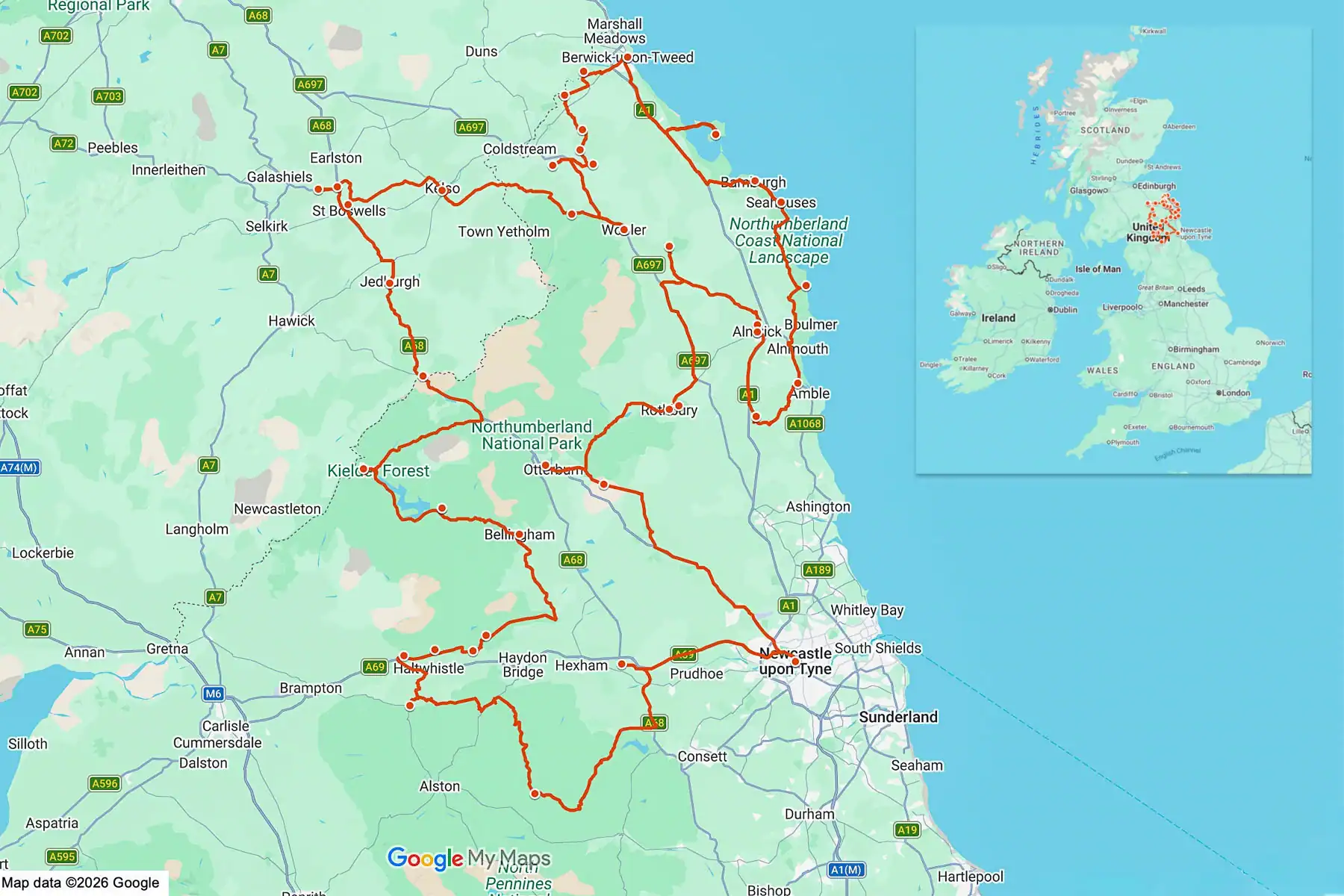
To help you plan your Northumberland 250 itinerary, we’ve mapped our full route.
We suggest using the map alongside our day-by-day itinerary to help you get a clear sense of driving distances, overnight stops and how each stage of the route fits together.
It’s particularly useful for understanding where you might want to slow down, add excursions or activities, or make adjustments to suit your own pace.
Day 1: Newcastle to Alnwick – Wild landscapes, battle sites, country estates and castles
Highlights: Winter’s Gibbet | Percy Cross | Cragside | Chillingham Castle | Alnwick Castle Viewpoint
Total driving distance: appx. 140km (85 miles)
Total driving time: appx. 2.5 hours
Overnight: Alnwick
We reckon starting a Northumberland 250 road trip in Newcastle is a great option as it allows you to experience one of the UK’s most vibrant cities before you hit the road. We’ve spent many hours wandering the city landmarks and waterfront here, as well as sampling one or two of its awesome, friendly pubs, and we heartily recommend a couple of days here if you have the time to spare.
That said, you can just as easily start the drive anywhere along the route and adjust the itinerary to suit your plans.
As you leave Newcastle’s city traffic behind on the road northwest, it’s not long before you’re driving along narrow country roads, past the edges of moorland and old battle sites. The route weaves through lovely riverside towns, and past historic country estates and castles – with some of northern England’s most beautiful landscapes to keep you company.
It’s a full day, so we suggest getting on the road early to ensure you have a decent amount of time to enjoy the two highlights of today’s route: Cragside and Chillingham Castle. Our other suggested stops are great for a quick break so you can stretch your legs or grab a coffee. However you roll, try to arrive in Alnwick by late afternoon to allow time to check in, wander around town and grab dinner.
Highlights of Day 1
While there are plenty of things to do along the Northumberland 250, we would suggest building today’s itinerary around the following, which for us were the must-sees of the day:
- Winter’s Gibbet: Up in the high hills of Northumberland National Park, you’ll find this forlorn spot where a gallows has been standing since the hanging of William Winter in 1791. We had this eerie place to ourselves: just us, the wind, and desolate views across the countryside in all directions.
- Percy Cross: Historic border skirmishes between the Scots and English have shaped the landscape around these parts, and we couldn’t resist a quick stop at this poignant site near Otterburn commemorating the legendary 1388 Battle of Otterburn. You won’t need long here, but if you’re drawn to the stories behind a place, it’s well worth taking the time to read the on-site panels about the battle.
- Cragside: We almost skipped this remarkable Victorian house, but a last-minute decision to use our National Trust membership really paid off. Cragside was the world’s first house to be lit by hydroelectricity, and its wooded grounds, technical innovations and grand interiors make it a standout. Don’t miss the Turkish Bath Suite and the six-metre-high marble fireplace in the Drawing Room – personal highlights of our visit.
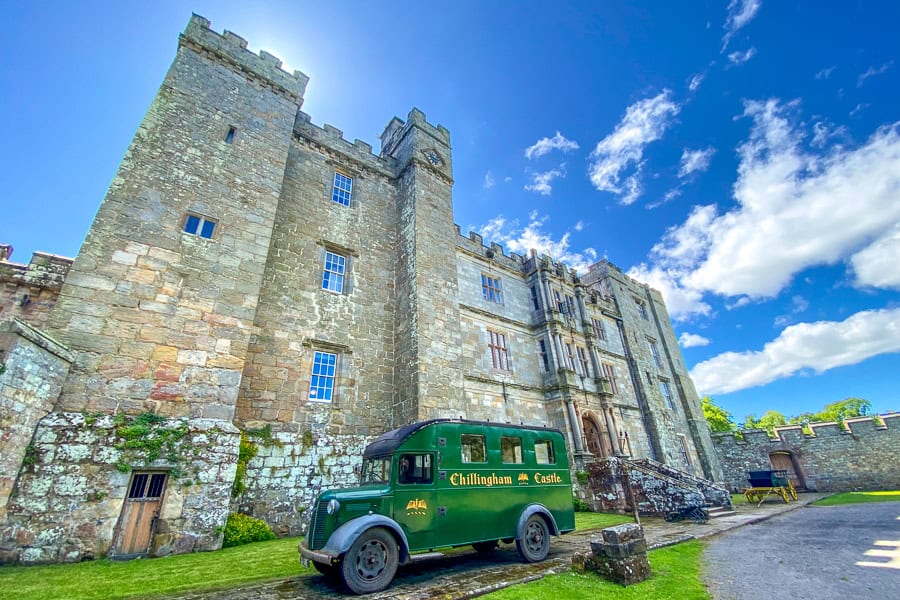
- Chillingham Castle: We loved our visit to this quirky castle, haphazardly packed to the rafters with a wild assortment of antiques and bric a brac, and entertaining handwritten notes scattered about by the owner, Sir Humphrey. The castle is also said to be haunted and while we saw no ghosts, the grim dungeons and torture chamber definitely add a macabre vibe.
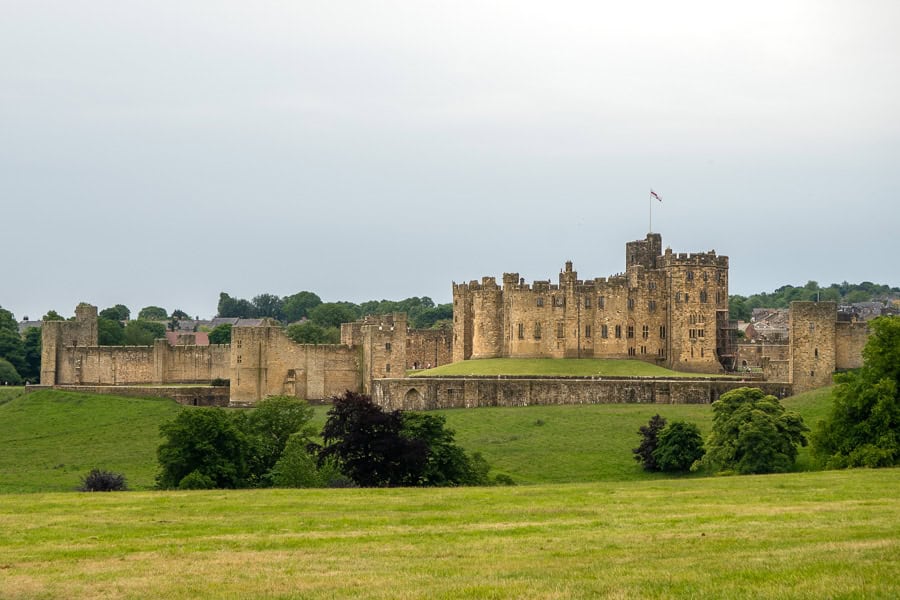
- Alnwick Castle Viewpoint: Pull over at this viewpoint for a final quick stop on the way into Alnwick to take in a sweeping view of this enormous castle, the famed setting for Hogwarts (you’ll have a chance to visit tomorrow morning).
Other sites in the area
For us, the biggest challenge of any itinerary is deciding what to leave out, but the Northumberland 250 has so many things to see along the route that it would take far longer than a week to see everything.
While we’ve included our pick of Day 1 top spots above, there are many other things to do in this area, some of which we’ve captured below. If any of these stops are more your thing, just swap them into your itinerary instead and adjust timings as necessary:
- Wallington: If you like exploring National Trust country estates, the former home of Sir Charles Trevelyan serves up a grand house and walled garden in a setting of rolling hills and woodlands.
- Otterburn: Blink and you may well miss the stone cottages of scenic Otterburn surrounded by the rugged Cheviot Hills.
- Drake Stone: If you fancy an amble, the 1km scenic hike to the mythical Drake Stone provides views over the ruins of Harbottle Castle and surrounding countryside.
- Simonside Hills: Another worthwhile detour if you’re feeling energetic (and the weather is behaving) – a variety of trails and linked paths await here, including forest loops and ridge-line walks to scenic viewpoints.
- Rothbury: For us, this was a great spot to grab a coffee and snack before heading out on a lovely stroll through town and along the pretty riverside walkway.
- Thrunton Wood: A lovely forest detour with woodland trails leading to rocky outcrops and views across the surrounding Northumberland countryside.
- Linhope Spout: If waterfalls are your thing, the walk to Linhope Spout takes you through pretty Breamish Valley countryside to a 60-foot cascade tucked into the hills.
- The Cheviot Hills: For a more serious walking detour, the Cheviot Hills offer some of the wildest scenery in Northumberland, but you’ll need proper time, decent weather, and suitable gear to make the most of them.
Where to stay in Alnwick
Alnwick is one of the best overnight stops on the Northumberland 250, with easy access to the castle and gardens, as well as local attractions like Barter Books, while still being close to the coast for the next stage of the itinerary.
Accommodation here includes traditional inns, guesthouses, boutique stays, holiday homes, cottages and town-centre apartments. There’s a good amount of self-catering accommodation in and around Alnwick, which can work well if you want more space, laundry facilities or the option to eat in. The following options all get consistently good reviews:
- Good value: The Bondgate Boutique – This small guesthouse in central Alnwick is handy for the castle, gardens and town centre. Comfy, well appointed ensuite rooms, self check-in, and free parking nearby at the Plough make this a great central option.
- Mid-range: The Tempus at Charlton Hall Estate – Stylish hotel set in a country estate around 11km (7 miles) north of Alnwick. With spacious, modern rooms, an on-site restaurant & bar and free parking, this is a nice option if you want a more peaceful stay away from town.
- Spend a bit more: The Cookie Jar – Elegant boutique hotel with tastefully designed, super comfortable rooms close to the castle and town centre. With exceptional staff, an on-site bistro, walled garden, and easy on-street parking it’s a good higher end option for Alnwick.
Book your Northumberland 250 road trip
Find a stay
Grab a hire car
Book a tour
Day 2: Alnwick to Seahouses – Castle towns, harbour villages and classic Northumberland coast
Highlights: Alnwick | Alnwick Castle | Warkworth | Warkworth Castle | Craster | Dunstanburgh Castle
Total driving distance: appx. 70km (40 miles)
Total driving time: appx. 1.5 hours
Overnight: Seahouses
Kick off the day with a few hours in Alnwick; in our view, one of the nicest towns on our Northumberland 250 itinerary. Depending on your interests, you could visit Alnwick Castle, wander through The Alnwick Garden, or head to Barter Books for one of the most atmospheric bookshop stops in England.
From Alnwick, the route turns south-east towards the coast, calling at the harbour town of Amble and the castle village of Warkworth before looping north again to Craster. This is where the day really starts to feel like a Northumberland coastal road trip, with fishing villages, ruined castles, sea views, and wide-open stretches of coastline.
It’s another full day, so we’d suggest choosing your Alnwick sights carefully and leaving enough time for the walk from Craster to Dunstanburgh Castle. Finish the day in Seahouses, the most practical base for exploring the Farne Islands tomorrow.
Highlights of Day 2
Today’s route combines some of Northumberland’s best-known sights with smaller harbour towns and coastal walks. To make the most of your hours, we’d suggest planning the day around the following key stops. For us, these are the big ticket items for today:
- Alnwick: Start the day early and take a walk down Alnwick’s cobbled streets and alleys before grabbing a coffee at Barter Books to enjoy one of the UK’s most atmospheric second-hand bookshops, set inside Alnwick’s former Victorian railway station.
- Alnwick Castle: We’ve visited Alnwick a few times, and seeing the imposing medieval castle here never gets tired, so arrive for opening if you want to do it justice (you can book tickets in advance here). This 11th-century stronghold is one of England’s great medieval castles, with state rooms, exhibitions, beautiful grounds, tours and seasonal activities to keep you busy. With screen credits like Harry Potter, Downton Abbey and Robin Hood: Prince of Thieves, it may well feel familiar as you walk around.
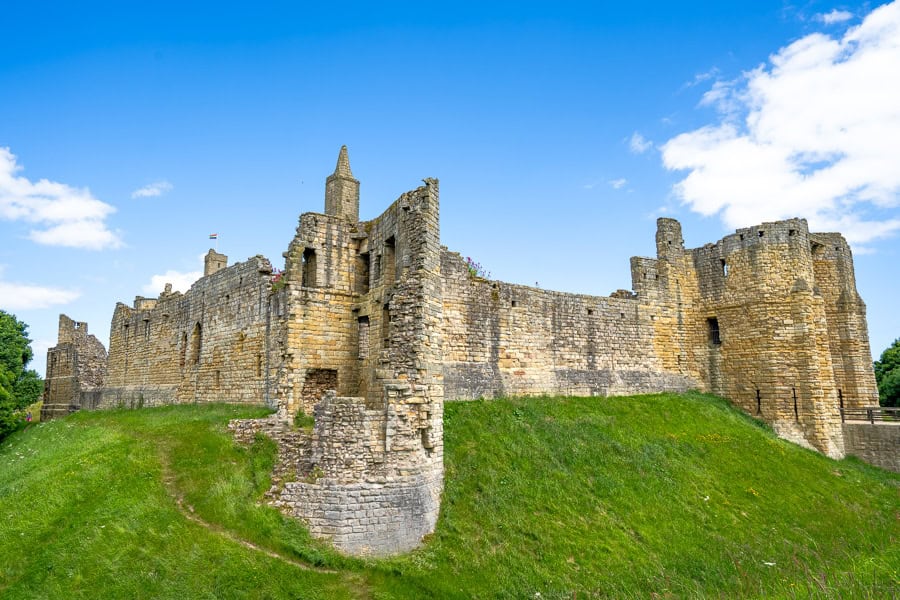
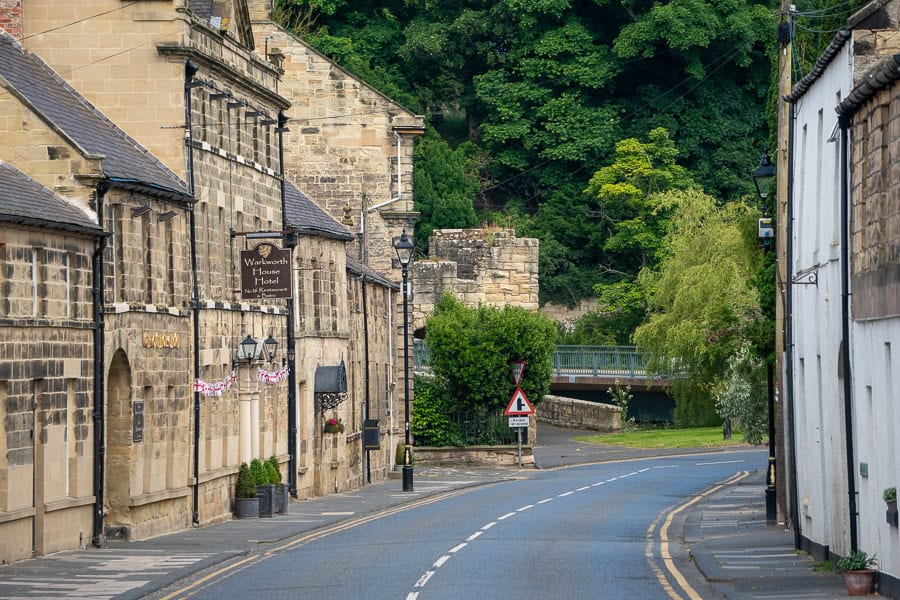
- Warkworth: We were pleasantly surprised by Warkworth and would recommend stretching your legs here, or even stopping for a pub lunch. We really enjoyed wandering through the village, past old sandstone houses, pubs and independent shops, before heading down towards the river to walk across the medieval bridge and see the old defensive gateway. If you have time to spare, Warkworth Castle is worth going into for the Great Tower and ruined halls, however the views from outside are equally impressive.
- Craster: This small fishing village with a pretty harbour is the starting point for one of the best coastal walks on the route. Renowned for its oak-smoked kippers, it’s also a good place to stop for lunch or a snack before setting off on foot towards Dunstanburgh Castle.
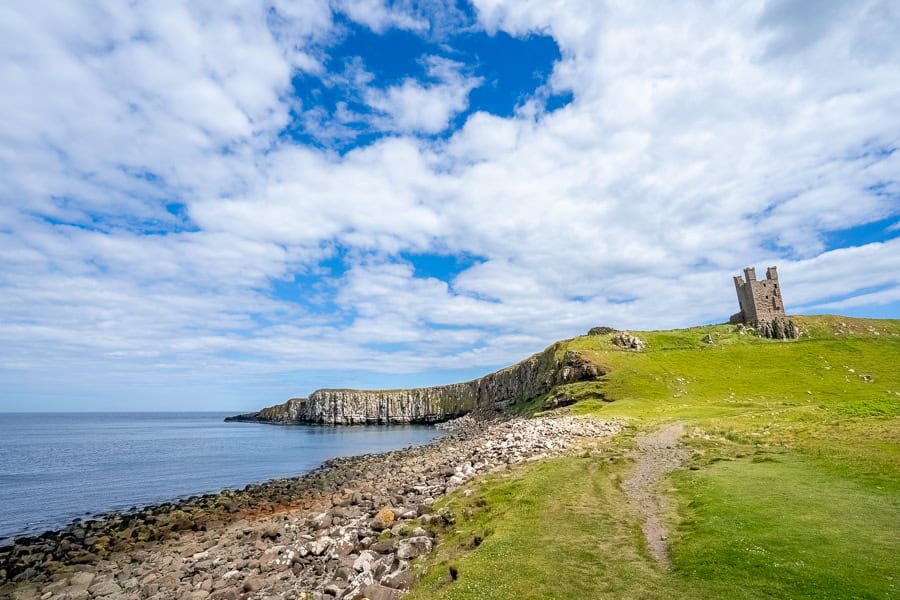
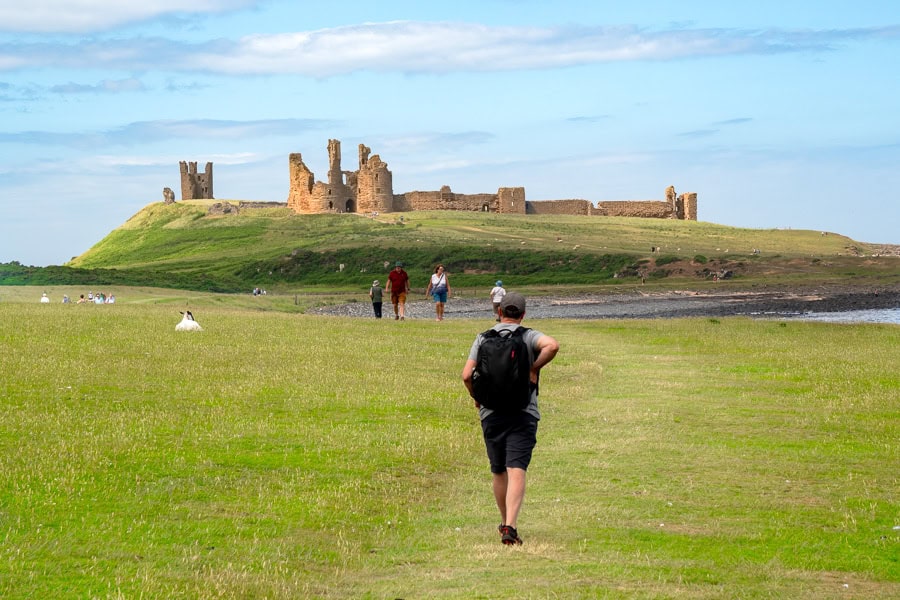
- Dunstanburgh Castle: This imposing medieval ruin sits in a dramatic position above the sea around a 2km walk from Craster. The coastal trail here – through gently rolling farmland with sheep for company and the castle looming large in the distance – was one of the absolute highlights of our own Northumberland 250 road trip. Be sure to take the time to walk around the outside of the castle to see it from different vantage points, as well as taking a peek inside if you are going ok for time.
Other sites in the area
While today’s itinerary is designed to maximise time for exploring Alnwick, Warkworth and the stunning coastal path to Dunstanburgh Castle, there are many other worthwhile places to stop around this area. If beaches, quieter villages or extra viewpoints are more your thing, the following options could certainly be included with some reworking of today’s itinerary:
- The Alnwick Garden: If you enjoy gardens, this may be worth adding, although it’s a large space that needs time to explore. Located next to Alnwick Castle, it’s best known for the Grand Cascade water feature and guided tours among the toxic and narcotic plants of the Poison Garden. You can grab an entry ticket in advance here.
- The Bathing House: Built in the early 19th century by Earl Grey as a private seaside retreat, this listed building is now a holiday rental, so treat it as a quick coastal photo stop rather than somewhere to explore.
- Embleton Bay: A lovely beach add-on after the Dunstanburgh Castle walk, with wide sand dunes and excellent views back towards the castle from the north.
- Northumberland coastal villages: There are plenty of detours to the coastal towns and villages south of Seahouses today if time allows: Amble, Alnmouth, Low Newton-by-the-Sea and Beadnell are all worth a stop.
Where to stay in Seahouses
We really enjoyed staying in Seahouses, a small, bustling harbour town with decent amenities, including boat trips, a petrol station, grocery shops, a few decent pubs, and a handful of restaurants and fish and chip shops.
Accommodation here ranges from traditional guesthouses and B&Bs to harbourfront inns, self-catering cottages, apartments and a handful of more comfortable coastal stays. If you’re travelling in peak season, book early, especially if you want parking, sea views or somewhere within walking distance of the harbour.
There’s a great variety of stays here, including the following, which all get excellent reviews from other travellers:
- Good value: Dunlem Snug – We chose to stay at this great little guesthouse due to its location close to the harbour in Seahouses and free on-site parking. Rooms are nicely appointed, surprisingly spacious, comfortable and quiet – which was exactly what we wanted for our stay.
- Mid-range: Beach House Hotel – Comfortable waterfront hotel with friendly staff and free on-site parking just a short stroll from the harbour in Seahouses. Rooms are clean, modern and comfy, some have sea views, there’s an on-site restaurant and bar, and the included breakfast gets top marks.
- Spend a bit more: Northern Hideaways Seascape – Stylish apartment with ocean views close to Seahouses Harbour. The property is tastefully designed, has a well-equipped kitchen, living area, two comfortable bedrooms, two bathrooms and free, on-site parking.
We’ve also stayed a little further down the coast at Farne Lodge in Beadnell, which is another option if you’d prefer a quieter village base and don’t mind driving into Seahouses for boat trips. Again, rooms were nicely appointed and comfy, parking is free, and there’s a great pub (the Craster Arms) just around the corner.
Day 3: Around Seahouses – Puffins, dive-bombing terns and one of our favourite English castles
Highlights: Farne Islands boat trip | Bamburgh Beach | Bamburgh Castle
Total driving distance: appx.15km (10 miles)
Total driving time: appx. 20 mins
Overnight: Seahouses
Day 3 of our itinerary is all about the coast, with just a little bit of driving and two huge highlights: Bamburgh Castle and a Farne Islands boat trip – arguably two of the best things to see in Northumberland.
Depending on the time of year, Inner Farne boat trips depart at 10.15am, 11.45am, and 1.45pm. Check departures for when you plan to be there and pick a sailing that allows you to visit Bamburgh Castle before or after. The castle is normally open between 10am and 5pm, with last entries at 4pm.
Bamburgh Castle
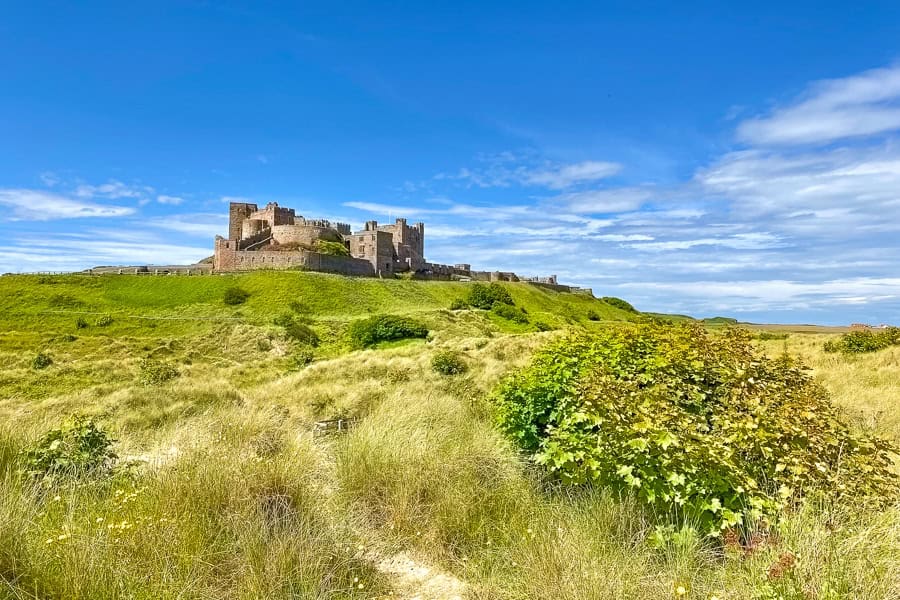
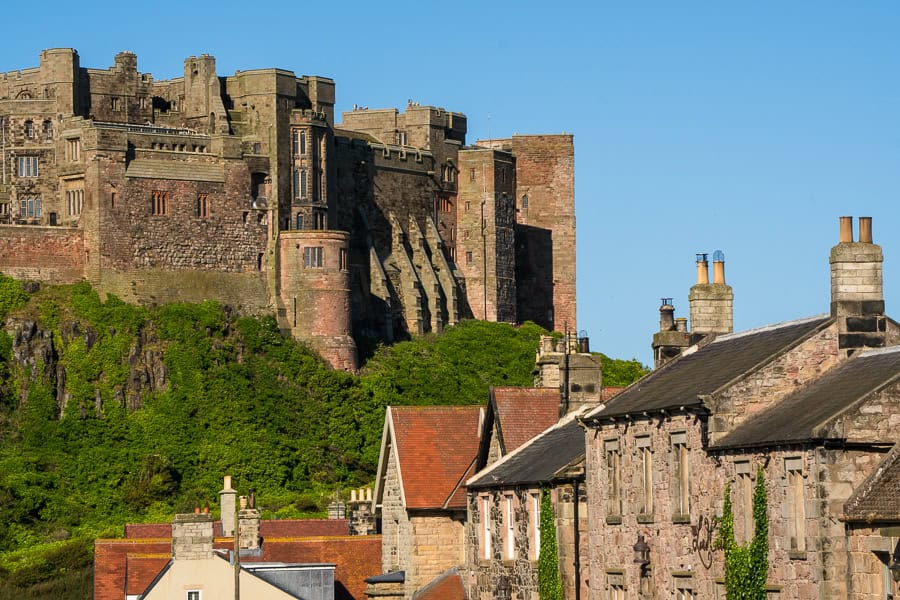
Bamburgh Castle has long been on our radar, even before we read the Last Kingdom books and watched the TV show. The giant fortress dominates the landscape hereabouts and towers over the castle village.
We suggest parking at the official car park near the entrance, and rather than go straight into the castle, walk down to the sand to take in the wonderful castle views from the dunes and beach.
After dusting the sand off our feet, we spent a couple of hours inside the castle and enjoyed every second. The interiors are very well presented, particularly the State Rooms and Keep, there are plenty of information panels, and the castle’s position above the beach provides sweeping coastal views from various lookout spots.
There may also be an exhibition inside the castle during your visit – when we were there, it was a very cool Last Kingdom exhibition, with costumes, props, and information about the filming of the TV series.
Farne Islands boat trip
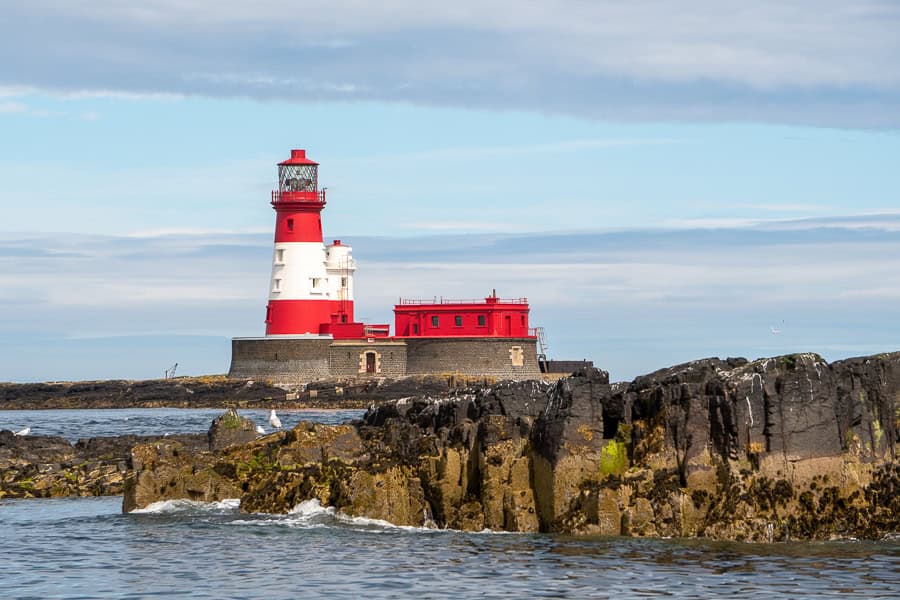
While we loved the castle, our Inner Farne Island Tour was, without doubt, one of the standout experiences of the whole Northumberland 250 itinerary.
As keen twitchers, sailing around these beautiful islands teeming with gulls, terns, guillemots, razorbills, and kittiwakes was pretty much birding nirvana for us. And hearing about the turbulent history of the area – religious movements, Viking raids and shipwrecks – just added to the experience.

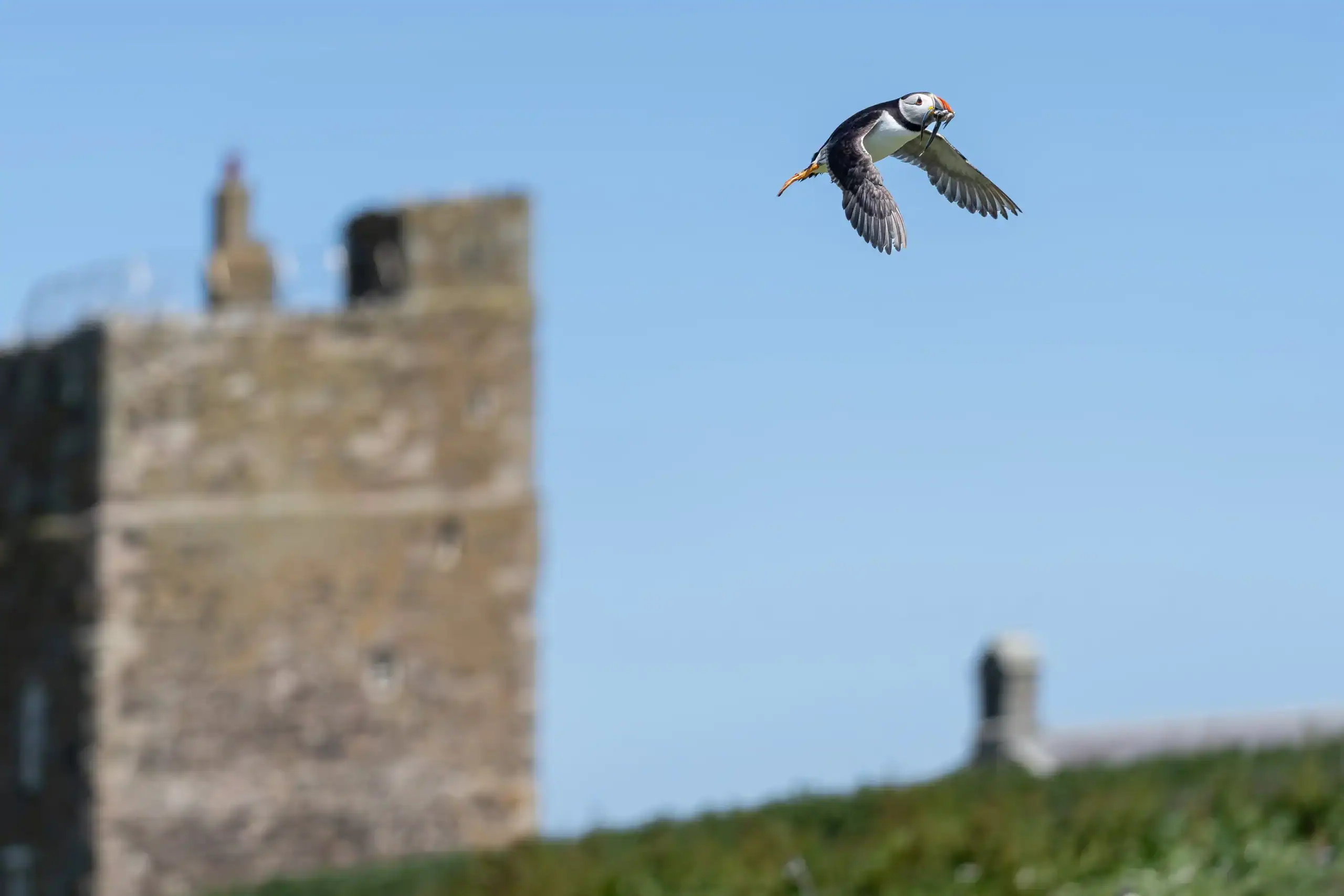
Seeing puffins has been very high on our birding bucket list for a while. So for us, landing on Inner Farne and having a chance to get up close with puffins, terns and other seabirds was just incredible.
Not only did we encounter hundreds of delightful puffins going about their puffiny business on Inner Farne, we also got to see plenty of Arctic terns performing aerial displays. Though judging by their dive-bombing raids, they weren’t as happy to see us as we were to see them.
Inner Farne tours operate between April and September. If you visit during breeding season (May to July), be sure to take a hat of some kind as this is peak swooping season and you can expect to be harassed by some very determined birds.
Other sites in the area
While it’s quite likely the Farne Islands and Bamburgh Castle will fill the whole day, there are a couple of nearby stops worth keeping in mind if you can squeeze them in:
- Grace Darling Museum: A small museum in Bamburgh village operated by the Royal National Lifeboat Institution that tells the story of Grace Darling and the famous 1838 rescue of survivors from the wrecked SS Forfarshire.
- St Cuthbert’s Cave: Inland detour to a site 20km west of Bamburgh where it’s believed monks carrying St Cuthbert’s body sheltered on the way to Durham Cathedral after fleeing Viking raids at Lindisfarne. The short walk to the cave serves up views across the countryside towards the coast.
Planning your Northumberland 250 itinerary last minute?
Stylish boutique stay in a beautifully converted fire station, close to restaurants, bars and theatres: Hotel Gotham Newcastle
Superb – 9.5 | More than 400 reviews
Get up close and personal with local puffins and learn all about Northumberland’s Viking and maritime history: Inner Farne landing Tour from Seahouses
Top rated – 4.9 | More than 4,000 reviews
Elegant boutique hotel with super comfortable rooms located close to Alnwick Castle: The Cookie Jar
Superb – 9.4 | More than 500 reviews
Learn all about Lindisfarne’s fascinating history and spot local wildlife: Pilgrims’ Path walk across the sands to Holy Island
Top rated – 5.0 | More than 100 reviews
Cosy waterfront hotel with sea views and on-site bar and restaurant located close to Seahouses harbour: Beach House Hotel
Fabulous – 8.9 | More than 1,900 reviews
Walk along Britain’s most famous wall as a guide brings 2,000 years of border history to life: Hadrian’s Wall 2-Hour Guided Tour
Top rated – 5.0 | More than 50 reviews
Day 4: Seahouses to Berwick-upon-Tweed – A holy island, border history and big sea views
Highlights: Holy Island boat trip | Holy Island of Lindisfarne | Berwick-upon-Tweed
Total driving distance: appx. 40km (25 miles)
Total driving time: appx. 1 hour
Overnight: Berwick-upon-Tweed
Day 4 of our Northumberland 250 road trip starts with a morning trip to the Holy Island of Lindisfarne, before driving north to Berwick-upon-Tweed for the afternoon.
Holy Island of Lindisfarne
Holy Island is one of the most important early Christian sites in England, with deep links to St Cuthbert, the Lindisfarne Gospels, and the Anglo-Saxon monastery founded here in AD 635. It’s perhaps most famous though, for its brutal sacking by Vikings in AD 793. A visit here is an absolute must, but getting here requires some careful planning.
Time and tides: Holy Island is linked to the mainland by a tidal causeway that can be driven by car at low tide only during published safe crossing times. In suitable conditions, and with more planning, it can also be crossed on foot via the historic Pilgrims’ Way across the sands.
Boat departures also vary with the tides, as each sailing needs the right conditions to reach Holy Island, land safely and give people time ashore before returning to Seahouses.
We chose to visit Holy Island by boat as we really wanted another chance to see the Farne Islands, do more birdwatching, and enjoy views of the Northumberland coastline, including Bamburgh Castle. Fortunately, departures for our Holy Island Boat Trip lined up with our itinerary and we were even more lucky to be accompanied by playful dolphins on the way.

As the boat trip usually takes around 5 hours, including time ashore, it only really works for this itinerary if you can get a reasonably early departure from Seahouses. Otherwise you’re best visiting the island by car, tides permitting.
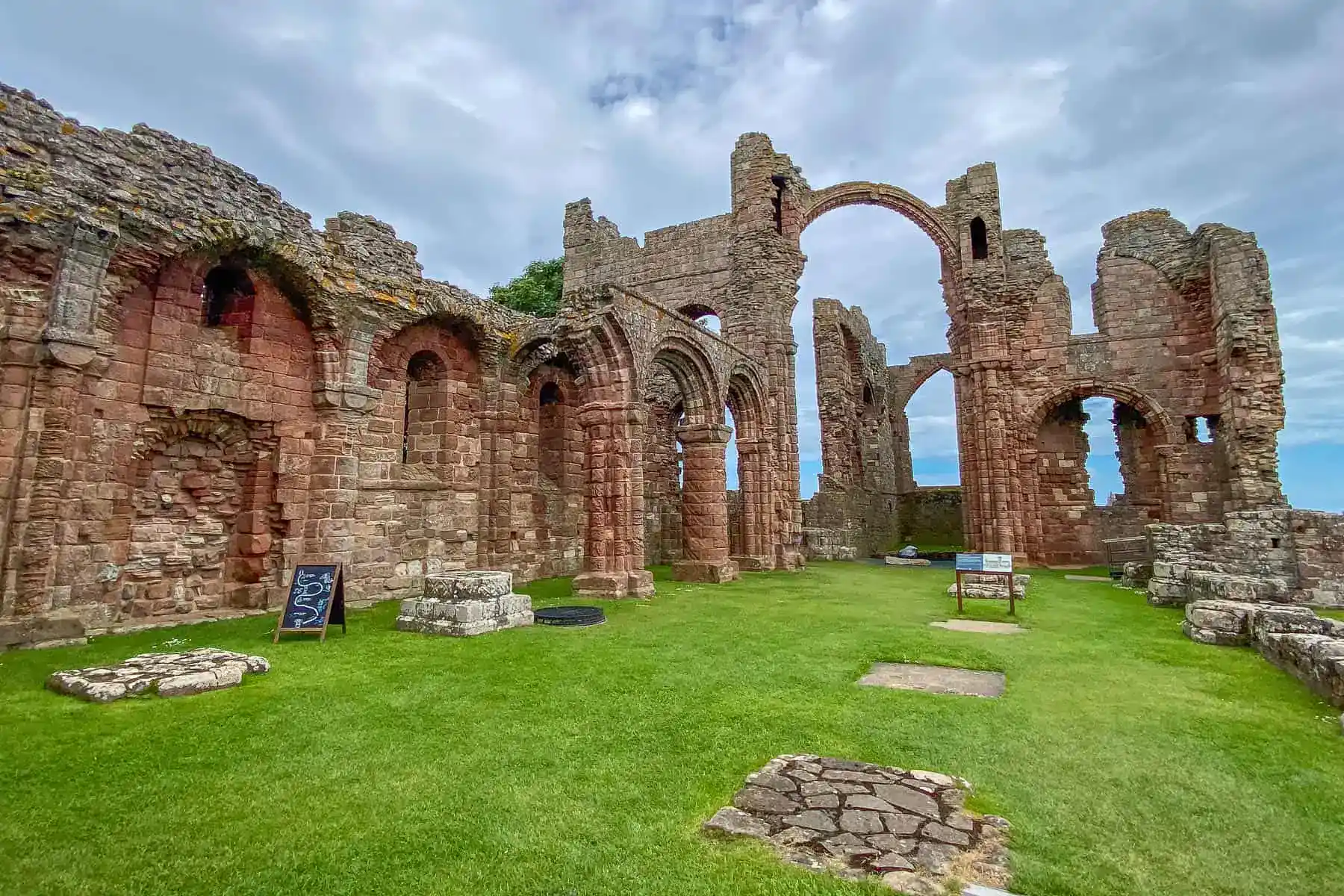
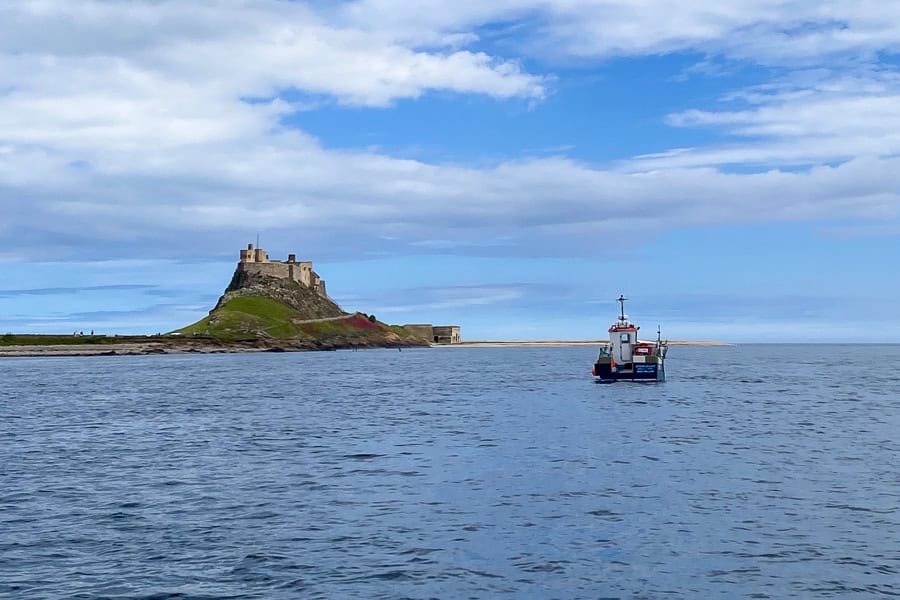
Once on Holy Island, head through the village to the harbour, visit the atmospheric ruins of Lindisfarne Priory, then continue towards Lindisfarne Castle, which rises imposingly on its rocky outcrop.
We visited both and really enjoyed them. The priory is the island’s key historic site, while the castle offers a completely different experience: originally a Tudor fort, it was later transformed into an Edwardian holiday home by architect Edwin Lutyens.
After returning to Seahouses, we suggest grabbing some lunch. Then drive north for one final peek at Bamburgh Castle before hitting the A1 for a pleasant, but largely uneventful 30-minute drive to England’s northernmost town, Berwick-upon-Tweed.
Berwick-upon-Tweed
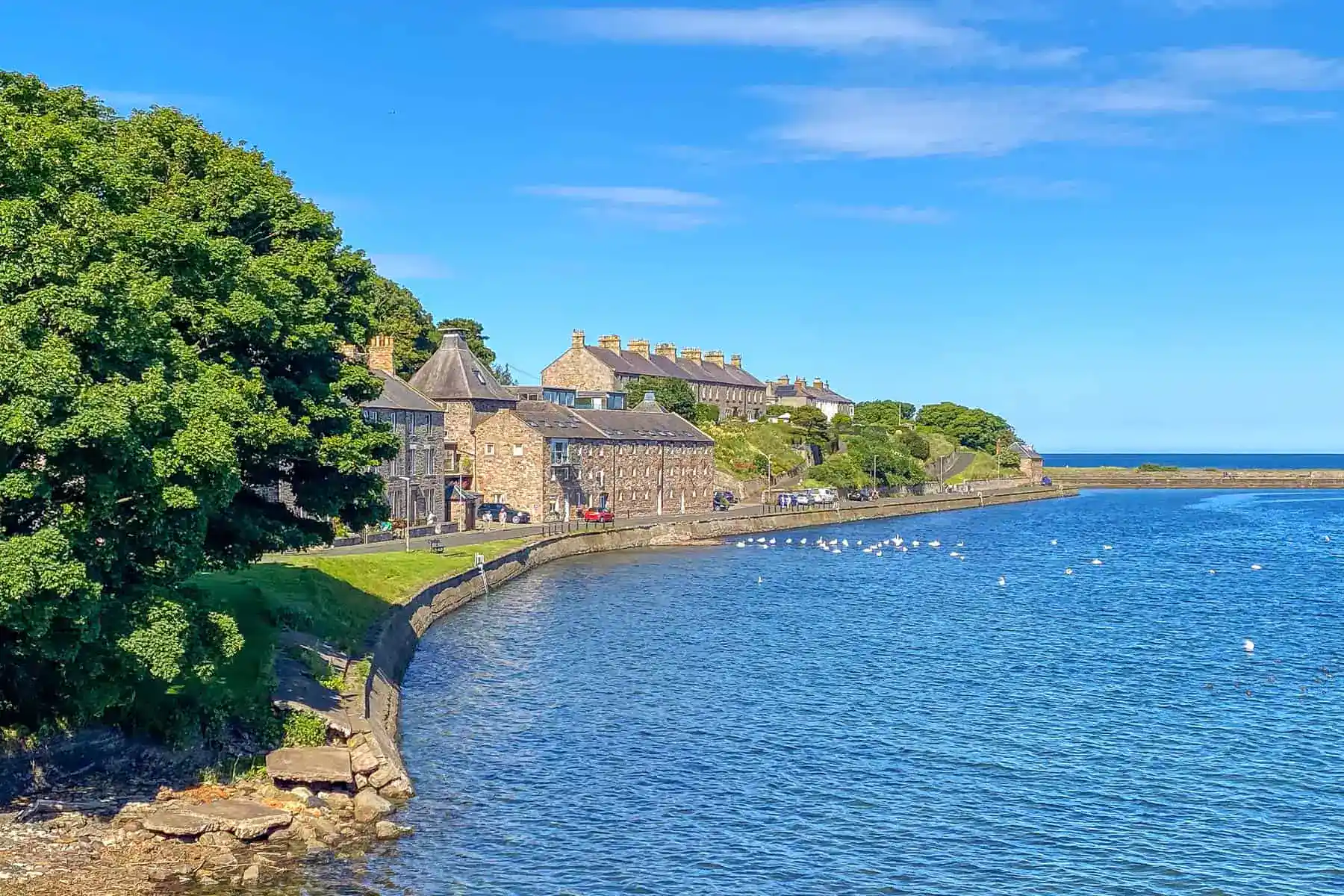
We arrived to find Berwick bathed in afternoon sun, and were immediately taken by its impressive, fortified walls, cobbled streets, striking bridges, river views, and unique border-town identity.
Walking around the riverside and along the walls is a great way to get a feel for the town, so if you fancy stretching your legs, try to build the following highlights into your own self-guided walk:
- Quayside and bridges: We started our exploration of Berwick along the quayside, with views of three impressive Tweed crossings: the Old Bridge, Royal Tweed Bridge and Royal Border Bridge. While you’re here, look out for Bank Hill Ice House, built around 1790 to store ice for the town’s salmon trade.
- Main Guard: Keep an eye out for this small military landmark tied to Berwick’s garrison history on the way towards the walls.
- Berwick town walls: We loved these impressive Elizabethan walls and recommend following them for a while to appreciate the views across town and towards the river and coast.
- The Magazine: This sturdy, 18th-century gunpowder store was designed to keep powder dry and reduce explosion risk during more troubled times.
- Rose Garden, Flagstaff Park and Windmill Bastion: This is probably the best part of the walk, with gardens, open space, coastal views and one of the town’s historic defensive bastions.
- Marygate and Town Hall: Finish in the town centre around Marygate, where Berwick’s 18th-century Town Hall stands prominently in the middle of the street.
We finished our walk with a couple of well-earned drinks at friendly Curfew Micropub before finding dinner in town, where there’s no shortage of options for places to eat and drink.
Other sites in the area
The Northumberland 250 route turns inland from here, but if you have more time, there’s a great opportunity for a fun day trip north to explore the Scottish Borders and East Lothian, highlights of which include:
- St Abb’s Head: A dramatic coastal nature reserve north of Berwick, ideal if you want cliff-top walks, sea views and birdlife before continuing into Scotland.
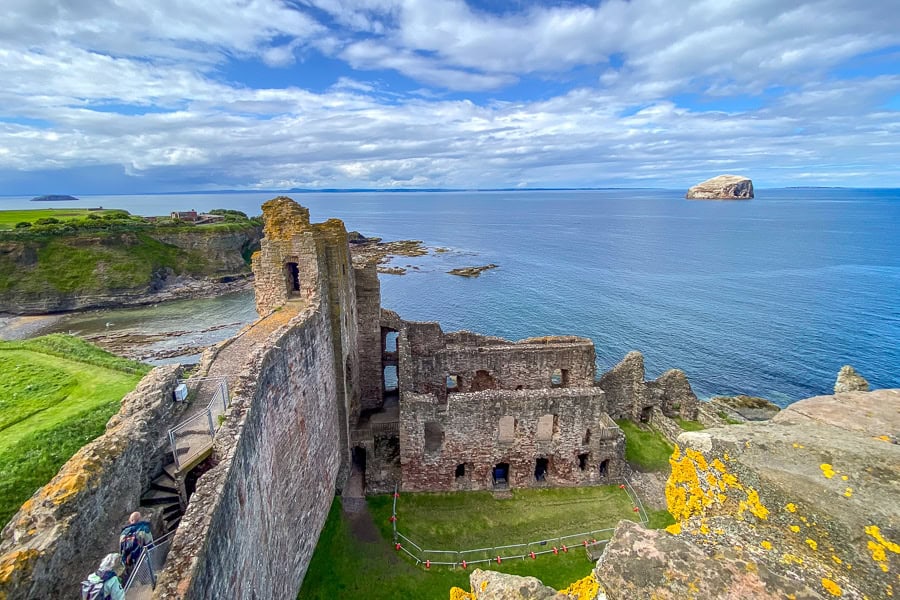
- Tantallon Castle: This crumbling 14th-century clifftop fortress in East Lothian is probably our favourite castle across the border. Be sure to climb the castle walls for striking views of the coast and Bass Rock.
- Dirleton Castle: Another ruined fortress set within particularly beautiful gardens just west of Tantallon. We particularly enjoyed exploring the ruined towers, chambers, vaults and courtyards here.
Where to stay in Berwick-upon-Tweed
Berwick-upon-Tweed is the best overnight stop for the northern end of the Northumberland 250 route, giving you time to explore the town walls, bridges and historic centre before heading into the Borderlands the next day.
There are stays here to meet most tastes, with guesthouses, small hotels, B&Bs, and self-catering apartments. Staying close to the historic centre works best if you want to explore on foot, while Tweedmouth and Spittal can offer easier parking, quieter streets and some nice coastal views.
The following options in and around Berwick all get consistently good reviews:
- Good value: Eastwatch Guesthouse – Friendly guesthouse in Spittal, just a short drive or bus ride from Berwick’s historic centre. The guesthouse has comfortable, sea view rooms, while guests also have access to a shared kitchen, heated indoor pool and hot tub. Permits are also provided for street parking.
- Mid-range: Belmont House Boutique – Popular boutique guesthouse in Tweedmouth, around 20 minutes’ walk or a short drive / bus ride to central Berwick. Expect stylish, super comfortable rooms, a friendly, helpful host, delicious breakfast, and free on-street parking.
- Spend a bit more: The Weights and Measures Office – Nicely presented one-bedroom apartment in the historic centre of Berwick. The property has a king-size bedroom, ensuite bathroom, well-equipped kitchen, and cosy living space. While there’s no on-site parking option, there’s free public parking close by.
Day 5: Berwick-upon-Tweed to Wooler – Border bridges, ruined castles, standing stones and Anglo-Saxon history
Highlights: Union Chain Bridge | Norham Castle | Duddo Five Stones | Ford & Etal | Flodden Field Memorial | Ad Gefrin Anglo-Saxon Museum
Total driving distance: appx. 60km (40 miles)
Total driving time: appx. 1 hour
Overnight: Wooler
It would be easy to imagine our Northumberland 250 itinerary gets a little less exciting as we leave the coast, but the coming days are packed with ruined castles, stone circles, dark skies, battlefields, fine villages and Roman history.
From Berwick-upon-Tweed, start by heading west towards the River Tweed and the Union Chain Bridge before continuing to Norham Castle, one of the great strongholds of this once-contested frontier.
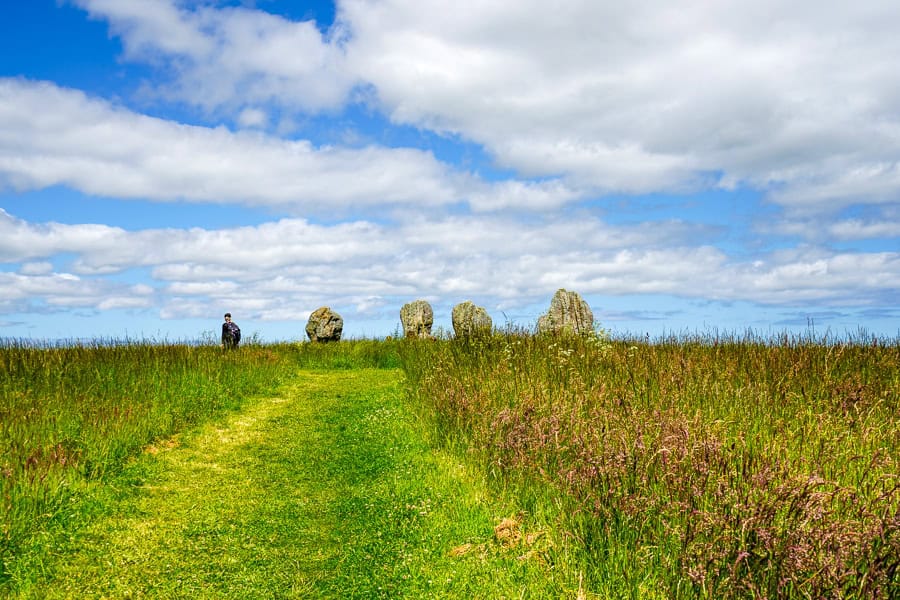
From there, the route moves through farmland and narrow lanes to Duddo Five Stones, which turned out to be one of our favourite short walks of the whole trip. You then continue on to Ford & Etal and Flodden Field before finishing at Wooler with a visit to the fascinating Ad Gefrin Anglo-Saxon Museum.
Highlights of Day 5
While the drive distance isn’t that far today, there’s stacks to see along the route, so we recommend getting on the road early and building your day around the following highlights:
- Union Chain Bridge: Start the day just outside Berwick with a short walk from England to Scotland and back across this historic border bridge (once the world’s longest wrought iron suspension bridge) over the River Tweed.
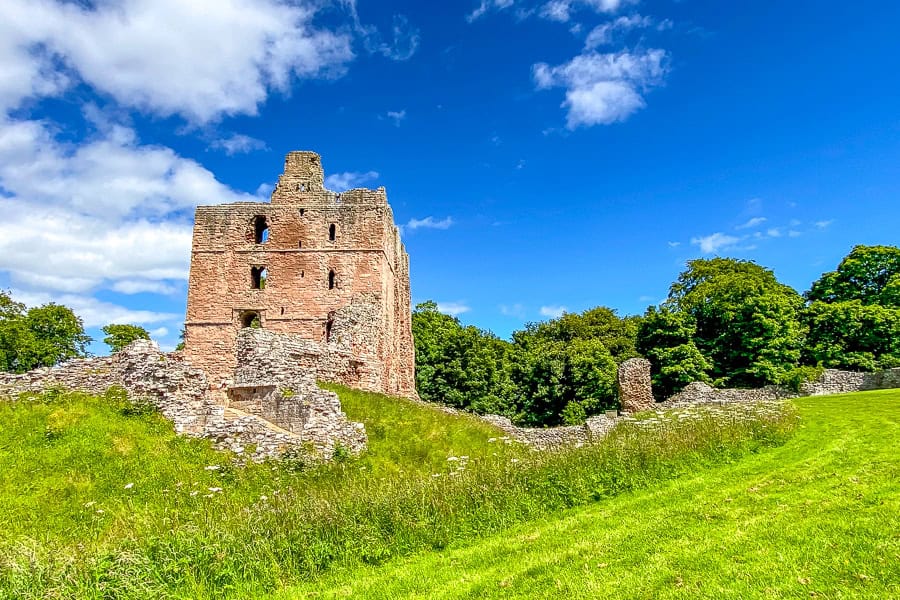
- Norham Castle: This dramatic ruined castle above the River Tweed was an important English border stronghold for more than 400 years. We had the place to ourselves, wandering its broken walls and learning about a turbulent history shaped by cross-border conflict.
- Duddo Five Stones: We loved the walk to Duddo Five Stones, which takes you across wide open farmland to a remote hilltop stone circle. It’s an ambient spot with sweeping views – and our personal highlight of the day.
- Ford & Etal: Set aside some time for these pretty estate villages, where you can wander between heritage buildings, small shops, tearooms, the River Till and nearby attractions. If you have longer, Etal Castle and the Heatherslaw Light Railway are nearby.
- Flodden Field Memorial: If you’re interested in the turbulent border history of these parts, this ambient site commemorating the devastating Battle of Flodden between the Scots and English in 1513 is well worth a stop.
- Ad Gefrin Museum & Whisky Distillery: We were completely taken by surprise by this compact, ultra-modern museum that brings to life the Anglo-Saxon royalty and community that lived in this area around the 7th century. The museum alone, with its well-presented exhibits and artefacts was well worth the stop, but if you have more time, you can also include a distillery tour and tasting.
Other sites in the area
There are some excellent walking and landscape detours in the Cheviot Hills that are close to today’s route, but you’d really need more time to appreciate them properly:
- Yeavering Bell: You’ll need to put aside a few hours if you want to visit Yeavering Bell, a twin-peaked hill where you’ll find tell-tale remnants of the largest Iron Age hillfort in Northumberland. Certainly worth a detour if you want a hill walk combined with some ancient history and panoramic views.
- College Valley: Another area with a variety of walking routes encompassing ancient hillforts and big scenic landscapes. Best added if you have extra time and good weather.
Where to stay in Wooler
Wooler sits close to Ad Gefrin, Ford & Etal, Flodden Field, Yeavering Bell and the Cheviot Hills, making it one of the most practical bases for this inland part of the route. This is a small market town rather than a major accommodation hub, so book ahead in peak season.
Stays here include the usual mix of inns, B&Bs, guesthouses, cottages and simple self-catering stays, with the main advantage being that you can walk to pubs, restaurants and basic services while staying close to the countryside. The following options all get consistently good reviews:
- Good value: Noble Lands – Central Wooler stay with simple ensuite rooms equipped with TV, fridge and tea / coffee making facilities. Excellent location close to restaurants, pubs and local services, plus free on-site parking.
- Good value: Cheviot House Gallery and Guest Rooms – This is a proper, centrally located B&B with super helpful hosts, right on Wooler High Street. You can expect comfortable ensuite rooms, a yummy cooked breakfast, a comfortable guest lounge and even laundry facilities. There’s free parking on the street around the B&B.
- Mid-range: The Old Mill – This friendly B&B with free off-street parking is located on the edge of Wooler, just 5 minutes’ walk from the centre. Rooms are clean, comfortable and well equipped, there’s a tasty breakfast included in the rate, and the hosts are extremely friendly and helpful.
For various reasons, we stayed just over the border in the town of Coldstream, but with hindsight, we would recommend overnighting in Wooler for this itinerary.
Day 6: Wooler to Kielder – Medieval abbeys, border viewpoints, and dark-sky country
Highlights: Kelso Abbey | Dryburgh Abbey | Leaderfoot Viaduct | Melrose Abbey | Jedburgh Abbey | Carter Bar | Kielder Observatory
Total driving distance: appx. 140km (90 miles)
Total driving time: appx. 3 hours
Overnight: Kielder
Traditionally, the Northumberland 250 route takes a fairly direct path between Wooler and Jedburgh via mainly B roads that traverse Kirknewton, Mindrummill, and Kalemouth. But we think this misses a huge opportunity to spend the day exploring the extraordinary medieval Border abbeys.
So today our road trip takes a wonderful detour across the border to four spectacular abbey ruins, river valleys, old stone towns and beautiful landscapes before returning to Northumberland for the remote forests and dark skies of Kielder.
It’s a full day, and you can of course pick and choose the abbeys you visit, but if you’re like us and want to see them all – and it is possible to see all four in a day – then we’d suggest making an early start.
After Jedburgh, the last and most impressive abbey of the day, the route heads south to Carter Bar, one of the classic England-Scotland border viewpoints, before continuing into Kielder Water & Forest Park.
If timings work, finish the afternoon at Kielder Bird of Prey Centre, then head to Kielder Observatory in the evening if you’ve booked tickets and the weather plays along.

Highlights of Day 6
Today is one of the longer driving days of our itinerary, but it’s also one of the most varied, linking Scottish monastic history with the remote dark-sky landscapes of western Northumberland. You’ll need to keep a tight rein on your itinerary if you want to visit all of the highlights below, but we absolutely rate each and every stop:
- Kelso Abbey: A quick stop since there’s not much left of this historic abbey in the charming town of Kelso beyond the striking west tower. It was closed for conservation when we visited, but the views from outside provide a sense of what it once was and there’s some stonework to appreciate.
- Dryburgh Abbey: One of our highlights of the day, these atmospheric ruins are full of ornate archways, vaulted ceilings and surviving remnants of rare, 13th-century painted plaster work. Be sure to admire the lovely, vaulted transept that houses Sir Walter Scott’s tomb, seek out the cool little library niches, and climb the narrow spiral tower stairway for views over the site.
- Scott’s View: A panoramic viewpoint between Dryburgh Abbey and Melrose that overlooks the River Tweed, rolling farmland, woodland and the Eildon Hills. Said to be one of Sir Walter Scott’s favourite views.
- Leaderfoot Viaduct: This is just a brief stop near Melrose to check out the striking railway viaduct over the River Tweed surrounded by beautiful countryside.
- Melrose Abbey: This crumbling Gothic abbey has beautifully ornate medieval stonework on display, along with a great collection of gargoyles, including the famous pig playing bagpipes. Robert the Bruce’s heart was said to be buried here, though that claim seems subject to debate.
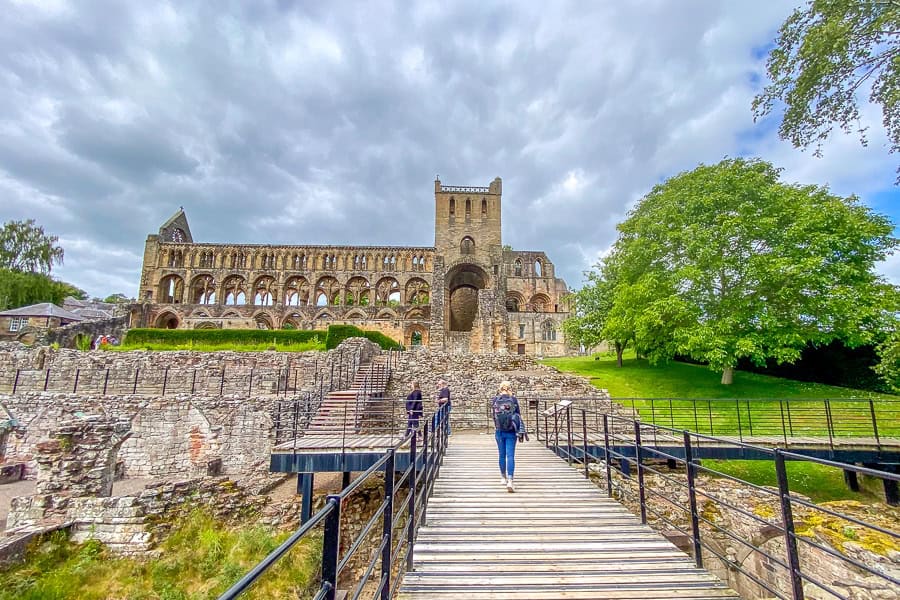
- Jedburgh Abbey: Perhaps the most impressive abbey ruins on today’s route, with a tall, elegant church that mixes Romanesque and Gothic architecture. Its scale, borderland setting and excellent visitor centre make it a great way to finish our Scottish detour before crossing back into England.
- Carter Bar: Quick stop for a classic border viewpoint as you cross back into the remote western edge of Northumberland from the Scottish Borders.
- Kielder Forest Drive: At 450 metres above sea level, this scenic 19km (12-mile) toll road is one of England’s highest, winding along an unsealed track through Kielder Forest with expansive views over this remote corner of Northumberland. It’s open seasonally between May and December; check conditions before you drive.
- Kielder Observatory: Finish the day at Kielder Observatory if you’ve booked an evening event. This is one of the best places in England for stargazing, but visits need planning: book ahead, allow time to get here, and be prepared for cloud or weather to affect what you see.
Other sites in the area
This is already a big day, but there are a few extra stops in the Scottish Borders and around Kielder worth keeping in mind if you have more time or want to adjust the route:
- Kelso town centre: Worth a short wander if you want more than an abbey stop, especially around the market square and riverside.
- Trimontium Museum: A good Melrose add-on if Roman history interests you and you want more context before Hadrian’s Wall tomorrow.
- Kielder Bird of Prey Centre: Home to owls, eagles, hawks, falcons and vultures, with daily (weather-dependent) flying demonstrations. It’s advisable to check ahead if this is a priority for you.
- Kielder Water & Forest Park: The largest man-made lake in northern Europe, surrounded by forest, walking trails, viewpoints and big open skies. Perfect for gaining a real sense of the scale and remoteness of this part of Northumberland beyond just visiting the observatory.
Where to stay around Kielder
Kielder is one of the trickiest overnight stops on our Northumberland 250 road trip because accommodation is much more limited than in Alnwick, Seahouses or Berwick.
It’s worth booking this night early, especially if you want to stay close to Kielder or Falstone and have easier access to the lake, forest and dark-sky experiences.
If you’d prefer to have access to a village base with more services and dining options, consider expanding your search to include Bellingham, located around 30 minutes’ drive from the Observatory.
The following options all get great reviews:
- Good value: Brown Rigg Guest Rooms – Set in a quiet rural area outside Bellingham, with clean, comfortable ensuite rooms, access to a shared kitchen, and free on-site parking – all perfectly located to kick off our final day on the Northumberland 250.
- Mid-range: Fountain Cottage Cafe and B&B – Friendly B&B in the centre of Bellingham, close to pubs, village services and the Hareshaw Linn walking trail. Rooms are spacious and comfortable, there’s an excellent breakfast on offer, an on-site cafe and free private parking.
- Spend a bit more: The Pheasant Inn, Falstone – Well-regarded coaching inn located in a quiet, scenic spot close to Kielder Water, and about 20 minutes’ drive from the observatory. The ensuite rooms are comfortable, there’s an on-site restaurant, cosy bar, open fires, friendly service and ample parking, making this one of the most convenient options for this part of the route.
Day 7: Kielder to Newcastle – Waterfalls, Hadrian’s Wall, Roman forts and moorland villages
Highlights: Bellingham | Vindolanda | Cawfields Roman Quarry | Roman Army Museum | Lambley Viaduct
Total driving distance: appx. 190km (120 miles)
Total driving time: appx. 3.5 hours
Overnight: Newcastle
The final day of our Northumberland 250 itinerary is another big one, and it brings together some of our favourite things: forest landscapes, Hadrian’s Wall country, and some of the best Roman sites in England, before closing the loop back to Newcastle.
From Kielder, the drive heads south-east towards Bellingham and a short forest trail to Hareshaw Linn, one of Northumberland’s prettiest waterfalls.
The scenery gradually shifts as you approach Hadrian’s Wall country, where Roman forts, museums and viewpoints all compete for attention.
You’ll need to be selective depending on time, as there is much more here than can realistically fit into a single day. This particularly applies to the exceptional Roman forts of Housesteads and Vindolanda, which both deserve a decent amount of time to explore. We recommend choosing just one, or swapping out some other stops today.
The final stretch back to Newcastle is one of the most varied parts of the route, passing through the remote countryside around Allendale and Allenheads, the historic village of Blanchland, and the Roman town of Corbridge, before you hit the final stretch to the city.
Highlights of Day 7
Today might well be the busiest of this Northumberland road trip, but if you have the energy it’s just about possible to do everything below. Of course, if you want a more relaxed final day, you can pick and choose the sites and activities that appeal most:
- Bellingham: A pleasant riverside village of stone buildings that’s worth a quick stop and wander. We grabbed a coffee here and walked the lovely riverside path, but you could also take the short walk through woodland and over a series of bridges to Hareshaw Linn Waterfall.
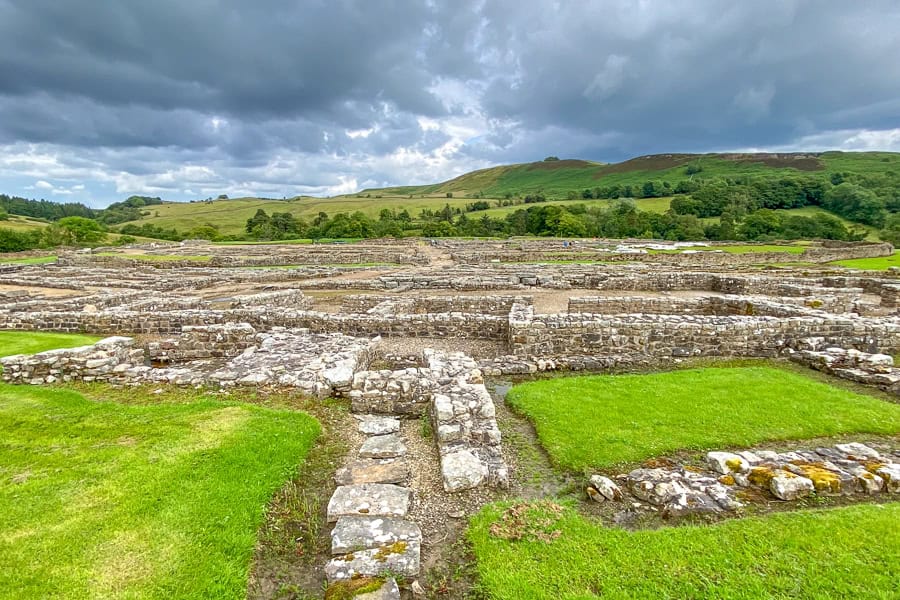
- Vindolanda: We’ve visited Vindolanda many times over the years and there’s always something new to see. Located in a lovely valley setting, this ancient Roman frontier military fort and civilian settlement is an extensive archaeological site with ongoing excavations. The museum is excellent and packed with items from daily life – including the famous Vindolanda writing tablets – that provide a very real and moving connection to the people who lived here on the far edge of the Roman Empire nearly 2,000 years ago. If you only have time for one major Roman site today, this would be our pick, though Housesteads is a very close second (see below).
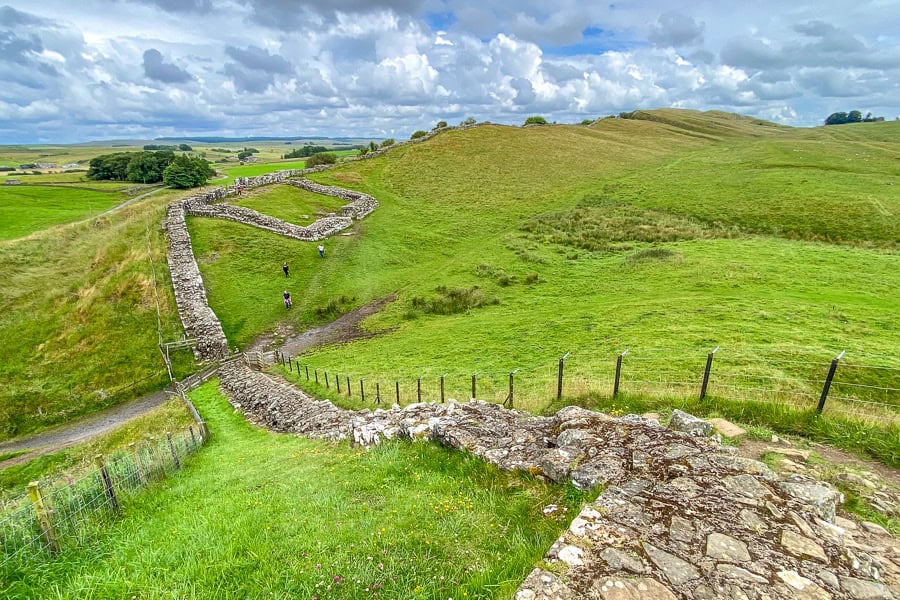
- Cawfields: This was one of our favourite stops along Hadrian’s Wall. Once a quarry, now a lake, Cawfields provides easy access from the car park to one of the best preserved and highest standing stretches of the Wall, the remains of Milecastle 42, and excellent views across the surrounding countryside. If you want to gain a deeper understanding of the area, 2-hour guided tours also depart from here – you can check availability here.
- Roman Army Museum: This fascinating little museum goes hand in hand with a visit to the Roman sites in this area. We walked away with a much better understanding about the life and times of a Roman soldier in the legions. The ticket to Vindolanda also includes entry here.
- Lambley Viaduct: The short scenic stop at Lambley Viaduct makes for a nice change of scene after all the Roman sites as you begin the final stretch of the route.
To close the loop back to Newcastle, or wherever you plan to finish your tour of the Northumberland 250, continue from Corbridge along the A68 towards Otterburn. For most travellers, returning directly from Corbridge or Blanchland towards Newcastle will make for a more manageable final day.
Other sites in the area
There are several more worthwhile stops after Hadrian’s Wall, but they’re best added only if you have more time in this area, or you’re happy to extend your final day:
- Housesteads Roman Fort: Perched high above the surrounding countryside, this windswept ancient outpost has the remains of barracks, gateways, granaries and, best of all, the finest example of Roman communal latrines in the country. It also abuts a dramatic stretch of Hadrian’s Wall with epic views. The site is at the top of a 15-20 minute hill climb. Swap with Vindolanda if you’re keen for a fort-and-wall experience.
- The Sill National Landscape Discovery Centre: Built into the landscape, this visitor centre is a great launchpad for exploring Northumberland National Park, with exhibitions, local info, a cafe, and access to Hadrian’s Wall walking trails, including the Sycamore Gap Memorial site.
- Blanchland: One of the prettiest villages on the route, with stone buildings, a peaceful setting and a historic core built around a former medieval abbey.
- Derwent Reservoir: A scenic final detour after Blanchland if you want to follow the southern edge of the Dark Skies section more closely.
- Corbridge: A nice final stop before Newcastle, with a lively village centre, independent shops, pubs and riverside walks. It’s also close to Corbridge Roman Town if you want one last dose of Roman history before leaving Hadrian’s Wall country.
- Aydon Castle: We rarely pass up the opportunity to stop at a castle, and this small fortified manor house near Corbridge is worth a quick detour if you’re castle nerds like us.
- Hexham: A practical stop for food, fuel or a final overnight if you don’t want to continue all the way to Newcastle. Hexham Abbey is also worth a look if time allows, with its Saxon crypt, medieval painted panels, stained glass and early Christian heritage.
- Belsay Hall, Castle and Gardens: A large country estate with a medieval castle, Greek Revival hall, quarry gardens and formal grounds. It’s too big to squeeze in on a quick visit though, so this one would require more time or reorganising the itinerary.
Where to stay in Newcastle
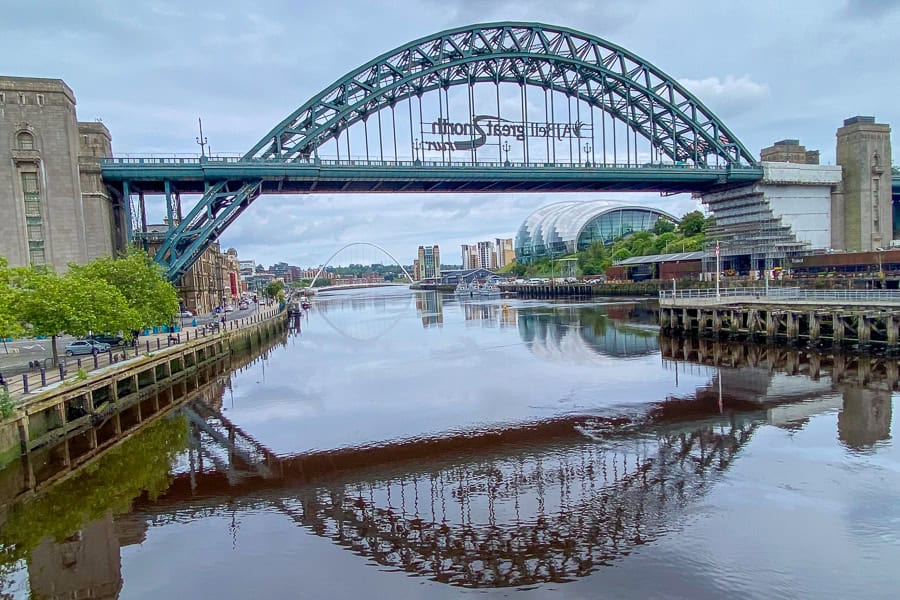
Newcastle is the easiest place to start and finish the Northumberland 250 if you’re arriving by train, plane or plan to pick up a hire car. It also works well if you want to add a city night at the beginning or end of the trip, with easy access to restaurants, bars, the Quayside, museums and transport links.
For most visitors, staying in the city centre or around the Quayside makes the most sense, especially if you don’t want to use the car once you arrive. If you’re mainly using Newcastle as a practical overnight before or after the road trip, staying a little further out can also work, especially if you want easier parking. The following options all get consistently good reviews:
- Good value: Motel One Newcastle – Popular central hotel close to the train station, Theatre Royal, restaurants and bars. Rooms are compact but comfortable and well designed, with a lounge bar and friendly service. Like many city centre hotels, guests need to use one of the many paid public parking options nearby.
- Mid-range: Dakota Newcastle – This extremely cool Quayside hotel sits right on the River Tyne, just 15 minutes’ walk from the city centre. The modern, spacious rooms are beautifully designed, staff are friendly and helpful, and there’s a wide range of facilities, including a restaurant, cocktail bar, lounge, gym and paid on-site parking.
- Spend a bit more: Hotel Gotham Newcastle – Stylish city-centre hotel in a beautifully converted fire station, handy for restaurants, shopping, theatres and the Quayside. The spacious rooms have an elegant, boutique feel, there’s a restaurant and bar on-site, staff are exceptional, and guests can self-park nearby, or utilise the hotel’s paid valet parking option.
We stayed a little out of town at the quirky Dorset Arms Hotel, which has clean, simple rooms and free parking, with easy access to both the city and Tynemouth via the nearby train line. Being close to the end of Hadrian’s Wall Path it’s a popular spot with walkers. Another solid option if you want free parking and don’t mind being on the outskirts is the Great North Hotel, around 5km (3 miles) north of the city, with comfy modern rooms, an on-site restaurant and bar, and good public transport links into town.
Planning a Northumberland 250 Road Trip
How long do you need?
While the Northumberland 250 is a relatively short road trip compared with routes like Scotland’s North Coast 500, or Ireland’s Wild Atlantic Way, that doesn’t mean you should rush it.
As the name suggests, the typical loop is around 250 miles (400km), but you really need time to do it justice, especially if you want to fit in boat trips, castle visits, abbey ruins, coastal walks, Roman sites, waterfalls, dark-sky experiences, and other occasional detours.
That’s why we’ve allowed 7 days for this itinerary, giving you enough time to cruise the coast, the Borderlands and Northumberland’s scenic interior, while also getting you out of the car to see and experience the main highlights of the route.
While you can absolutely complete the route in less time, you’d need to make some compromises and be laser-focused on where you want to stop.
Suggested trip lengths
- 3 days – possible as a fast-paced scenic drive, but you’ll need to be very selective about where you stop, and accept you’d be skipping many of the walks, boat trips and optional detours.
- 4 to 5 days – a better highlights trip, especially if you focus on the coast, Borderlands and Hadrian’s Wall, but it will still feel extremely busy.
- 7 days – the full itinerary in this guide, including time for a Farne Islands boat trip, Holy Island, Scottish Border abbeys, Kielder’s dark sky landscape and Hadrian’s Wall country.
- 10 days or more – more time will allow you to slow down, maybe walk in the Cheviot Hills, spend more time around the Farnes and Holy Island, include a few more castle visits, or build in contingency time to account for weather impacts on boat trips and stargazing.
Best time to drive the Northumberland 250
The Northumberland 250 can be driven year-round, but for a first-time visit we think late spring to early autumn is the sweet spot. During these months, you’ll have longer daylight hours, more attractions open, better walking conditions, and the best chance of fitting in boat trips to the Farne Islands and Holy Island.
While summer gives you the longest days, best weather and widest choice of open attractions, it also coincides with the busy school holiday period, when coastal towns, tourist attractions and accommodation are at their busiest and most expensive.
Winter can still be beautiful, especially if you’re interested in dark skies, but you’ll need to plan more carefully around short daylight hours, reduced opening times, colder weather, and the possibility of more challenging rural driving conditions.
Seasonal planning tips
- Farne Islands and Holy Island boat trips are seasonal and weather-dependent, and should be checked before you lock in your itinerary.
- Farne Islands birdwatching is best between April and July, when huge colonies of puffins, razorbills, guillemots and Arctic terns gather to breed and nest on the islands.
- Holy Island causeway access changes daily with the tides, so always check safe crossing times if you plan to drive there.
- Kielder Observatory events are extremely popular and should be booked in advance.
- Castles, abbeys, gardens and heritage sites may have seasonal opening hours, especially outside the main visitor season, so always check visiting times ahead of your visit.
- Walking routes around places like the Cheviots, Simonside, Linhope Spout and Hareshaw Linn are best tackled with suitable footwear, layers, wet weather gear, and an eye on the skies.
- And lastly, remember, this is England: it can get chilly or rainy anytime, even at the height of summer, so always pack accordingly.
Getting to Newcastle
One of the great things about the Northumberland 250 is that it’s relatively easy to access, especially if you start and finish in Newcastle. The city has great rail, road and air connections, decent car rental options, plenty of accommodation, and enough going on to justify an extra night or two before or after the road trip.
That said, you don’t have to start in Newcastle. Because the Northumberland 250 is a looping route, you can join it wherever makes the most sense for your plans. Alnwick, Berwick-upon-Tweed, Wooler, Hexham and Corbridge can all work as alternative starting points, depending on whether you’re arriving from Scotland, northern England or elsewhere in the UK.
Flight options
- Newcastle International Airport, located 11km northwest of the city centre, is the most convenient arrival point for this itinerary, with decent connections that span domestic and European hubs, as well as further afield to the Middle East and North America.
- International travellers may find it easiest to fly into London, Edinburgh or Manchester first, then continue to Newcastle by train or hire car depending on your broader UK plans.
- Edinburgh Airport can also work well if you want to combine the Northumberland 250 with Scotland, especially as the route includes a short Scottish Borders section.
Train options
Newcastle sits on the East Coast Main Line, making it straightforward to reach by rail from London, Edinburgh, York and other major cities. You can check routes, prices and book your train travel in advance via Omio.
- From Edinburgh: Trains between Edinburgh and Newcastle are fast and frequent enough to make Edinburgh a practical alternative gateway for the route.
- From London: Direct trains can get you to Newcastle in less than 3 hours, allowing you to avoid the long drive and pick up a hire car after you’ve had time to explore the city.
Ferry and bus options
- Ferry: it’s a long haul of more than 16 hours, but if you’re travelling from mainland Europe, DFDS operates ferries between Amsterdam and Newcastle. You can check prices and make a reservation via Ferryhopper.
- Bus: Long distance coach services to Newcastle are operated by National Express and FlixBus from a range of UK cities including London, Edinburgh, Manchester, Leeds and Birmingham. While coach travel is slower than the train, it can be a good-value option if you book ahead.
Driving options
- Newcastle is easily reached by road from a range of destinations around the UK, including:
- Edinburgh – 120 miles (195km) – 3 hours via the A1.
- Manchester – 140 miles (230km) – 3 hours via the M62 and A1.
- London – 280 miles (450km) – 6 hours via the M1 and A1.
- Hire cars are available in and around Newcastle, including airport and city options.
Driving in Northumberland
Driving is easily the best way to experience the Northumberland 250. While you can reach some of the bigger towns by public transport, many of the best stops are small villages, castle ruins, countryside viewpoints, walking trails, beaches and remote historic sites that are far easier to visit with your own car.
Most of the driving is straightforward, but this is still a rural road trip. Expect narrow lanes, limited overtaking, slow sections, small car parks, sheep on or near the road, and occasional stretches where services and mobile phone reception is limited.
It’s also worth remembering that while the distances don’t always look huge on a map, some of the minor roads can be slow going, especially when you add in scenic stops and activities.
Road conditions
- Main roads are generally easy to drive, especially between larger towns and villages.
- Rural lanes can be narrow, winding and slow, particularly inland and around the Cheviots.
- Some attractions involve small car parks or short walks from parking areas.
- Weather can change quickly, particularly in exposed coastal, moorland and upland areas.
Planning tips
- We generally recommend an early start, especially on the busier days in this itinerary; there’s usually somewhere to grab a coffee and a sausage butty for the road!
- Top up the fuel tank before heading into more remote areas such as Kielder, the Cheviots and isolated inland regions.
- Before you go, download the PayByPhone parking app as this is the main service used in Northumberland’s council car parks. We also picked up a parking disc (available for around £1 from tourist info centres, council offices and some local shops) as these are often required in free, time-based, short-stay parking lots in towns such as Alnwick and Berwick. Private car parks may also use pay-and-display or number plate recognition, while some charity and trust sites welcome donations.
- Download offline maps, especially for walking detours and remote driving sections.
- Allow extra time for parking, short walks, photos and slower rural roads.
While we’re familiar with driving in the UK, we’ve done enough road trips in our time to appreciate how daunting it can be driving somewhere new, especially when road rules, signs and local etiquette differ.
If you like to know what to expect before getting behind the wheel, Tripiamo’s Driving in the UK Made Easy guide is worth a look. It’s a certified online driving kit for international travellers, with 360-degree drive tours, expert videos, local road rules, practical tips and downloadable PDFs covering the UK and Northern Ireland.
It brings together the kind of driving information we usually spend ages searching for before a road trip, all in one place – and you can save some money with our exclusive 10% discount code: TWOFORTHEWORLD2026.
Northumberland 250 car rental
If you don’t have your own car, Newcastle is the easiest place to arrange car hire for this itinerary. It has the strongest transport links, airport access and car rental choice in the region, and it keeps the route simple by allowing you to start and finish in the same city.
Car rental tips
- Book early for summer or school-holiday travel.
- Choose a car with enough boot space for all your luggage.
- Check parking arrangements at each overnight stay before booking accommodation.
- Consider an automatic if you’re not comfortable with manual driving on narrow rural roads.
- Avoid hiring a very large vehicle unless you genuinely need the space.
We’ve always found the best deals at DiscoverCars and they’re our preferred car rental booking engine, with great rates and free cancellation should your plans need to change.
Booking your Northumberland car rental in advance will get you the best rates and widest choice of vehicle. You can find and book your Newcastle rental car here.
Northumberland accommodation
Accommodation along the Northumberland 250 ranges from city hotels and traditional inns to guesthouses, self-catering cottages, coastal stays, rural lodges and dark-sky retreats. We’ve included suggestions for popular stays for each overnight stop throughout this itinerary, including the places we’ve stayed.
What to expect
- Newcastle has the widest accommodation choice and is the easiest place to start or finish the route.
- Alnwick, Seahouses and Berwick-upon-Tweed have a decent spread of hotels, inns, guesthouses and self-catering stays.
- Seahouses is the most practical base for Farne Islands and Holy Island boat trips.
- Accommodation becomes more limited inland around places like Wooler, Kielder, Falstone and Bellingham.
- Smaller towns and coastal villages can book out early in peak season.
Planning tips
- We recommend staying two nights in Seahouses so you can take both the Inner Farne and Holy Island boat trips without rushing.
- Book Kielder, Falstone or Bellingham early, as accommodation is much more limited around this part of the route.
- Check parking options before booking your stays, especially in places like Alnwick, Seahouses, Berwick-upon-Tweed and Newcastle.
- If you can’t find somewhere suitable in Berwick-upon-Tweed, look slightly inland around the Borderlands or across the border in places like Coldstream.
- If staying right by Kielder Water is too expensive or unavailable, Bellingham can be a more practical alternative.
Do you need to move every night?
If you only have 7 days for this Northumberland itinerary, we recommend moving each night to make the most of your time and avoid too much backtracking.
The only exception is Seahouses, where staying a couple of nights allows you to take Inner Farne and Holy Island boat trips while also visiting nearby Bamburgh Castle.
We’ve also visited parts of this itinerary from bases along the coast around Seahouses, and also in the Borderlands. This can work well if you’re staying longer in the region and don’t mind backtracking a bit, and of course it also means you don’t have to travel with your luggage every day.
Where we can, we’ve based the overnight stops around towns and villages that keep the route flowing while giving you a reasonable choice of places to stay.
We booked all our Northumberland 250 stays through Booking.com, and it’s a useful place to compare hotels, inns, guesthouses and self-catering stays along the route. You can find and book your Northumberland stays here (or use the search box below).
Useful Travel Resources
Stays: We used Booking.com for all the stays on our Northumberland itinerary – you can check prices and book your stays here.
Airport Transfer: Avoid the hassle of navigating from the airport to your stay with all your luggage in tow with a pre-booked airport transfer. You can check prices for Newcastle airport transfers at Welcome Pickups.
Car Rentals: Our go-to for hire vehicles is DiscoverCars as it has a wide choice of vehicles and the best prices. You can book your Newcastle car rental here.
Driving Guides: If you’re feeling apprehensive about driving in the United Kingdom, we highly recommend Tripiamo’s comprehensive, driving school-certified Driving in the UK Made Easy guide. Save 10% with our exclusive discount code: TWOFORTHEWORLD2026.
eSIMs: We use Airalo eSIM to stay connected while travelling. Check out your UK eSIM options here.
Tours: Northumberland and the borderlands have so much to see and do, and you’ll find a wide range of tours and experiences on GetYourGuide. Check out what’s on offer and book tours here.
If you’ve got any questions about this incredible Northumberland 250 road trip itinerary, including about driving in the UK, ask us in the comments below.
For more road trips in Britain, have a look at our UK page. Or check out our bucket list of 100 ultimate road trips around the world.