

Santiago de Chile is a gateway hub for South America and yet for many people, Chile’s capital is often just a transit to somewhere else. With our list of 20 cool things to do in Santiago, we’re on a mission to prove why this vibrant city is much more than just a stopover.
For a long time, Santiago was one of those places that we managed to repeatedly overlook. Like Dubai and Abu Dhabi, we landed there a number of times, but always in transit.
We’re not quite sure why Chile’s capital didn’t rank on our travel radar sooner; when it became clear though that our South American travels would have us passing through the city several times, we decided it was time to get out of the airport.
What we found was a complete surprise.
Not only is Santiago vibrant, friendly, cosmopolitan and beautiful, it also has a fascinating cultural and political history, along with a lively, modern food and drink scene that wouldn’t be out of place in New York or London.
We wish we’d discovered the Chilean capital sooner. So if, like us, you’ve been wondering whether Santiago is worth visiting, here are 20 of the best things to do in Santiago that just might convince you to turn your stopover into a stay.
What’s in this post
Planning a Santiago Visit
– How long do I need to visit Santiago?
– Best time to visit Santiago
– Getting to Santiago
– Getting around Santiago
– Where to stay in Santiago
20 Cool Things to do in Santiago
1. Explore Santiago’s city highlights on a walking tour
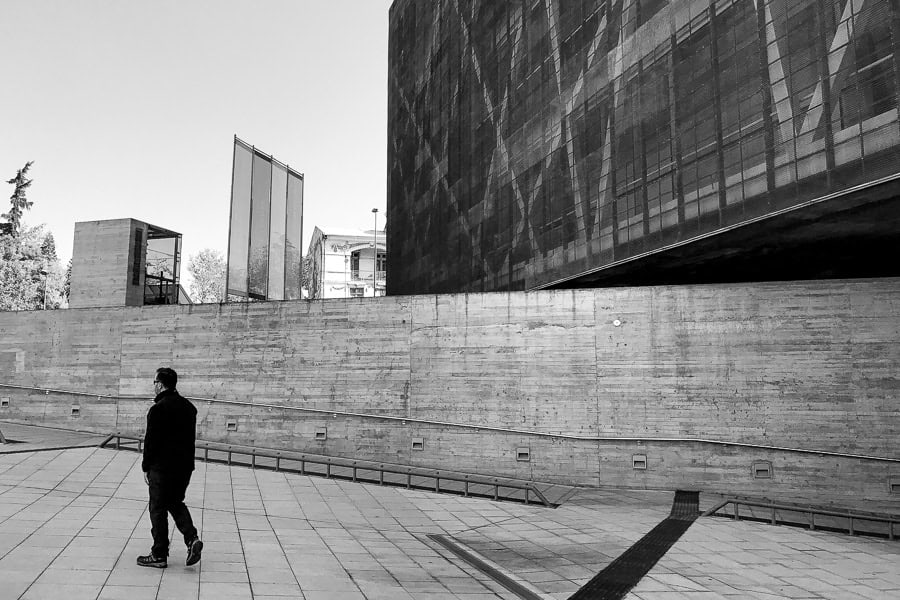
2. Experience the Museum of Memory and Human Rights
3. Enjoy a seafood lunch at Mercado Central
4. Watch the world go by in Plaza de Armas
5. Take in the views from Cerro San Cristobal
6. Down a Terremoto then follow it up with an Aftershock – if you dare
7. Watch the Changing of the Guard at La Moneda Palace
8. Stroll through the National Museum of Fine Arts
9. Explore Santiago’s gritty heart on an offbeat walking tour
10. Meet the ghosts of Santiago’s past at the General Cemetery
11. Give some lovin’ to Santiago’s friendly street dogs
12. Munch on a chilean classic with an empanada de pino
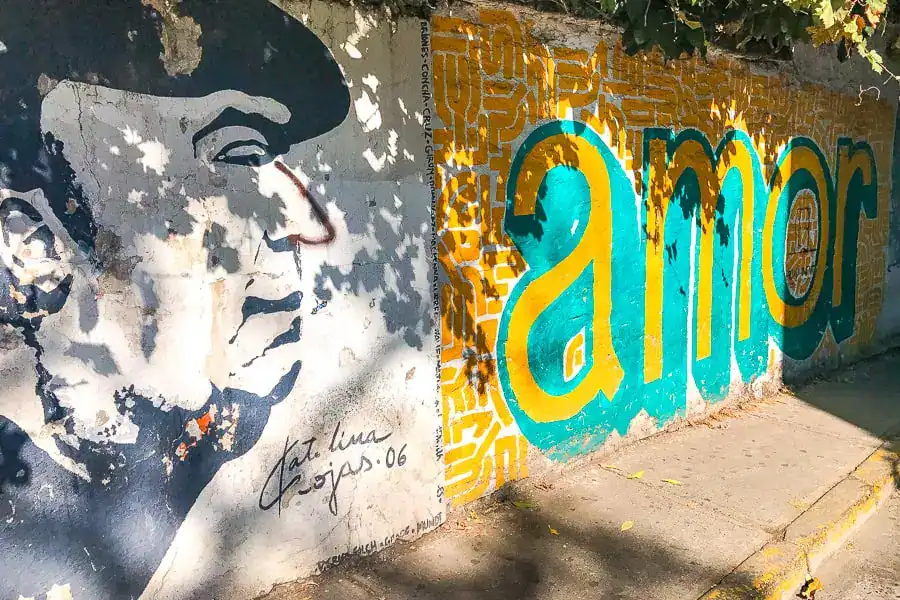
13. Search out Santiago’s vibrant street art
14. Pay a house visit to Pablo Neruda’s stylish digs
15. Sample some Chilean brews in a craft beer joint
16. Tuck into a tasty bowl of pastel de choclo
17. Marvel at Chile’s creative past at the Museum of Pre-Columbian Art
18. Chow down with a steak and wine dinner
19. Escape the city to explore the wineries near Santiago
20. Get a birds eye view at the Sky Costanera Observation Deck
This post contains affiliate links. If you choose to buy through these links we may earn a small commission at no extra cost to you, which helps us to keep Two for the World running. Many thanks for your support!
Planning a Santiago Visit
How long do I need to visit Santiago?
Santiago is one of those cities that rewards you the longer you linger. We’d transited a number of times before we realised there’s far more to Chile’s capital than just a quick stopover. Between its big-hitting sights, lively neighbourhoods, and easy day trips to wine country or the Andes, you can fill a few days here without even trying.
If you’re on a tight itinerary, try to give yourself at least two days in Santiago. That’s enough to wander the historic centre, ride the funicular up Cerro San Cristóbal for sweeping views, and dive into the city’s food and drink scene.
With 3 days in Santiago you can dig deeper, taking time to chill out in Lastarria’s cafés and galleries, take in a couple of Santiago’s world-class museums, or join a guided food or walking tour.
With five days or more, the city becomes a perfect base for side trips. You might consider taking a Maipo Valley wine tour, head out to the colourful port city of Valparaíso, or escape into the mountains of Cajón del Maipo for hiking and hot springs.
In the end, how long you stay depends on your own personal circumstances – but trust us, Santiago is worth more than just a layover.
Best time to visit Santiago
Santiago can be visited year-round, but each season offers a different experience.
Spring (September to November) is one of the best times to visit, with mild weather, leafy parks in bloom, and a relaxed vibe before the summer rush.
The city gets pretty hot during the Summer months of December to February, with long days, buzzing neighbourhoods, and plenty of outdoor events. It’s the busiest time of year though, so popular spots can get crowded.
We visited in Autumn (between March and May), and loved the crisp, clear days and autumn colours everywhere. You can expect slightly fewer visitors this time of year, but we had mostly decent weather with clear skies and comfortable temperatures.
June to August brings the winter chill, so you can expect snow on the Andes and fewer visitors. It’s a great time of year to snag cheap deals on hotels as the city takes on a slower, more local rhythm.
Getting to Santiago
Santiago is Chile’s main entry point, with flights from major destinations across the globe and a variety of destinations right across Latin America arriving at Arturo Merino Benítez Airport, 18 km from downtown.
You can reach the city by taxi, rideshare, or shuttle in around an hour, depending on traffic. We often pre-book transfers when arriving somewhere laden with bags, you can check airport transfer prices with Welcome Pickups here.
Domestically Santiago is well served by flights with carriers like LATAM, Sky, and JetSmart, while an extensive intercity bus network also operates across Chile, with a few routes crossing the border into Argentina. You can check bus routes, prices, and book seats on Busbud.
Getting around Santiago
Staying in Barrio Brasil, we found the city to be a fairly walkable for the most part, with many of the major Santiago attractions within strolling distance of the city centre.
Santiago’s extensive metro system is cheap, clean, efficient and very easy to use, and a blessing on hot afternoons when your feet are starting to protest.
We also found Uber to be widely available across Santiago, providing a safe and convenient option for getting to places the metro doesn’t get to, or for trips after dark.
Where to stay in Santiago
Santiago is a large, sprawling city, and you’ll find a wide range of stays to suit most styles and budgets.
There are plenty of budget and mid-range options in Santiago Centro that are handy for the main landmarks, while Lastarria is known for its boutique guesthouses and stylish apartments tucked among leafy plazas, wine bars, and galleries.
Across the river, Bellavista has a more bohemian energy, with colourful guesthouses and quirky hotels that reflect the area’s lively nightlife and street art scene.
For a calmer base, Providencia offers tree-lined streets, reliable metro links, and a mix of affordable chains and mid-range hotels, while Las Condes and Vitacura step things up with international brands and luxury hotels complete with pools, spas, and polished service.
There’s so much choice in fact, that narrowing down where to stay can be quite difficult, so here are a few suggestions that get consistently positive reviews:
- Good value: Hostal Boutique Black Cat – boutique hostel vibe | stylish, colourful rooms | terrace & shared kitchen | outdoor pool | close to Plaza de Armas
- Good value: Hotel HW Libertad – simple, clean & modern | close to metro | comfy, spacious rooms | fitness centre | restaurant and bar
- Mid-range: Hotel Panamericano – excellent central location | walk to Plaza de Armas & key sights | clean, spacious rooms | hearty breakfast | friendly staff
- Mid-range: Hotel Capital Bellet – modern hotel | comfy rooms | terrace bar | decent location in Providencia | close to metro, bars and dining | great value mid-range choice
- Spend a bit more: AC Hotel by Marriott Santiago Cenco Costanera – sleek high-rise hotel | rooftop bar with fabulous skyline views | stylish rooms | beside Costanera Center | close to metro
- Spend a bit more: Mandarin Oriental – resort-style luxury | nicely appointed, spacious rooms | lagoon pool and gardens | Andes views | spa facilities | fine dining restaurant | top-notch service
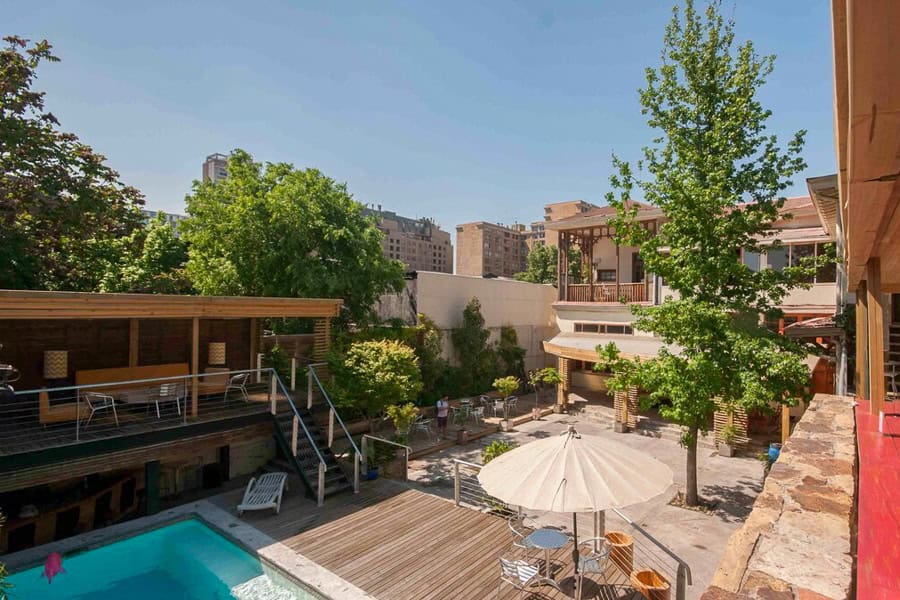
We’ve stayed centrally in Barrio Brasil at Happy House Hostel, which is close to the metro and has a good choice of drinking and dining spots nearby. It’s housed in a lovely old mansion, so you can expect high ceilings, clean, spacious rooms, and friendly staff. There’s also a nice courtyard with a pool which was an added bonus.
For stays out near the airport we’d recommend the Holiday Inn, literally opposite the terminal, and Hotel Diego de Almagro Aeropuerto. We’ve stayed in both and had no complaints – they’re clean, comfortable, modern, and have all the facilities you’d expect, including on-site bar/restaurants.
20 Cool Things to do in Santiago
1. Explore Santiago’s city highlights on a walking tour
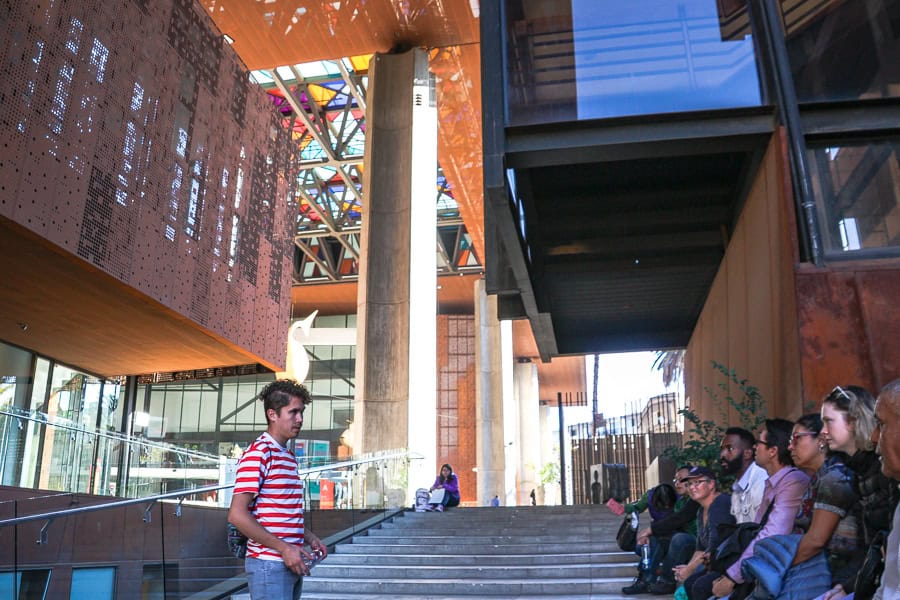
We love to get our bearings in a new city on foot, and Santiago was no exception. There’s something about strolling past grand plazas, government buildings, and leafy parks while a local guide shares the stories that bring them to life.
On our own city walk we took in the Plaza de Armas, wandered by La Moneda Palace, and paused at the striking GAM Cultural Centre, all while learning about the city’s colonial past, street art, political strife, and cultural life, as well as getting a helpful introduction to using the metro.
If you’d like to do the same, the following popular tours all get excellent reviews, offer free cancellation and have secure booking:
- Guided walking tour of the historical Old Town: Takes you through Santiago’s main historic landmarks, from the Presidential Palace and Plaza de Armas to Santa Lucía Hill and the vibrant streets of Lastarria and Bellavista. It’s a fantastic way to cover a lot of ground in a few hours – you can book your place here.
- Walking tour through the history of Santiago: This tour dives deep into the city’s past, with stops at the Pre-Columbian Museum, the Stock Exchange, Santa Lucía, and La Moneda. If you’re keen to understand Santiago’s architectural and political history as you explore, this is the one to reserve.
- Free walking tour of Santiago: A tip-based tour led by passionate locals who share their own stories of the city. It’s a great way to soak up the atmosphere of the historic centre – just sign up online and join the group.
Whichever one you choose, a guided walk is the perfect way to start your time in Santiago, giving you a great orientation to the city, and a deeper appreciation of the city’s history and cultural life.
2. Experience the Museum of Memory and Human Rights
If you pick just one museum when you visit Santiago, make it the Museum of Memory and Human Rights.
Easily one of the most profound and moving museums we’ve ever visited, the museum was created as a memorial to, and commemoration of, the victims of the 1973 to 1990 dictatorship of Augusto Pinochet.
The Pinochet regime oversaw human rights abuses on a vast scale, a dark period that divided families and friends, and left an indelible mark on the society.
The museum is set out over three floors, with innovative and interactive exhibitions that explore the timeline of events from Pinochet’s coup through to the end of his rule, and efforts since to build remembrance and cultural respect.
Pinochet is a sensitive topic for Chileans even today so a visit to the museum, while confronting, is an exceptional and eye-opening insight into Chile’s past that will help frame your understanding of where the country has come from and where it is today.
This excellent free museum is open from Tuesday to Sunday from 10am to 6pm. There’s a free app and audio guide, but if you want a deeper understanding you might want to consider a guided tour. The nearest metro station to the museum is Quinta Normal, literally just a few steps away.
3. Enjoy a seafood lunch at Mercado Central
If you’re a fan of seafood – and even if you’re not – be sure to visit Santiago’s Mercado Central while you’re in town.
With a coastline stretching more than 4,000 kilometres along the Pacific Ocean, fishing is a major industry for Chile and seafood is abundant. For Santiago locals, the best place to land some of this fresh catch is at the city’s famous Mercado Central.
The 19th-century building that houses the market is a drawcard in itself, with an ornate wrought-iron roof. Dozens of seafood restaurants fill the main space, serving up a range of Chilean specialties.
Avoid the market’s central restaurants, these are geared towards tourists and the prices are jacked accordingly.
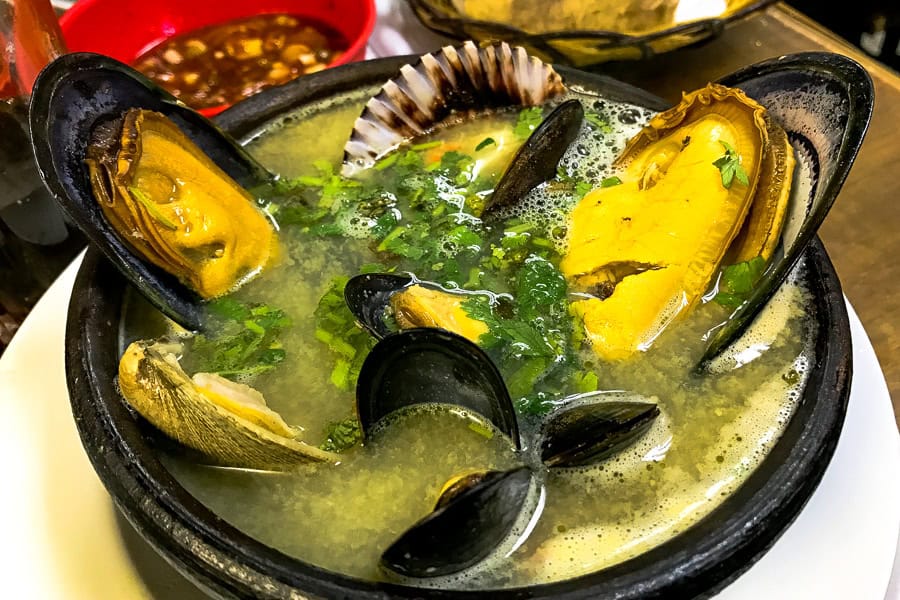
Hit up one of the tiny hole-in-the-wall restaurants lining the outer edge of the market instead (we visited Yiyi), squeeze onto a table with the locals and order a delicious bowl of seafood-bursting Paila Marina.
If you want to get some exercise while visiting the city’s markets, you could hop on a Santiago markets bike tour run by La Bicicleta Verde. We’ve booked other tours with them and can’t fault their service.
This tour will take you on a pedal through Bellavista, past Pablo Neruda’s house, and then onto the markets, before ending with a stroll at Parque Forestal.
4. Watch the world go by in Plaza de Armas
For some of the city’s best people-watching, head to popular Plaza de Armas, Santiago’s main square and its urban heart and soul.
Here, tourists, street performers, pop-up food and book stalls, sculptures, fountains and locals collide in a chaotic, colourful melee that makes for compulsive viewing.
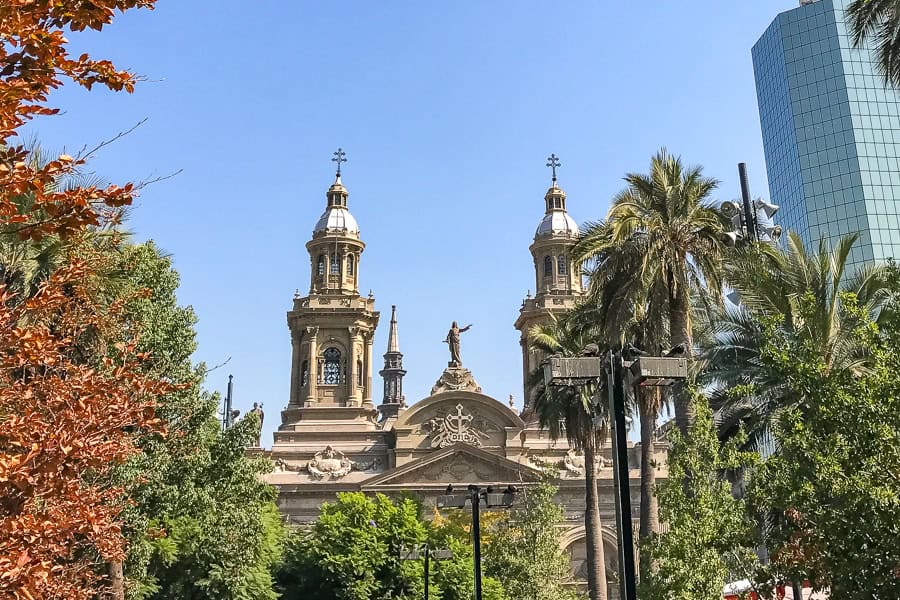
Playing a key role in the civic life of Santiago since the city was founded in 1541, Plaza de Armas is surrounded by some beautiful historic buildings like the Palacio de la Real Audiencia de Santiago, the Central Post Office Building, and the grand, neoclassical Cathedral Metropolitana, which is definitely worth a walk through.
5. Take in the views from Cerro San Cristobal
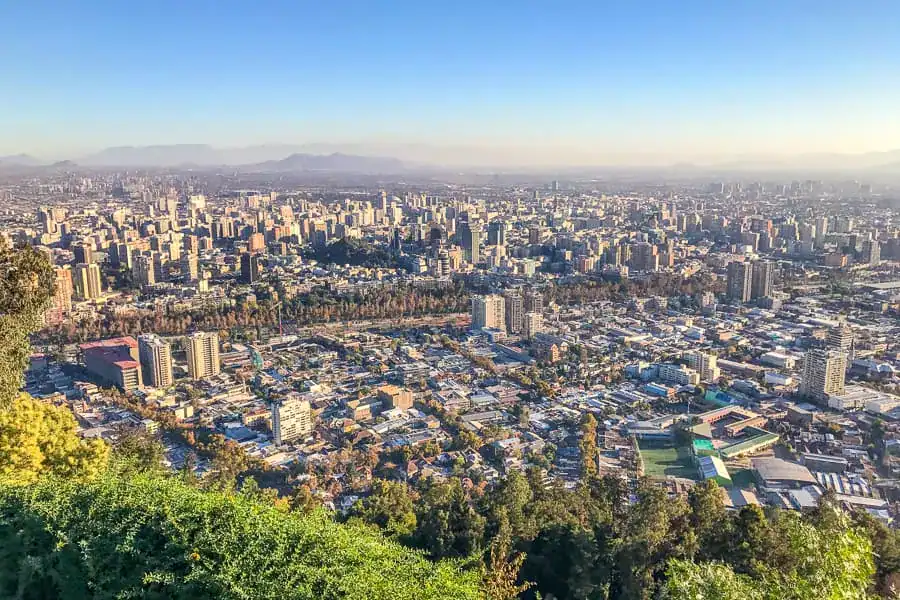
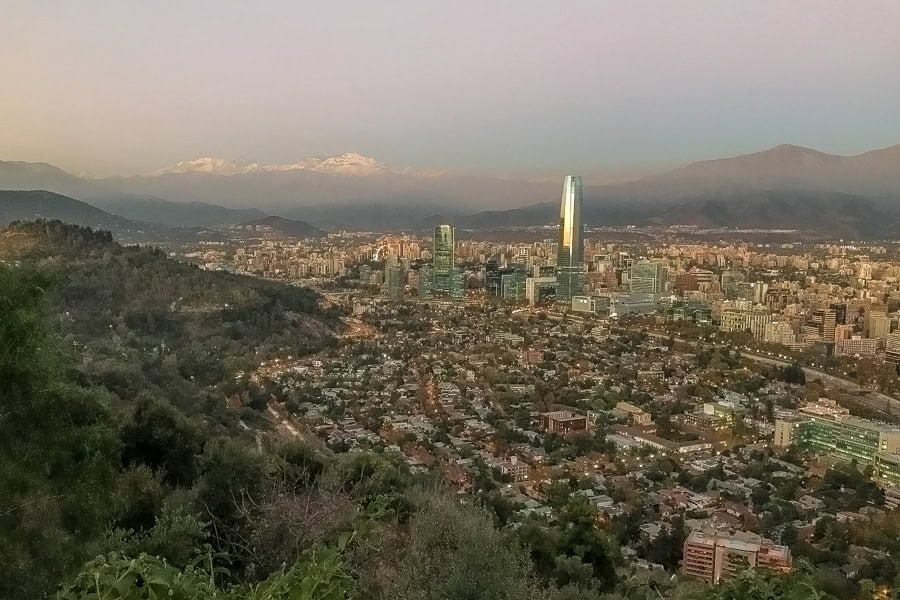
For sweeping views over the Andes and the city skyline, Cerro San Cristóbal is one of the top attractions in Santiago.
If you’ve got the energy, you can walk to the summit, a nice, but energetic hike of around 45-minutes to an hour. Otherwise you can choose to ride either the historic funicular from the Bellavista entrance, or the more modern teleférico cable car from the Providencia entrance.
Whatever you decide, the views as you climb above the city are impressive.
At the top of the cerro, you’ll find an amphitheatre, a chapel and a 22-metre-high statue of the Virgin Mary, which is lit up at night and visible from around the city. There’s a café nearby if you’re parched after the trek.
Find a spot on the steps in front of Mary and enjoy the panoramas of Santiago’s sprawling, mountain-ringed metropolis.
Cerro San Cristóbal is an awesome spot to catch sunset — just be sure not to miss the last ride down like we did, unless you fancy a long walk back in the dark.
The park is generally open from 6 am to 8:30 pm, with the funicular and teleférico operating between around 10 am to 7 pm (except Mondays). Hours can vary seasonally or for maintenance, so it’s always worth checking the schedule before you go.
Expect return funicular tickets to set you back around CLP $4,500, while return teleférico tickets are around CLP $3,850 (prices can vary on weekends/holidays). You can also combine rides on both the funicular and teleférico with the hop-on-hop-off bus on a combined two-day ticket.

6. Down a Terremoto then follow it up with an Aftershock – if you dare
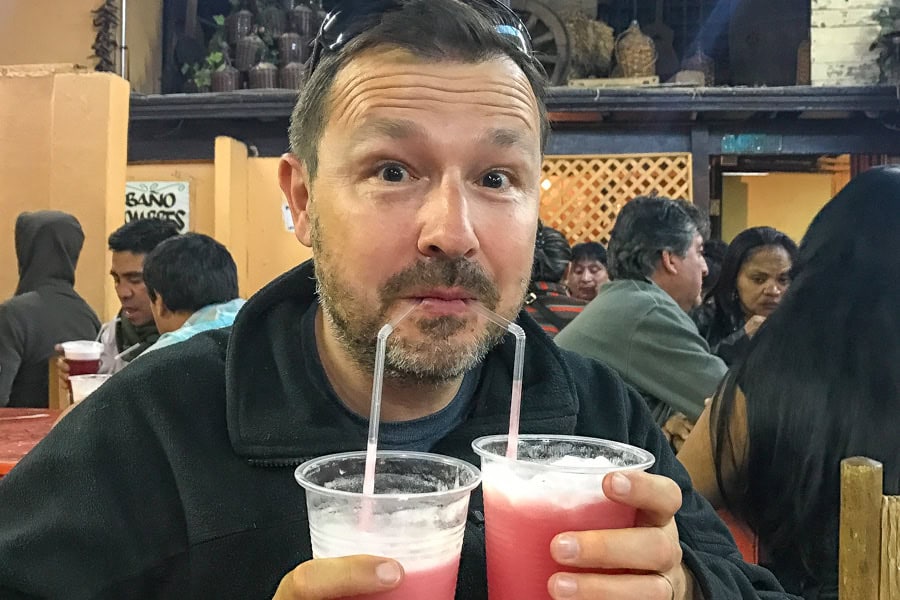
In a region famous for earthquakes, the Chilean sense of humour (or irony) is obviously at play in the name of one of the country’s most popular drinks: the Terremoto, which literally translates as ‘earthquake’.
A bright pink alcoholic beverage most often served during Chile’s national holiday (but available anywhere, anytime, really), the Terremoto is made with a sugary, fermented wine known as pipeño, pineapple ice cream, and either fernet or grenadine.
Having each downed one of these sickly-sweet concoctions, we’re fairly certain the name has more to do with the seismic effect the drink has on the imbiber, rather than any geological activity.
If you’re game enough for a second round though, ask for an ‘aftershock’, a smaller version of the original drink. Trust us, you’ll thank the bartender the next day.
Sound like your kind of tipple? The best place in Santiago to try a Terremoto is La Piojera, a bar once dubbed ‘Santiago’s oldest and best dive bar’ by the Huffington Post.
Gritty and loud, La Piojera is chock full of character and colour, with murals and graffiti on the walls, friendly staff, and plenty of merry patrons on quaking legs. Just go gently on the Terremotos, they’re way stronger than they taste.
7. Watch the Changing of the Guard at La Moneda Palace
We stumbled across this ceremony by chance one morning on the way into town and while we aren’t normally big on pomp and ceremony, the daily Changing of the Guard is one of a handful of easy, eye-catching, free things to do in Santiago.
The ceremony takes around 30-minutes and centres on the meeting of the old and new guard detachments in front of La Moneda Palace with two units on horseback, a swapping of salutes, and a marching departure to the accompaniment of a military band.
Watching the Changing of the Guard is also a great opportunity to take in La Moneda Palace, originally the city mint and today the seat of the President.
La Moneda was bombed by the Chilean Air Force at the commencement of the Pinochet coup d’état of 1973 so what you see today is the result of heavy restoration. The history here is powerful stuff.
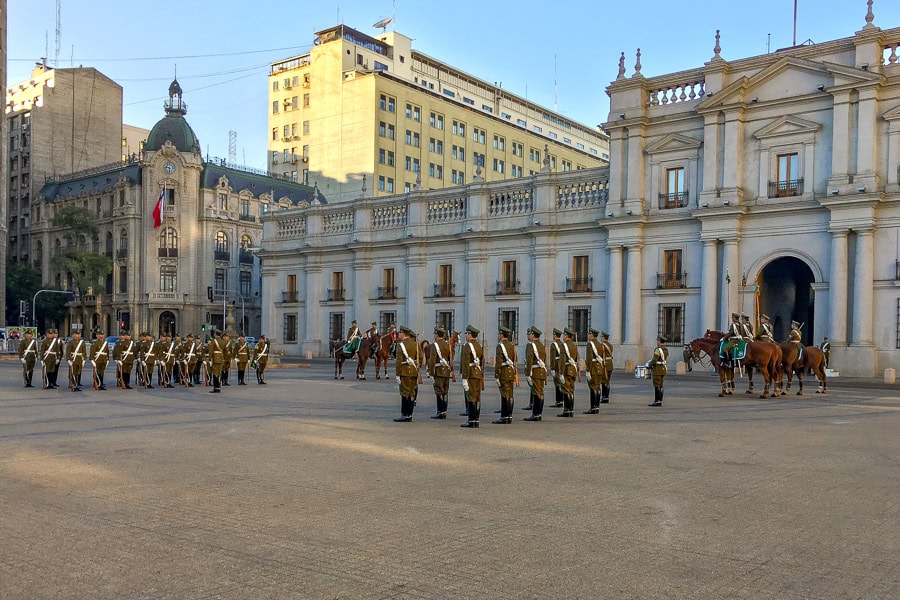
The Changing of the Guard takes place every two days at 10am. Check the local tourist information when you arrive in Santiago to confirm the schedule while you’re here.
The ceremony is also incorporated into some walking tours of Santiago, including this free (tip based) 2 hour walking tour, which includes a stop to watch the ceremony and discuss La Moneda’s history, including its role in the coup of 1973.
8. Stroll through the National Museum of Fine Arts
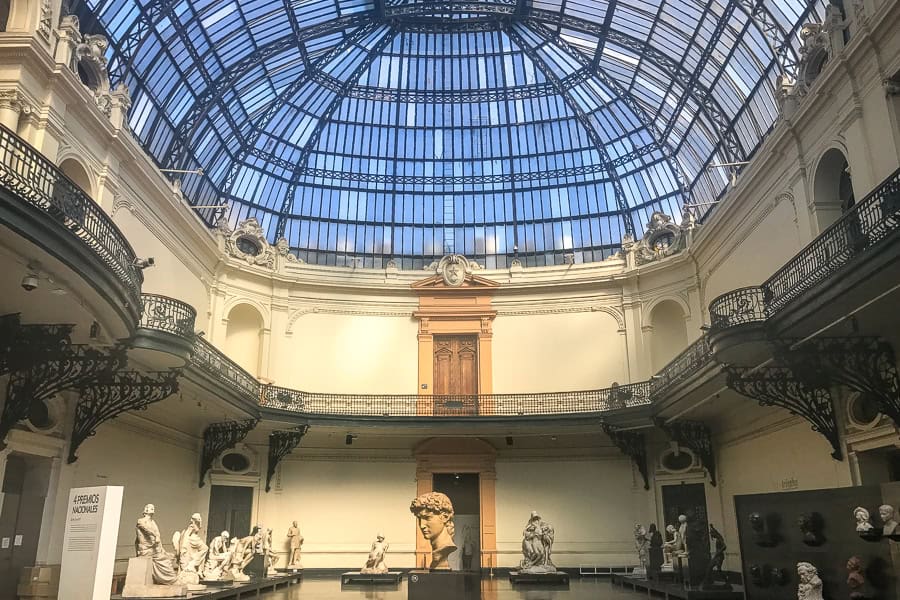
Housed in the Palacio de Bellas Artes, a grand neoclassical building from 1910, this fine arts gallery houses more than 5,000 Chilean and international artworks and sculptures from colonial days up to the present.
It’s worth checking the museum website for the latest on exhibitions. While some of the rooms were closed during our visit, we still enjoyed a stroll through, including a visit to one of the temporary exhibitions.
This museum is another contender for best free things to do in Santiago, so even if time is short, it’s worth popping into the building just to lay eyes on the huge glass cupola that sits atop the central hall.
And if your artistic tastes sway more towards modern art, the Museum of Contemporary Art is right next door.
The National Museum of Fine Arts is open from Tuesday to Sunday from 10am to 6:30pm and is free to enter. The closest metro to the museum is Bellas Artes, a short walk around the corner.
9. Explore Santiago’s gritty heart on an offbeat walking tour
Nothing beats having a local guide when you’re visiting a new city, especially for getting off the beaten track and into areas you might not find – or wander through – on your own.
We signed up for the Tours4Tips Santiago Offbeat Walk to leave the touristy city centre behind and explore the grittier side of Santiago’s river.
Santiago is a city of more than seven million people and on this tour, you’ll hear stories about the lives and livelihood of ‘La Chimba’s’ hard working locals as you wander through the streets and visit the local market, before winding up in the city’s epic cemetery to see how the wealth gap plays out in the afterlife.
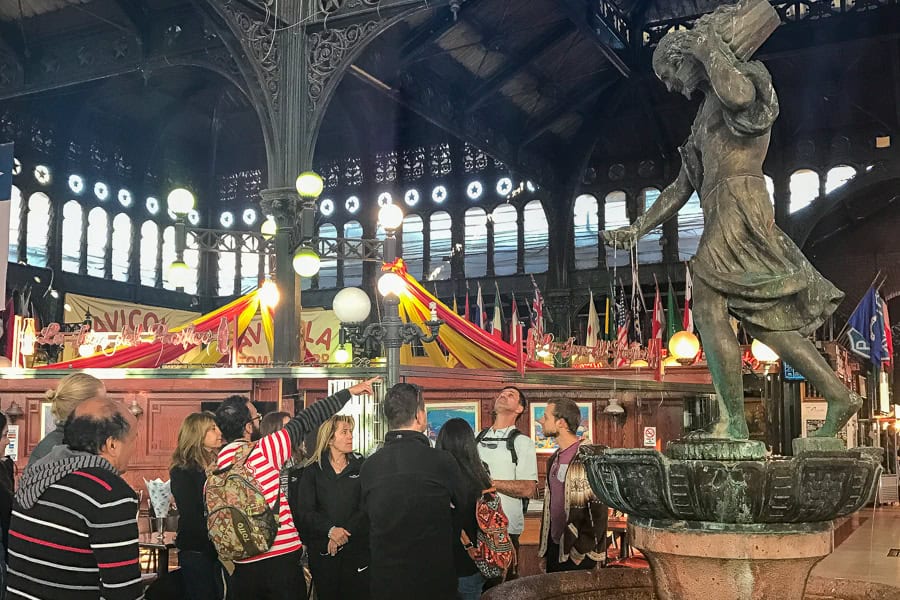
Like many ‘free’ tours in Santiago, Tours4Tips runs a pay-as-you-like model, and the lively tour guides work their butts off to give you a memorable experience of their much-loved city. Please don’t run off without giving them something for their efforts.
10. Meet the ghosts of Santiago’s past at the General Cemetery
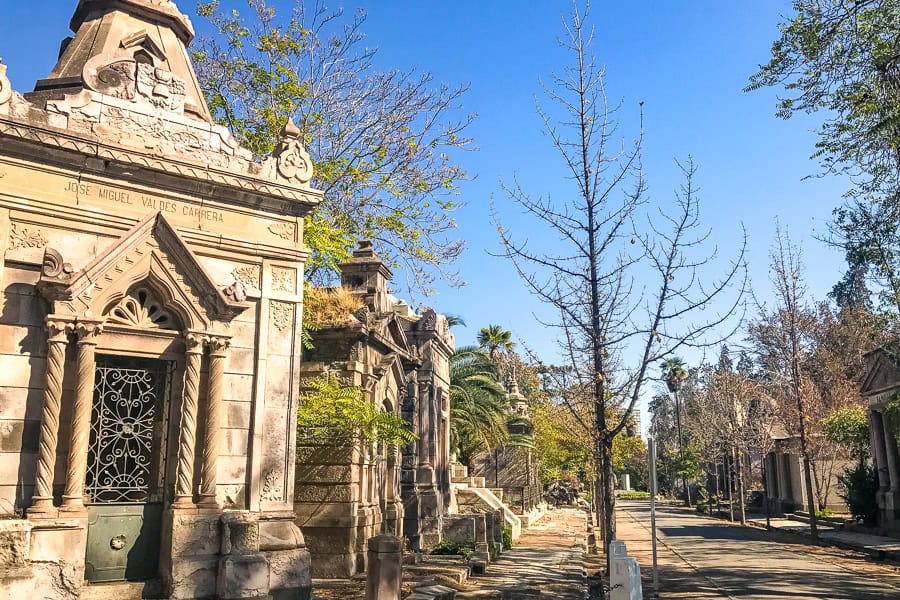
Even if you don’t do the Offbeat Walk, one of the top things to do in Santiago is visit the General Cemetery, the city’s vast necropolis.
Covering an area equivalent to roughly 140 football fields, and final resting place for more than 2 million souls, this is one of the continent’s largest burial grounds and a sprawling contrast of rich and epic mausoleums, respectable middle class tombs and crumbling storied niche blocks for the poor.
Some of the country’s most illustrious figures are buried here, as are some of its poorest. Years of neglect and earthquake damage only add to the cemetery’s moody ambience.
It’s worth devoting a couple of hours to wandering the estate, but go with a guide if you can, you’ll take away much, much more.
The General Cemetery is open daily between 8am and 5pm, and entry is free. It covers an enormous space, and as such, can be accessed from Cementerios, Hospitales, and Cerro Blanco metro stations.
11. Give some lovin’ to Santiago’s friendly street dogs
If you spend any time walking while you’re visiting Santiago, you’ll almost certainly meet some of the city’s most endearing residents: the street dogs, known locally as ‘quiltros.’
Charming, resilient and streetwise, Santiago’s canines can be found in just about every plaza, park and playground. Unlike in many countries we’ve visited though, these street dogs are remarkably comfortable around people and, more often than not, are curious and friendly.
On talking to locals, we discovered this is probably because in Chile, the concept of quiltros is that they are ‘nobody’s dogs and everybody’s dogs.’ In other words, they are cared for by the community. It certainly seemed to be the case; we often saw locals providing street dogs with food, playtime, cuddles, and even coats.
Of course, there are still questions about veterinary care and overall quality of life, but the city’s dogs are nevertheless an intrinsic part of the Santiago experience. So please keep an eye out for them and if you’re a dog lover, unleash some love and dog biscuits on them.
While Santiago’s quiltros are usually waggy-tailed and super friendly, it’s always best to approach any animal interactions with a little caution. Pay attention to the dogs body language and how it’s interacting with others, always let them approach you first, and go slowly with any pats until the dog is comfortable with you.

12. Munch on a Chilean classic with an empanada de pino
An empanada a day keeps the hangry away. That’s our mantra when we’re travelling in South America anyway, and Chile’s huge empanadas are guaranteed to cure those mid-afternoon, pavement-pounding munchies.
While Chilean empanadas come in all the usual flavours, Pino is by far the country’s most popular version of the delicious pastry pocket: a filling of seasoned mince beef with onions, olives, raisins and a slice of boiled egg.
You can pick up an empanada just about anywhere but if you’re visiting Santiago’s city centre, then drop a pin on Emporio Zunino. The narrow, crowded, standing-room only empanada house has been baking up a pastry storm for more than 90 years, so they know their Pino.
Buy a couple of the classics, and maybe one of their flaky pastry cheese editions, elbow your way to a table, and start your empanada love affair.

13. Search out Santiago’s vibrant street art
You don’t have to look hard to find splashes of street art colour around Santiago. Some say it’s one of the best cities for street art in the world.
While the murals here maybe aren’t quite as extensive as the painted city of Valparaiso (a couple of hours from Santiago and definitely worth a visit if you have time), there’s still plenty of artful wandering to be had.
Neighbourhoods like Barrio Bellavista and Barrio Brasil are great for simply strolling for street art, while a project in San Miguel has turned it into an open air museum (Museo a Cielo Abierto), with more than 60 large murals revitalising its crumbling streetscape.
Street art is free to enjoy and best explored by foot in Bellavista, Barrio Brasil and San Miguel. For a deeper dive, consider joining a street art walking tour, you’ll find a few online – although they aren’t as common as we thought they’d be.

14. Pay a house visit to Pablo Neruda’s stylish digs
Built as a love nest and named ‘La Chascona’ – tangled-haired woman – for the love of his life, Pablo Neruda’s extraordinary house was one of our Santiago highlights.
The poet, diplomat, author and politician was a force of nature, a champion of leftist politics, and one of Chile’s great luminaries until his untimely death in 1973, which some say was on the orders of Pinochet.
Although a museum these days, Neruda’s split-level, indoor-outdoor home at the base of Cerro San Cristobal is definitely no fusty gallery full of tired old furniture.
Restored and packed with his personal belongings, La Chascona is a testament to Neruda’s creativity, his passion, and his penchant for collecting unique and beautiful things on his travels.
His larger-than-life character and style, and his great love for Mathilde, live on in this quirky and unusual home.
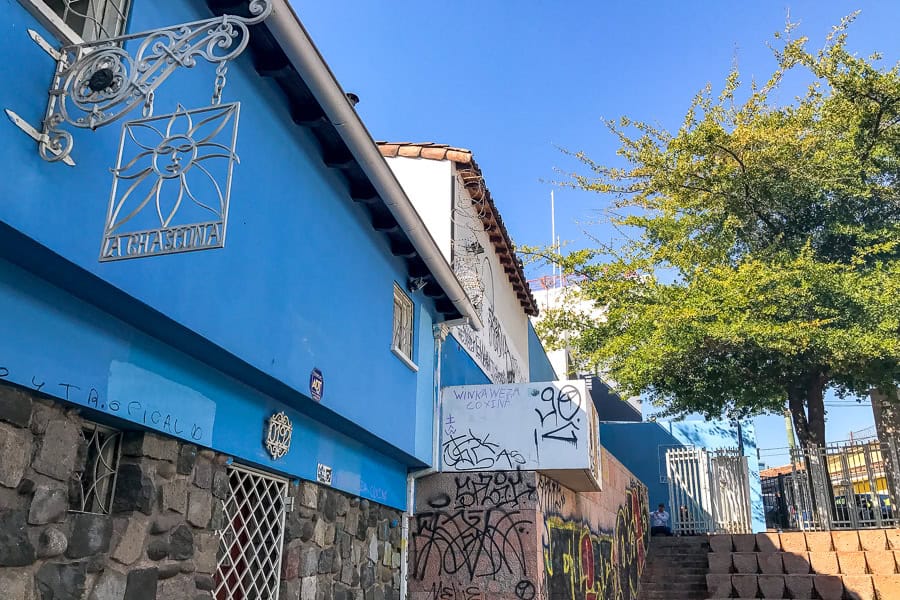
La Chascona is open Tuesday to Sunday from 10am to 6pm (7pm in summer). Entry costs CLP $10,000 and includes an audio guide in several languages. The nearest metro station is Baquedano, around 15 minutes’ walk away.
15. Sample some Chilean brews in a craft beer joint
After decades of large scale brewers dominating the market, craft beer has taken off in a big way across Chile, and nowhere more so than in the nation’s capital.
Boutique breweries, craft beer shops, and hip brewpubs are everywhere, providing visitors with a great opportunity to try out some of Chile’s most interesting and innovative beers.
If you’re out and about in Lastarria, check out José Ramón 277, near the Centro Gabriela Mistral Cultural and Performing Arts Centre. It’s a small, casual and friendly bar with a wide range of beers on tap that successfully distracted us from our Santiago sightseeing one lazy afternoon.
We’ve also read good things about places like Cervecería Intrinsical and On Tap Amsterdam, but sadly we had limited time for beer tasting this time around, so they’re on our list for the next visit.

16. Tuck into a tasty bowl of Pastel de Choclo
Growing up, Cottage Pie and Shepherd’s Pie were firm favourites in both our households, so when we heard about Chile’s traditional local version, Pastel de Choclo, we had to try it.
To be fair, Pastel de Choclo is really nothing like cottage or shepherd’s pie. Both sweet and savoury, this Latin casserole brings together a bunch of flavours in a meaty base of beef, chicken, onions, olives and boiled egg (sounds like that Pino empanada, right?), which is covered in a layer of thick, creamy mashed corn and then baked in the oven where the top-most layer caramelises (*mouth waters*).
Served up with a glass of delicious Chilean Carménère wine, this is comfort food like nobody’s business – perfect for a winter’s day. Or any day, really. No matter what time of year you’re visiting Santiago, make time for this dish.
As traditional fare, you can find Pastel de Choclo all over Santiago and Chile, but for the real deal, head to Galindo in Providencia.

17. Marvel at Chile’s creative past at the Museum of Pre-Columbian Art
You’ve done the Museum of Memory but you have time for one more museum while you’re visiting Santiago. Stop looking now and make it the Chilean Museum of Pre-Columbian Art.
You won’t find a musty old oil painting in sight at this beautiful, contemporary tribute to the Pre-Columbian peoples of the Americas.
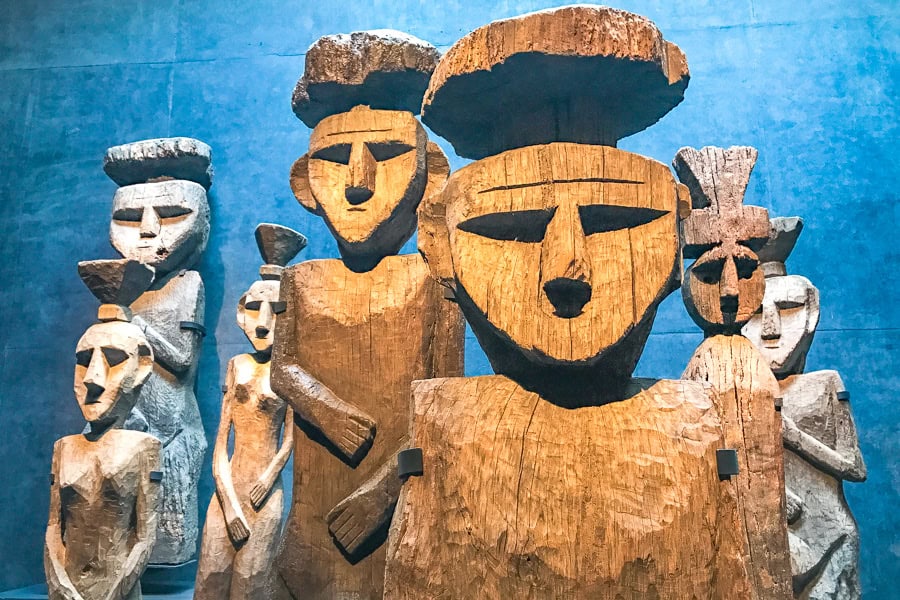
Housed in a stunning, 19th-century palace, the museum brings together a spectacular array of art and artefacts from different cultures across Latin America spanning thousands of years up to the arrival of Europeans.
On the lower floor, a stunning permanent exhibition called Chile Before Chile tells the story of the country’s own Indigenous peoples, from the distant past through to today.
We’ve been to many, many museums in our travels and these days we can be a bit of a tough audience. This museum took our breath away. Not only are the exhibitions striking, but the artworks and artefacts on display are masterpieces.
The museum is open Tuesday to Sunday from 10am to 6pm. Entry cost for tourists is CLP $12,000, and the closest metro station is at Plaza de Armas, just a couple of hundred metres away.
18. Chow down with a steak and wine dinner
Argentina may get all the regional red meat and wine accolades, but Chile can definitely hold its own.
A steak and wine dinner was high on our gastronomic agenda when we arrived in Santiago, and we weren’t disappointed.
Chilean Cabernet Sauvignon and Carménère were some of the best red wines we’d tasted during our South American travels. For the most part, they’re also very affordable.
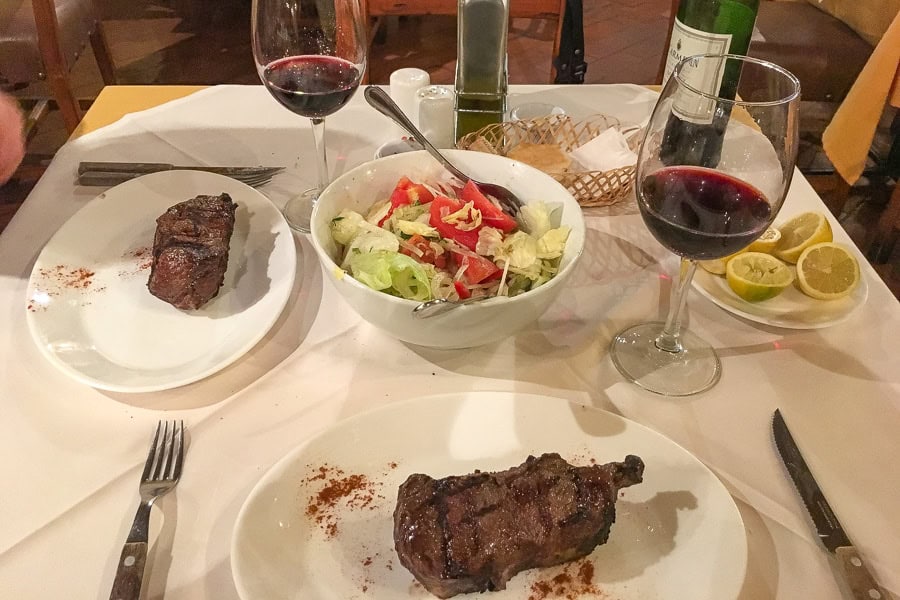
There are excellent steak houses all over Santiago, but we found our own meat mecca in Las Vacas Gordas (fittingly, ‘the fat cows’), a local steakhouse in Barrio Brasil, just around the corner from where we were staying.
It might be going a step too far to say our slabs of sirloin were superior to our all-time favourite steak restaurant in Bariloche, Argentina, but Las Vacas Gordas tempted us back. Twice.
19. Escape the city to explore the wineries near Santiago
Surrounded by mountains, Santiago sprawls across the wide, mostly flat Maipo Valley. Jesuit priests travelling with Spanish conquistadores in the 16th century saw the potential in the fertile soil of the valley and planted vines in the 1540s.
Today, Chile is one of the great New World wine producers and the Maipo Valley a key player. While vineyards once stretched for kilometres, urban sprawl has forced them towards the mountains but several wineries are still within spittoon distance of the city, making for a very easy wine tasting day trip.
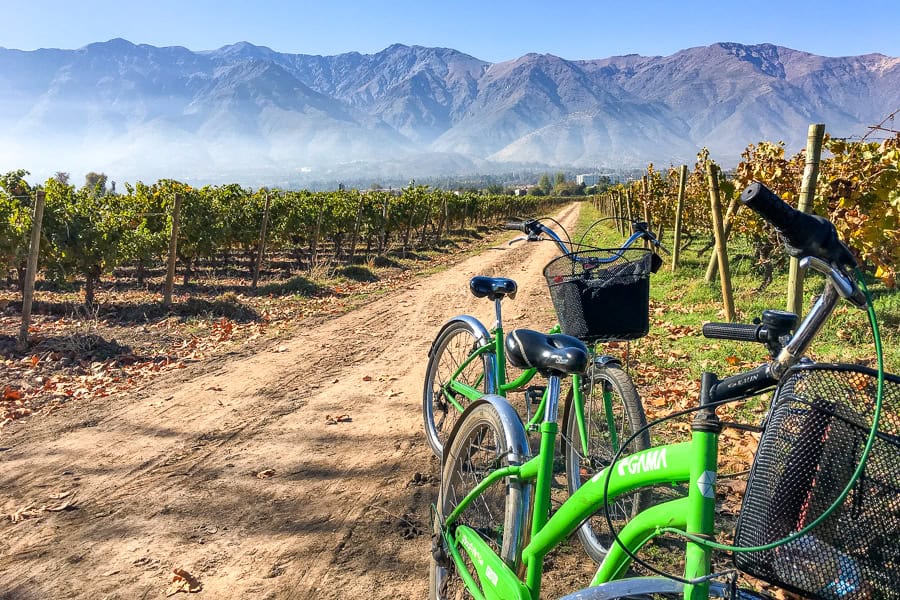
We had a fabulous few hours cycling through the vines, visiting cellars, and tasting incredible Maipo wines at one of the oldest wineries in Chile.
Sitting right on the edge of the city, the Maipo Valley is Santiago’s most accessible wine region where you can taste Cabernet Sauvignon, Carmenère, Syrah and more, with an Andean and city backdrop.
You can read all about our experience in our Wine Tours in Santiago: How to Sip, Cycle and Taste in Chile’s Capital post, which also includes an overview of the local regions and most popular tours.
If you’re short of time though, and want to get a few wineries in, there’s a full day, small-group Maipo Valley wine tour, including tastings at 4 vineyards and a pisco tasting, along with cheese and snacks, that gets great reviews.
20. Get a birds eye view at the Sky Costanera Observation Deck
Sitting atop the 300-metre Gran Torre Santiago, the tallest building in South America, the Sky Costanera Observation Deck provides 360-degree views across the Chilean capital towards the snow-tipped Andes.
Visitors ride a high-speed glass elevator to the 61st and 62nd floors, where floor-to-ceiling windows showcase Santiago sprawling beneath your feet – a panorama that’s said to be particularly stunning at sunset, when the city glows gold and the mountains turn shades of rose and violet.
If you want to enjoy the view for a little longer, perhaps with a wine or cocktail, the upper level has a bar/café serving drinks, coffee, and light bites.
While we saw the Gran Torre from afar, we didn’t make it up to Sky Costanera this time. It looks like the perfect place to end a Santiago visit though – and that’s why it’s on the top of our list of things to do in Santiago next time we’re here.
The observation deck is open daily from around 10am to 10pm, with last entry an hour before closing (hours vary seasonally). The nearest metro is just around the corner at Tobalaba.
If you want to visit for sunset or during peak season, it’s probably best to book your ticket in advance. You can pre-book a spot here.
Useful Travel Resources
Stays: We generally use Booking.com for our stays while travelling as there’s a huge choice of accommodation on offer through the platform. You can also get discounts and other benefits through their Genius loyalty program. Search and book your Santiago stay here.
Airport Transfer: We’ll often book an airport transfer in advance when we arrive in a new city laden with bags. Welcome Pickups operates in hundreds of destinations around the world, including Santiago, and takes the hassle out of arriving and navigating to your stay. Book your transfer to or from the airport here.
Car Rentals: We’ve always found the best deals at DiscoverCars and they’re our go-to car hire provider, with great rates and free cancellation should your plans need to change. Booking your car hire for Chile in advance will get you the best rates and widest choice of vehicle. You can find some great deals on Santiago car hire here.
eSIMs: We find having access to mobile data on the go can make navigating, booking tours, planning (and staying in touch with home) way easier than relying on wifi alone, or spending a small fortune on global roaming. Airalo is our preferred international eSIM provider, and you can pick up your Chile eSIM here.
Tours: GetYourGuide is a great option for finding local tours all around the world. We’ve included links to a number of popular tours throughout this post, but there are many more to choose from. You can find and book a range of great tours and experiences for Santiago here.
Sound like your kind of adventure? If you’ve got any questions or suggestions on the best things to do in Santiago please drop us a comment below.
If you’re looking for more awesome experiences in Chile and South America, check out our post on wine tours in Santiago, our 6-day Easter Island itinerary, or our South America page.
I have just signed up for your blog and this was my first read. Very nicely presented and informative. If I were to make one suggestion I would like to see the prices of things like food and accommodations, but other than that I will look forward to reading more on your delightful blog.. good job!
Thanks very much Joan, we’re really glad you enjoyed this post and found it helpful. Thanks also for your suggestion regarding including cost information. We’ll be sure to take this into consideration for future posts.