

Plan the perfect Vancouver Island road trip with our 14 day itinerary and discover the best beaches, old-growth rainforest, coastal hikes and wilderness areas between Victoria and Cape Scott. Along the way, you’ll have a chance to spot whales, orca and bears, and taste some of the island’s best food, wine and beer.
From storm-battered Pacific beaches and towering old-growth rainforest to whale, orca and bear watching, remote wilderness areas and a rich Indigenous culture, Vancouver Island is an unforgettable road trip destination.
Sitting just off the coast of British Columbia in Canada, this is the largest island off the Pacific coast of North America. Even so, Vancouver Island packs an extraordinary amount of diversity within its rocky shores.
Historic harbour cities give way to vineyard-covered valleys, winding coastal highways, surf towns, dense rainforest and, eventually, the quieter, more remote landscapes of the island’s north.
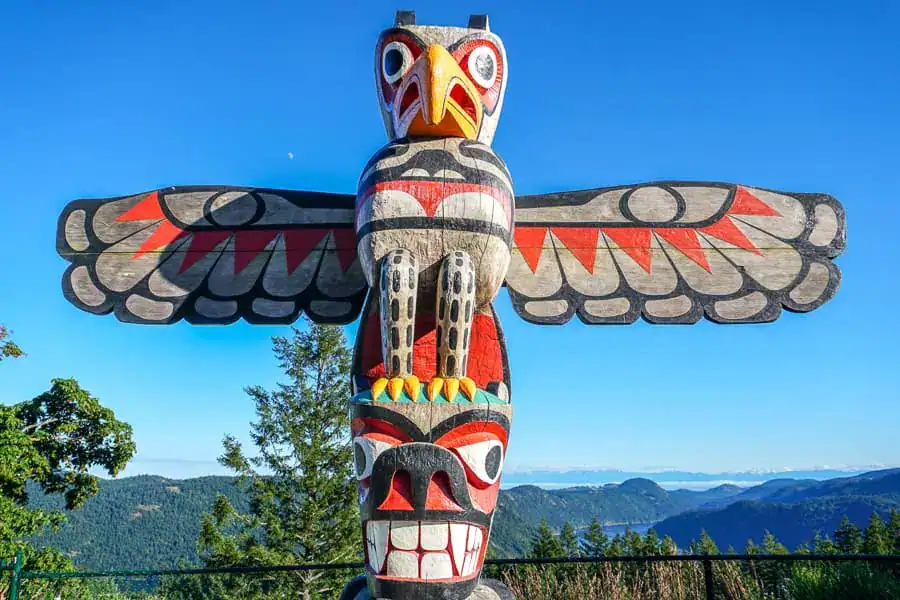
For thousands of years, Vancouver Island has been home to First Nations communities whose cultures, traditions and connection to the land remain deeply woven into the island today. Pausing to appreciate totem poles, cultural centres and Indigenous art was one of the highlights of our visit.
Another thing we loved about Vancouver Island was just how quickly the scenery changes. One day you’re wandering Victoria’s harbourfront or tasting wine in the Cowichan Valley, and the next you’re standing on a driftwood-covered beach watching Pacific waves roll in.
With scenic coastal drives, incredible wildlife tours, giant Douglas firs, brewery stops, small harbour towns, ferry crossings, and some of the best coastal scenery in British Columbia, this is a road trip we’ll be waxing lyrical about for years to come.
What’s in this post?
Our 14 Day Vancouver Island Itinerary
– What’s the route?
– Vancouver Island road trip map
– Day 1: Vancouver to Victoria – Harbour views to historic streets
– Day 2: Victoria wine tasting and harbourside dinner
– Day 3: Victoria to Duncan – Dramatic coastal views, wineries and Indigenous culture
– Day 4: Duncan to Port Alberni – Birds of prey, seaside towns, scenic roads and classic pubs
– Days 5 to 7: Tofino and Ucluelet – Pacific beaches, rainforest walks and wildlife tours
– Day 8: Ucluelet to Cumberland – Old-growth forest, waterfalls and breweries
– Day 9: Cumberland to Campbell River – Waterfalls, island hopping and wildlife tours
– Days 10 to 13: Exploring the north from Port McNeill to San Josef Bay
– Day 14: Port McNeill to Nanaimo and ferry to Vancouver
Planning a Vancouver Island Road Trip
– How long do you need to see Vancouver Island?
– Best time to visit Vancouver Island
– Getting to Vancouver Island
– Driving on Vancouver Island
– Vancouver car rental
– Vancouver Island accommodation
Useful Travel Resources
This post contains affiliate links. If you choose to buy through these links we may earn a small commission at no extra cost to you, which helps us to keep Two For The World running. Many thanks for your support!
Vancouver Island Itinerary – Quick Plan
Start & finish: Vancouver
Distance: Around 1,700km (1,050 miles) depending on detours and day trips
Recommended duration: 14 days
Ferry in / out: Tsawwassen > Swartz Bay / Nanaimo > Horseshoe Bay
Best time to visit: June to September
Trip highlights: Whale & bear watching | Wild Pacific Trail | Cathedral Grove | Pacific Rim beaches | Duncan Totem Walk | The Raptors bird of prey centre | Cowichan Valley wineries | Telegraph Cove | San Josef Bay | Cape Scott Provincial Park
Overnight stops: Victoria | Duncan | Port Alberni | Tofino / Ucluelet | Cumberland / Courtenay | Campbell River | Port McNeill
Our 14 Day Vancouver Island Itinerary
What’s the route?
This epic 2 week Vancouver Island road trip starts with the ferry from Vancouver to Victoria before gradually working north through the Cowichan Valley, Chemainus, Nanaimo, and Port Alberni, then crossing to the Pacific coast for several days exploring Tofino and Ucluelet.
From there, you’ll head back east through Cathedral Grove and the Comox Valley before continuing north into Vancouver Island’s quieter upper reaches around Telegraph Cove, Malcolm Island, Alert Bay, and Cape Scott Provincial Park.
With this itinerary, the scenery evolves as you travel. While the south feels more settled, with wineries, marinas, small farming communities and historic towns, the scenery gets more dramatic the further north and west you go, with rainforest, surf beaches, and rugged Pacific scenery.
We spent a few weeks road tripping around the island and have developed this itinerary to take advantage of the things we learned and avoid the mistakes we made along the way. Our aim? A trip plan that balances the island’s biggest highlights with realistic driving days and enough flexibility to slow down where it matters.
Our Vancouver Island itinerary follows a fairly logical south-to-north route before returning along the east coast. It keeps longer driving days comfortable and minimises unnecessary backtracking, while still allowing time for hikes, wildlife experiences, waterfront walks, the occasional brewery visit, and the spontaneous roadside stops that often become some of the most memorable moments of a road trip.
Vancouver Island road trip itinerary overview
| Day | Route | Driving |
|---|---|---|
| Day 1 | Vancouver > Swartz Bay > Victoria | 2.5 hrs |
| Day 2 | Cowichan Valley wineries | Tour |
| Day 3 | Victoria > Malahat Drive > Cowichan Bay > Duncan | 2 hrs |
| Day 4 | Duncan > Chemainus > Nanaimo > Port Alberni | 3 hrs |
| Days 5-7 | Port Alberni > Tofino / Ucluelet then explore locally | 4 hrs |
| Day 8 | Ucluelet > Cathedral Grove > Cumberland | 3 hrs |
| Day 9 | Cumberland > Elk Falls Provincial Park > Campbell River | 30 mins |
| Days 10-13 | Campbell River > Port McNeill then explore Telegraph Cove, Malcolm Island, Alert Bay, Cape Scott Provincial Park and San Josef Bay | 8 hrs |
| Day 14 | Port McNeill > Nanaimo > Vancouver | 6 hrs |
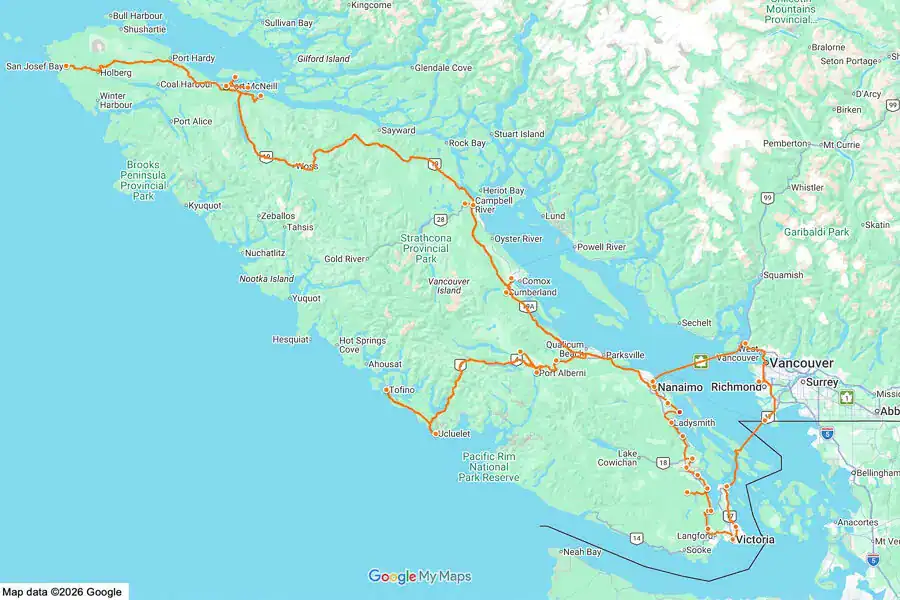
Vancouver Island road trip map
To help you plan your Vancouver Island itinerary, we’ve mapped our full route.
We suggest using the map alongside the day-by-day itinerary to help get a clear sense of driving distances, overnight stops and how each stage of the route fits together.
It’s particularly useful for understanding where you might want to slow down, add excursions or activities, or make adjustments to suit your own pace.
Book your Vancouver Island road trip
Find a stay
Grab a hire car
Book a tour
Day 1: Vancouver to Victoria – Harbour views to historic streets
Highlights: Tsawwassen to Swartz Bay ferry | Saanich Peninsula | Mount Douglas Lookout | Victoria Inner Harbour | Parliament Buildings | Chinatown | Fisherman’s Wharf | Dallas Road
Total travel distance: appx. 105km (65 miles)
Total travel time: appx. 2.5 hours
Included ferry crossing: Tsawwassen-Swartz Bay
Overnight:Victoria
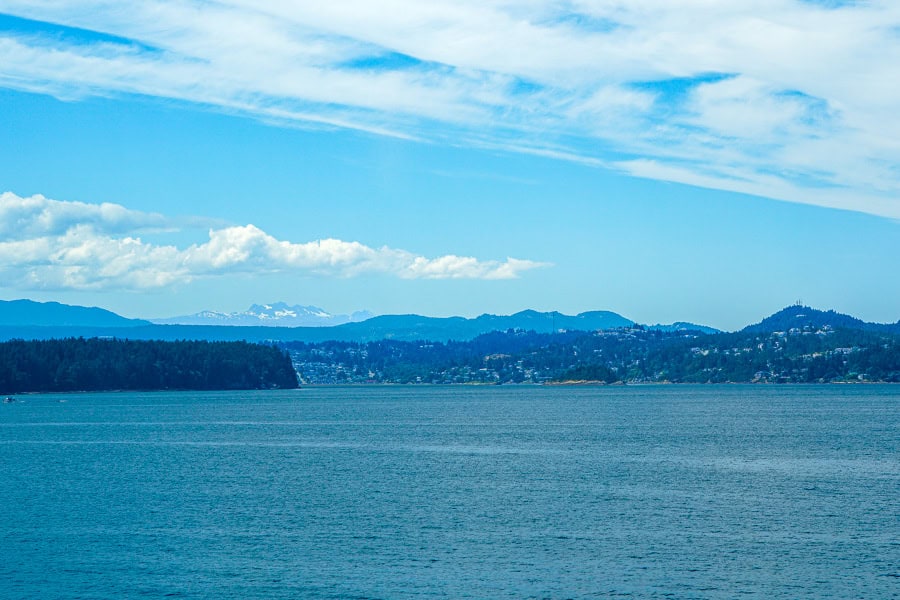
Our Vancouver Island road trip starts with the ferry from Tsawwassen (south of Vancouver city) to Swartz Bay. On a clear day, the route through the Gulf Islands is a beautiful introduction to the coastline of southern British Columbia, with forested islands, sheltered channels, and distant snow-capped mountains for much of the journey.
After arriving at Swartz Bay, it’s an easy drive south toward Victoria. If you have time, Sidney makes a worthwhile first stop for a waterfront wander, coffee, or a quick look around the town centre before continuing on. You could also make a detour to Mount Douglas Park for 360-degree views across Victoria, the coastline and surrounding hills.
Once you arrive in Victoria, check into your hotel and spend the afternoon exploring the city on foot. Victoria is compact enough for a self-guided walk, and most of the main sights around the harbour, old town and Chinatown can be easily seen on foot.
We finished the day by jumping on one of the cute old Victoria Harbour Ferries to West Bay, and then strolling along the picturesque harbour path to Spinnakers Gastro Brewpub for an early dinner. The chowder here was sensational, as was the location right on the water. You can walk off dinner by continuing along the waterfront path all the way back to the city.
We really enjoyed wandering around the historic streets of Victoria, and would suggest incorporating the following stops on your walking tour:
- Inner Harbour – Victoria’s central waterfront area is lined with historic buildings, boats, buskers and harbour views, making it a pleasant area to spend some time.
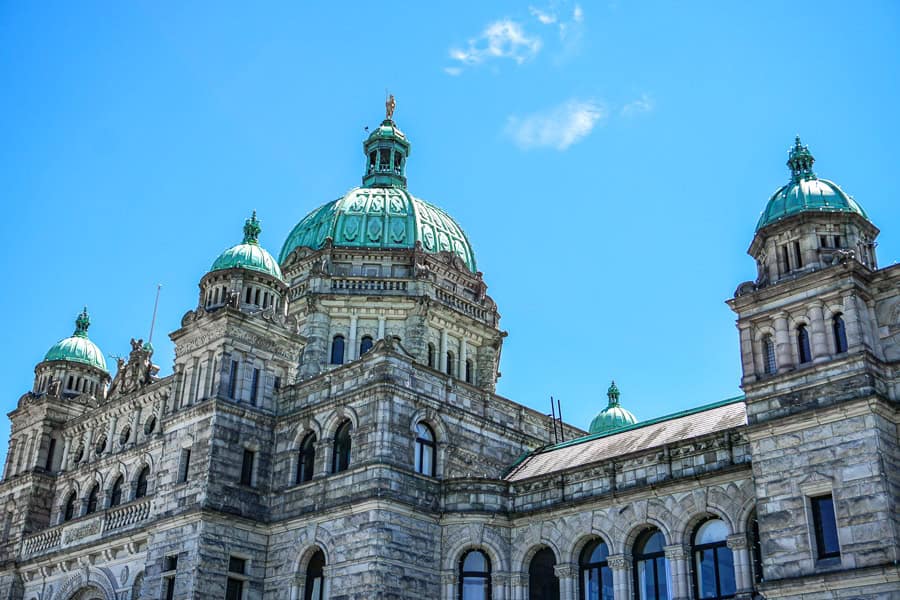
- It’s impossible to miss Victoria’s Parliament Buildings, one of the city’s most recognisable landmarks, overlooking the Inner Harbour.
- Royal BC Museum – a major museum exploring British Columbia’s natural and human history; for us, the impressive Indigenous collection of totems and other artefacts was worth the admission price alone.
- Wander up Government Street through central Victoria, with its shops, cafés and historic buildings.
- Explore the narrow laneways and surrounding neighbourhood of Fan Tan Alley and Chinatown, one of North America’s oldest Chinatowns.
- Enjoy the harbour views as you walk across to photogenic Fisherman’s Wharf, with its colourful floating-homes and marina. Grab a snack from one of the food kiosks before continuing down Dallas Road to enjoy ocean views across the Strait of Juan de Fuca.
Where to stay in Victoria
Victoria is the best place to stay at the start of this itinerary because it gives you easy access to the harbour, historic centre, restaurants, wine tours and the ferry from Swartz Bay.
Stays in Victoria range from large waterfront hotels and stylish boutique options, to heritage inns, apartment hotels and more affordable motels slightly further from the harbour. If you want harbour views, walkability, and easy access to restaurants and sightseeing, expect to pay a premium, particularly during summer.
For this road trip, the most convenient areas are around the Inner Harbour, Old Town, James Bay and Downtown Victoria. These areas allow you to walk to many of the city’s main sights without relying on the car once you’ve checked in.
The following options get consistently good reviews:
- Good value: Marketa’s Bed and Breakfast – cosy heritage B&B in James Bay that’s an easy walk from downtown, with clean, comfy rooms, excellent included breakfasts and free on-site parking plus street and paid options nearby.
- Mid-range: The Oswego Hotel – popular James Bay hotel with spacious, modern rooms with kitchenettes just a short walk from the Inner Harbour. The hotel has a well-regarded restaurant and there’s paid secure parking on-site.
- Spend a bit more: Fairmont Empress Hotel – probably Victoria’s most iconic hotel, overlooking the Inner Harbour with tastefully decorated rooms, on-site paid parking, and all the resort facilities you would expect, including restaurant, bar, pools and a wellness centre.
Day 2: Victoria wine tasting and harbourside dinner
Highlights: Saanich Peninsula and Cowichan Valley wine tours | Butchart Gardens | Victoria harbour dining
Total driving distance: No driving today
Overnight: Victoria
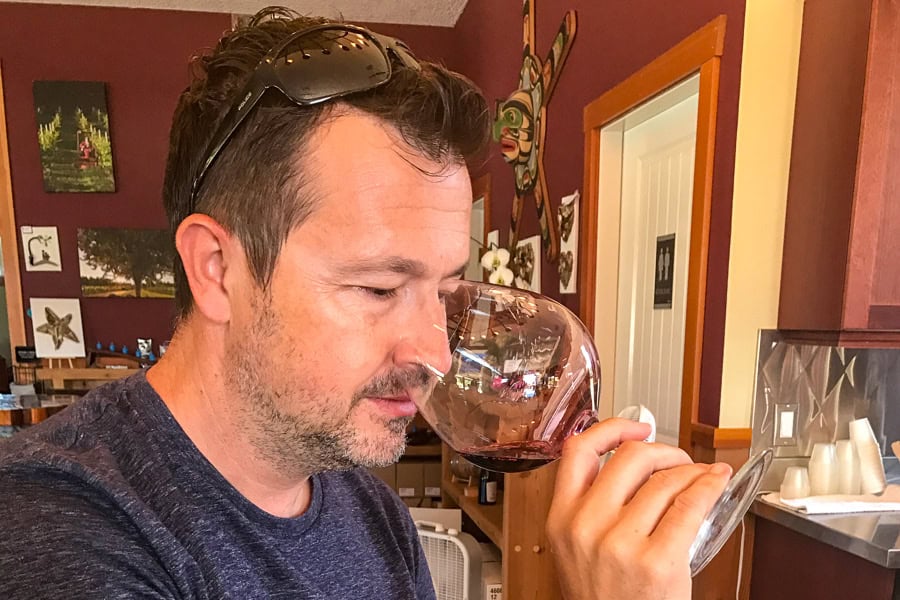
Spend your second day based in Victoria, either joining a guided wine tour or planning a self-drive tasting route through the Saanich Peninsula and Cowichan Valley.
Vancouver Island’s wine region is smaller than many of Canada’s better-known wine destinations, but that’s part of what makes it enjoyable. The tasting rooms tend to be relaxed, the drives between stops are short, and many tours include a mix of wineries, cideries, distilleries and food stops.
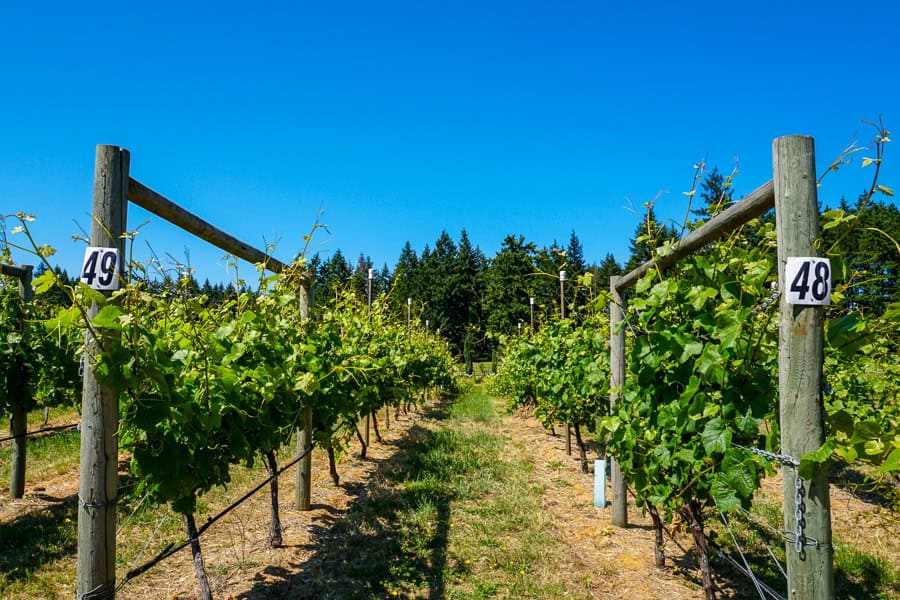
For most visitors, a guided tour is the easiest option. It means no one gets the designated driver short straw, and it lets you spend the day tasting properly before returning to Victoria for dinner.
Fortunately there’s plenty of choice when it comes to tours covering food, wine, spirits and craft beer.
Book a guided wine, distillery or brewery tour
Victoria Wine Tour with Wine Tastings and Charcuterie – This small-group wine tour provides a great introduction to three local wineries with guided tastings and a light lunch. Book your spot here.
Cowichan Valley Wine & Food Tour – A popular tour that combines scenic vineyard drives, family-run wineries and a farm-to-table lunch in the Cowichan Valley. Check prices and book here.
Victoria Craft Beer and Distillery Tour – If you’re not into wine, you may prefer this relaxed afternoon tour exploring Vancouver Island’s excellent craft beer and spirits scene, with visits to local breweries and a distillery around Victoria and the Saanich Peninsula. Check availability here.
If you prefer to self-drive, the Saanich Peninsula is the easiest option from Victoria. You can also combine wineries with Butchart Gardens, or head further north toward the Cowichan Valley if you don’t mind a longer day out.
Finish the day back in Victoria with dinner overlooking the harbour, followed by an evening stroll around the Inner Harbour area.
With more time in Victoria
Port Renfrew and the wild coast
With more time in Victoria, consider driving west from the city through Sooke to Port Renfrew. This route follows the island’s more remote southwest coastline, with beaches, rainforest, surf, tidal pools and access to several sections of the Juan de Fuca coast. Port Renfrew itself is small, but it gives access to some of the wildest coastal scenery on southern Vancouver Island.
Salt Spring Island
Salt Spring Island is worth considering if you like artisan food, galleries, markets, wineries, cideries and slow island drives. You can reach the island by ferry from Swartz Bay to Fulford Harbour, or from Crofton to Vesuvius.
Other Victoria add-ons
Other things to do around Victoria include visiting the famous Butchart Gardens, walking the Ogden Point Breakwater, exploring Beacon Hill Park, or driving up to Mount Douglas Park for sweeping views across the city, coastline and Gulf Islands.
If you enjoy craft beer, Victoria has plenty of brewpubs and tasting rooms spread around the harbour and downtown area.
You can also go whale watching directly from Victoria, take a harbour kayaking tour, or simply allow extra time to enjoy Victoria itself; it’s a fantastic small city to wander around on foot.
Popular Victoria activities
Take a stroll with a local guide and learn about the city’s history on the Iconic & Obscure Walking Tour in Victoria
4.8 Stars | More than 40 reviews
Combine your guided walk with some tasty local bites on the Victoria Guided Food and History Tour
5 Stars | More than 2,000 reviews
Ditch the car for a day and take the Butchart Gardens Express Shuttle from downtown Victoria
4.5 Stars | More than 600 reviews
Get out on the water to search for whales in the Strait of Juan de Fuca on a Victoria Half-Day Whale Watching Adventure
4.9 Stars | More than 2,000 reviews
If you’re feeling active, why not enjoy the harbour views and spot local wildlife on a Victoria Harbour Kayak Tour
4.9 Stars | More than 60 reviews
Day 3: Victoria to Duncan – Dramatic coastal views, wineries, and Indigenous culture
Highlights: Goldstream Provincial Park | Malahat Drive & SkyWalk | Kinsol Trestle Bridge | Cowichan Valley | Cowichan Bay | Duncan Totem Walk
Total driving distance: appx. 90km (55 miles)
Total driving time: appx. 2 hours
Overnight: Duncan
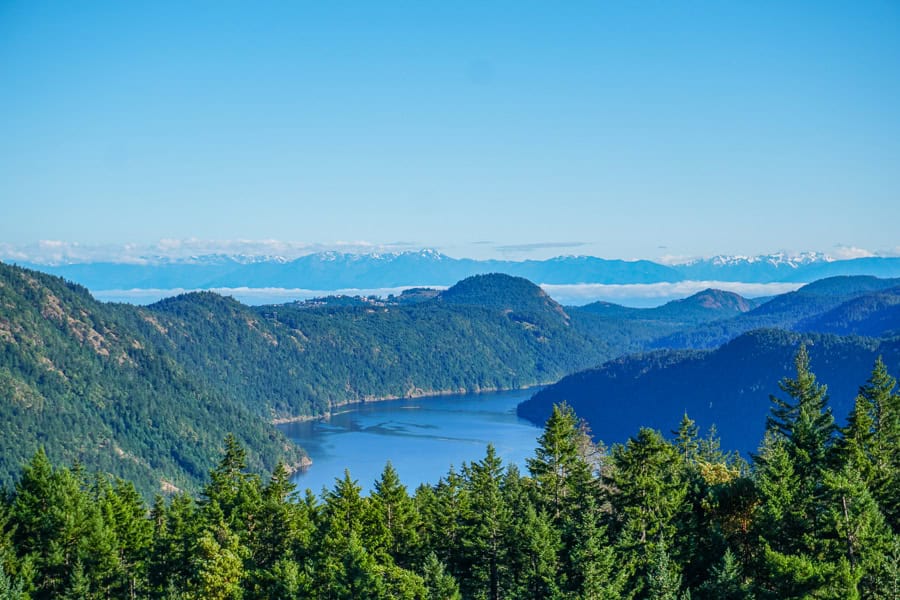
Our Vancouver Island road trip really kicks into gear today as you leave Victoria behind and jump on the road to Duncan. While it’s a relatively short drive of less than 100km (62 miles), it’s a great introduction to the sensational scenery of Vancouver Island.
Without stops, the drive is around 90 minutes. It climbs through dense forest with glimpses of the coastline and surrounding mountains, before passing by the small farming communities, marinas and vineyards that make up the Cowichan Valley on the way to Duncan.
Highlights of today’s drive include:
- Goldstream Provincial Park – take the short walk through the towering Douglas firs to Niagara Falls (the other one); if the season is right, check out the nearby salmon run.
- Soaking up the views along Malahat Drive, one of Vancouver Island’s classic scenic roads, stopping at Malahat Summit Viewpoint before continuing on to the elevated Malahat SkyWalk for panoramic views over southern Vancouver Island.
- Kinsol Trestle Bridge – we recommend the short walk to see one of the tallest free-standing timber rail trestles in the world; it’s an impressive sight spanning a heavily forested, picturesque river valley.
- Getting off the highway to explore the Cowichan Valley, a relaxed agricultural region of wineries, cideries, cafés, marinas, and small waterfront towns. We had a delicious lunch and wine tasting at Enrico Winery (one of our favourite Vancouver Island wineries), before continuing on to Cowichan Bay, where we spotted bald eagles around the fisherman’s wharf.
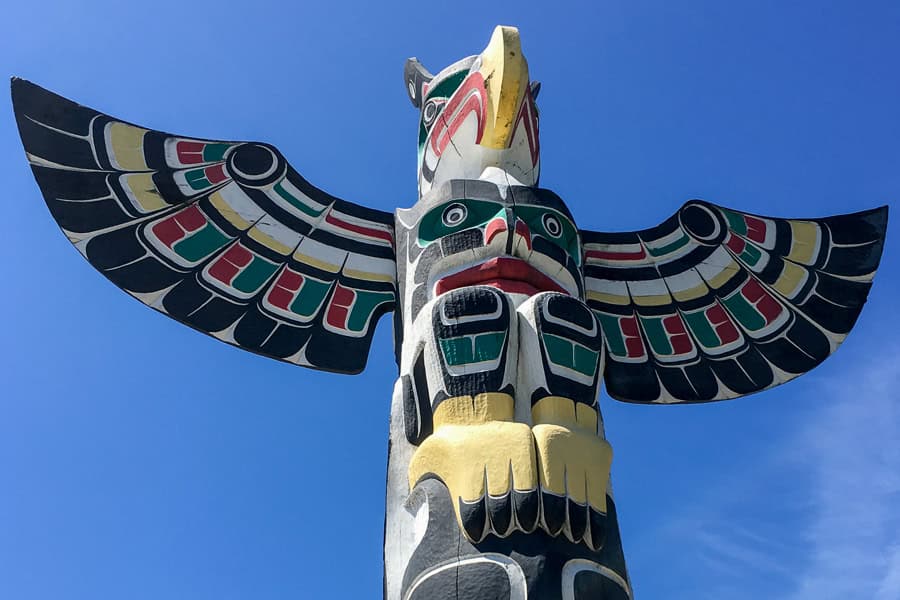
Finish the day in Duncan following the yellow footprints on a self-guided wander around one of the world’s largest collections of outdoor First Nations totem poles on the Duncan Totem Walk (there are also maps at Cowichan Valley Museum on Canada Avenue) – we loved this!
Where to stay in Duncan
Duncan and the wider Cowichan Valley make a great overnight stop between Victoria and the west coast of Vancouver Island. Staying here breaks up the drive nicely while also giving you time to explore the wineries, cideries, waterfront towns, and scenic roads that make this region such an enjoyable part of the island.
For convenience, staying somewhere around Duncan, Cowichan Bay or Cobble Hill works best for this itinerary. Duncan itself is the most practical base, while Cowichan Bay has a slightly more scenic waterfront feel if you’d prefer somewhere quieter and closer to the water.
Stays in the area that get consistently good reviews include:
- Good value: Wessex Inn By The Sea – a good value waterfront stay in Cowichan Bay with simple, comfortable rooms, friendly staff and free onsite parking. Located just ten minutes from Duncan with the local marina, restaurants, and waterfront all just a short walk away.
- Mid-range: Eaglenest Manor Cowichan – positively reviewed guesthouse in a peaceful setting just a short drive from Duncan. The property has large ensuite rooms, a shared kitchen, games room and extremely friendly, helpful hosts.
- Mid-range: Best Western Plus Chemainus Inn – a great option if you want to stay closer to Chemainus and Ladysmith. You can expect spacious modern rooms, swimming pool, fitness centre and free onsite parking.
If you’re on a budget and don’t mind staying further north, the Vancouver Island Residences in Nanaimo may also be worth considering. Generally only available during university holiday periods when rooms are vacant, we found the simple, clean rooms here more than suitable for our needs, with free wifi, ensuite bathroom and free on-site parking.
Day 4: Duncan to Port Alberni – Birds of prey, seaside towns, scenic roads and classic pubs
Highlights: The Raptors | Chemainus Murals | Ladysmith | Yellow Point Road | Crow & Gate Pub | Nanaimo waterfront
Total driving distance: appx. 160km (100 miles)
Total driving time: appx. 3 hours
Overnight: Port Alberni
As official bird nerds, there was no way we were missing The Raptors, a bird of prey centre just outside Duncan. So that’s where Day 4 of our Vancouver Island itinerary starts.
The facility focuses on conservation, education and public awareness around the threats facing raptors. For us, it was magic seeing bald and golden eagles, hawks, owls, falcons and vultures up close and very personal during the flying demonstration.
We could easily spend a whole day here photographing these magnificent birds. But as today is a packed itinerary, we suggest arriving for opening time at 10am and then watching the first flying demonstration (normally 11am). Times vary by season, so check the website before your visit.
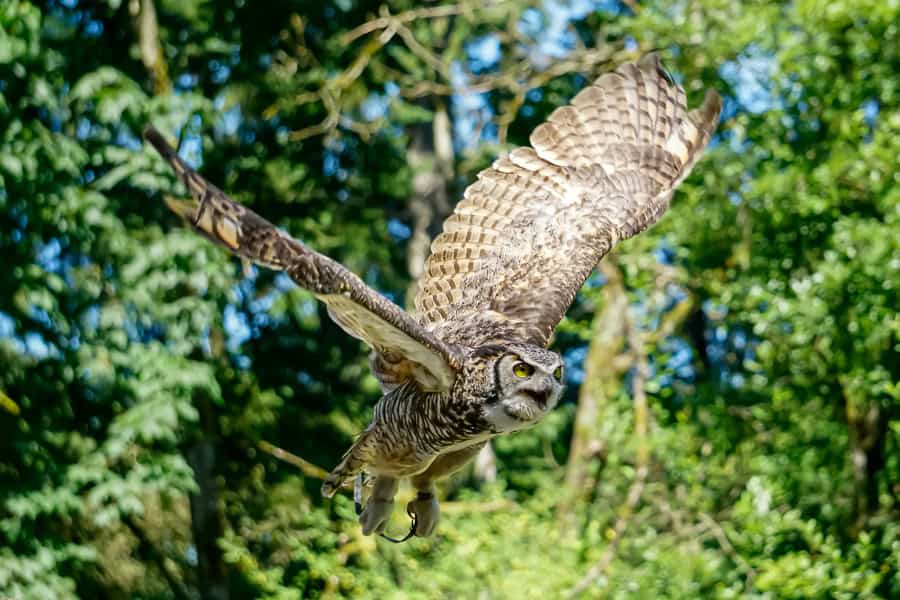
As we head further north, today’s drive takes you through Chemainus, Ladysmith and Nanaimo, before eventually turning inland through protected old growth forest and mountain scenery toward Port Alberni.
It’s a drive that combines small-town stops with scenic coastal routes, classic pubs and harbourfront walks en route to the island’s rugged west coast. While you won’t drive that far today, it’s still a long day with plenty to see and do along the way – so take your time and enjoy the ride.
Highlights of today’s drive include:
- Chemainus Murals – a cute coastal community known as ‘the little town that did’ after it reinvented itself in the 1980s following the collapse of the logging industry. Stretch your legs and enjoy the murals painted throughout town that depict the area’s history, logging heritage, and coastal culture.
- Ladysmith – another relaxed historic town with cafés, heritage buildings, and a pleasant waterfront area at Transfer Beach.
- Getting off the highway to follow scenic Yellow Point Road through forest, farmland, and quiet seaside communities before stopping for lunch at the wonderful Crow & Gate Pub. This is a classic English-style country pub with beautiful gardens; it was a lovely surprise for us, with hearty food, and one of the best pub atmospheres on Vancouver Island.
- Nanaimo waterfront & Old City Quarter – we actually ended up staying in Nanaimo for a few days, but even with a couple of hours it’s worth a stop to appreciate the heritage buildings and walk around the harbourside, we had a great time here spotting bald eagles.
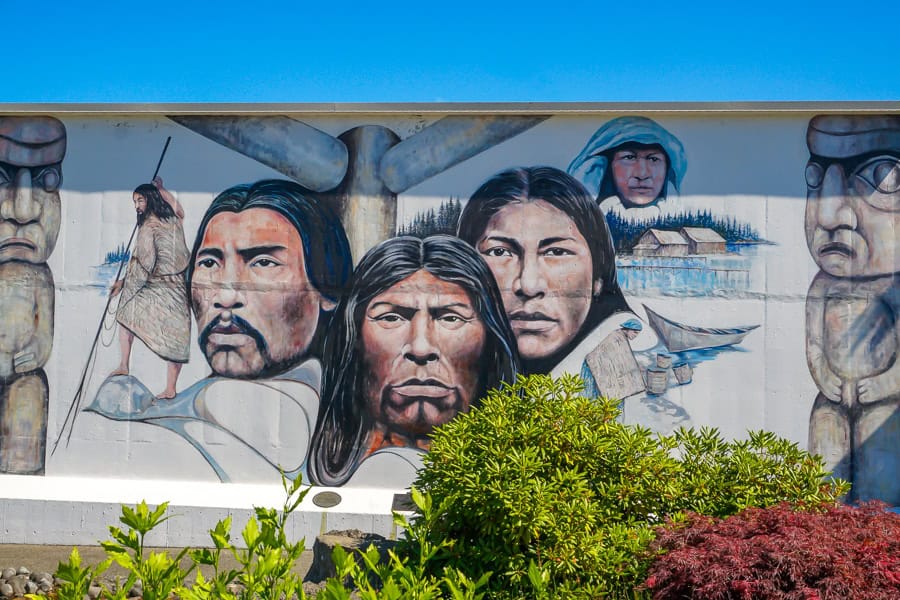
Where to stay around Port Alberni
Port Alberni is perhaps best thought of as a practical overnight stop before crossing to Vancouver Island’s west coast, rather than a scenic stop. While its industrial feel means it doesn’t have the shine of places like Tofino or Ucluelet, its dramatic mountain setting, working harbour, and location at the head of the Alberni Inlet give it a rugged west coast atmosphere that’s not without some charm.
You’ll find a reasonable range of stays in the area, including B&Bs, inns and hotels, while the town’s breweries, pubs, and nearby nature spots make it a convenient overnight stop to break up the drive. Staying here will also allow you to enjoy the spectacular Pacific Rim Highway at a far more relaxed pace tomorrow.
The following stays in Port Alberni all have free parking and consistently good reviews:
- Good value: Outdoor Lovers Bed & Breakfast – small B&B with excellent reviews that provides a relaxed atmosphere, comfortable rooms, a tasty breakfast, and friendly hosts who know a thing or two about local hiking and outdoor activities.
- Mid-range: Cedar Wood Lodge Bed & Breakfast Inn – surrounded by gardens and forest, this peaceful B&B has friendly hosts, homely, comfortable rooms and a generous breakfast close to the riverside just north west of town.
- Mid-range: Best Western Plus Barclay Hotel – an excellent option if you’re after a full-service, centrally located hotel with modern rooms, swimming pool, on-site restaurant, and consistently strong reviews for comfort and service.
Days 5 to 7: Tofino and Ucluelet – Pacific beaches, rainforest walks and wildlife tours
Highlights: Stamp River Provincial Park | Beach sunsets | Canso Bomber Ruins Trail | Bear watching | Wild Pacific Trail Lighthouse Loop | Whale watching | Ancient Cedars Loop
Total driving distance: appx. 230km (140 miles), which includes 130km from Port Alberni to Tofino, 40km from Tofino to Ucluelet, plus side trips and local driving
Total driving time:appx. 4 hours
Overnight:Tofino and/or Ucluelet
Start today by swinging by Stamp River Provincial Park on the way out of Port Alberni. We wandered the lovely short walk along the river here to the fish ladders, which is well worth doing, even outside salmon season.
The drive west to the Pacific coast is arguably one of the best on Vancouver Island. If you’re anything like us, you’ll be stopping frequently to take in the views as the road climbs past dense forest, rivers, lakes and dramatic mountain passes before eventually dropping toward the beaches, surf and rainforest of the Pacific Rim.
This is probably our favourite part of Vancouver Island, and we could have easily spent more time here as there’s so much to see and do. The main towns in this region are Tofino and Ucluelet.
Tofino is busier, more surf-focused and has a wider choice of restaurants and cafés. It’s worth visiting to spend time around the beaches, catching sunset at Cox Bay, Chesterman Beach or Long Beach. It’s also more convenient for the Canso Bomber hike.
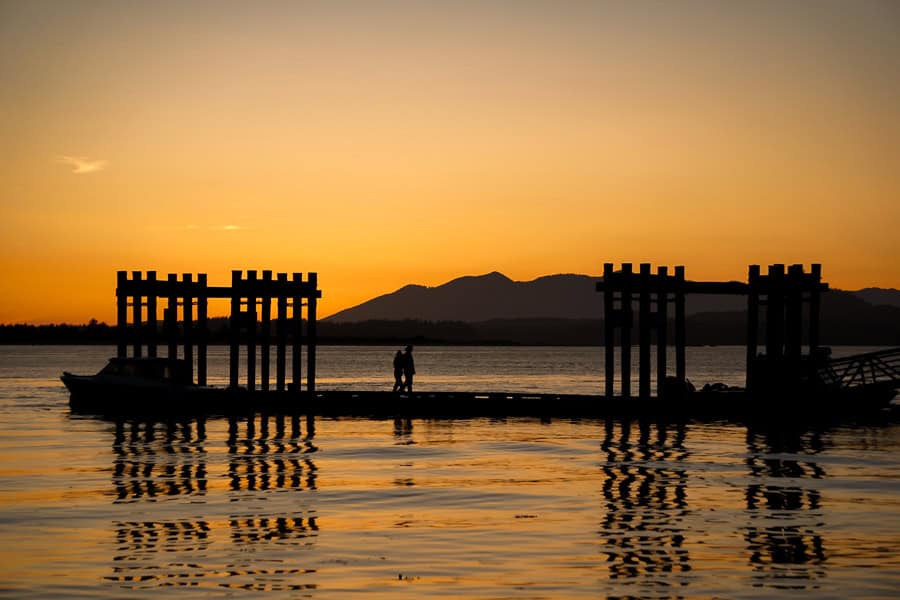
Ucluelet is smaller and quieter, with a lovely waterfront and excellent access to the Wild Pacific Trail, including the popular Lighthouse Loop and Ancient Cedars sections. You’ll also find some great local spots to eat and drink – we very much enjoyed late afternoon beers overlooking the harbour at Eagle’s Nest Pub.
As Tofino and Ucluelet are just 40km (25 miles) apart, you can easily base yourself in one or the other for this part of the trip. Or split your time between both, which is what we ended up doing.
Regardless of where you decide to stay, plan your itinerary over the next few days to make the most of the exceptional nature and wildlife experiences that make this part of Vancouver Island so special. The following options in the area are all extremely popular:
- Canso Bomber Ruins Trail – hiking to the remains of a WWII bomber is probably one of the most unique trail walks we’ve ever done. Be prepared for a muddy scramble as you get near to the wreck, which is located around 4km through the rainforest from the carpark (check AllTrails for track details).
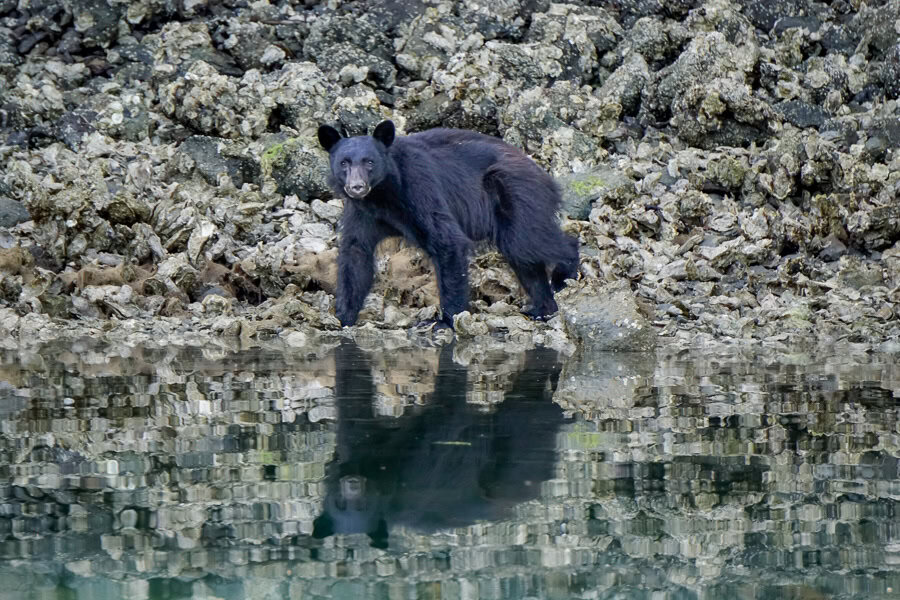
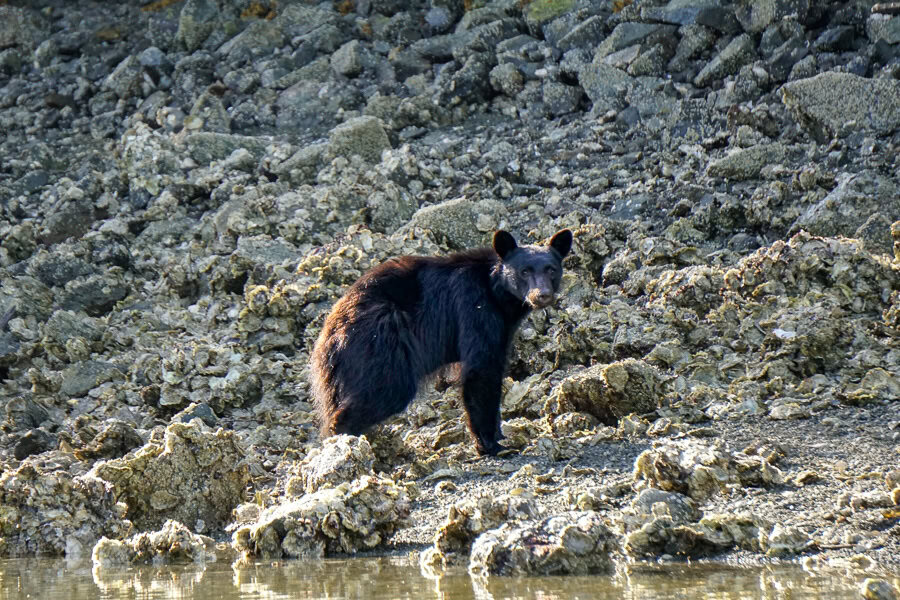
- Black bear watching zodiac tour – taking an early morning zodiac tour around misty islands and peaceful inlets in search of black bears feeding along the shoreline was one of the absolute highlights of our Vancouver Island road trip. We had a fantastic time spotting foraging bears on this 2.5-hour Bear Watching Zodiac Tour from Ucluelet with Jamie’s Whaling Station; if you’re in Tofino, check out this 2.5-hour Bear Watching Boat Trip.
- Lighthouse Loop (Wild Pacific Trail) – we loved this 3km trail, which is arguably one of the best short coastal walks on Vancouver Island. Take your time to enjoy the wave-battered coastline and many viewpoints along the way to the lighthouse.
- Whale watching tours – this part of the island is a great place to get out on the water to search for humpbacks, grey whales, sea lions, sea otters and, if you’re very lucky, orca. Jamie’s Whaling Station offers 2.5 to 3-hour whale watching zodiac tours like this Whale Watching Zodiac Tour from Ucluelet, and a similar option from Tofino.
- Ancient Cedars Loop (Wild Pacific Trail) – another of our favourite forest walks; this one is just a short 1km (0.6 miles) through old cedars and rainforest close to Ucluelet.
- Kayaking tours of the coast and islands – a wonderful way to experience the coastline here is to paddle around the sheltered inlets, remote islands, beaches and wildlife-rich waterways. Paddle West Kayaking operates popular guided kayak tours out of both Ucluelet and Tofino, including a 4-hour Ucluelet Coast Kayaking Tour and a 2.5-hour Tofino Islands Kayaking Tour.
Pacific Rim National Park trail conditions
Before setting out on the trail, its best to check the latest Parks Canada trail conditions and closures, particularly after storms or during maintenance periods, as conditions on some Pacific Rim trails can change quickly.
Where to stay in Tofino and Ucluelet
Accommodation around Tofino and Ucluelet ranges from simple motels and self-contained apartments to surf lodges, boutique waterfront stays, rustic cabins and high-end resorts on the shores of the Pacific.
Staying in central Tofino is convenient if you want easy access to tours and activities, and be close to restaurants, bars and cafés. It also has more higher-end stays, particularly around Cox Bay, Chesterman Beach and Mackenzie Beach, where you can find properties offering direct beach access, ocean views and resort-style facilities.
Ucluelet tends to be slightly more affordable overall, with many stays clustered around the harbour and rocky coastline near the Wild Pacific Trail. You’ll find a mix of motels, apartment-style accommodation and waterfront resorts, often with quieter surroundings and easy access to coastal walks and wildlife tours.
For this itinerary, you can either base yourself in one town for all three nights or split your stay between both. We ended up doing both, which gave us a much better feel for each place.
Stays in Tofino
- Good value: Tofino Paddlers Inn – friendly budget stay right on the waterfront in the heart of Tofino, offering clean, simple rooms with shared bathrooms close to cafés, restaurants, bars and the harbourfront. There’s no on-site parking so you’ll likely have to pay for a spot in town.
- Mid-range: Tofino Motel Harbourview – very popular centrally located waterfront motel with free on-site parking. The property has nicely decorated modern rooms with balconies overlooking the harbour.
- Spend a bit more: Long Beach Lodge Resort – one of Tofino’s classic oceanfront stays right on Cox Bay with direct beach access, ocean views and an on-site restaurant and wellness centre. There’s a range of stylish rooms, suites and cottages to choose from, parking is free, and the location is just ten minutes’ drive from town.
We stayed at the Maq Hotel in Tofino and honestly, you couldn’t find a better location slap bang in the centre of town and close to the harbour, shops, supermarkets, restaurants and bars. The place has been recently renovated, rooms are spacious enough, there’s an on-site bar, and free parking.
Stays in Ucluelet
- Good value: Pacific Rim Guest Lodge – cosy adults-only stay surrounded by forest on the edge of Ucluelet, offering comfortable ensuite rooms with free parking and easy access to both town and the Wild Pacific Trail.
- Mid-range: Winter’s Hideaway Suite – highly rated self-contained, spacious suite with kitchen facilities and modern interiors in a peaceful location within walking distance of Ucluelet’s restaurants and waterfront.
- Spend a bit more: Canadian Princess Lodge & Marina – centrally located harbour-side lodge with comfortable rooms, marina views and free parking right in the middle of town with easy access to restaurants and wildlife tours.
In Ucluelet, we opted for the Pacific Rim Motel, perfectly located close to the harbour, shops and restaurants and one of our favourite stays on this Vancouver Island itinerary. Our upstairs room was comfortable and spacious with lovely views of the nearby mountains across the harbour. We were even visited by grazing deer a few mornings.
Day 8: Ucluelet to Cumberland – Old-growth forest, waterfalls and breweries
Highlights: Cathedral Grove | Little Qualicum Falls | Englishman River Falls | Courtenay & District Museum Fossil Tour | Seal Bay Nature Park | Local breweries
Total driving distance: appx. 210km (130 miles)
Total driving time:appx. 3 hours
Overnight: Cumberland or Courtenay
Today you’ll be leaving the Pacific coast behind and retracing your steps back through the interior of the island toward the Comox Valley.
Around 90 minutes into the drive, you’ll pass through MacMillan Provincial Park, where one of Vancouver Island’s most accessible (and impressive) old-growth Douglas fir forests awaits.
Cathedral Grove can be a busy spot, but it’s well worth taking the time to stretch your legs on one of the many short walking loops here to really appreciate these towering firs up close.
From Cathedral Grove, it’s around an hour’s drive to Courtenay. Arrive before lunchtime if you plan to take a fossil tour, otherwise take it slow and visit one, or both, of the waterfalls along the way. Or head to Seal Bay for a short coastal hike.
As well as Cathedral Grove, today’s highlights include:
- Little Qualicum Falls – a lovely waterfall stop with easy walking trails linking a series of upper and lower falls viewpoints through beautiful old forest and river gorge scenery.
- A short detour from today’s route will take you to Englishman River Falls – here you’ll find a network of scenic forest trails and bridges connecting viewpoints over both the upper and lower falls and deep canyon pools below.
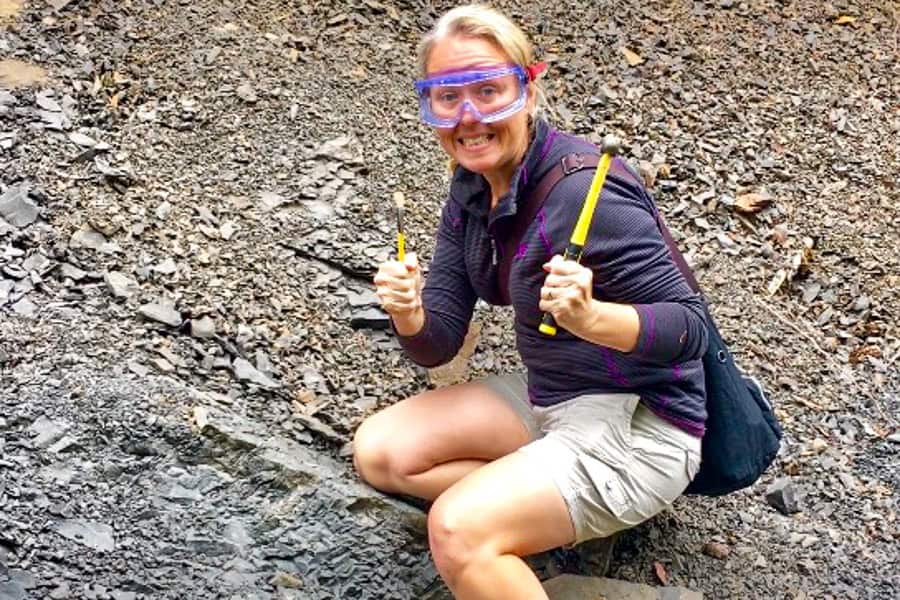
- Fossil Tours – learning all about the area’s famous fossil finds and then trying our hand at finding some prehistoric relics along a local riverbank was probably the most offbeat highlight of our time on Vancouver Island. Pre-booking is essential, so check the Courtenay & District Museum website for further details.
- If fossils aren’t your thing, consider stretching your legs near the coast at Seal Bay Nature Park. There are a number of trails to choose from here through tall Douglas fir forest toward quiet beaches and shoreline viewpoints.
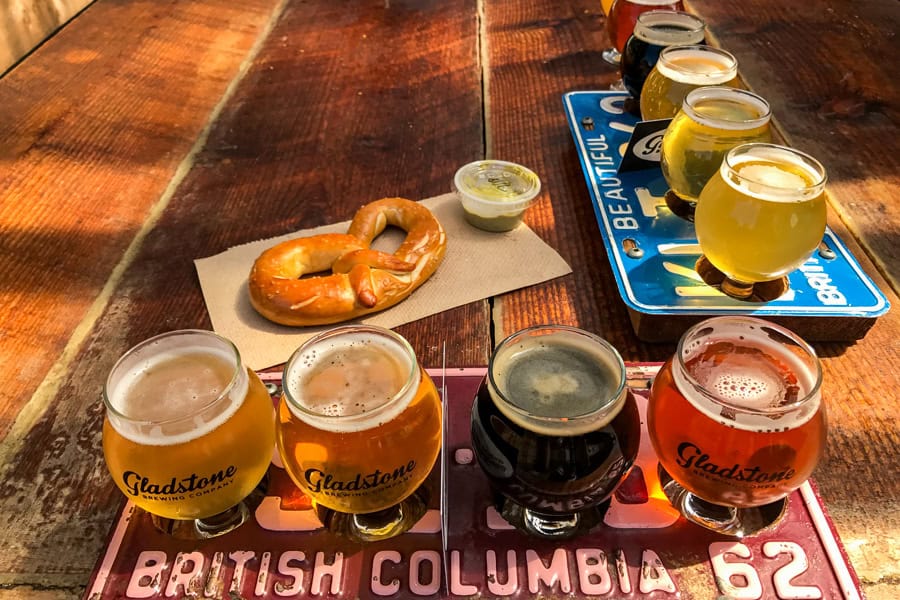
- Local breweries – we were in this area for a couple of days so of course we were drawn to the brewery scene. The area has several good options, including Gladstone Brewing across from the museum, and Cumberland Brewing Company – we whiled away some merry hours in both!
Where to stay in Cumberland and Courtenay
Cumberland and Courtenay both work well for this part of the itinerary. Cumberland has the more interesting village feel, with pubs, a brewery, cafés and access to mountain biking trails, while Courtenay has a wider range of accommodation and is closer to the museum, restaurants and services.
While we don’t often stay in hostel-style accommodation these days, we ended up at Riding Fool in Cumberland on this night and couldn’t have been happier. We had a cosy double with spotless shared bathroom, and access to excellent facilities and communal areas. As a bonus, it’s just a few minutes’ walk from the brewery.
There are a few popular options in the broader area that receive consistently positive reviews, including:
- Good value: Estuary House Reflexology B&B – friendly B&B on the north side of the Courtenay estuary, offering comfortable rooms with water or mountain views. There’s also free on-site parking and a tasty included breakfast to set you up for the day.
- Mid-range: Bayview Hotel – comfortable hotel located near the airstrip just 1km from the centre of town. Rooms are spacious and modern, breakfast is included in the room rate, parking is free, and there’s also a small pool and fitness centre on site.
- Mid-range: Old House Hotel – popular hotel with spacious modern suites close to the Courtenay Riverway and town centre. There’s a spa and wellness centre on-site, as well as a pool, and free parking.
Day 9: Cumberland to Campbell River – Waterfalls, island hopping and wildlife tours
Highlights: Campbell River | Elk Falls Provincial Park | Quadra Island | Ripple Rock Trail | Whale watching | Grizzly bear tours
Total driving distance: appx. 55km (35 miles)
Total driving time:appx. 30-40 minutes
Overnight: Campbell River
The drive from Cumberland to Campbell River is short, but we recommend giving Campbell River at least a full day as it’s one of Vancouver Island’s main outdoor activity hubs.
The town itself is more of a gateway than a destination, but the surrounding area is excellent. You can spend the day walking to waterfalls, taking a wildlife tour, crossing to Quadra Island, hiking to ocean viewpoints, or joining a grizzly bear viewing tour if the season is right.
It’s a choose-your-own-adventure kinda day, and your options are many, including:
- Elk Falls Provincial Park – an easy stop close to Campbell River, with forest trails, a nice suspension bridge and a waterfall viewpoint.
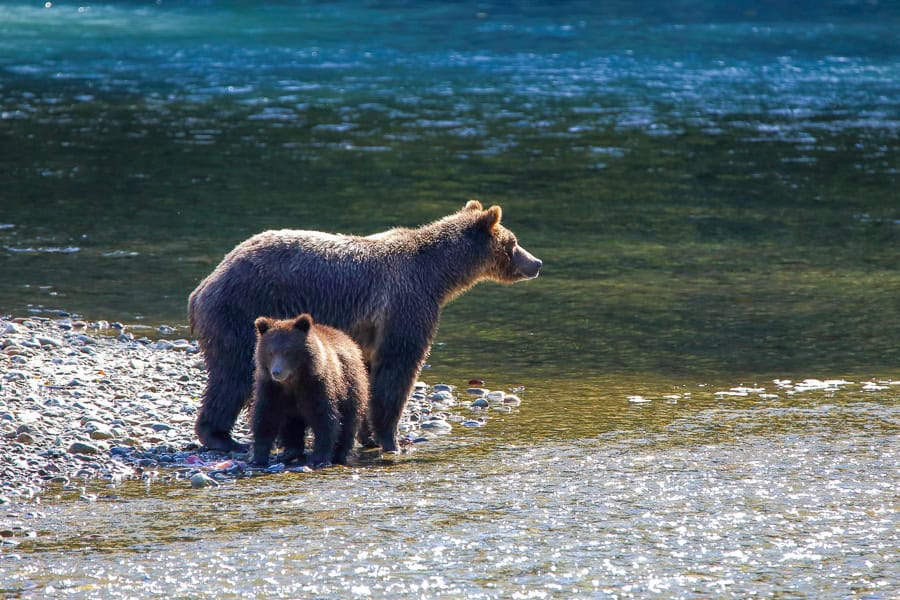
- If you’re here from mid-August to mid-October, this is the best time for a Grizzly Bear Tour, one of the most popular seasonal wildlife experiences in the area; it usually involves a boat trip into remote mainland inlets where bears gather along rivers and estuaries feeding on salmon.
- Campbell River waterfront – take a stroll along the picturesque waterfront walkway to enjoy views across Discovery Passage toward Quadra Island, while keeping an eye out for sea lions.
- If you’re keen for beaches, forest walks, cycling and a slower pace, consider taking the BC Ferries crossing from Campbell River to Quadra Island. Ferries run regularly for both cars and passengers, and highlights include Rebecca Spit Provincial Park, galleries and coastal roads and walks.
- Ripple Rock Trail – a popular half-day hike through forest to a viewpoint overlooking Seymour Narrows, one of the most turbulent tidal passages on the British Columbia coast.
- Campbell River is another excellent base for getting out on the water in search of humpback whales, orcas, dolphins, porpoises, sea lions and bald eagles. This 4-hour Zodiac Whale and Wildlife Tour explores the waterways around the Salish Sea and Discovery Islands.
Where to stay in Campbell River
Campbell River is a handy one-night stop before continuing north to Port McNeill. It has a good range of hotels and motels, plus easy access to Elk Falls, Quadra Island ferries, wildlife tours and the waterfront.
For this itinerary, staying close to the waterfront or town centre makes the most sense, especially if you want dinner within easy reach after a day outdoors. The following options all get excellent reviews:
- Good value: Fireflies Bed & Breakfast – friendly B&B located in a quiet residential area a few kilometres south of Campbell River. Rooms are spacious and cosy, the hosts are friendly and helpful, and a homemade breakfast is included in the rate.
- Mid-range: Above Tide Motel – waterfront motel just south of the centre offering simple, clean rooms with balconies that overlook the water and mountains. There’s free on-site parking, and some rooms have kitchenettes.
- Spend a bit more: Naturally Pacific Resort – large, modern hotel located near the golf course with resort facilities including restaurant, spa, and rooftop pool. Rooms are spacious and modern, there’s free on-site parking, and the centre of town is a 10 minute walk away.
Days 10 to 13: Exploring the north from Port McNeill to San Josef Bay
Highlights: Port McNeill | Kayaking and whale watching at Telegraph Cove | Malcolm Island | Beautiful Bay Trail | Alert Bay | U’mista Cultural Centre | San Josef Bay
Total driving distance: appx. 450km (280 miles), which includes 200km from Campbell River to Port McNeill, 220km round trip to San Josef Bay, plus side trips and local driving
Total driving time: appx. 8 hours
Overnight: Port McNeill
North of Campbell River, Vancouver Island starts to feel much quieter and more remote. Traffic thins out, the towns become smaller, and the surrounding forest feels increasingly vast as you work your way toward Port McNeill.
Port McNeill itself is not the main reason to come this far north. To be honest, we found the town fairly plain compared with some of the other stops on the island. But it works very well as a base for the north of the island, allowing you to experience some of our Vancouver Island road trip highlights, including Telegraph Cove, Malcolm Island, Alert Bay and Cape Scott Provincial Park.
Many visitors never make it this far north, but we absolutely think it’s worth factoring in a few days up here as there’s so much to see and do. Depending on your interests, you may want to plan your days around some of the following:
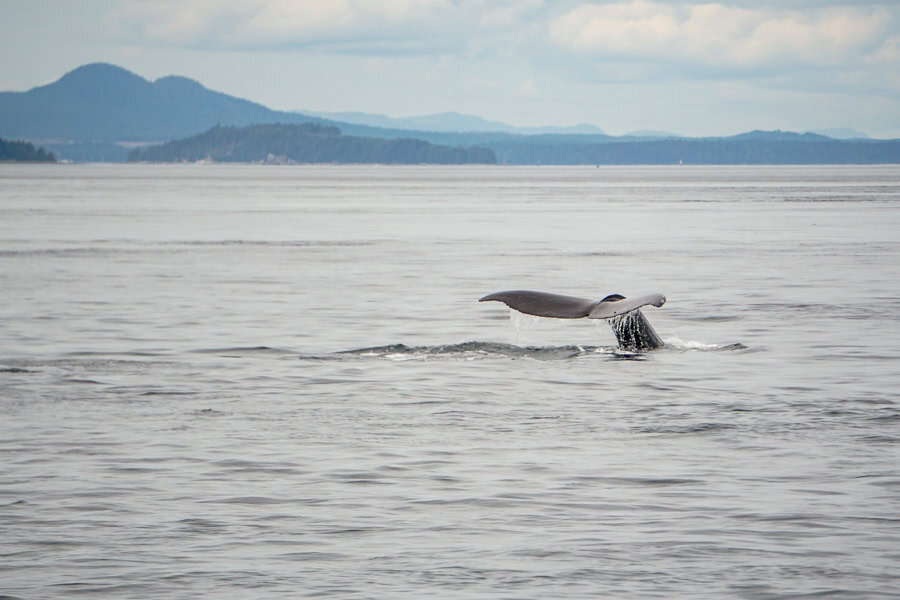
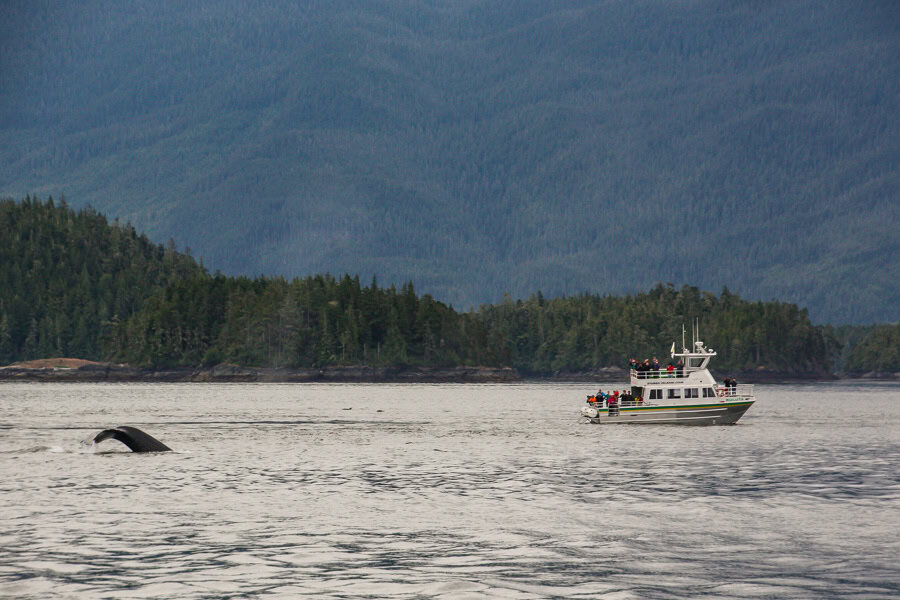
- Telegraph Cove – head here to see the colourful historic boardwalk village and watch playful otters darting around the jetty (we spent ages watching these captivating creatures); it’s also an excellent spot for water-based activities, like this top-rated, 3-hour Whale Watching Tour. We had a brilliant morning exploring the picturesque waters of Johnstone Strait, with an escort of tiny, energetic Dall’s porpoises, and appearances by humpback whales, seals, eagles and otters.
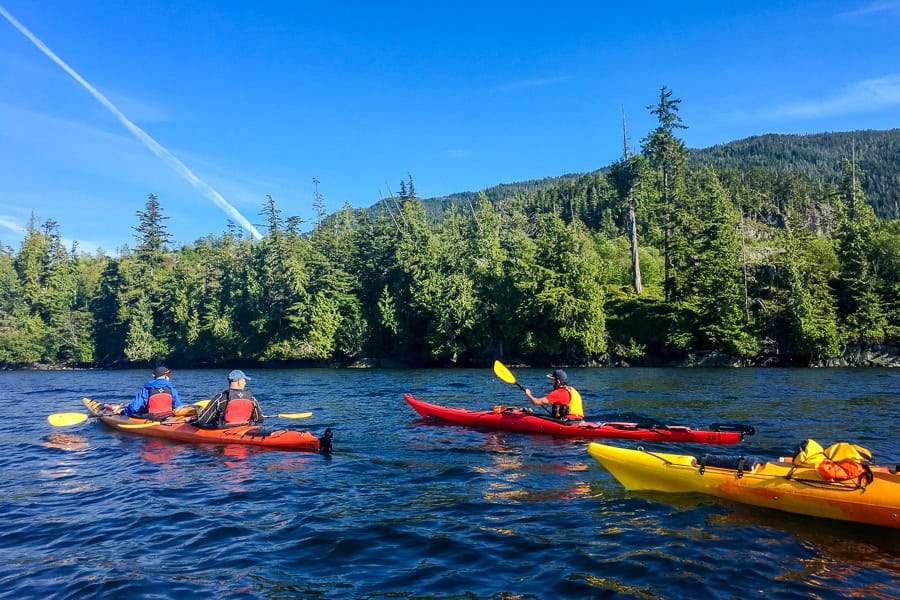
- Kayaking tours – this is another excellent way to explore the coastal waters around Telegraph Cove, especially if you want a slower pace; we had perfect skies for our afternoon paddle and spotted lots of bald eagles and local wildlife along the way.
- Malcolm Island and Sointula – take the ferry from Port McNeill to the small fishing community of Sointula, and hike the stunning 10km return Beautiful Bay Trail through old forest to a remote bay famous for orca shallow water pebble rubbing behaviour. While we were out of luck for orca on the day we visited (your best chance is during July and August), we did spot whales offshore.
- Day trip to Alert Bay – it’s an easy and scenic ferry ride from Port McNeill to Alert Bay, where you can stroll the waterfront, visit the nearby totem-filled cemetery, browse Indigenous art galleries, and spend time at the U’mista Cultural Centre, with its excellent exhibitions and insights into the history, art and cultural heritage of the Kwakwa̱ka̱ʼwakw people of this region; we also bought a beautiful Indigenous carving here.
- Cape Scott Provincial Park and San Josef Bay – drive north via Port Hardy before following rough gravel logging roads to the San Josef Bay Trail, a beautiful 5-7km return walk through coastal forest to one of Vancouver Island’s most spectacular beaches. Many people tackle the road in standard hire cars, but we found it a bit too rough and potholed to risk our insurance, so this one remains on our bucket list. If you don’t fancy the drive, this highly-rated, full-day San Josef Bay Tour in Cape Scott Provincial Park departs daily from Port Hardy.
Take precautions if you drive the road to Cape Scott
The road between Port Hardy and Cape Scott is an active logging route, and as such, BC Parks advises drivers to be careful, keep lights on at all times, and be prepared to yield to logging trucks.
Where to stay around Port McNeill
Port McNeill isn’t one of Vancouver Island’s prettiest towns, but it is the most convenient base for exploring Telegraph Cove, Malcolm Island, Alert Bay and Cape Scott without constantly changing stays.
Accommodation in the area is fairly limited, so you may need to broaden your search to include Telegraph Cove and Port Hardy, and it’s advisable to book well ahead in the summer months. Most stays are simple, but for this part of the itinerary you mostly need somewhere clean, comfortable and well located for ferries and day trips.
The following options all get consistently good reviews:
- Good value: Dalewood Inn – friendly, centrally located inn just a short walk from the ferry and local amenities. Rooms are clean and comfortable, on-site parking is free, staff are helpful, and there’s a restaurant next door.
- Good value: Humpback Inn – centrally located motel stay just a short walk from the waterfront and ferry terminal, offering simple, clean rooms and free on-site parking in a convenient location.
- Mid-range: Kwa’lilas Hotel – located in Port Hardy around 30 minutes north of Port McNeill, this stylish First Nations-owned hotel is decorated with local Indigenous artwork, has modern rooms, free parking, an on-site bar and restaurant, and views toward the surrounding mountains and water.
Day 14: Port McNeill to Nanaimo and ferry to Vancouver
Highlights: Campbell River | Comox Valley | Parksville and Qualicum Beach | Nanaimo | Ferry crossing back to Vancouver
Total travel distance: appx. 430km (270 miles)
Total travel time: appx. 6 hours
Overnight: Vancouver (or fly home)
The final day of this incredible Vancouver Island road trip is a long but straightforward drive south from Port McNeill to Nanaimo, following the island’s east coast and then taking the ferry back to Vancouver.
There are no major must-see stops that you haven’t already had the chance to include, so it’s best to treat this as a flexible return day. If you leave early, you can break the drive with a waterfront stop in Campbell River, lunch around Courtenay or Comox, or a beach walk at Parksville or Qualicum Beach before continuing to Nanaimo.
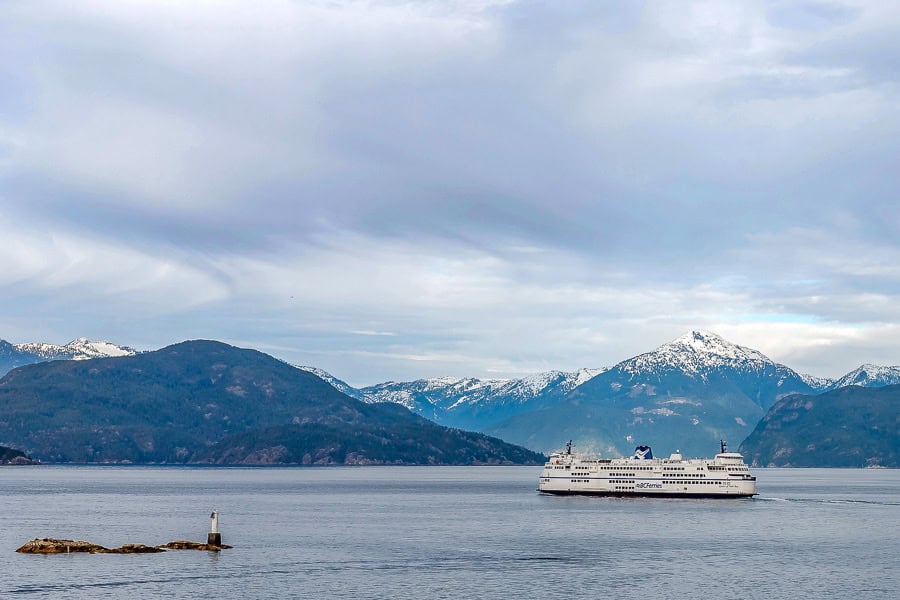
The Departure Bay ferry in Nanaimo connects directly to Horseshoe Bay in West Vancouver, so enjoy the scenic crossing with mountain and coastal views as you head back toward the mainland.
If you’re travelling in summer, book the ferry in advance and leave plenty of buffer time. The drive from the north of Vancouver Island is long enough that you don’t want to be racing to catch the ferry.
Where to stay in Vancouver
If you aren’t flying home today and need somewhere to stay in Vancouver after returning from the island, it’s worth choosing a location that keeps the final logistics simple. After a long drive from Port McNeill and the ferry back to Horseshoe Bay, you probably won’t want to deal with complicated parking, long cross-city drives, or being too far from the airport if you have a flight the next day.
For convenience, Downtown Vancouver, Coal Harbour, Yaletown, and Gastown all work well if you want one final evening in the city. These areas put you close to restaurants, the waterfront, Stanley Park, breweries, and major transport links. If you have an early flight, staying closer to Vancouver International Airport in Richmond may be easier.
As we were flying the next day, we opted for Vancouver Luxury Homestay, located in a quiet residential area just 10 minutes’ drive from the airport. It was just what we needed after a long drive, with a lovely spacious room, comfortable bed, and ensuite bathroom.
Other highly rated and popular stays in Vancouver include:
- Good value: Hotel Willo – located close to downtown in the former YWCA building, this popular stay has clean modern rooms, friendly staff, paid on-site parking, and good access to public transport, being close to BC Place and Rogers Arena.
- Mid-range: Hotel BLU – modern downtown hotel located almost next door to Hotel Willo, with spacious rooms, professional staff, indoor pool and fitness centre, and paid secure parking (free for EVs).
- Mid-range: Fairmont Vancouver Airport – with direct terminal access this is undoubtedly the most convenient option if you have an early flight. But in addition to that you’ll find comfortable, modern rooms, an indoor pool and spa, fitness centre, bar and restaurant.
- Spend a bit more: L’Hermitage Hotel – extremely popular boutique hotel in downtown Vancouver with stylish suites, a heated outdoor pool and hot tub, 24-hour gym, restaurant, and private (paid) parking.
Planning a Vancouver Island Road Trip
How long do you need to see Vancouver Island?
Vancouver Island is much larger than many people expect, and with plenty of winding coastal roads, mountain passes, and endless views, it’s a place you won’t want to rush.
We’ve designed this Vancouver Island itinerary over 2 weeks to allow you to properly experience the island’s highlights. We honestly think that’s the minimum amount of time needed if you want the flexibility to include wildlife tours, hikes, beach stops, and the occasional day trip away from driving.
When you’re planning your trip, just note that distances on Vancouver Island can look deceptively short on maps.
Suggested trip lengths
- 1 week – stick to the south and east, including Victoria, Cowichan Valley, Tofino/Ucluelet, and perhaps the Comox Valley or Campbell River.
- 10 days – enough time to add Telegraph Cove or Alert Bay without rushing too much.
- 2 weeks – the full itinerary in this guide, including the north of Vancouver Island and Cape Scott region.
- 3+ weeks – allows slower travel, more or longer hiking or wildlife experiences, and visits to islands such as Quadra and Salt Spring.
Best time to visit Vancouver Island
The best time for a Vancouver Island road trip is generally between late May and early October, when roads are easier to drive, wildlife tours operate more reliably, and most seasonal businesses are open.
Seasonal snapshot
- June and September – our personal sweet spot, with generally good weather and fewer crowds.
- Spring (March to May) – excellent for waterfalls, coastal scenery and emerging wildlife activity.
- Summer (July and August) – the warmest, driest and busiest months, with the highest accommodation prices.
- Autumn (September to November) – a great time for wildlife, with quieter roads and beautiful coastal scenery.
- Winter (December to February) – cooler, quieter and stormier, particularly around Tofino and Ucluelet, where storm watching has become an off-season highlight.
Peak wildlife watching
- Black bears are commonly seen from spring through autumn.
- Grizzly bear tours generally operate from late summer into autumn, when salmon runs attract the bears into mainland river systems.
- Orca can be seen year-round, although sightings are most reliable from late spring through autumn.
- Humpback whales are most commonly seen between spring and autumn, with peak sightings typically during summer.
- Bald eagles are around throughout the year across much of Vancouver Island.
- Salmon runs depend on the species, but generally take place throughout autumn, peaking between September and November.
Planning tips
- Victoria is noticeably drier and sunnier than the west coast, while Tofino and Ucluelet have a distinct weather pattern, so be ready for a shower any time of year.
- Some wildlife and whale watching tours only operate seasonally, or run less frequently outside the main summer months.
- Summer accommodation should ideally be booked months ahead, especially in Tofino and Ucluelet.
Getting to Vancouver Island
Most visitors begin their road trip from Vancouver on mainland British Columbia, but there are a range of options for getting to Vancouver Island.
Flight options
- Vancouver International Airport is western Canada’s main international gateway. There are direct flights from Australia, Asia, Europe and major North American cities.
- Frequent domestic flights connect Vancouver Island airports, including Victoria, Nanaimo, Comox and Campbell River, with Vancouver, Calgary, Edmonton and other Canadian cities.
- Limited international flights, mainly from the United States, also operate into Victoria and some regional Vancouver Island airports.
Ferry options
There are a number of BC Ferries routes connecting Vancouver Island with the mainland, but the following are the most useful for this itinerary:
- Tsawwassen to Swartz Bay – the main ferry route for Victoria and southern Vancouver Island.
- Departure Bay (Nanaimo) to Horseshoe Bay – the most convenient return route toward downtown Vancouver.
- Duke Point (Nanaimo) to Tsawwassen – useful if heading back toward the airport or south of Vancouver.
Planning tips
- BC Ferries reservations are strongly recommended in summer.
- Give yourself plenty of time to get to the ferry terminal, and arrive early for ferry departures, especially if you’re coming in a vehicle.
Driving on Vancouver Island
In our opinion, driving is easily the best way to explore Vancouver Island. Many of the island’s best beaches, hikes, viewpoints and wildlife experiences are difficult to reach without your own vehicle.
Road conditions
- Main highways are generally in very good condition.
- We found most other drivers we encountered to be pretty safe and courteous.
- Roads become more winding and slower going west of Parksville toward Tofino and Ucluelet.
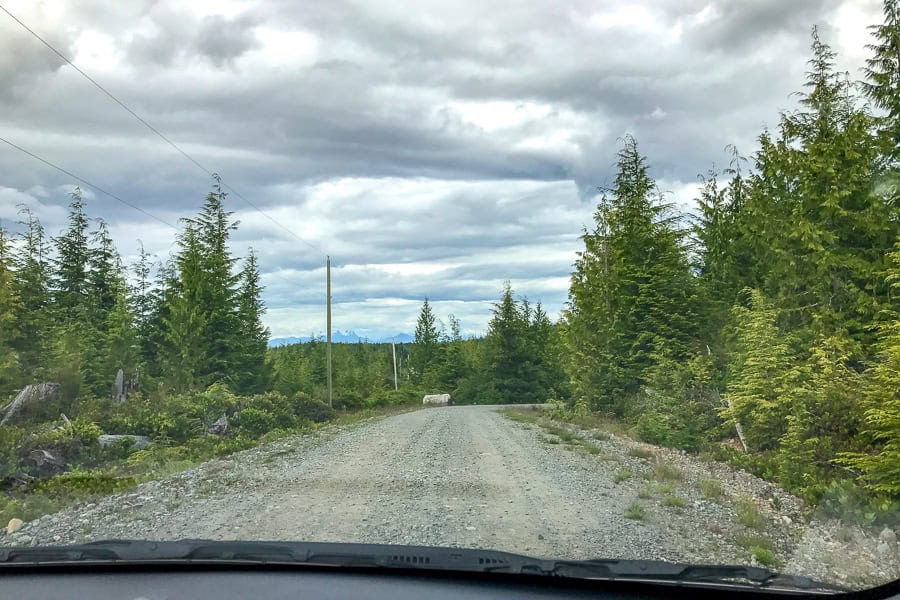
- Some remote areas involve gravel logging roads, some of which – around places like Cape Scott – can be quite rough and heavily potholed.
Planning tips
- Fuel stations become less frequent north of Campbell River.
- Take care driving at all times, but especially at dawn and dusk when wildlife is more active – we encountered large elk and a black bear on the road during our trip.
- Parking in Tofino can become difficult during summer afternoons, leave the car and walk if you can.
Vancouver car rental
Hiring a car in Vancouver is straightforward, with major rental companies operating from Vancouver International Airport and downtown Vancouver. On Vancouver Island, you can pick up a hire car in Victoria and Nanaimo.
Vehicle hire tips
- A standard two-wheel-drive car is perfectly suitable for most of our Vancouver Island itinerary; it’s what we had.
- SUVs are useful for additional clearance on rougher roads but aren’t essential.
- Rental car availability can become tight during summer, so we strongly recommend booking well ahead.
Planning tips
- Book as early as possible if you’re planning to visit in summer.
- Check whether your rental agreement allows driving on logging roads.
We’ve always found the best deals at DiscoverCars and they’re our go-to car hire provider, with great rates and free cancellation should your plans need to change.
Booking your Vancouver car rental in advance will get you the best rates and widest choice of vehicle. You can find and book your car rental for Vancouver Island here.
Vancouver Island accommodation
Accommodation on Vancouver Island ranges from roadside motels and guesthouses to surf lodges, cabins, waterfront apartments, international chain hotels and luxury coastal resorts. We’ve included suggested stays for each overnight stop throughout this itinerary.
What to expect
- Victoria and Nanaimo have the widest accommodation choice.
- Tofino and Ucluelet tend to be the island’s most expensive regions.
- Accommodation becomes more limited north of Campbell River.
- Smaller towns often book out surprisingly early in peak season.
Planning tips
- Motels and B&Bs are still very common across Vancouver Island, giving the place – in our opinion – a more local and low-key feel.
- Many waterfront stays have only a small number of rooms so book in advance if this is your preference.
- Summer weekends can sell out months in advance in popular areas – plan and book well ahead.
Where we can, we’ve based the overnight stops of this road trip around decent-sized towns to maximise the choice of available stays.
We booked all the stays on our Vancouver Island road trip through Booking.com. The platform has a huge choice of accommodation, and we like the discounts and other benefits we get with their Genius loyalty program. You can find and book your Vancouver Island accommodation here.
Useful Travel Resources
Stays: We used Booking.com for all the stays on our Vancouver Island itinerary – check prices and book your stays here.
Airport Transfer: Unless we pick up a hire car straight away, we tend to book an airport transfer in advance when we arrive in a new city. Check prices on Welcome Pickups.
Car Rentals: We normally hire vehicles through DiscoverCars to get the widest choice of cars and best prices. Book your Vancouver car rental here.
eSIMs: We normally use Airalo eSIM to stay connected while travelling. Find your Canada eSIM here.
Tours: Vancouver Island has so much to see and do, and you’ll find a wide range of tours and experiences on Viator. Check out what’s on offer and book tours here.
If you’ve got any questions about this epic Vancouver Island road trip itinerary,
ask us in the comments below.
If you’re looking for more great road tripping itineraries and adventures, check out our Road Trips page, and our bucket list of 100 ultimate road trips around the world.